Weaving plarn

Back to talking about plarn. Yesterday I posted about how I connect and spin loops of plastic grocery bags as I stitch. I wanted to learn a new nålbinding stitch and using plarn was a perfect way to practice without wasting expensive fiber. The stitch is a Finnish 2+2 stitch as described here (this page also talks about how different connections affect the finished texture, I chose M1 + F1 because it looks more braided). I started my chain, and made it long enough that I could make a beach mat, if I so chose. It is easiest to do nålbinding in the round, so I continued in the round (nålbinding can absolutely be cut and tidied up later). As I progressed, I felt the texture would be better suited for a bag than a mat (it has a rough feel due to the twist). So then the dilemma was how to deal with the base of the bag. I could stitch it straight, as a tote bag, which wouldn’t stand on its own. I could sew an oval piece of hard plastic in, but what plastic, and would it still be recycling? I could nålbind an oval, which is downright tricky. What about weaving? It is an experimental piece anyway, could I weave a base? I found a box that fit snugly in my nålbound tube and connected the first loop by threading it through the edge and looping it back on itself (as you do for connecting loops).
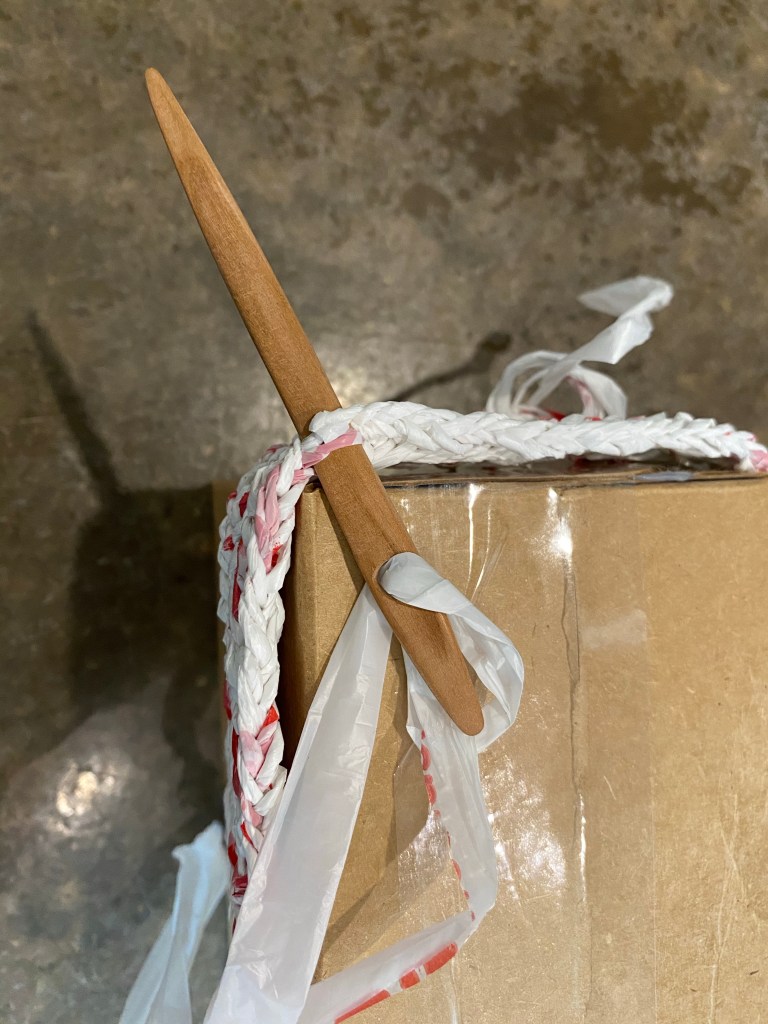
Starting the weaving

I then gave the loop some twist and ran it the long way along the box, out through the edge, then back in through the next stitch. I added loops and twist as I went, making the warp threads for the weaving.
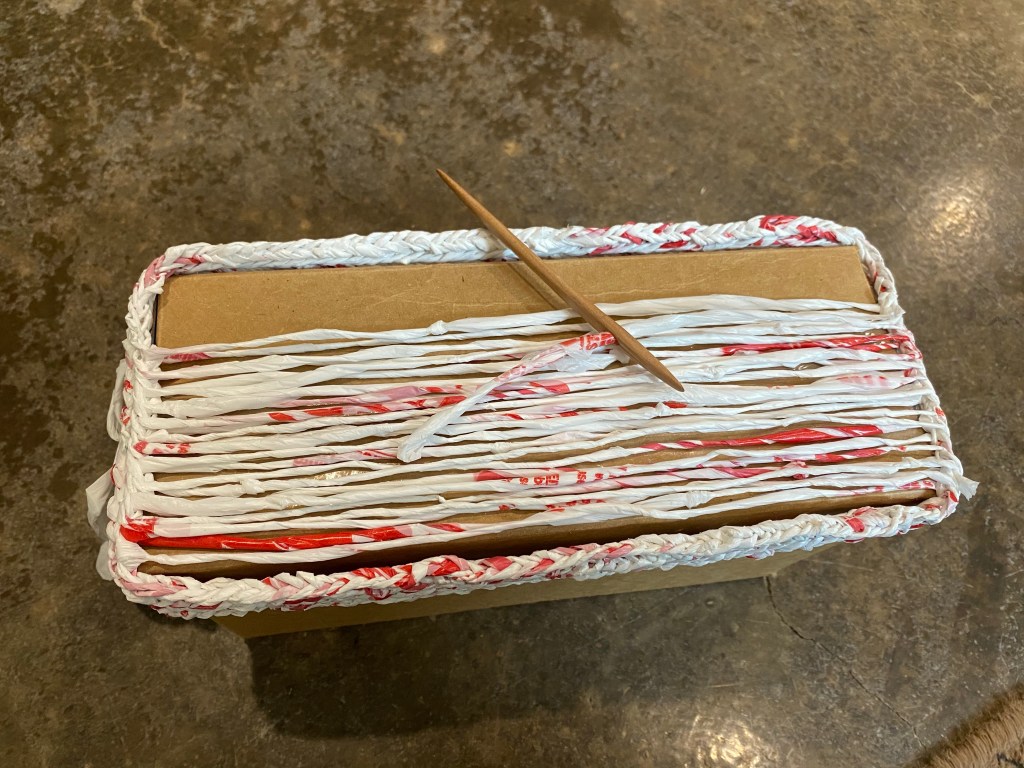
Setting up the warp threads with plarn

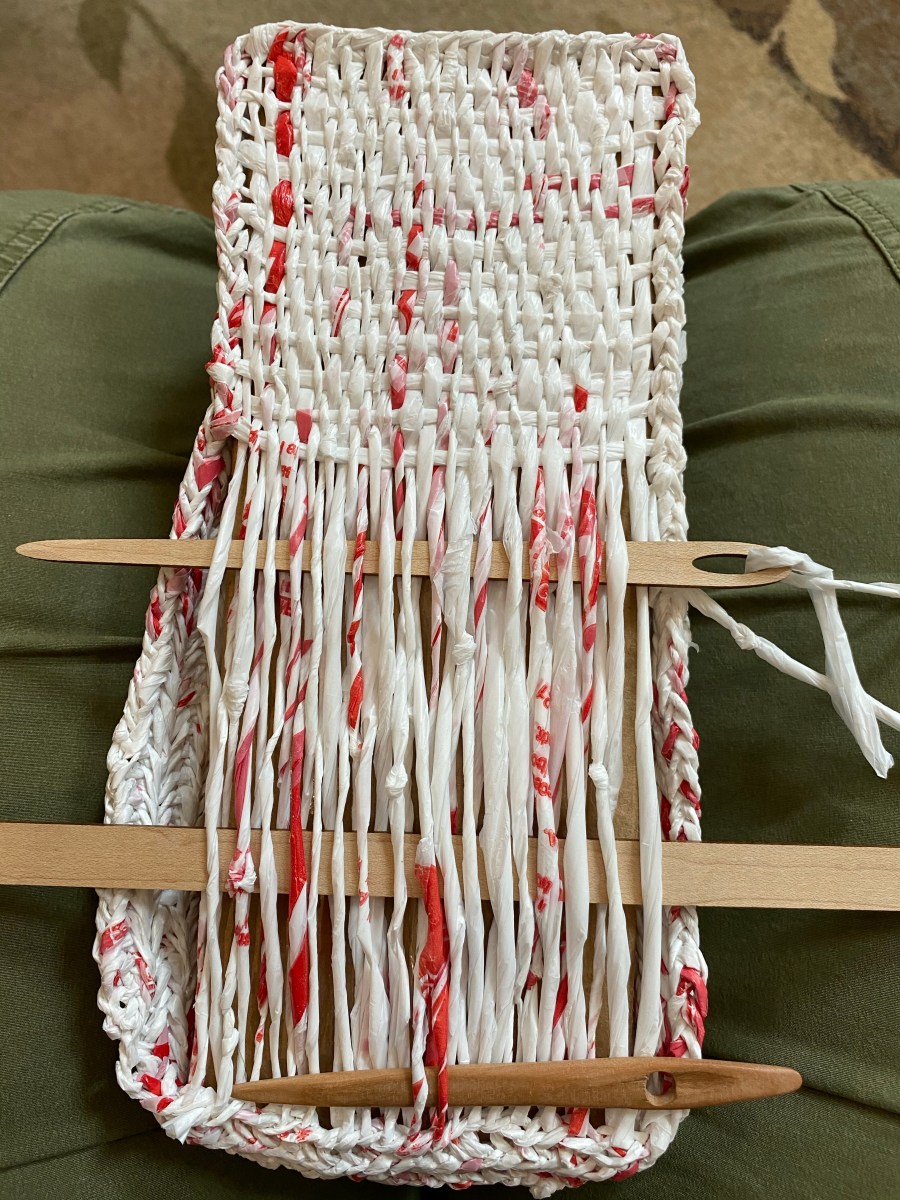
When it was time to start the weft, I realized that I didn’t have to break the plarn, I could just turn the box and keep going. I used a plain weave (over, under, over, under), and used a pick up stick to hold one shed, and a longer wooden needle to pick up the alternate threads. My nålbinding needle was best for connecting to the edge because it is smooth and doesn’t abrade the plastic.
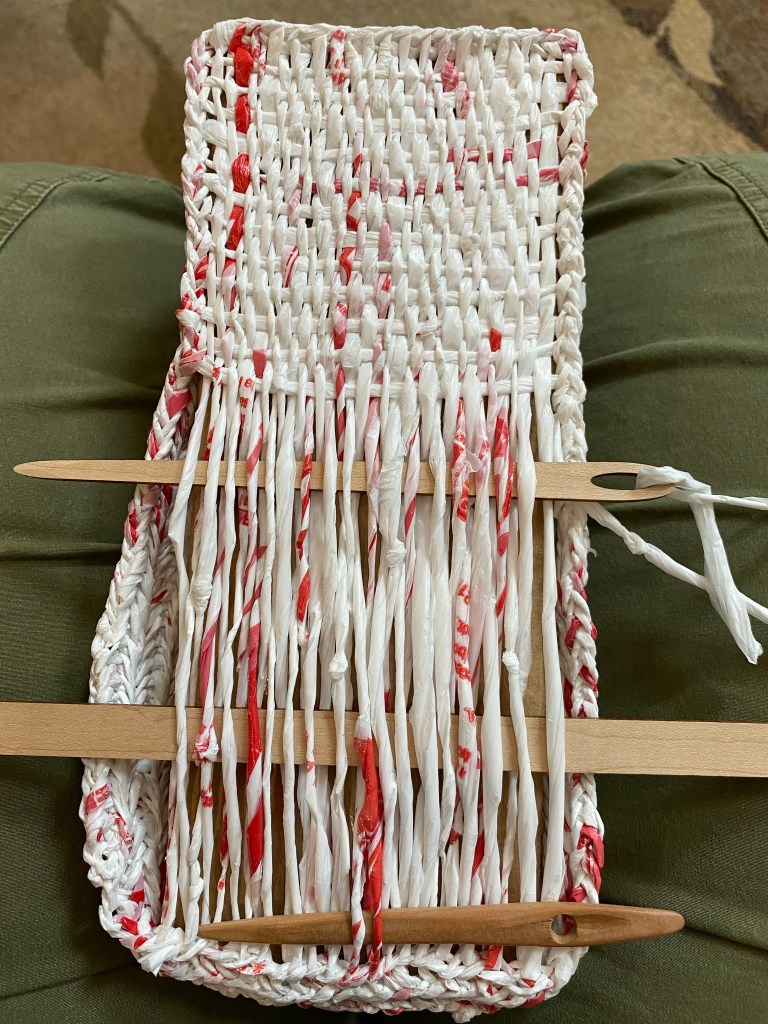
Weaving the weft on the bottom

I had to adjust my spacing as I went; I started off putting the weft through every edge stitch, then ended up every third stitch to get the weft to be straight. At the end, I wove in the tail and clipped it on the inside of the bag. (Only one tail to weave in, hurray!)
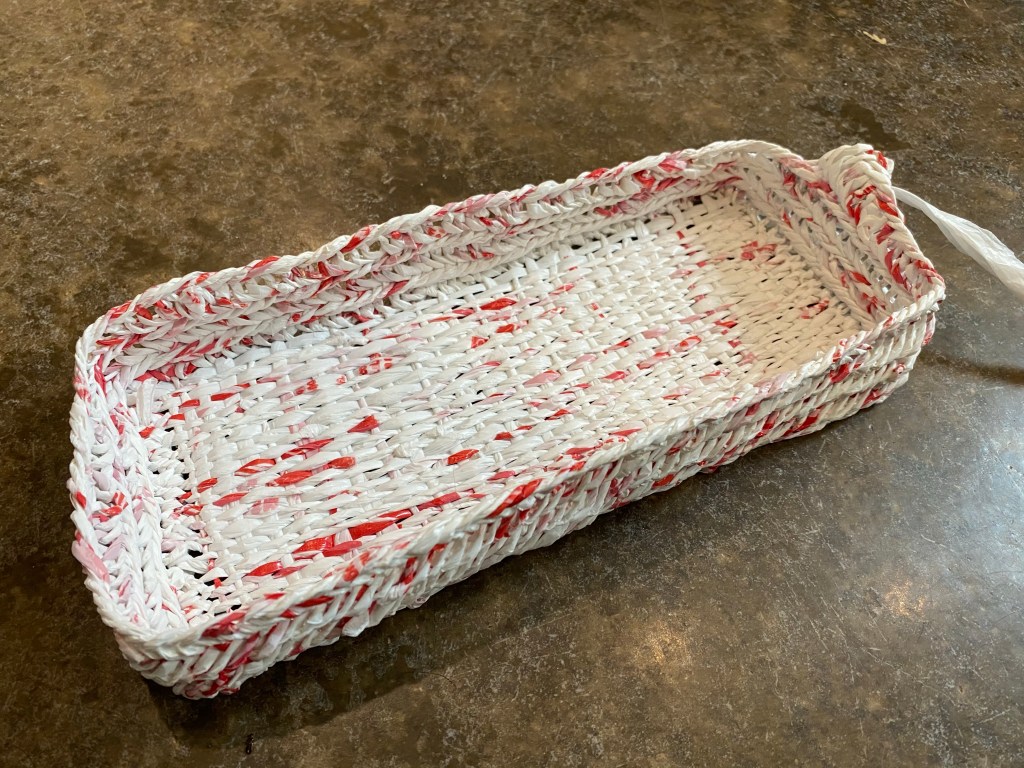
Woven base for nålbound bag (in progress)

This was a very pleasing experiment. I really like the woven base: it feels nice and is sturdy. I will continue to build up the sides with nålbinding, but that will take awhile. I’ll post an update when it is done!
Spinning as I go: plarn

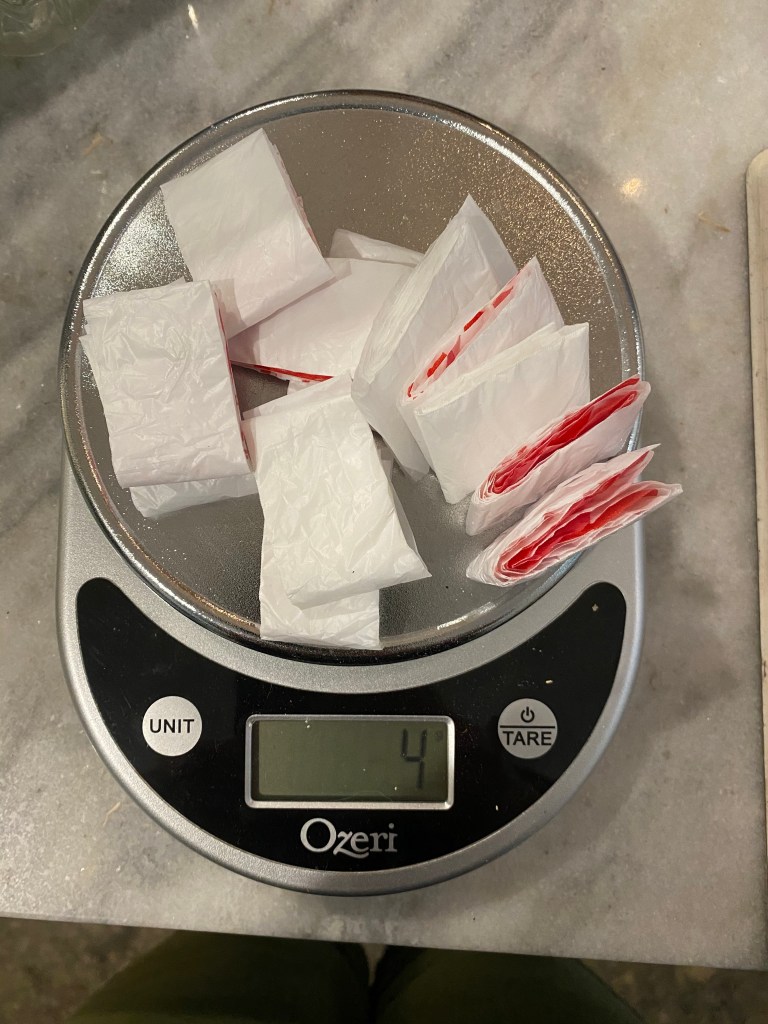
A crafting friend recently reminded me of the value of plarn. Plarn is yarn made from plastic (PLastic-yARN). Typically it is used in recycling efforts by giving new life to used shopping bags. (And oh the things people make, just image searching plarn is its own rabbit hole.) The attraction of cutting up bags is that if you cut them from side to side you end up with loops, which are very easy to connect into longer pieces. So I set my grocery bags out to dry, then cut them into loops by folding them length-wise several times, squeezing out the air, and cutting about one inch sections. (I found the measurement of the end digit of my tallest finger is one inch. Convenient.)

Sections cut from a grocery bag

I really enjoy nålbinding, and connecting short sections is the exact method needed for this technique. Rather than making a large length of plarn, I decided to attach as I go. But can I spin it too? Well of course. It actually works quite well to attach a loop, use the hook on my drop spindle on the other end of the loop, and spin just that section. (It is possible to put twist into the plarn with a pencil or fingers if you don’t have a spindle with a hook.) Putting twist into the strand makes it more durable and easier to work with when making stitches. The tighter the twist the harder the plarn feels; I prefer to twist until the diameter is about the same as the knot.

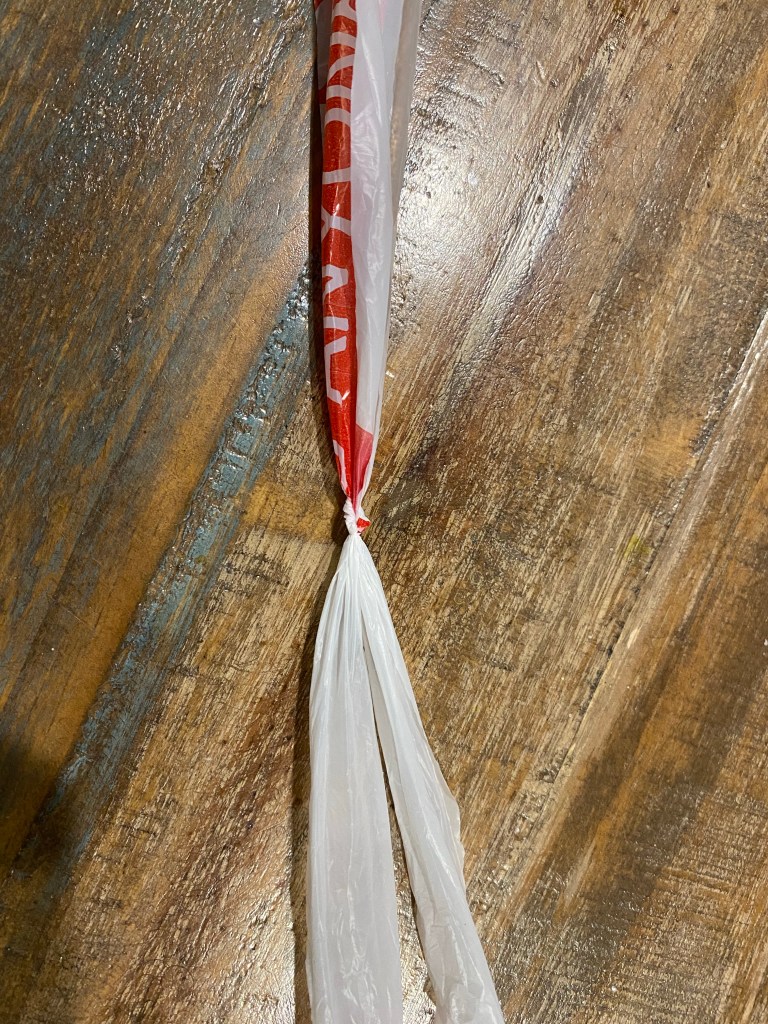
Plastic bag loops attached and aligned
Two loops pulled snug to make a small knot
Drop spindle hook used to put twist in the section

I did a short video to show this technique. (I used a new method for closed captions, so check that out too.) This post is getting rather long, so I’ll talk about what I’m doing with the plarn tomorrow.

Recycled Bottle Wind Spinner

Awhile back I shared my new obsession with bottle cutters. One of the reasons for the obsession was that I really wanted to experiment with the material, and I had the idea to make a wind spinner.

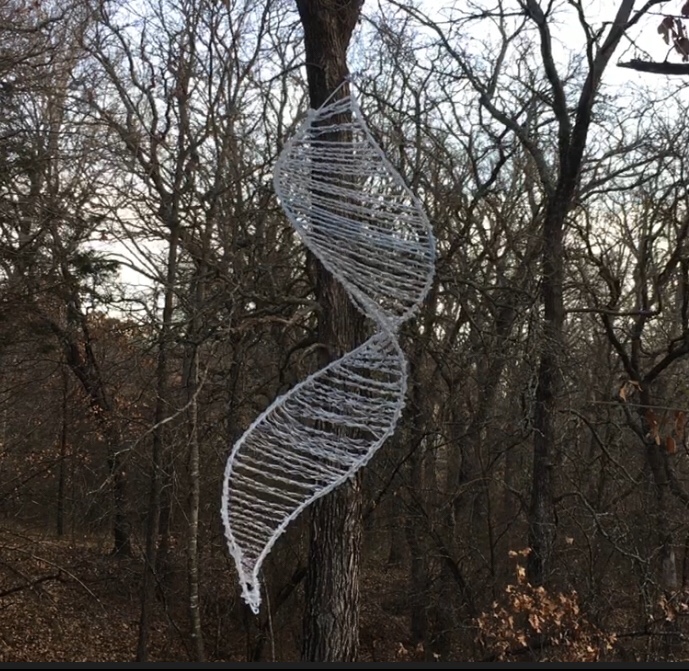
I love the wooden wind spinners that look like they transform their shape as they spin. I thought: “Could I do that with recycled materials?” Turns out I can! The bottle string is light and strong and fairly easy to shape with a little heat. And if anyone else wants to make a cool looking spinner with recycled materials, I made a video to show how I did it.

Not only is the spinner fun to watch in the wind, I hung it near the coop to scare away aerial predators and wild birds that may be carrying avian bird flu. (That is my story and I’m sticking to it. It is not at all that I have a fixation with kinetic sculpture.)