Recycled cotton plant holder

I found a source of recycled cotton macrame cord from RockMountainCo, based out of Colorado, and some recycled glass beads from our local vintage store, The Haps. The combination of recycled/upcycled materials seemed very appropriate to make macrame hanging plant holders requested by my sister.
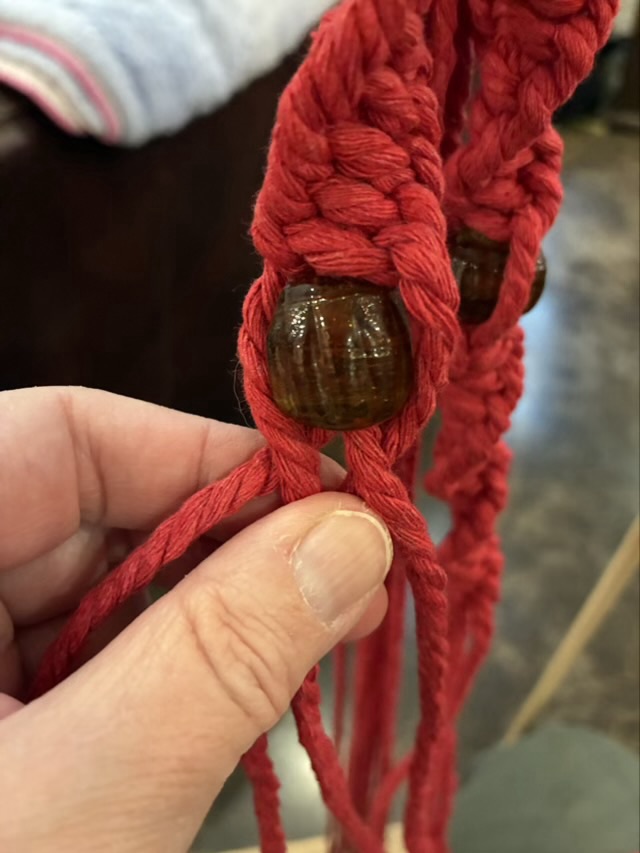
Photo description: close-up of the macrame in progress, adding a bead to the center two strands of a half knot twist

I found that my bag twining loom works well to hold macrame in progress, and to display the finished piece.
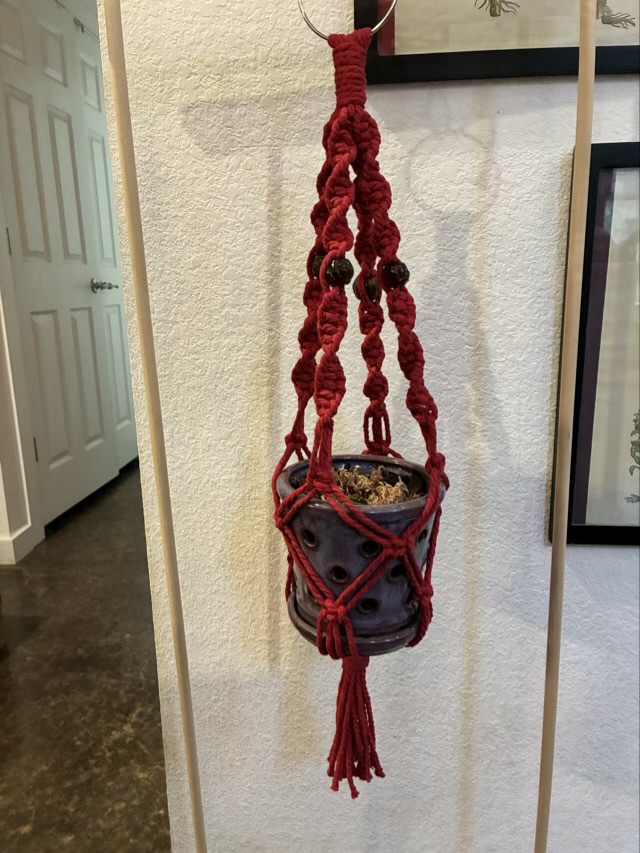
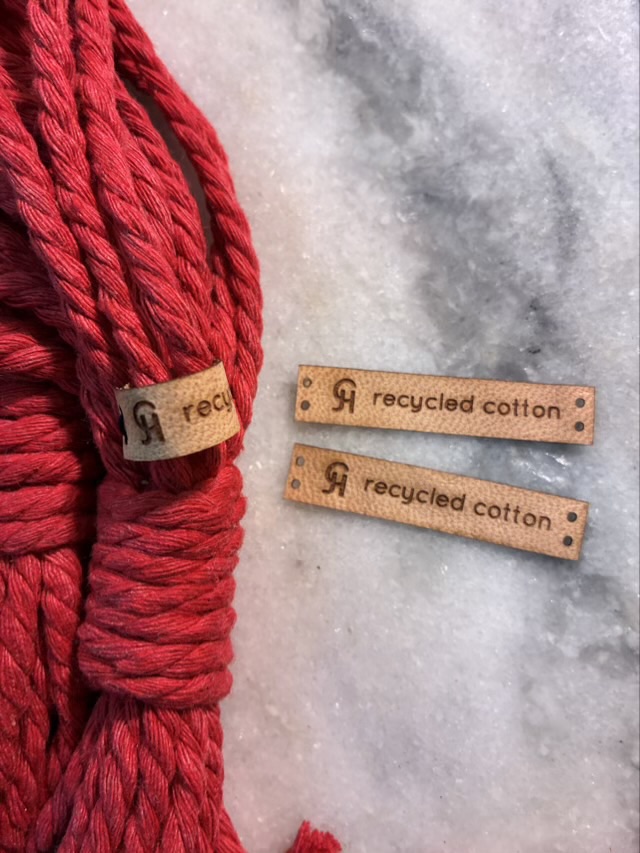
Photo description: hanging macrame pot holder made from red recycled cotton cord and recycled glass beads hanging from a bag twining loom
Photo description: leather tags marked with my signature and “recycled cotton”, one sewn into a circle on the macrame hanging

Technical details: I cut 8 lengths of 4mm cord 99 inches long, folded them in half through a welded metal ring, lashed the strands together with 30 inches of cord, made four half-knot twisted sections with 15 knots on either side of the bead, then three sets of offset square knots to make the body of the holder, finishing with another 30 inches of cord to lash the strands together at the bottom.

In macrame, when making a half-square knot twist, the two center cords function as a core, and don’t get knotted, so the outer knotted cords get short and the middle don’t. To balance this and make the most of the cordage, I used a bead to interrupt the pattern and switch the outer and inner cords. By making the same number of knots above and below the bead, the cords end up the same length. A little macrame trick for those that read this far.
Bobbin fail

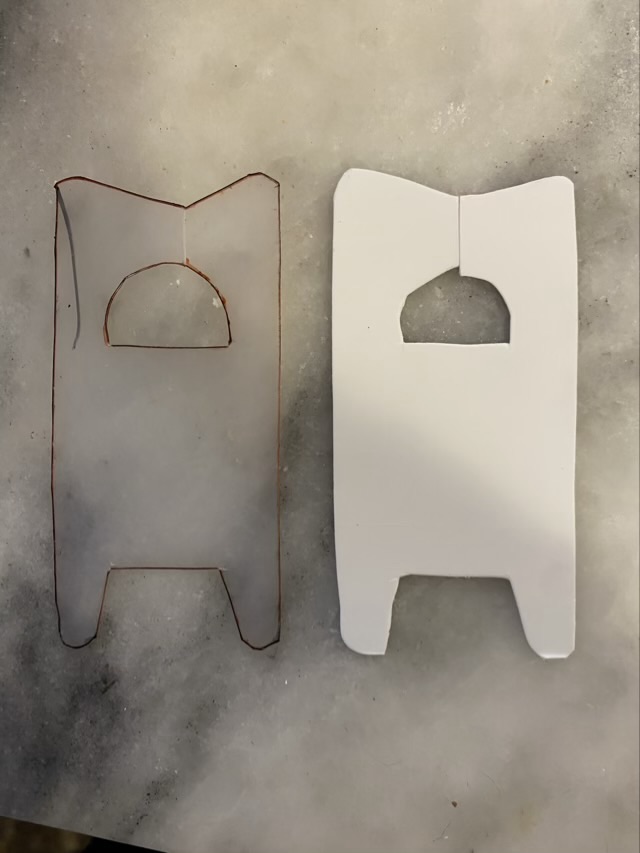
I’ve been cutting yarn bobbins out of waste plastic, as my grandmother did.

Photo description: hand cut plastic yarn bobbins made from waste plastic

I’m not as precise as my grandma, or I don’t take as much time, but I wondered if my new laser cutter could do a precise job for me. I read that the kind of plastic matters. PVC, for example, lets off chorine when heated, which can degrade the laser.

I designed an SVG file of the outline and hole, but left the slit to be cut by hand. The slit needs to be tight to hold the yarn back. I did my first try on a Tide pod container, which is PET (polyethylene terephthalate).

Photo description: three attempted laser cuts in the cut out side of a Tide pod container, with diode laser settings written on the plastic

The plastic melted and cooled, resealing the cut, but not releasing the piece from the base material. The cut the nearly made it through showed bad burn marks on the back where the label was adhered. I attempted to remove the label, but it was firmly attached.

Photo description: back of the cut sample showing the label burned by the laser

The labels on the Tide container have a shiny component, and I wonder if this is why it failed. Hm. Experiments will continue.

Reclaimation

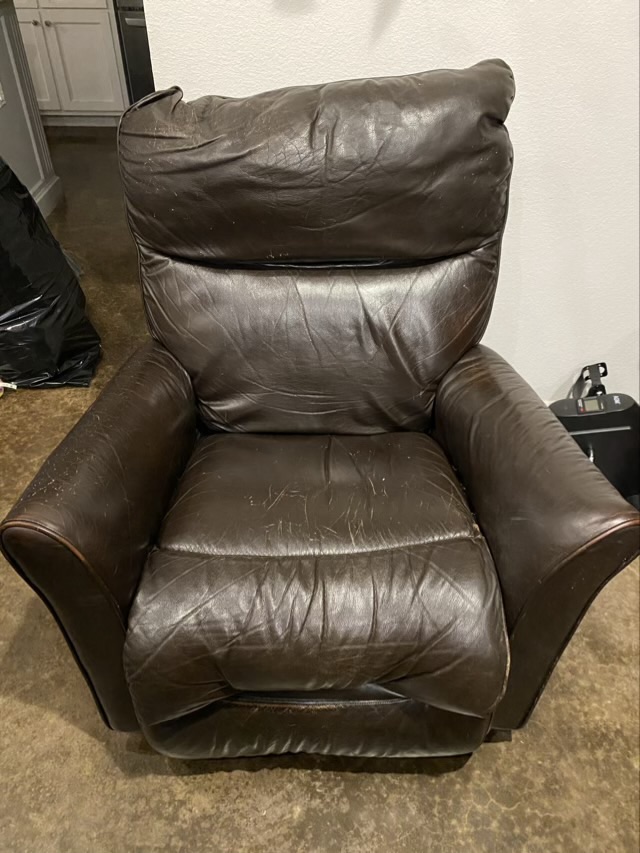
I replaced my recliner. The padding in the old one was breaking down, especially on the arms, causing pain and numbness in my own arm. I tried reworking the existing padding, and then replacing the padding, with no improvement. The recliner mechanism was also staring to go, again. (I did replace that a few years ago by ordering a new ratchet strip, but I even wore that out.) Time for a new seat, but what to do with the old one? It was not all leather, but did have some, could I reclaim it?

Photo description: old leather recliner

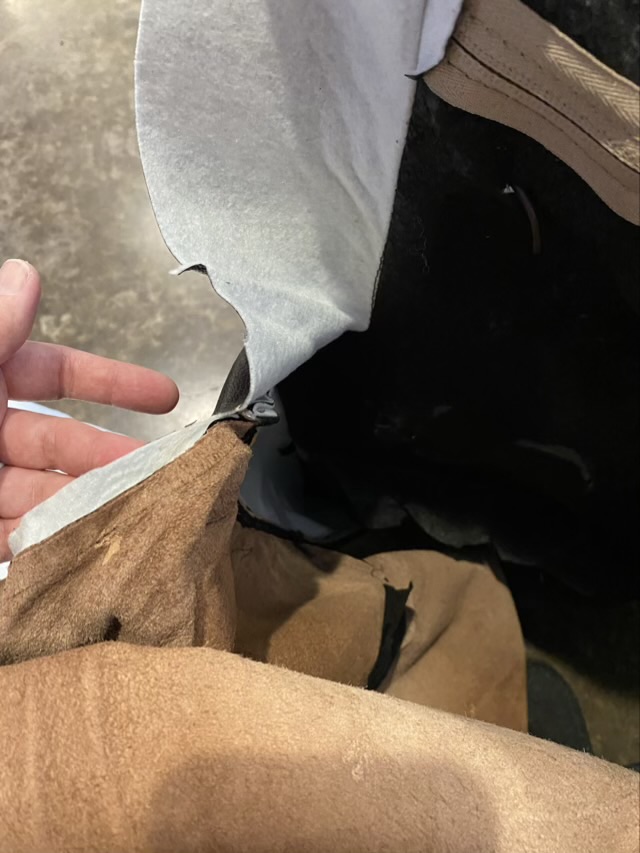
I took a pair of kitchen shears and went after the fabric of the chair.

Photo description: inside the recliner showing the leather (tan) and the faux leather (white)

Deconstructing was not terribly hard. Most of the screws were two sizes of Torx head, and I had the right size screwdrivers. I was appalled at the amount of cardboard inside the recliner, it was a thin sheet of that over the sharp edge of wood that was causing the pressure point in the arm of the chair; the curved slope was an illusion. The hardest thing to remove was the handle for the recliner action.

Photo description: handle removed after applying a wrench to the screwdriver to get enough torque

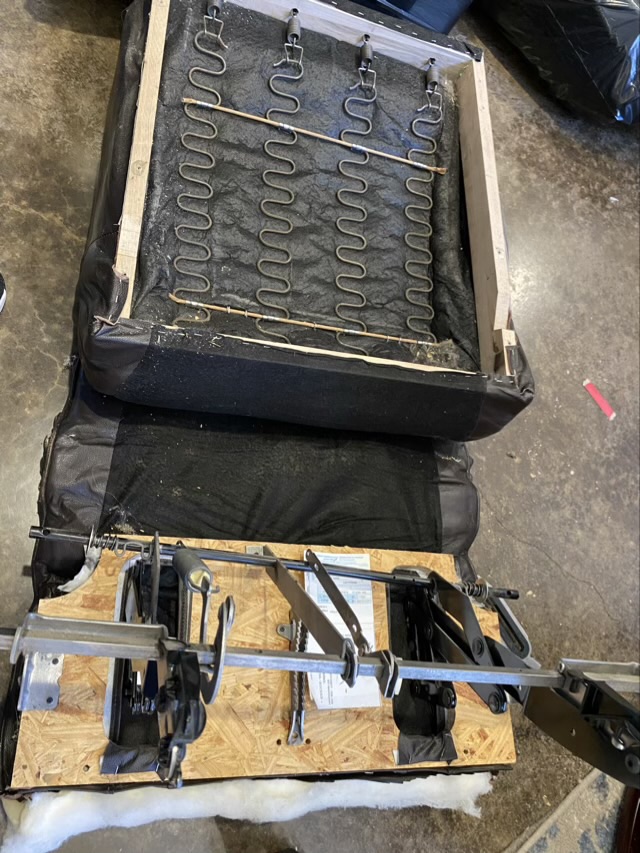
I’m thought about reclaiming some of the steel and springs, but I didn’t have a purpose in mind, and I don’t have the storage space for that much “maybe”. I used leather often, so I knew that was a valuable resource.

Photo description: steel mechanisms and springs inside the recliner

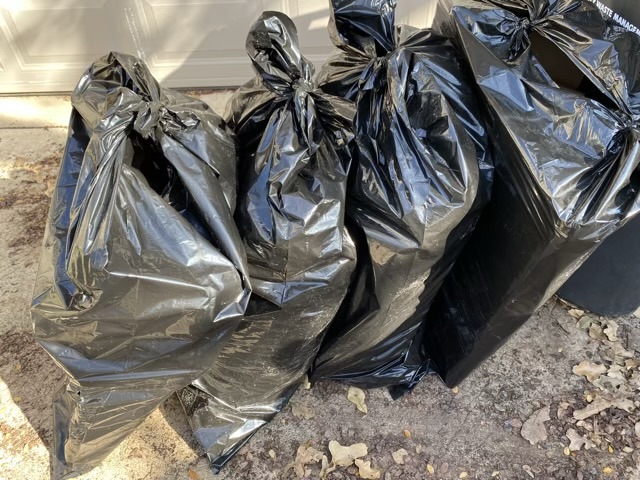
In the end, I reclaimed 2 pounds 9 ounces of leather and reduced the recliner to fit in four black bags, which could be put out with the other trash and not require a special pick up.

Photo description: four large black garbage bags ready for take out

Recycled bobbins

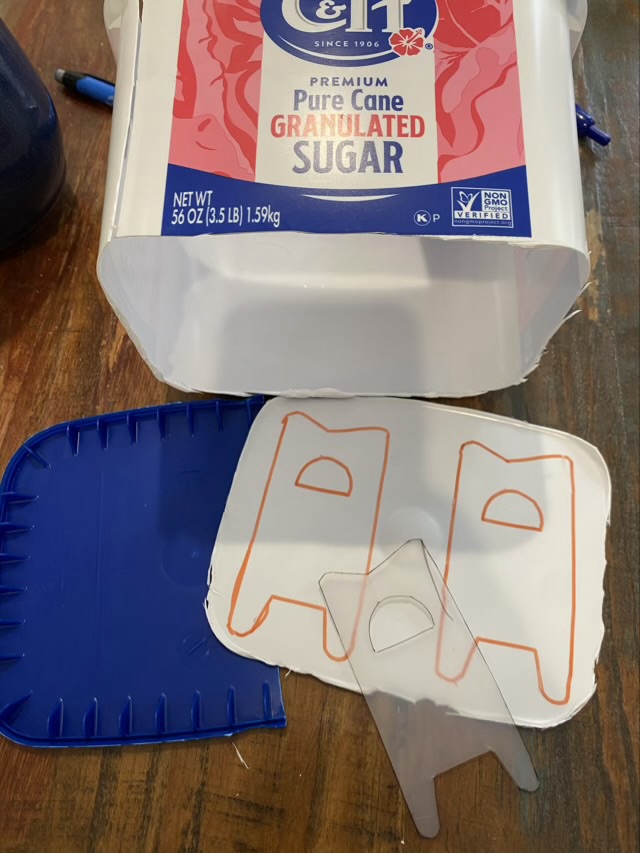
The only sugar container available at the store was a plastic bin. Sigh. Since it was a last minute run to the nearby market, to pick up what I forgot to put on my list, I bought it. All is not lost, though, since the flat sides of the container could be cut to make yarn bobbins.

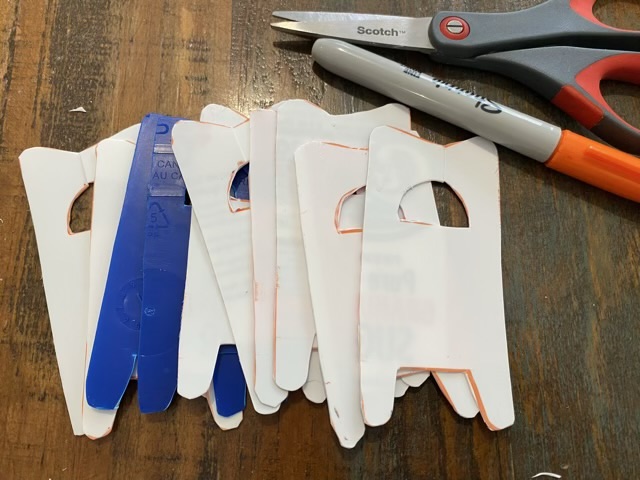
I like these bobbins for knitting and weaving and holding scrap yarn. They don’t unwind far and don’t need half hitch knots to hang from a project. They are made from recycled materials that would otherwise go in the trash. Win. (And yes, I wrote about them last year too!)

Photo description: plastic sugar container cut into sections and marked with a bobbin pattern
Photo description: 10 bobbins cut from one sugar container

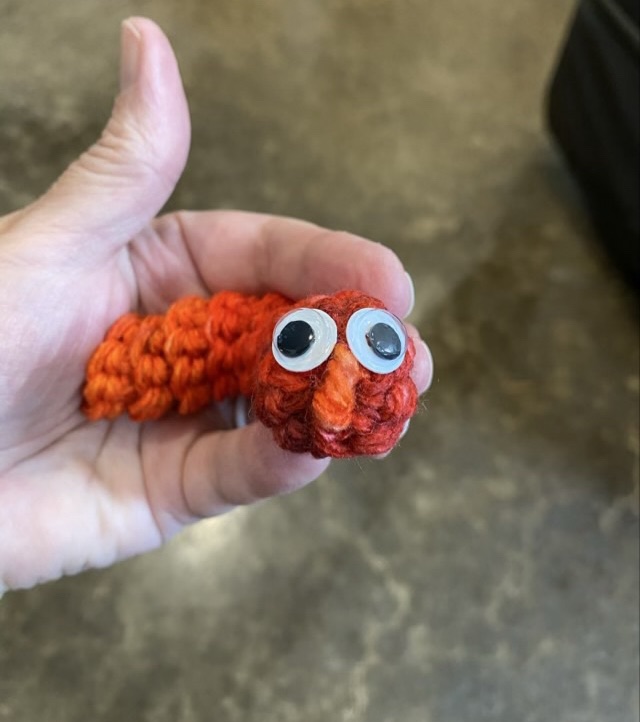
Looks like a muppet

I’ve come up with a worry worm pattern I prefer. I don’t really care for the flat head version, so I put the eyes on the end of the spiral, rather than making a separate head. I’ll share the pattern at the bottom, but I had to show you the familiar muppet face that serendipitously showed up on one worm.

Photo description: red crocheted worm with an orange nose and large googly eyes

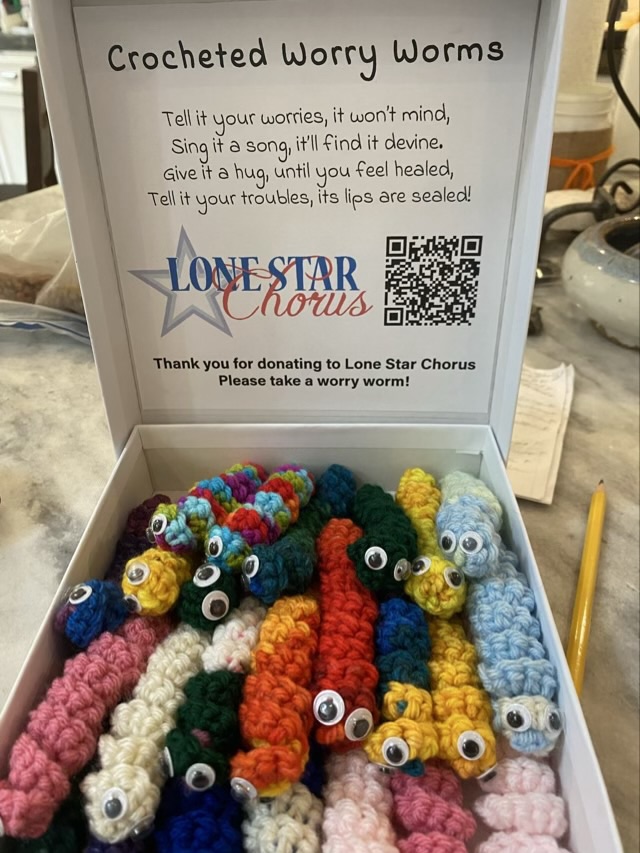
I really like making these with a variegated yarn that has a medium length color change, because then the worm comes out in two, maybe three colors. Shorter color changes are OK, but not as dramatic. I have been filling waiting time making worry worms as a fundraiser for my chorus, as a gift for donations.

Photo description: box of crocheted worry worms in many colors with a poem, Lone Star Chorus logo and a QR code with the words “Thank you for donating to Lone Star Chorus, please take a worry worm!”

I came up with the poem, there are many varieties out there on the web, but I wanted one with singing. The poem is:

Tell it your worries, it won’t mind,

Sing it a song, it’ll find it devine.

Give it a hug, until you feel healed,

Tell it your troubles, its lips are sealed!

To make them, I use worsted weight yarn scraps or variegated yarn. Acrylic is best for this to avoid any natural fiber allergies. I use a size J hook, but different hook sizes will still make a worm, just in different sizes and densities.

I start with a crochet chain, and weave in the tail as I chain. Before you make a chain stitch, flip the tail between the hook and the working yarn, this will catch the end in the next chain stitch. The end will become the nose. Chain 30.

In the second chain from the hook, make 3 single crochets (or half double crochets if you want a thicker worm). Make three stitches in each chain stitch all the way along. The worm will naturally spiral on its own, but can be encouraged by twisting.

Cut the yarn about 8 inches from the end and pull the last loop out. Thread it on a yarn needle and run the needle under three stitches to form the head. Add a sew-on googly eye, run the needle through three more stitches and add a second eye. Weave in the end.

Worm achieved.