I completed the fiber page for my spindle spun Ramie top fiber from Hearthside fibers. Ramie was pleasant to spin and has a cottony feel but with a long staple length. I experimented with three and four ply yarns.

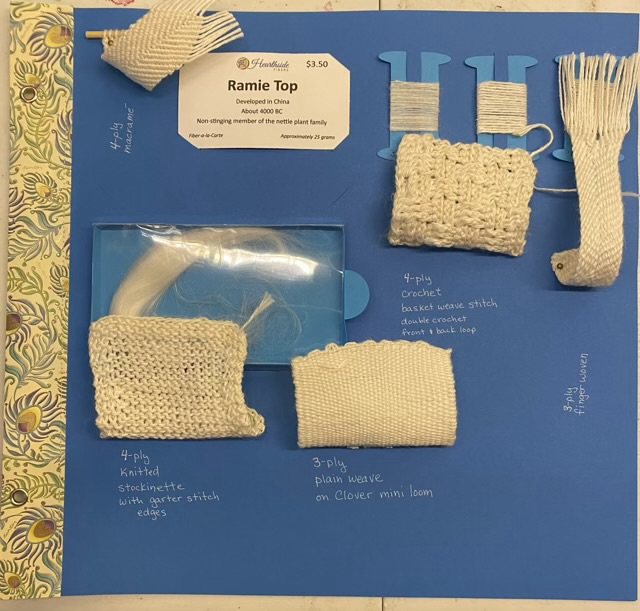

I completed the fiber page for my spindle spun Ramie top fiber from Hearthside fibers. Ramie was pleasant to spin and has a cottony feel but with a long staple length. I experimented with three and four ply yarns.
I’ve wanted to try finger weaving since I heard about it on a Sprang group (it was misidentified as Sprang). In Sprang, there are no weft threads, the vertical warp threads are overlapped consecutively. In finger weaving the warp threads become the weft threads, similar to braiding, but with more threads. I watched video after video before I found this video showing the weaving going out from the center, which made sense to me, and seemed balanced.


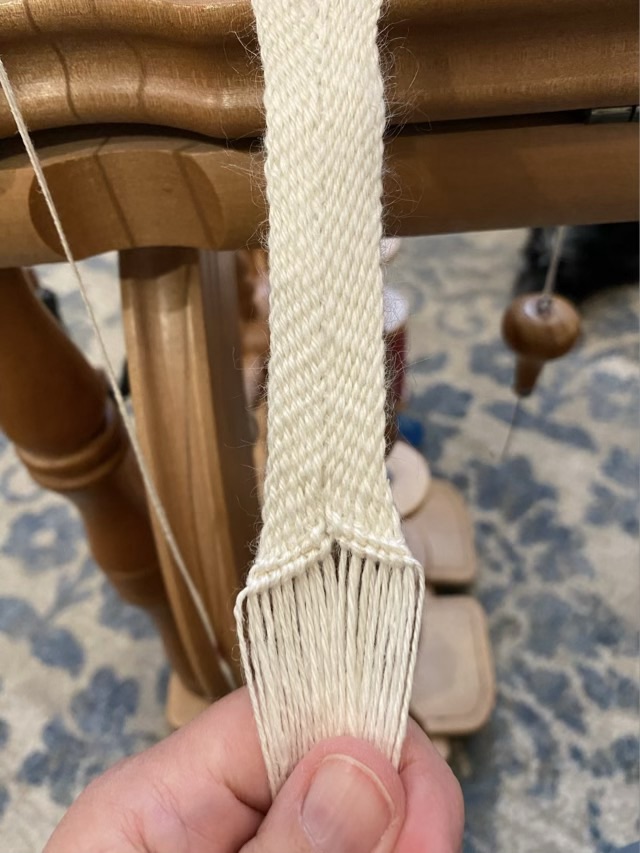
I wasn’t sure how to end the weaving, I’ve seen some bands just knotted at the end, but I want to put it in my fiber book, so the finish needed to be relatively flat. I opted to run two rows of double half hitch knots along the angles of the weave, which I think came out complimentary.

This was an interesting exercise, and finger weaving is a nice addition to my craft repertoire. It is nice that it can be done by anchoring one end, rather than needing a loom, and it comes out thinner and more flexible than macrame. It is more interesting with multiple colors.
Chain-plying yarn takes a single spun yarn and makes a three ply yarn from one bobbin or ball. The spinner makes long chain links, like in crochet, but each chain can be the length of an arm. There is no waste as the yarn is always tripled to the end of the length. It is a very useful technique especially if the spinner wants to preserve a color gradient, or doesn’t want to waste any precious material dividing the ball into three and risking running out of one ball before the other two. It does leave its mark, though. Each chain has a bend of yarn, a hiccup in the twist of the ply. This is difficult to see in a finished piece, but in a half-woven swatch, the chain loop ends are more obvious in the warp.
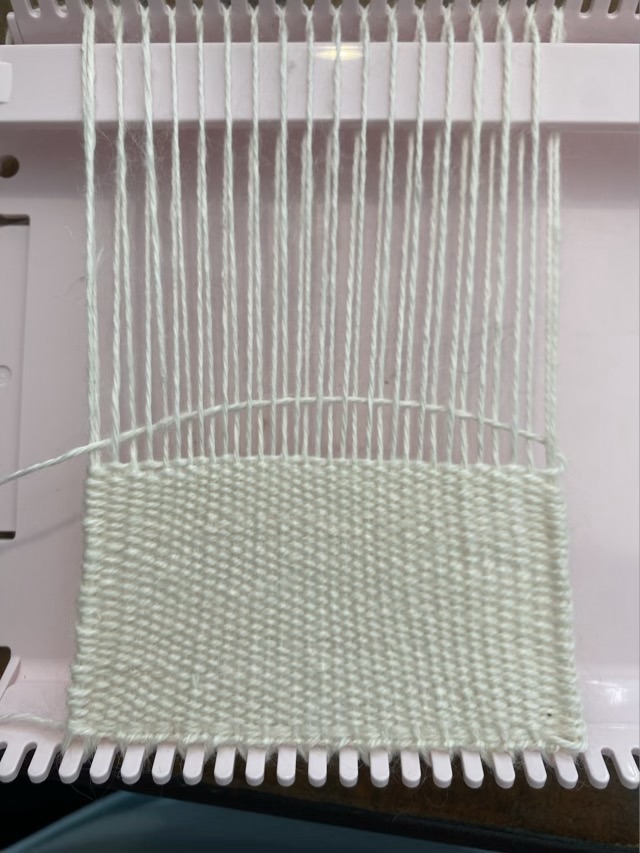

These chain bumps are more of a concern if the weaver wants to leave a fringe. I wove in the ends and trimmed them. To fix the missed warp in the weave, I took a small piece of yarn and sewed it over the warp and tied it in the back.


The chain bumps are not readily visible in the end piece, but the edges are uneven, and I pushed the weft into the loops left by the loom, arcing the bottom of the swatch. Which is why I swatch, I learn so much from each piece.
I like chain plying single spun yarn because I don’t need three bobbins and a Lazy Kate to get a three ply yarn. I use a center pull ball and make a crochet chain with really long loops. I was unsure about chain plying my Ramie fiber because I’ve read that it isn’t a good technique for bast fibers like flax because flax doesn’t like the sharp bends which happen at the ends of the loops. Flax is not as flexible as wool. Ramie is also a bast fiber, taken from the stem of the plant, but it chained plied quite well; the chain loop ends disappeared into the ply twist without little stubborn loops.
For chain plying with a drop spindle, I prefer to sit and park my spindle by my leg, then pull a loop as long as my arm. I keep the end of the loop open with a finger and the yarn ball in the same hand, then I can suspend the spindle and give it a spin in the opposite direction of the single.
I finished spinning a single of my Ramie fiber sample. The long staple bast fiber was easy to spin fine, and was enjoyable to work with.
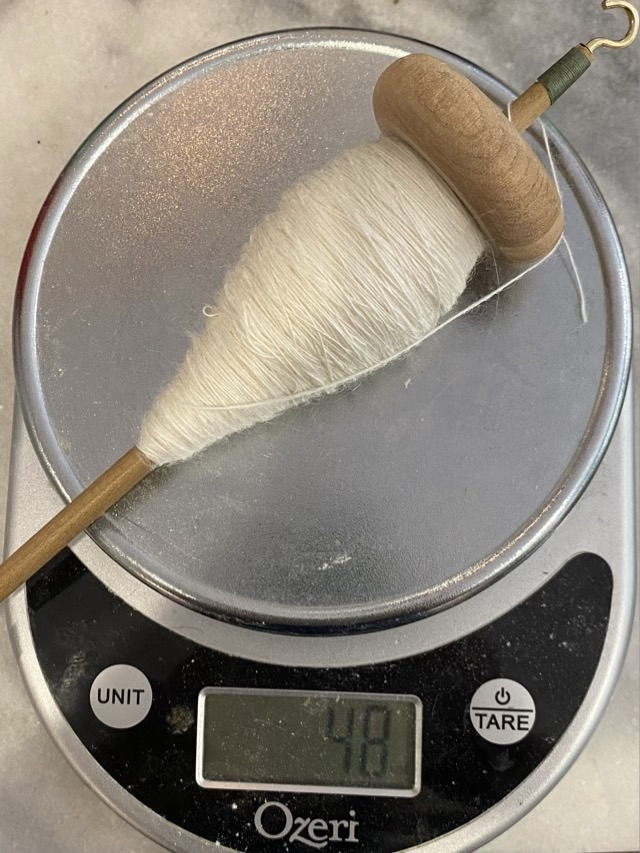
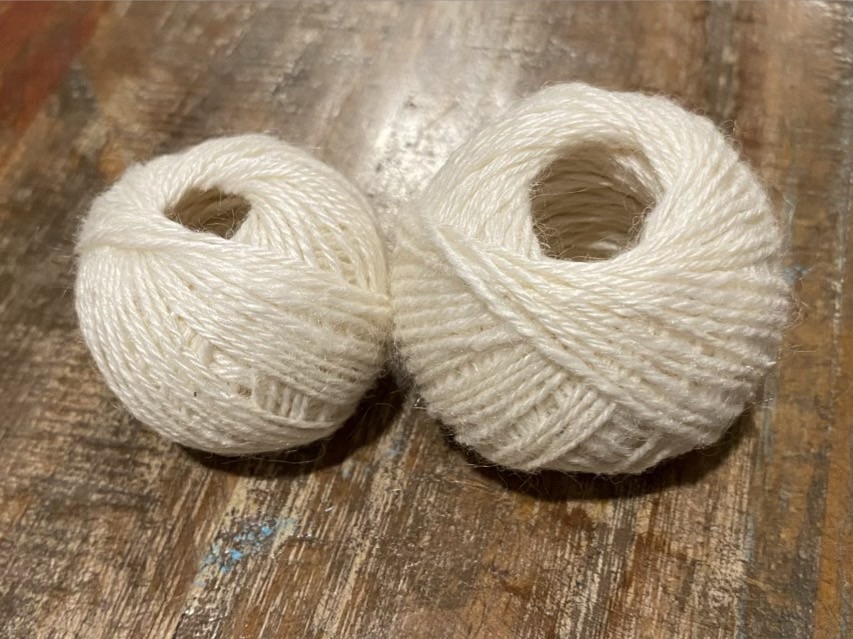
It is so fine that I decided to divide the yarn and make multi ply yarn. I weighed my full spindle, and since I had the spindle weight marked on the whorl (22g), I knew I had 26g of yarn. I wrapped a center pull ball of yarn that weighed 12g and set it aside to try chain plying, which results in a three ply yarn. I then wrapped two 4g balls and a 10 gram ball. Oops. No worries, I decided to do a four ply by using both small balls, and taking from the inside and the outside of the larger ball. It was tricky to handle, so I made a plying ball, which means I wrapped the four strands of yarn together, without twist, into a center pull ball. There were still some tangles, but they were manageable. I could then add twist as I pulled the four strands from the middle of the ball.
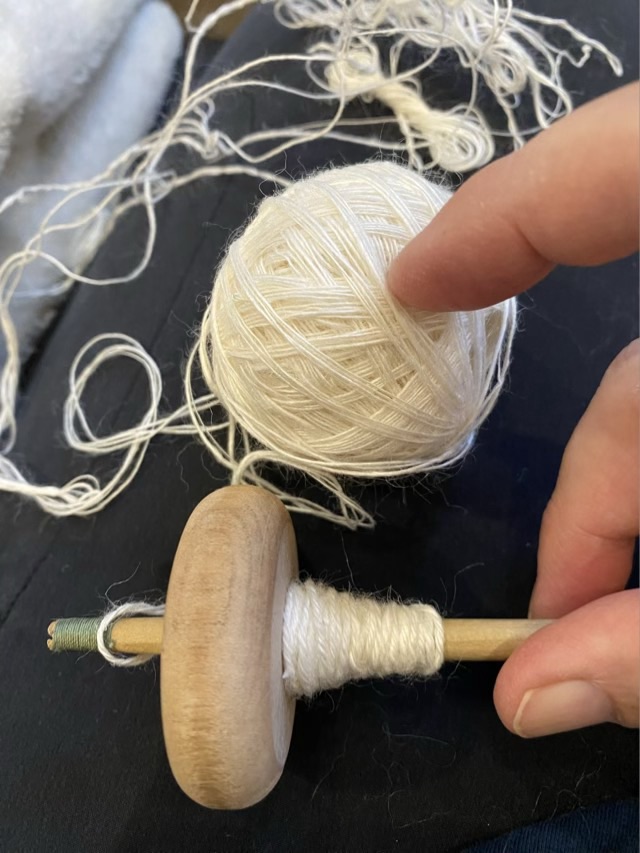
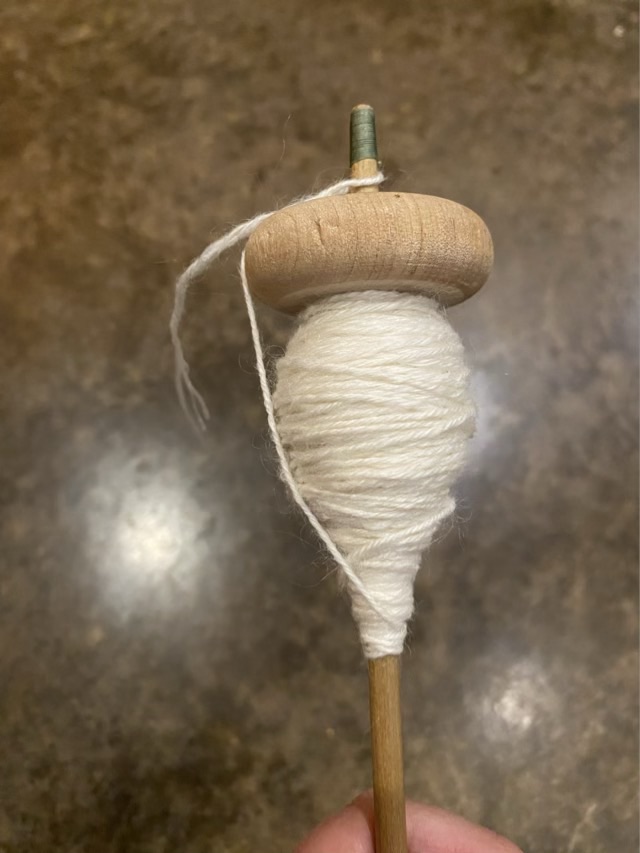
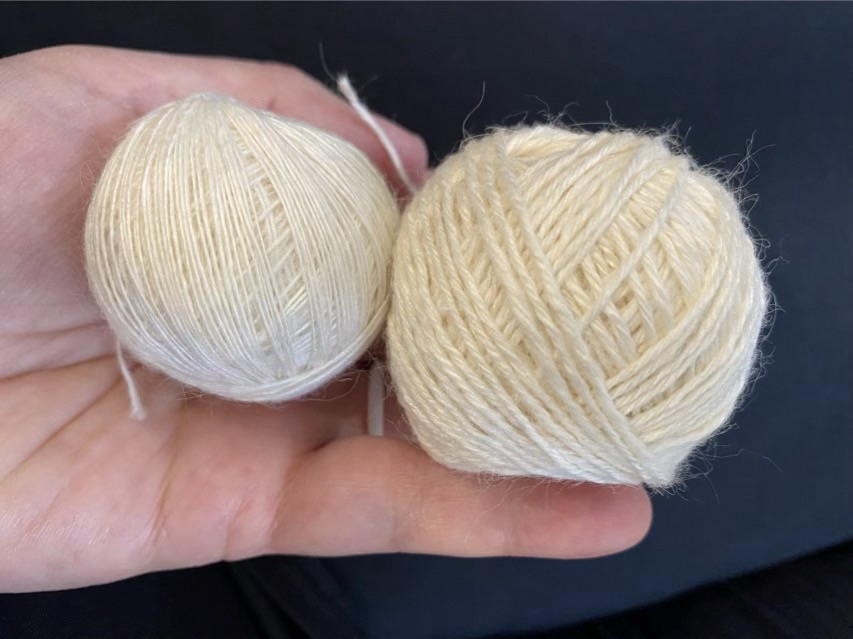
The rather rough single spun yarn felt much softer once it was plied into a multi-strand yarn.
 Critters and Craft