Plethora of Potholders

So I admit, I didn’t just get one set of potholder loops, but several, and experimented with color and weave pattern for weeks using a Pro Friendly Loom. This isn’t the smaller sized loom usually given to kids (which, if you want to give your kid the experience of weaving, wrap yarn around some cardboard and give them a blunt needle, then go to potholders). The Pro Loom produces large thick squares that are ideal in the kitchen. A nice touch is adding a metal or wood ring to the final loop, which is aesthetically pleasing and secure. Piglet’s Potholder Patterns has more ideas than you can make with 10 bags of loops, and is a lovely rabbit hole. Since the potholders are cotton, they are washable. Friendly Loom recommends washing them in a washing machine and hanging them up to dry.

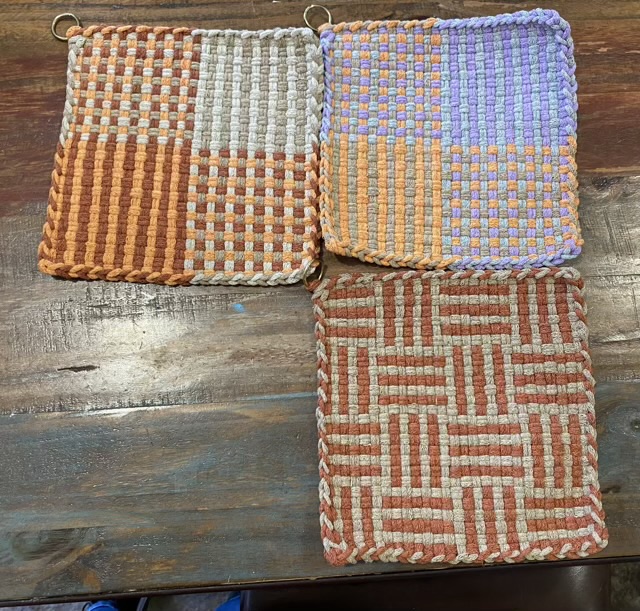
Photo description: eleven pro sized potholders in purples and oranges with various patterns
Photo description; three more potholders in different colors

I still have a few odd loops left, which is OK, they might find their way into a potholder eventually, or be used in a different way.

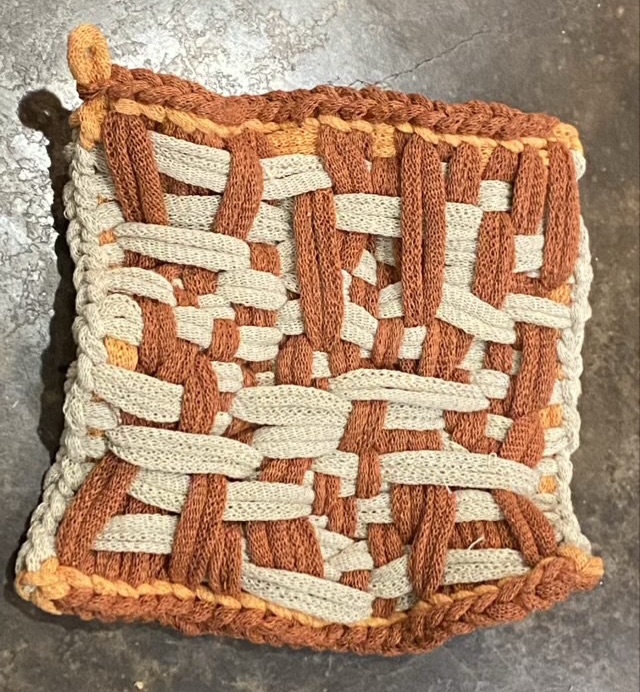
Attempted Rick Roll

I think “Rick Rolls” are hilarious. I loved Rick Astley’s song “Never Gonna Give You Up” when it came out (bass!), and it amuses me that it is now a cultural prank to deliver the ear worm in a sneak attack. I saw that someone used Minecraft blocks to build a QR code that went straight to the YouTube video. Nice. Since I have potholders on the brain, I thought maybe I could weave a QR code if it was a small one, like a Rick Roll. I didn’t want to buy black and white loops for an experiment, so I used the darkest and lightest loops I had on hand.

Photo description: Pro pot holder loom woven with brown and cream (and a couple of orange) loops into a QR code pattern

To get the right color options for each square, I strung all cream for the warp and all brown for the weft. There were some very, very long floats (floats are sections of weft that aren’t woven over under each warp thread). That made for a messy weave, and to lock in the sides I twisted the last loop. It didn’t really matter, the long floats made a messy grid and the picture didn’t scan. Bummer. When I took it off the loom the whole weave collapsed in shame at the audacity. (Ok, so not the impudence, it was the long uneven floats. I’m not a fan of floats.)

Photo description: potholder off the loom that has become a tangled mess due to the uneven and long floated weft loops

I did recover the loops for another project. The idea of weaving a QR code is not dead, I have some ideas on how to attempt future dastardly ear worm traps.

Potholder tips

As I’m going through my Pumpkin Spice Friendly Loom cotton loops and weaving potholders, I’ve found a few tricks that help my process flow.

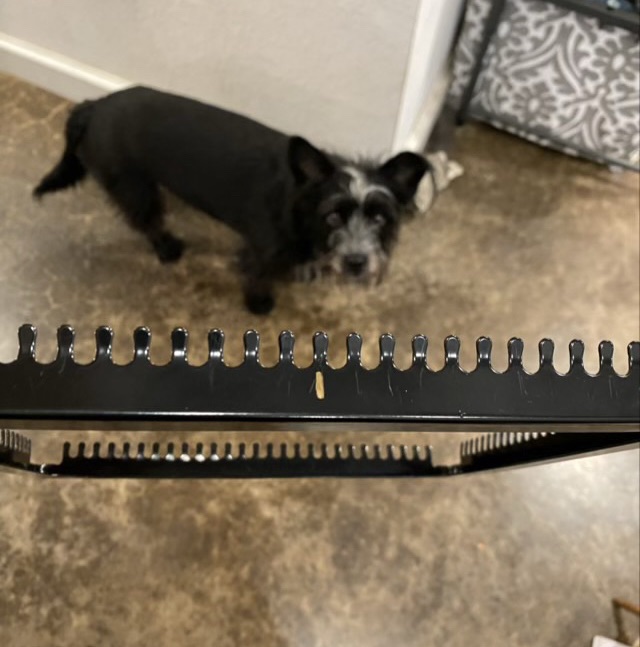
Marking the center peg of the Pro Loom helps reduce counting. I used a metallic Sharpie to mark the 14th pin on all four sides of my loom.

Photo description: Pro sized Friendly Loom marked with a gold pen at the middle peg, black dog looking up at the camera in the backgound

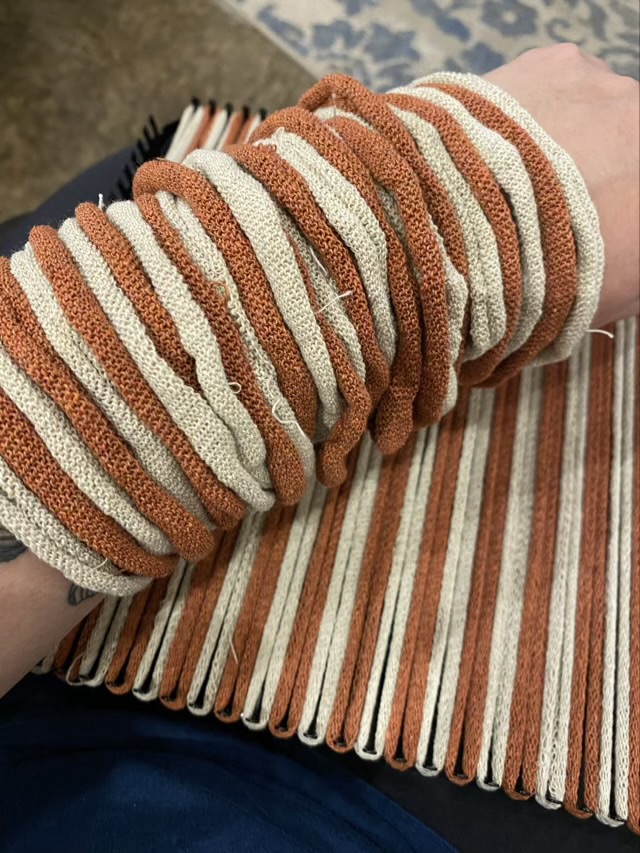
Rather opening and closing the bags every time I need a new color as I weave, I loaded my arm with cotton loops in the order I need. The loops are large bracelet sized and quite comfy to wear. This speeds up weaving time as well, since I’m not fumbling for the next color.

Photo description: Pro loom with warp set with alternating colors of spice and linen colored loops and my arm covered in the same alternating colors for the weft

This is the biggest thing, y’all. I stumbled across a vast repository of potholder weaving patterns. Piglet’s Potholder Patterns has over 600 weaving patterns in very easy to read charts, for free. Piglet Evans and Matthew Simon Cavalletto do a fantastic job with the website and have patterns for a variety of loom sizes as well as blank pattern charts. 600 pattern possibilities, I may have swooned.

Photo description: Pot holder woven with spice and linen colored loops along with the weaving chart from Piglet’s Potholder Patterns called Floating Circle

I love optical illusions and just had to try the Floating Circle pattern, which uses straight lines to trick the brain into seeing a circle. So neat.

Couldn’t resist

Friendly loom has my number, or rather, my email address, and had a sale and a color collection called “Pumpkin Spice.” I couldn’t resist, especially when I found out they had an online design app. Ooo.

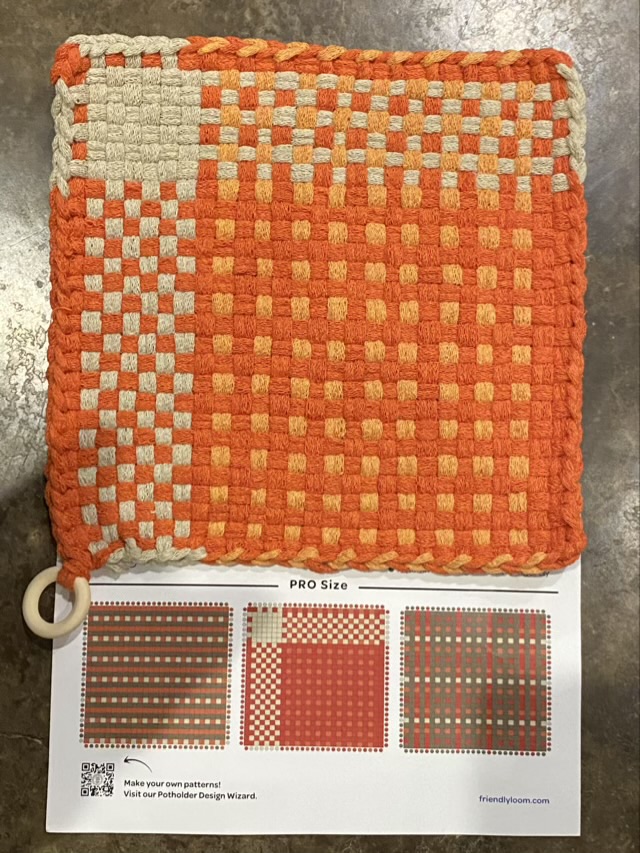
I made one of the designs they suggested on a card they sent, and the card also has a link to the Potholder Design Wizard. Like I said, they have my number.

Photo description: Pro sized potholder made from flax, orange, and tiger lily colored cotton loops with wood ring sitting with the Friendly Loom design card with QR code

I ordered the wood rings too, since they are such a nice way to tie off the last loop, and I didn’t know about them before either. Ooo.

Potholder: spiral

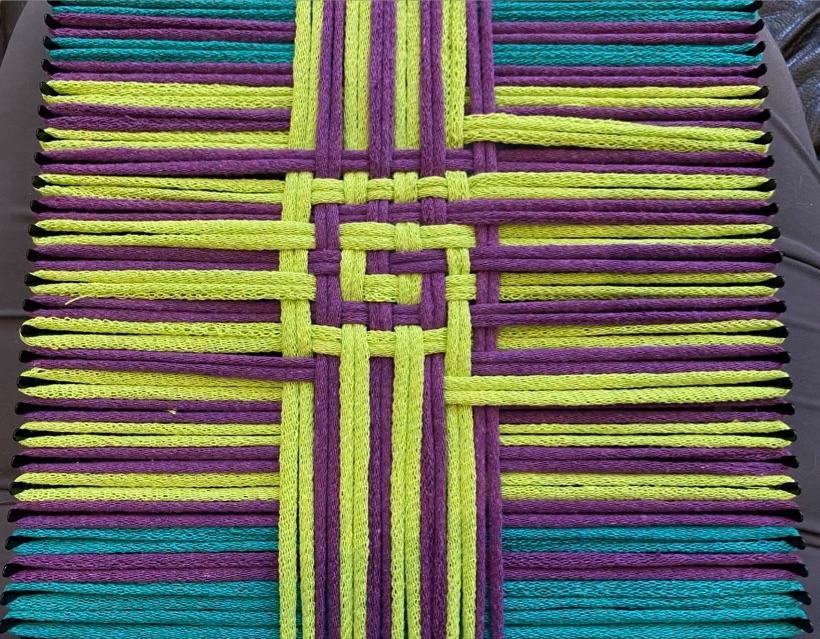
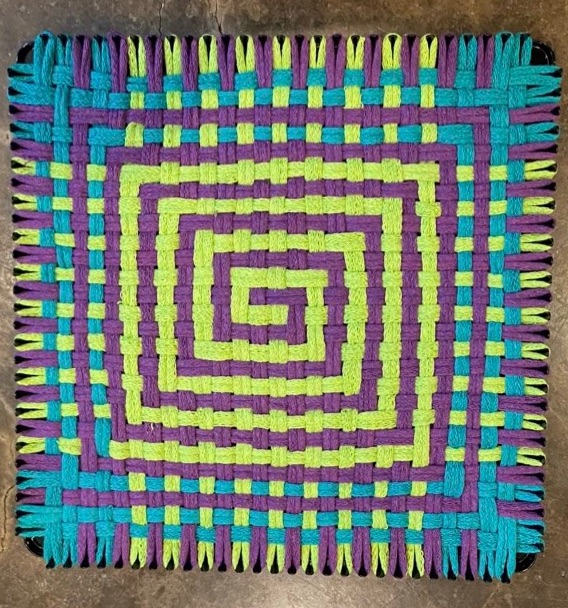
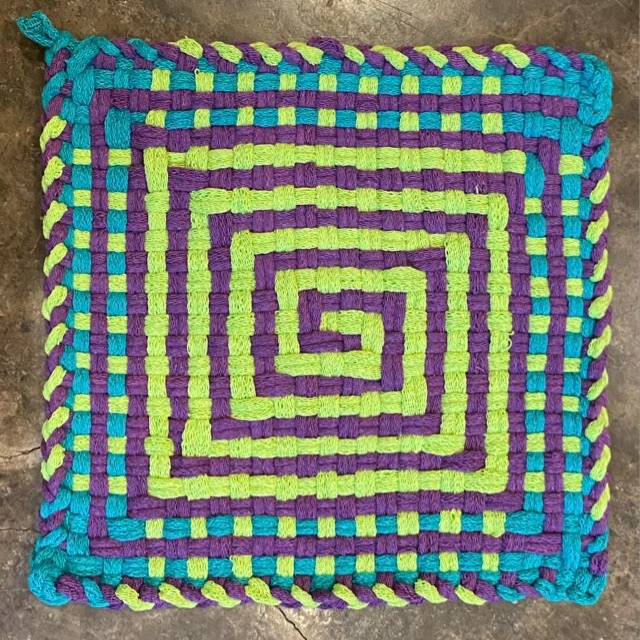
Once again I was down to the last set of cotton loops for a potholder loom. I actually started several patterns gleaned from Pinterest, didn’t like them, and took them apart. Once woven, the knitted cotton loops are quite robust, but if woven and unwoven repeatedly, they have a tendency to unravel. I needed to make a choice and stick to it. I love spirals so decided to tackle a spiral pattern potholder. This was easier decided than done. I did find a picture of a spiral potholder, but couldn’t wrap my head around the sequence of under overs working straight across. I ended up working from the center, slowly adding loops on each side and meticulously tracing the spiral, fixing the woven path as I went.

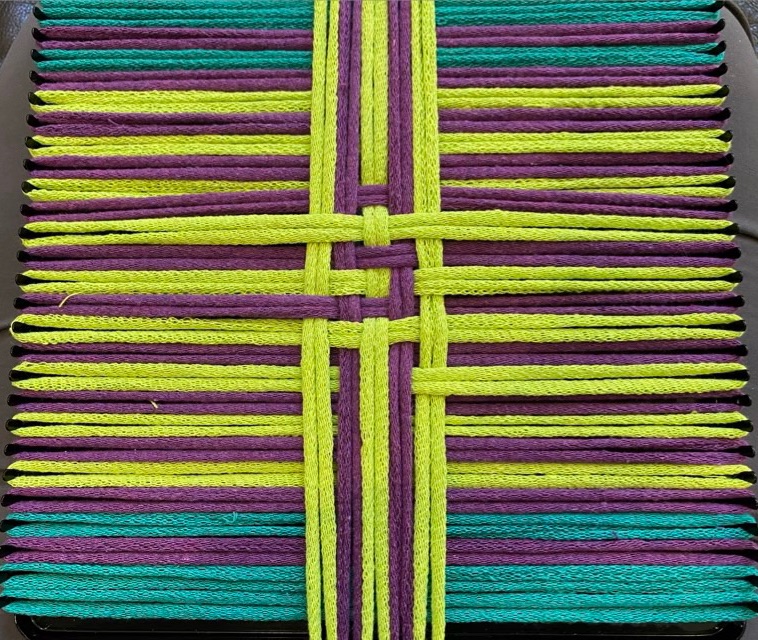
Photo description: potholder pro loom with horizontal loops set and five vertical loops woven together only in the center
Photo description: more loops added, the spiral growing out from the center of the loom
Photo description: spiral is larger
Photo description: weaving complete, the spiral disintegrates toward the outside because I ran out of purple loops

The key to the spiral is that sometimes loops go over two, rather than one opposing loop. These floats happen at the corners when the color needs to be continuous. The order of loop color is the same for the vertical and horizontal.

Photo description: finished potholder with chain edge and corner loop
Photo description: back side of the same potholder showing an equally interesting V pattern

I managed the make this whole week a throwback with this series of potholder experiments! The loops are now all gone and the looms have been absorbed into my weaving tool box. I plan to use the pin looms with yarn next. Tomorrow will be an actual throwback post.