
I have decided to name my 3D printed spindle design a “Phase Spindle”. It takes on many aspects of traditional spindle and tool design and combines them to increase the functionality. The barrel shape of this whorl-less spindle comes from the Scottish dealgan, and is used to create a center pull ball as you spin. Where the dealgan has a flat base, this has a point so it can be used as a supported spindle as well as a drop spindle. The head of the spindle has grooves to bring the yarn closer to the center of the spin and stabilize the spindle. There are two grooves so they work spinning clockwise or counterclockwise. The center of the spindle is hollow to reduce weight. As a bonus, the cavity is large enough to add beads if the user wishes to add weight to the spindle. The spindle is made of Tough Resin, which resists breakage when dropped, better than wood.
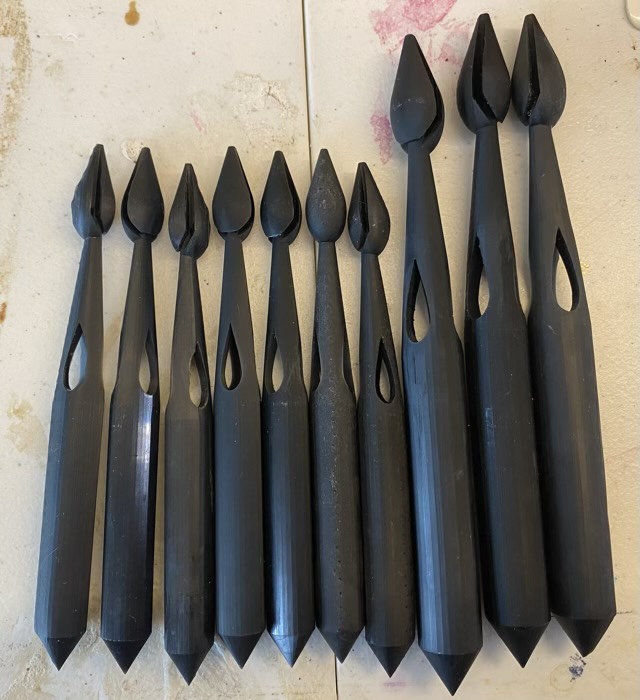
This project has been on the shelf for a while because I needed to reevaluate the head design. The printed spindle had a convex head, which didn’t give enough finger tip contact for flicking the spindle into action. I sanded each head into a straight to slightly convex curve to make spinning it easier.
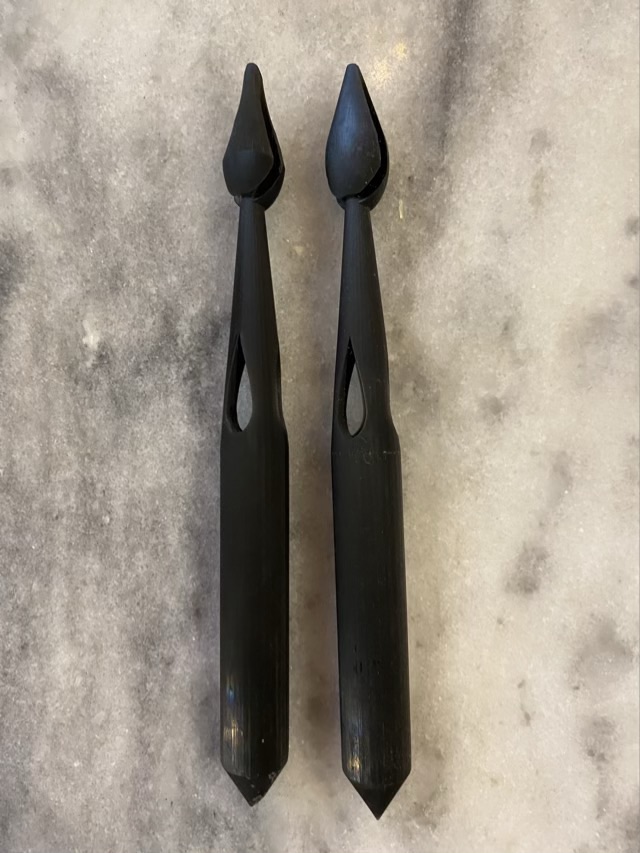
One side of the spindle has the lovely chatoyancy created by the precise parallel lines 3D printers make, but the other side had artifacts from the support structures. I sanded these smooth and used a stencil that I designed and cut out of removable vinyl to paint on a moon graphic.

To seal in the paint and protect it, I finished each spindle with a double coat of micro crystalline wax. The wax helps enhance the color of the resin as well.
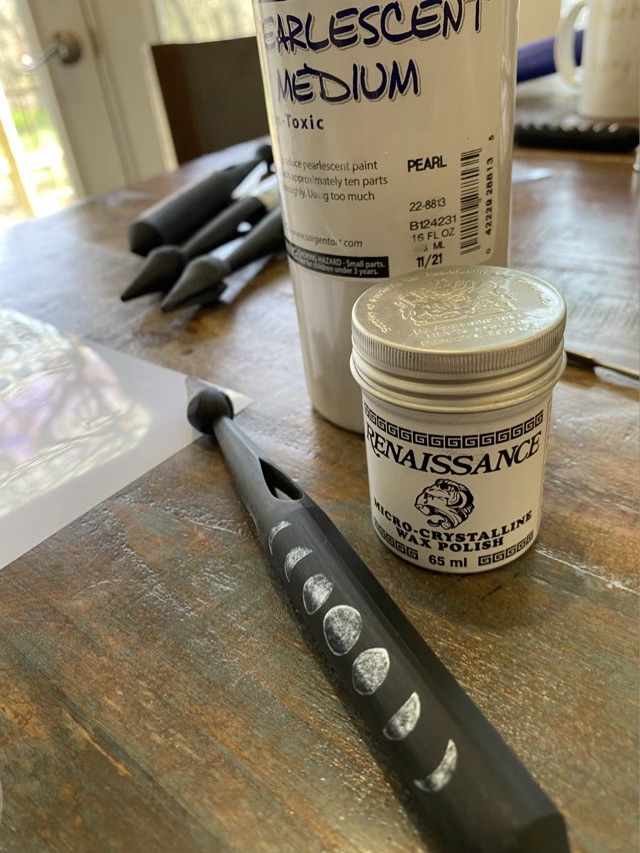
I quite like the way the moon graphic came out. As a bonus, I also have moon phase stickers weeded from the stencil.
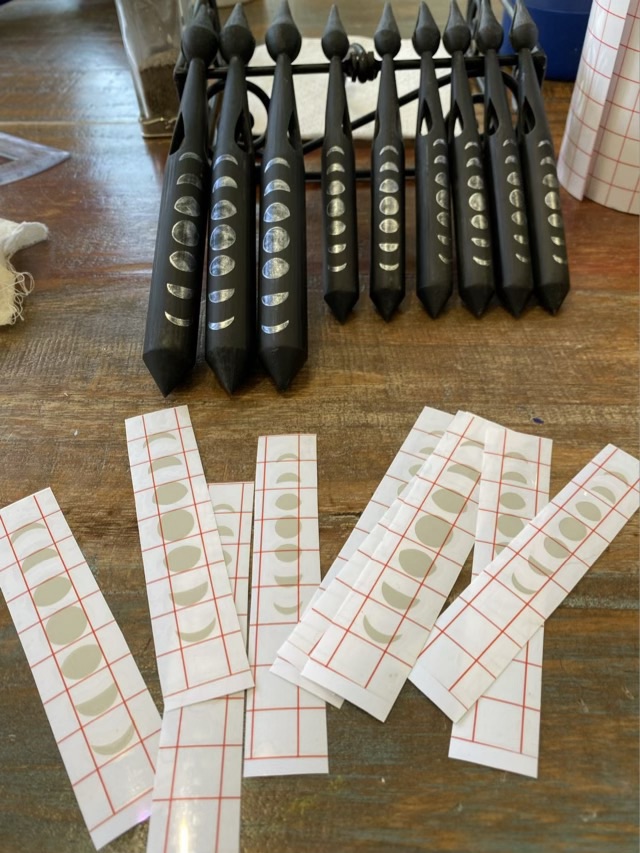
Next task: packaging.
 Critters and Craft