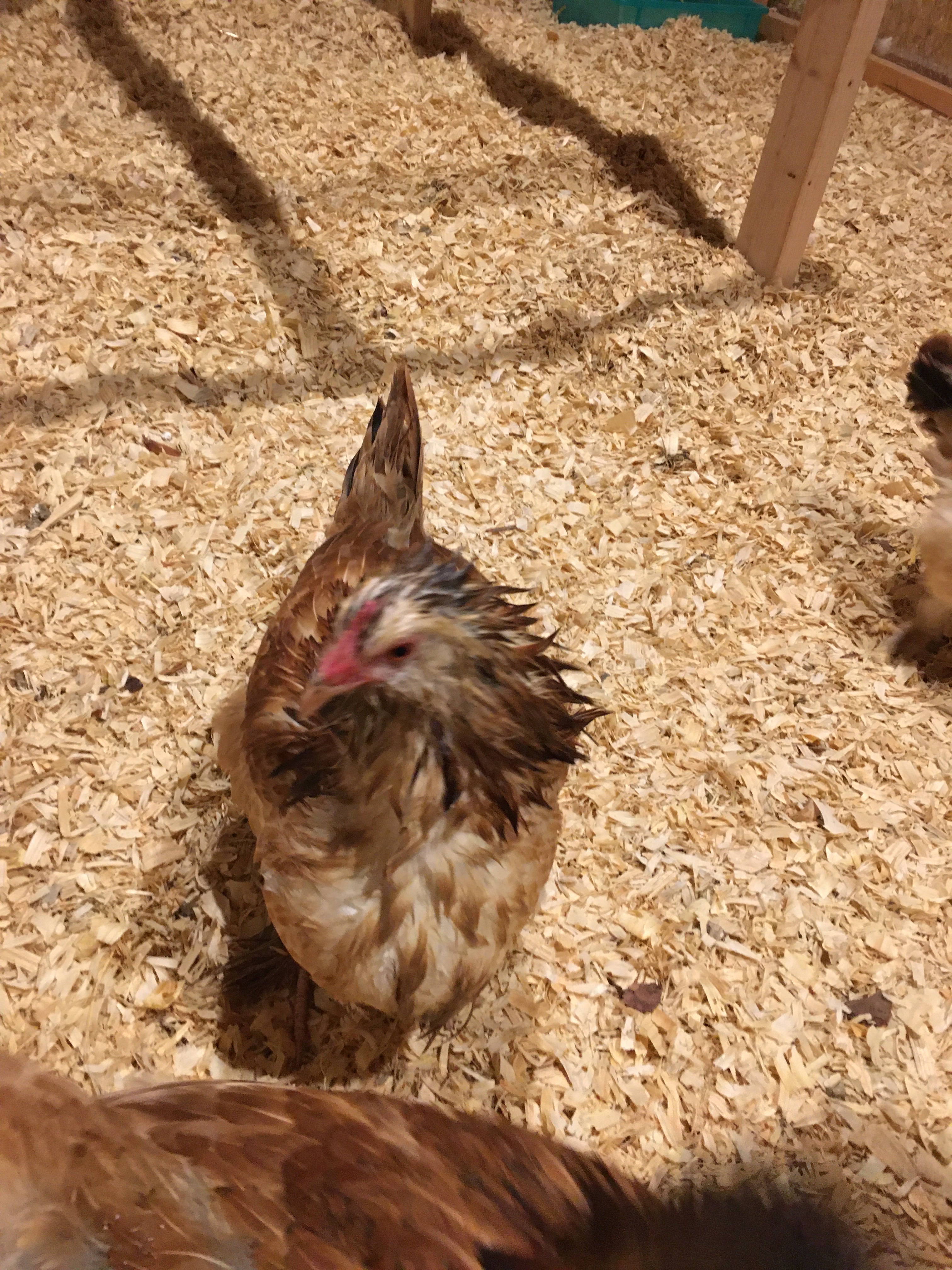
What the heck? I went out to put the chickens to bed (really to make sure they were headed to roost and lock up), and three of the hens were soaked. It had been raining all day, so I imagine they were out in the rain, but I didn’t think they liked to be wet!? After trying to take pictures of cold wet chickens all excited because the light was on at bedtime (obviously that didn’t work out well), I dried them off as best I could since it was forecast to be cold that night and hoped for the best.
They all survived the night, even Navi with her pendulous crop. There must have been a seriously tasty tidbit to tempt them into the downpour. Crazy chickens.
Had to dust off my chemistry degree to tend to Navi. The treatments for impacted crop were not working, so we moved on to treatments for sour crop, thinking that she has a fungal infection in her crop. I’m still following the advice in “The Chicken Health Handbook” by Gail Damerow. For sour crop, she recommends a flush, then treatment with Copper Sulfate. To make the Copper Sulfate drinking solution, first you have to make a stock solution, then add a little of the stock solution to a gallon of water. This is where my chemistry neurons had to be dusted off, and frankly I had to consult with my chemist Mom, because inorganic chemistry has never been my strong point. I made the stock solution and drinking water, which promptly turned cloudy and a little while later had precipitates at the bottom.
Copper Sulfate Solution made with softened water (precipitate formed)
Copper Sulfate solution should be clear. I figured out that it was probably that I used softened water from the sink, so remade both solutions using Reverse Osmosis water. Ah, a clear solution. My Mom hypothesizes that the precipitate was probably Copper Chloride Hydrate. I could have tested the precipitate, but I had already used the solution for a root killer in the yard, pouring it on poison ivy and saw briar stems. Copper Sulfate is a fungicide and a root killer.
Copper Sulfate solution made with reverse osmosis water (clear!)
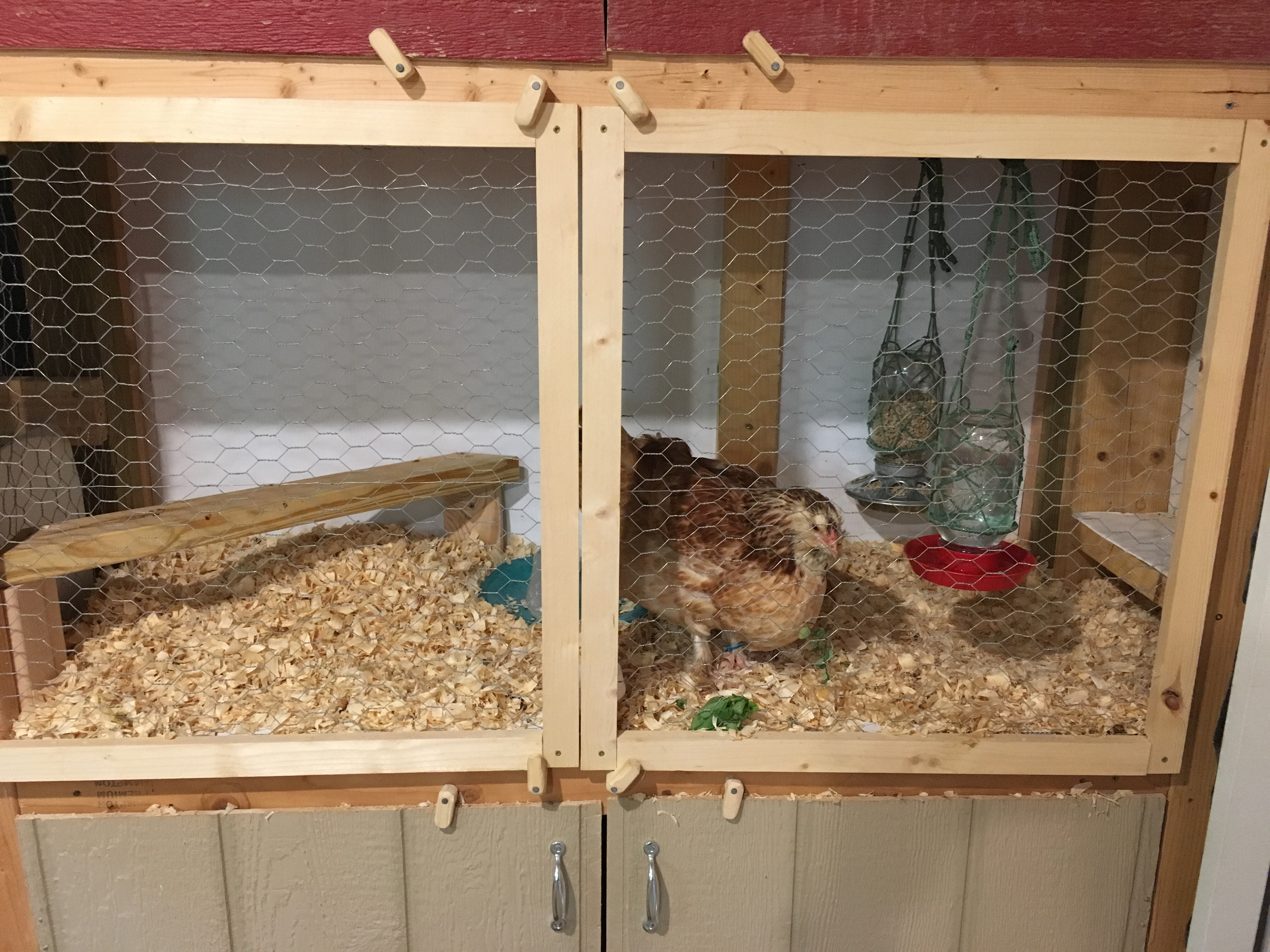
We’ll see if this treatment helps Navi. She is in isolation, but I’m glad I took my Dad’s advice because the isolation ward is at a good height, I can lean in, and it is plenty big for one chicken. Navi can see the other chickens, has a roost, food, water, and even a small foot bath. Although with her medicated water, she only gets a frozen water bottle on a plate so she doesn’t drink foot water. Ugh.
What an eventful day. We have had our first eggs (!!!) and put the first chicken in isolation.
Navi in the center
The move to isolation came first. I noticed a couple days ago that Navi had a larger crop than everyone else, like softball size and squishy. But she is eating and moving around, and I kept checking in the afternoon and evening. After consulting with my Mom and the chicken health book, we decided to check again in the morning to see if her crop empties. The isolation is to be able to observe her droppings and catch her before she hit the food bin in the morning. We decided not to make any further measures because her breath is not sour smelling as would be the case with sour crop.
Navi in isolation ward. She has a roost, but came off it when we left.
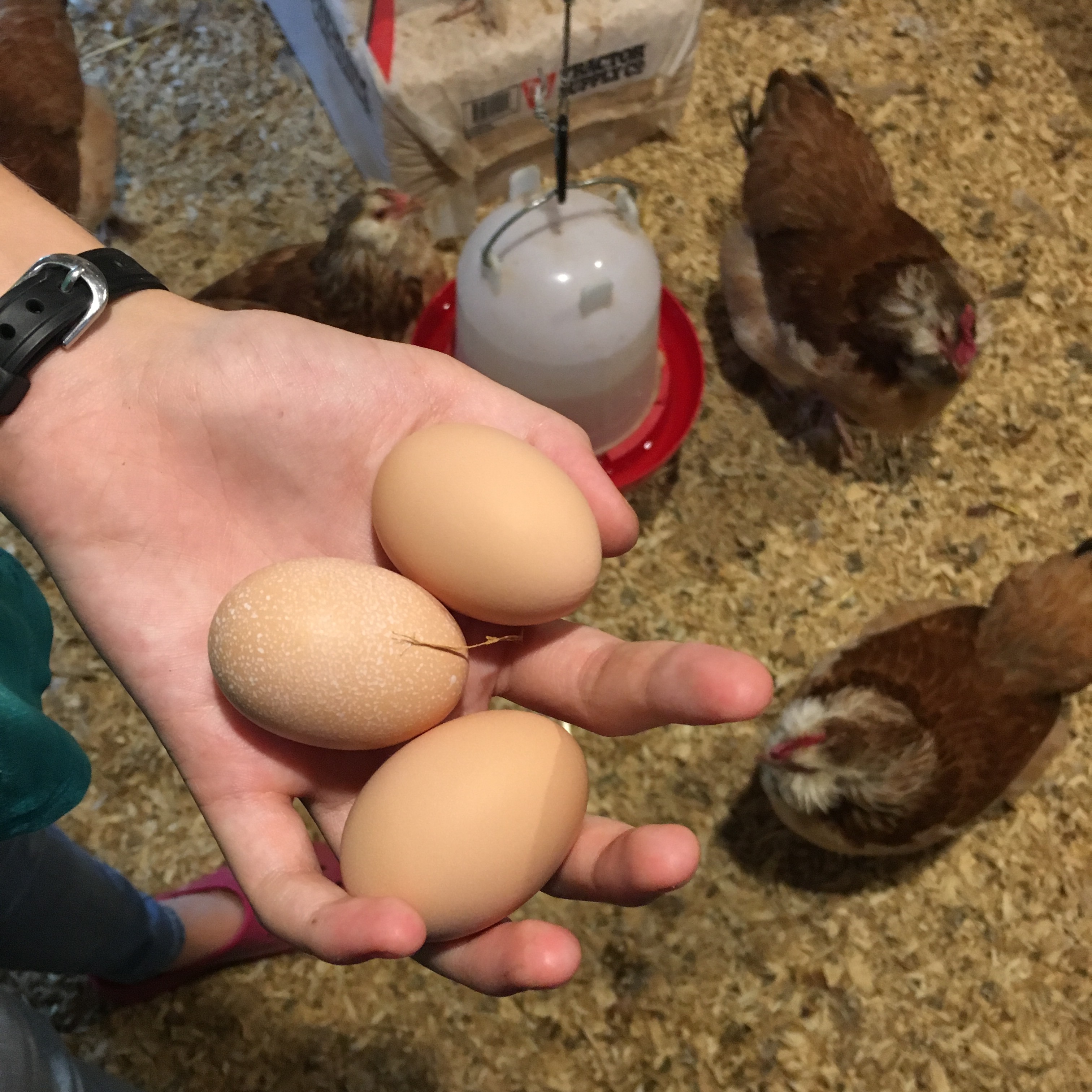
While setting up the isolation ward (I had been using it for storage), my eldest asked if I had checked the nest boxes for eggs. Honestly I had not in a couple days because I had resigned myself to no eggs until the chickens were 8 months old. So she checked. Not only were the nesting boxes behind the curtains visibly sat in, there were eggs in both bins! Holy cow! Three itty bitty eggs! (Yes, I weighed them! 38g, 38g, and 35g, which is about 1.3 ounces each. Extra small eggs.)





 Critters and Craft