
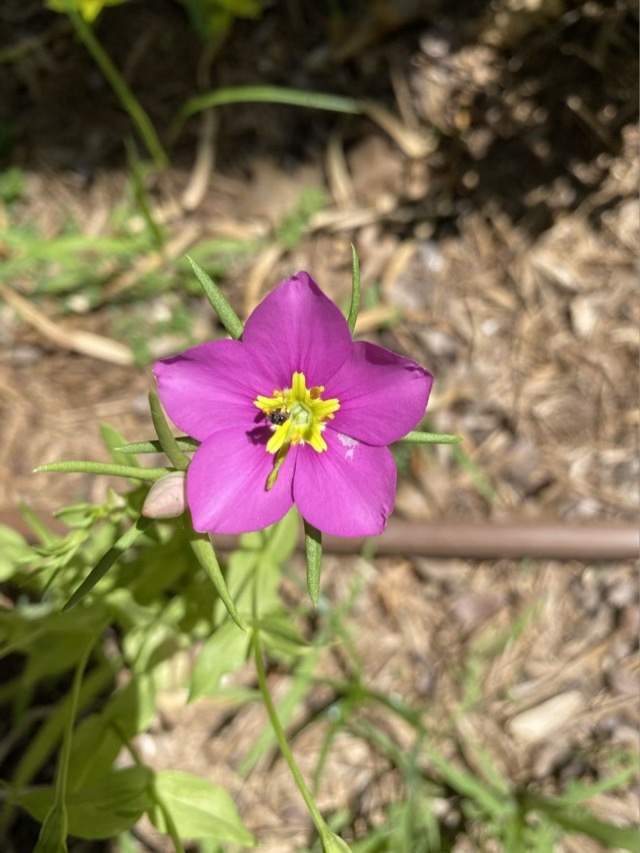
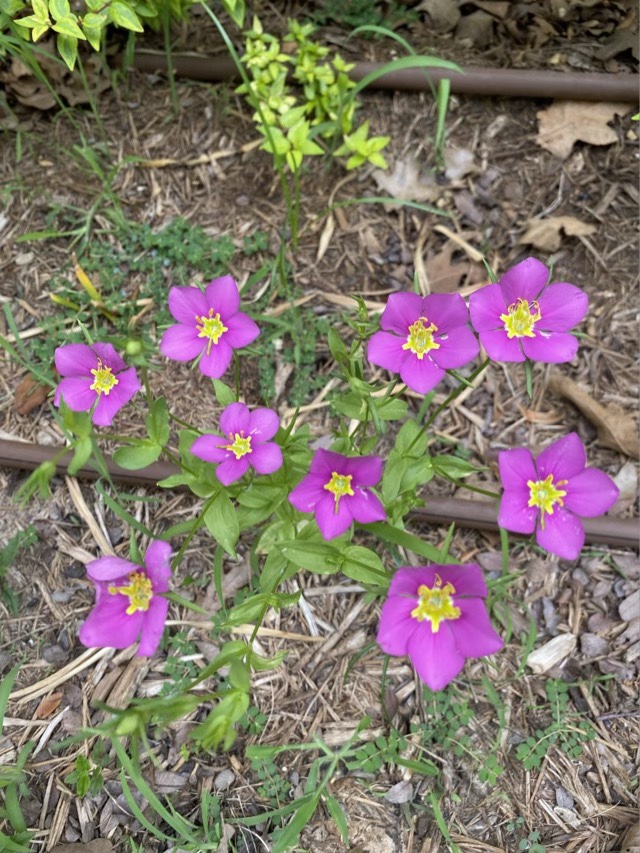
We had a strange plant come up in the front garden. Both my husband and I left it alone because we wanted to see what it would be. It wasn’t prickly or sticky, spiky or viney, in fact, it looked more like a cultivated breed, we just didn’t plant it. I’m glad we left it, because when it bloomed it was spectacular. I plugged a photo into iNaturalist and received a classification of Genus Sabatia. A little bit of image searching yielded a match: the Texas Star. Sabatia campestris, also known as a Meadow Pink, is an annual native in Texas, and, if left alone, will form clumps of flowers that bloom all summer. The petals close up at night and open again in the morning, so are longer lived. We will be leaving it just where it is and hoping it seeds itself, as it is the perfect height between the creeping blue speedwell and the artemisia bushes. We love having native flowers, and I’m glad the flower beds are attracting new natives. I’ve no idea where the seed came from, it wasn’t in any of the seed mixes we’ve spread on the property, but I’m glad it chose that exact spot to grow.
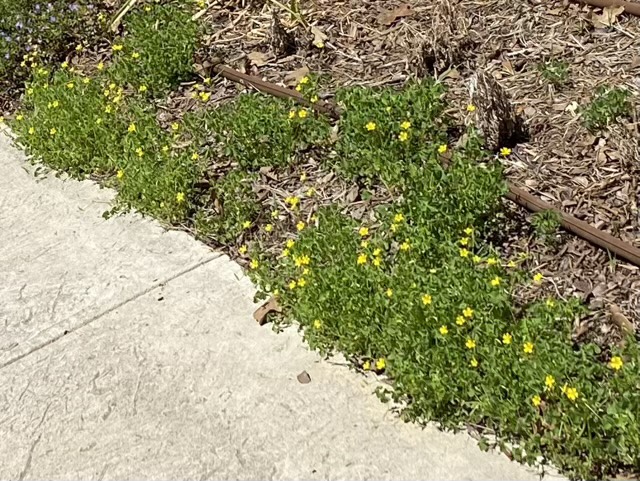
I have also let the native volunteer oxalis go to seed. It likes the garden bed so well that next spring I should have a nice border by just removing plants that stray.
 Critters and Craft