Mask conundrum

So I’m sure you have seen articles on the new study on a low cost method of testing masks by Duke University that showed neck gaiter masks may be worse than no mask at all. If not, the published scientific article is here. The conundrum (quite apart from the frustrations of language and the use of “fleece” for something that is neither warm nor fluffy), is that the neck gaiter (some twitches linguistically here too, gaiters are for ankles, but this usage shift is at least logical) is the only type of mask I can get my youngest to wear. The valve type masks have already been banned at the doctor’s offices. So what to do? While making masks for my eldest for school, I had an idea. Patch it.

Neck gaiter style mask with cotton fabric patch for nose and mouth

I had already ordered stretchy swimsuit material to make neck gaiters for my youngest, so I sewed a tube, then sewed on a rectangle of woven cotton fabric. (Don’t even get me started on the “hold it to the light” test, and all that vague verbiage.) We tested the patched neck gaiter on a trip to the doctor’s, and the fit works OK (I made the first one a little big), and it is a little trickier to get the patch in the right place, but she can still breathe, and her mouth is covered. Do I think it will be effective? I hope we don’t have to test that hypothesis. But it keeps her hands out of her mouth, and brings awareness for keeping distance. I have only seen a few people people properly wearing medical PPE: a dental hygienist and a phlebotomist. All these other people with their paper masks with gaping holes at the sides and around the nose, well, the effectiveness must be from awareness and not actual virus blocking. (Opinion only, not research backed, nor scientifically studied with proper peer review. Like all my stuff.)

Different style headband

I have never been able to wear the loop style headbands. They just slip off the back of my head. Ironically, buttoning a mask to the headband keeps my mask on and my headband on. The things we learn. The physics are all proper with the opposing forces and all that, it is just funny. I like that with the ear loops snug to the buttons, the elastic doesn’t push my glasses forward. I trialed a thinner headband, so thought I would try some waistband elastic and a wider tube of fabric. It works just fine.

Woven cotton headband with wide elastic

Fussy cuts

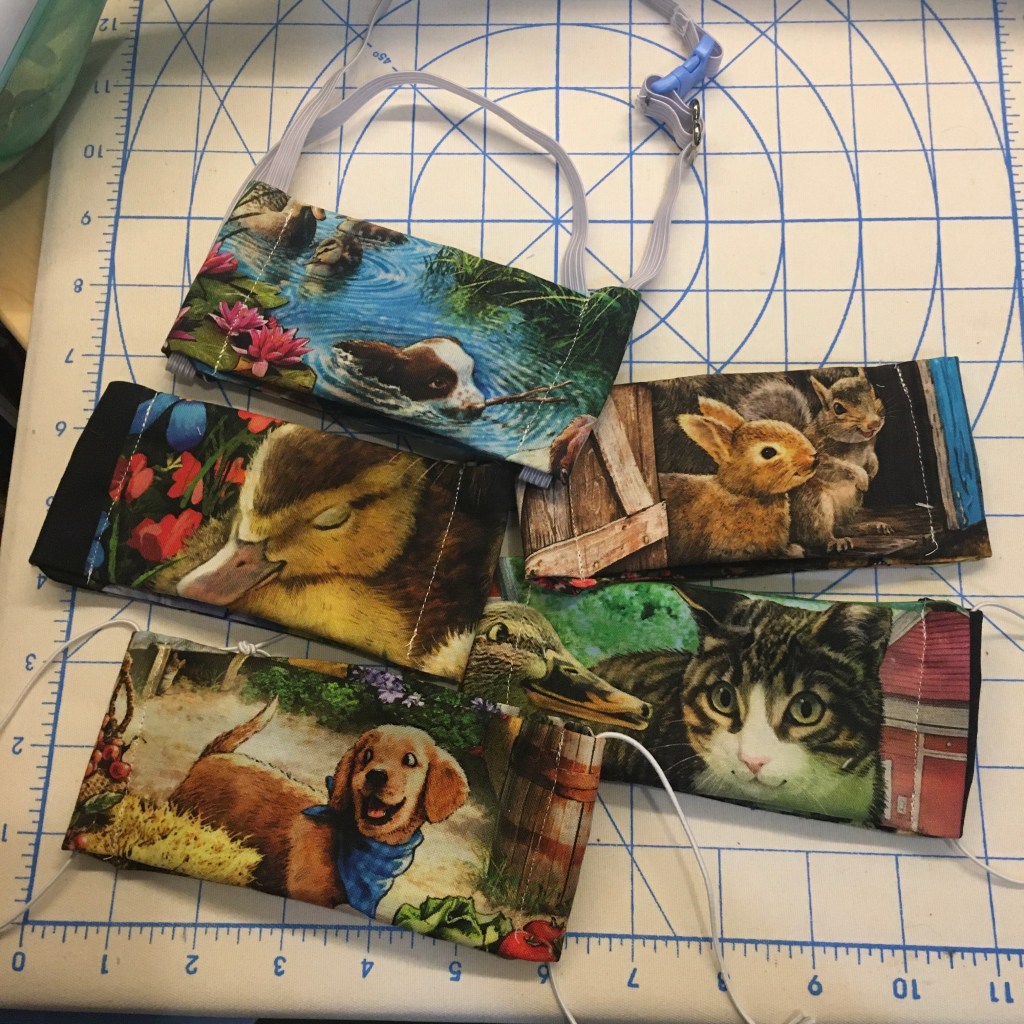
I found some cute barnyard animal panel fabric (large images printed on fabric rather than a smaller repeating pattern) at my local quilting store. I was trying to find fabric for masks for my nephew (this is not a quilting store that sells PawPatrol) and thought it might work with some fussy cuts. In quilting, a fussy cut is one where a piece is cut to capture a pattern or image in a certain way, rather than to maximize fabric usage. It usually leaves quite a bit of waste fabric, and making masks is no exception! Still, I was able to eek out five nicely composed kid-sized masks. It was an interesting experiment, but had too much waste for regular production.

Kid masks fussy cut from panel fabric

Assembly Line

One of my readers requested a video of how I make my masks assembly line style. I have tried hard to capture the process. I also decided to use the opportunity to learn new video making software, so it was particularly painful, but I learned so many new things. I used Adobe Premier Pro; I have a long way to go, but for a first project I hope it came out useful. I have added captions and voice over. Although I must disclose that trying to do clean voice over when there are others in the house is not possible. My dear family tried very hard to be quiet for the ten minutes or so that I needed to record, then my dog came and had a good solid scratch and shake behind me. Sigh. The original pattern is not mine, but is from Cook Children’s website and is available here. It is my go-to mask pattern for making many masks. The video on my mask assembly line is available here. The fabric is called “Sunshine Garden” design number #17191 by Darlene Zimmerman for robertkaufman.com. I found it in the 1920s reproductions section of my local quilting store.

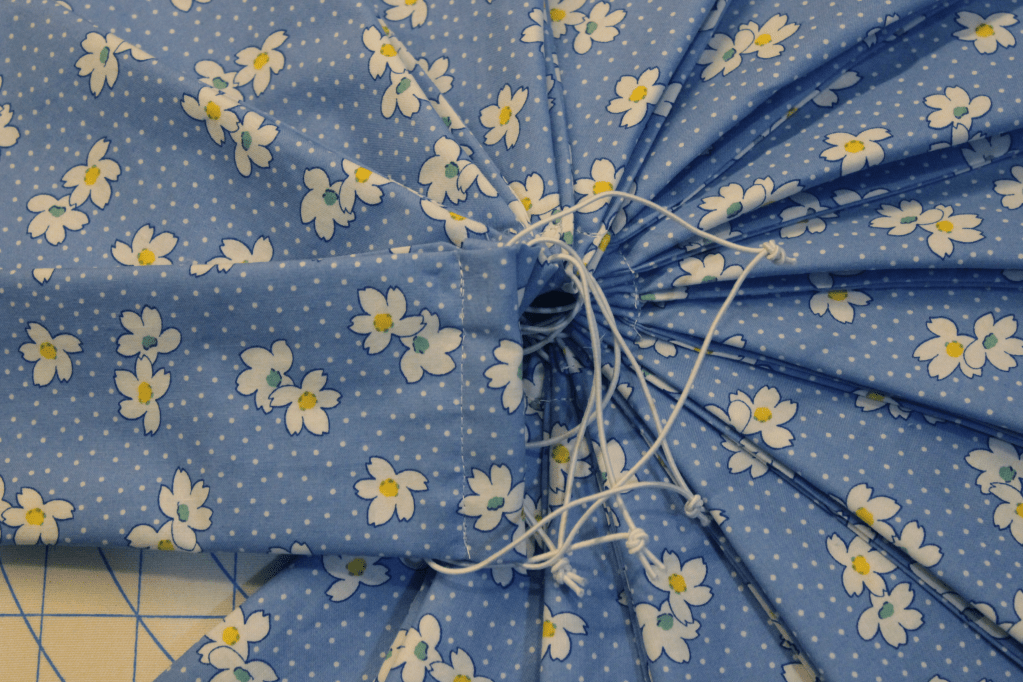
Spiral layout of finished cotton masks with ear loops

Ear saver head band

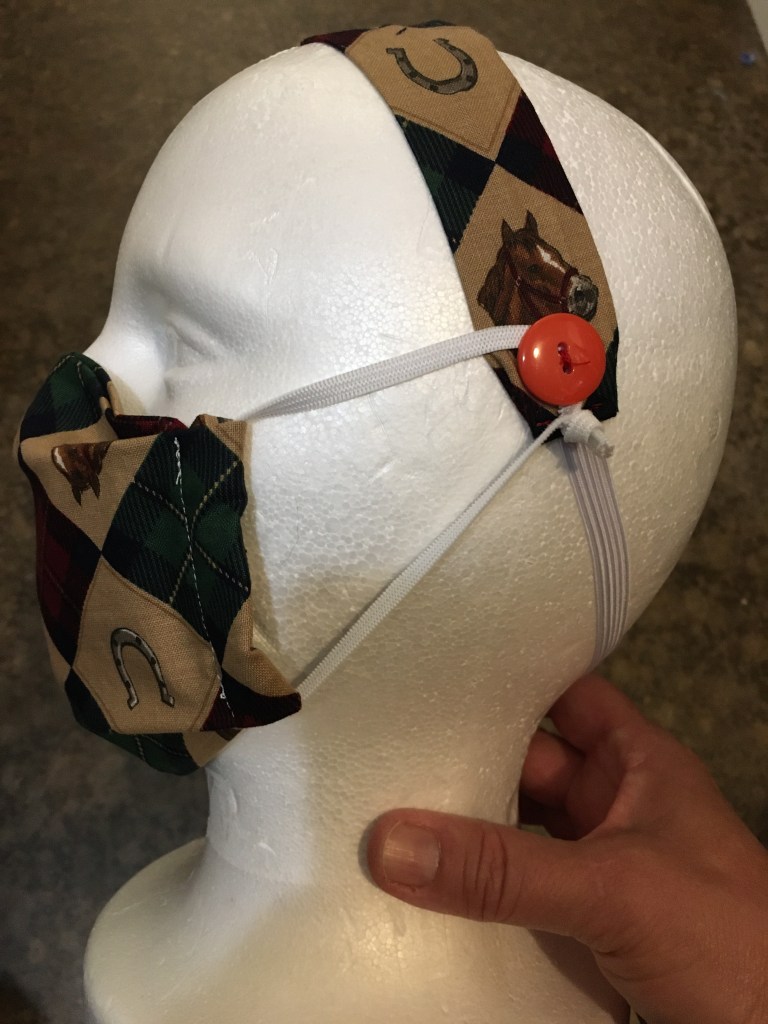
As I make masks, I have long strips of waste fabric, so I made some head bands with buttons to try as ear savers!

Child’s mask attached to buttons on a head band

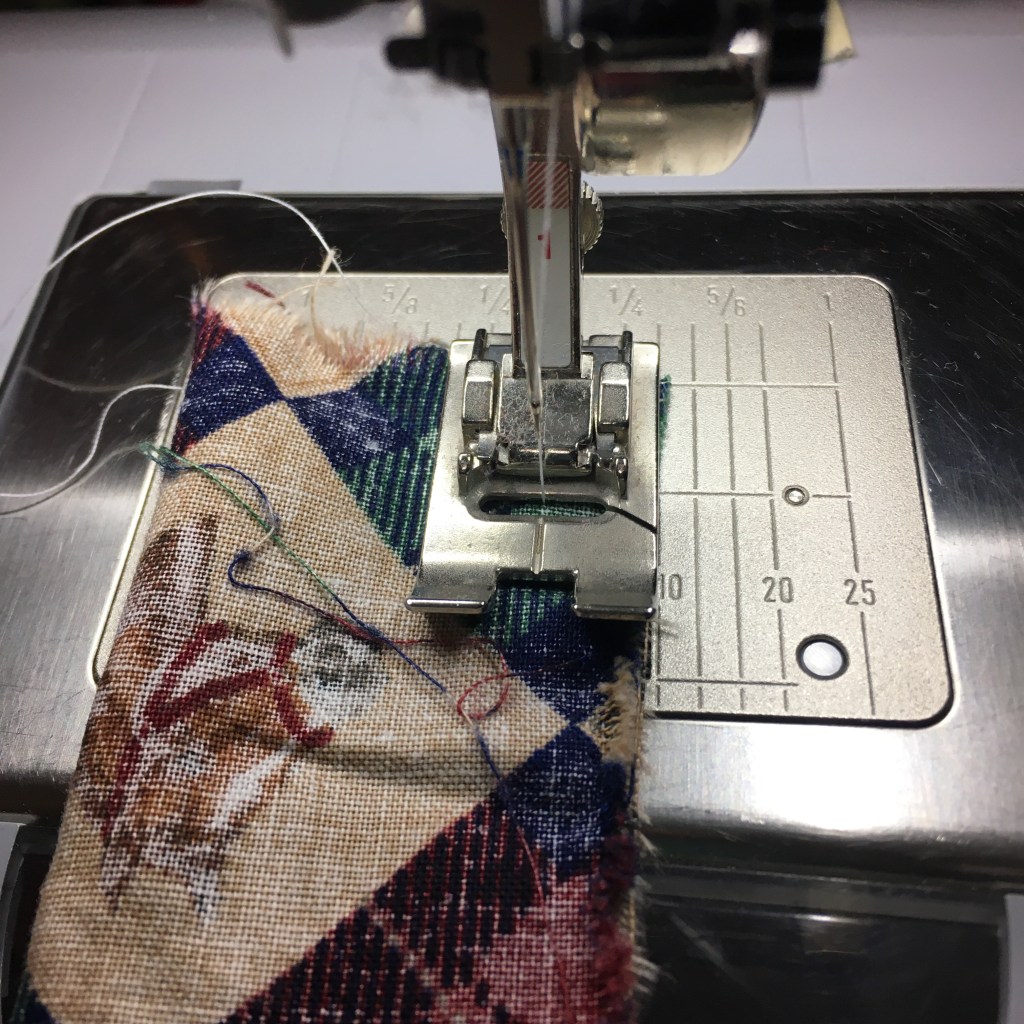
To make the headband, I made a strip of fabric 3” wide and 15” long for an adult size, or 3” x 12” for a child size. I folded the strip lengthwise with right sides together and sewed a 3/8” seam.

Sewing the seam for the headband

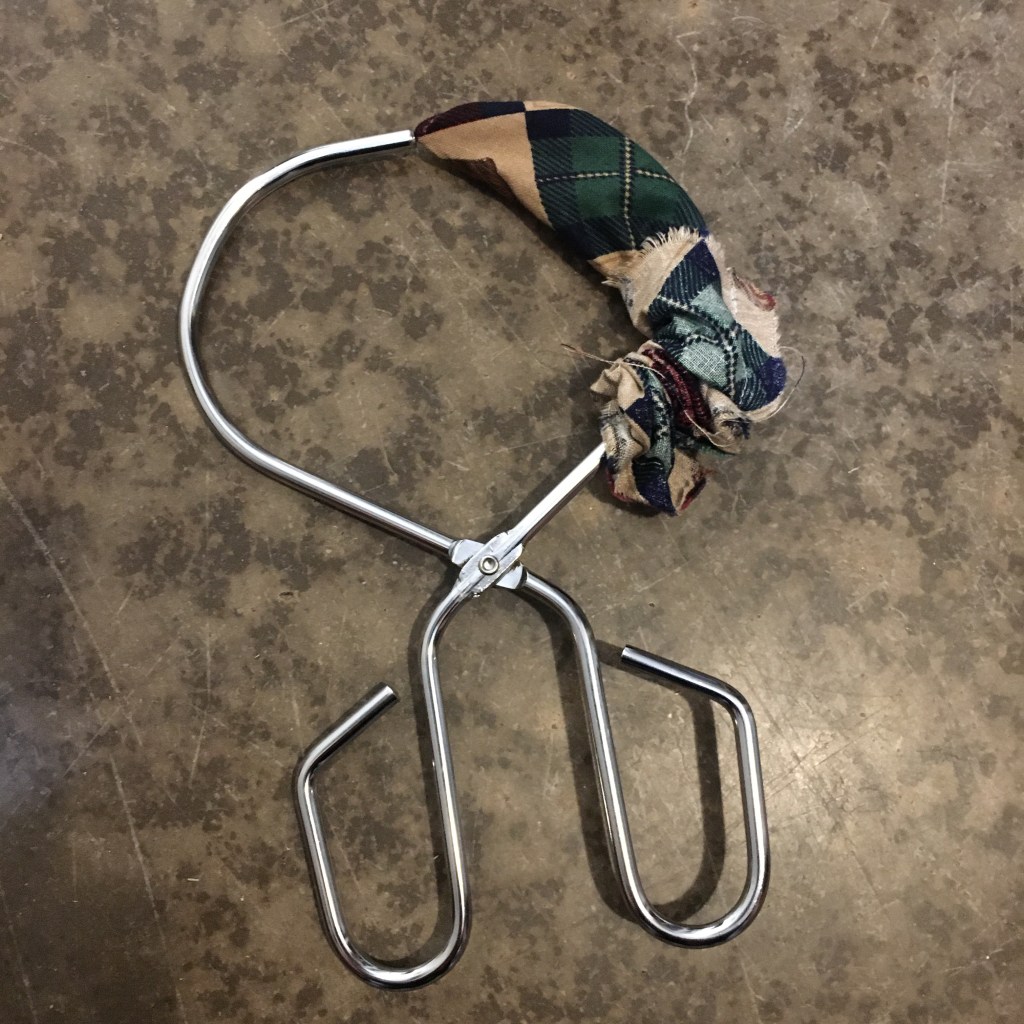
I used a tube turner to turn the fabric tube inside out, then pressed it flat.

Tube turner

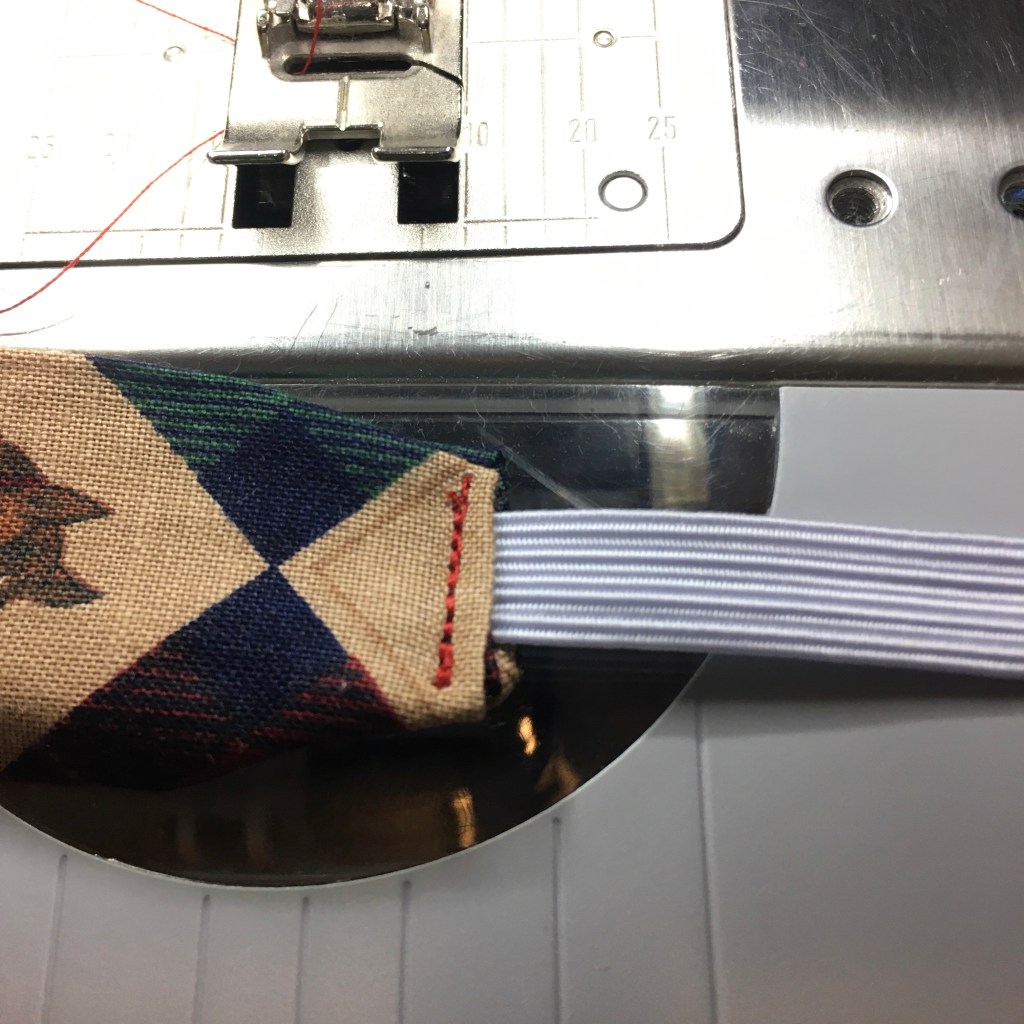
To attach the 3/8” elastic, I folded the end of the tube to the inside, then made two inverted folds on the sides to reduce the width of the headband (other sizes of elastic would work as well). I sewed across the end to secure the elastic.

Elastic sewn in

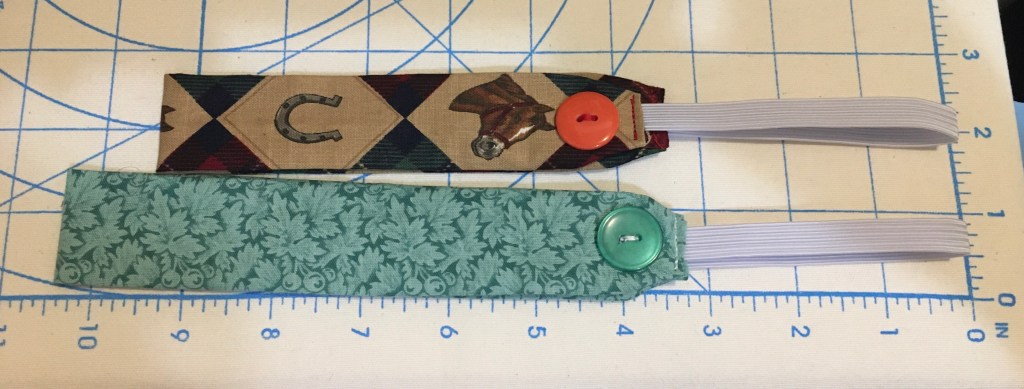
After sewing in the elastic on one side, I measured 21.5” from the end of the fabric for the adult size (19.5” for the child size), cut the elastic, and sewed in the second side. With the elastic secured, I sewed on machine washable buttons.

Ear saver headbands (top child sized, bottom adult sized)