Three styles of masks for the family (my husband keeps his in the truck)
I’ve been testing mask styles to find masks my kids will be OK wearing. When we found a good style, I then made a week’s worth for each kid. I realized that I was still scrounging around for clean prototypes when I had to wear a mask! I finally carved out some time to make my favorite style, which happens to be the original pattern I made from a local hospital. I like this one because the pleats allow me to talk without the mask slipping down (the fitted styles do a hokey pokey down my chin when I talk). It has a nose wire (I prefer the lighter gauge wire because it is easier to reshape after the wash), and is the easiest style to iron or steam after washing. They also store flat nicely. Now I just need to come up with a mask rack system to free up the hooks for winter coats!
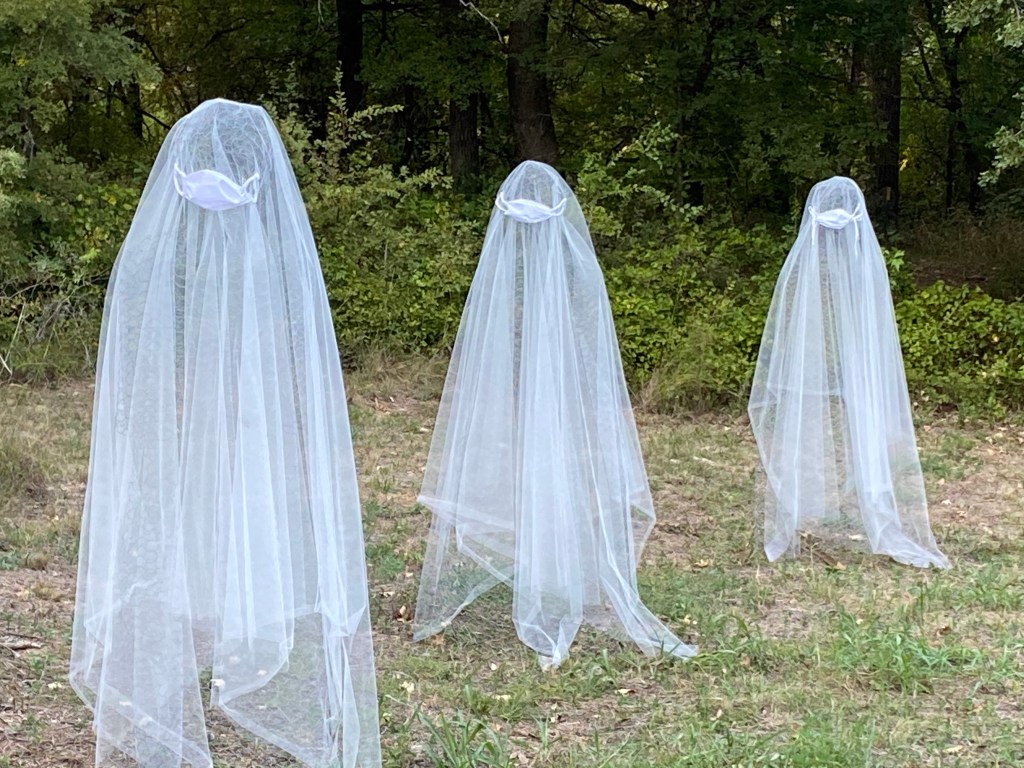
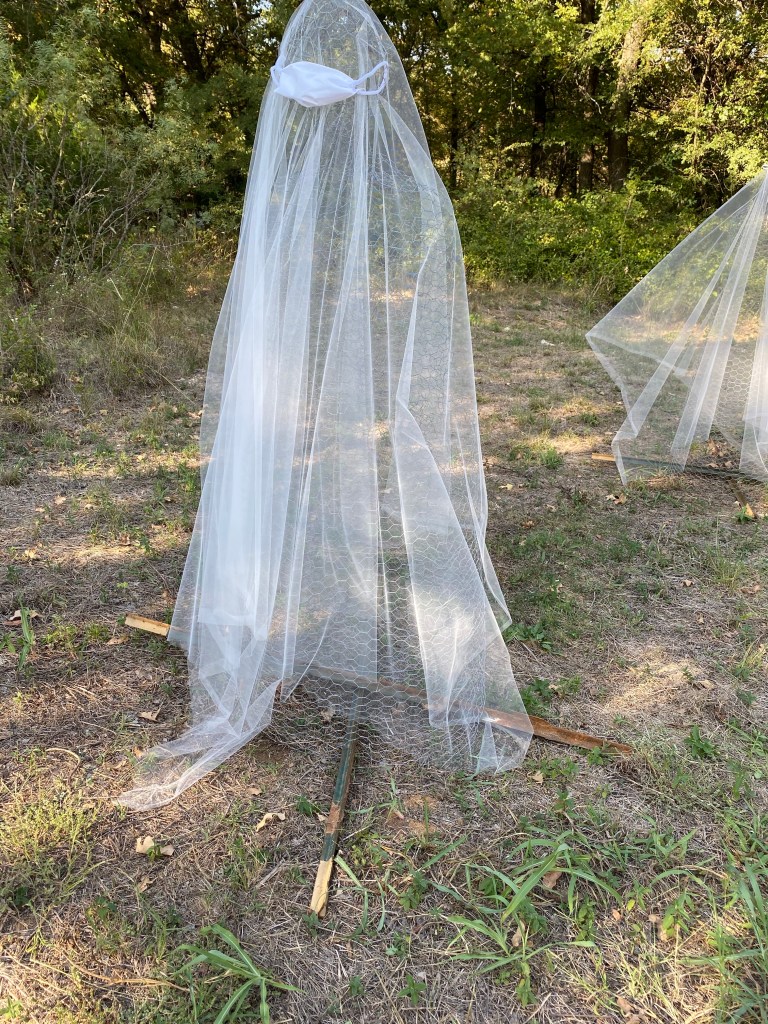
Because it is 2020, of course the ghost decorations need to have masks. These were fast and dirty chicken wire sculptures, draped with nylon tulle, and masked up with cotton squares held on with white chenille sticks. I was able to get all three put together in one morning (really rough sculpture)!
Chicken wire bases set up in the meadow.Bases secured with two metal fence posts through the bottom, also makes them movable
I did finally receive some manufactured mask frames! The hot glue frame I made was a little large for my youngest, but these kid sized frames fit fine, and actually help keep the mask on her face better (she has a little nose). To get the frames to work with the mask I sewed them in. I did try to sew a patch of quilter’s cotton over the frame, but the inelasticity was irritating to her, so I made a double layer of swimsuit material instead.
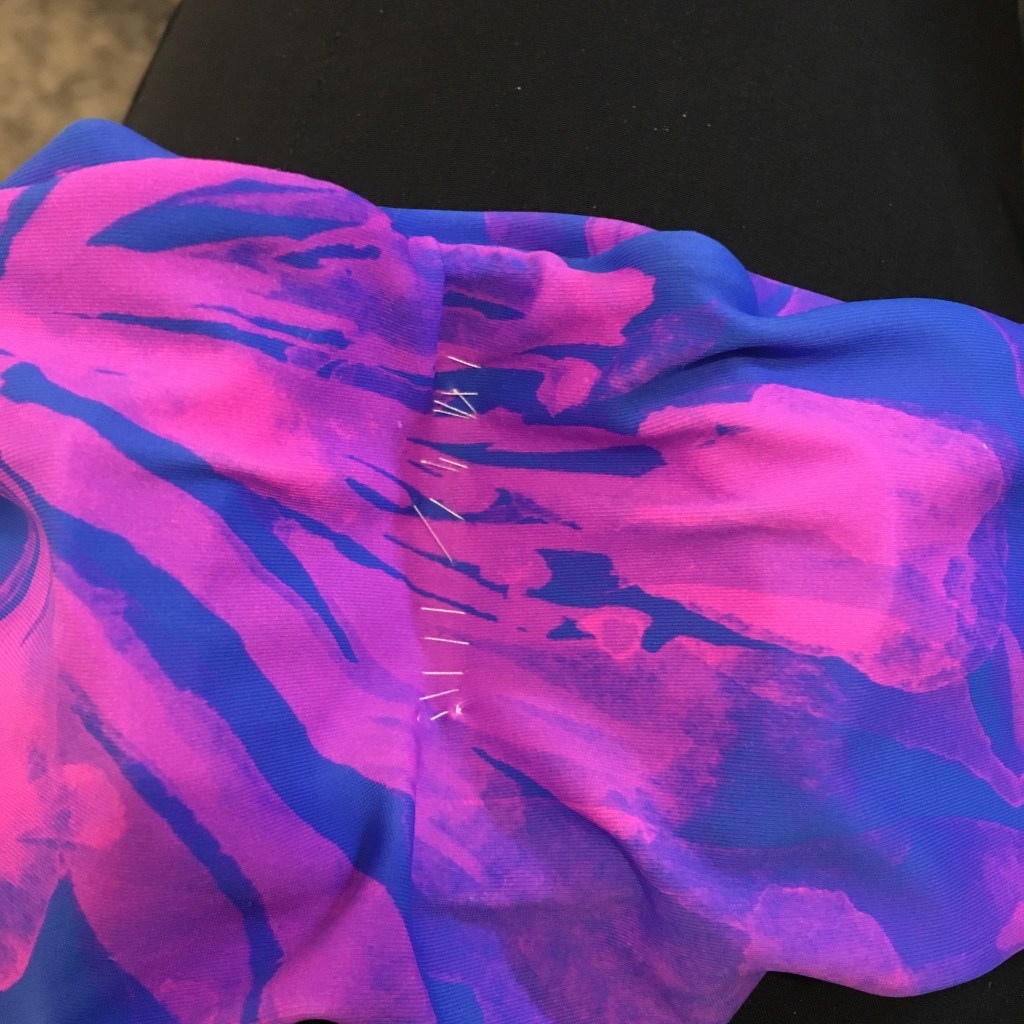
17”x9” rectangle of fabric sewn along the long edge, then marked in the middle. The line helps keep the frame centered as you sew.Frame sewn on through a single layer of the fabric. Sewing it in this way helps keep the fabric off the nose and mouth.Tube of fabric turned inside out, this is the inside of the mask showing the stitches. The outside is smooth. I used a jersey stitch to join the ends of the tube together to make a loop.Front of neck gaiter style mask with frame sewn in
My youngest does like these better. With the frame, her glasses don’t fog up and the neck gaiter style doesn’t interfere with her hearing aids. She can get it on and off herself and it has pink, so we’re all good. The only down side is that I am hand washing these, as the frame tends to fold in half when it goes through the washer and the dryer. The material dries quick, though.
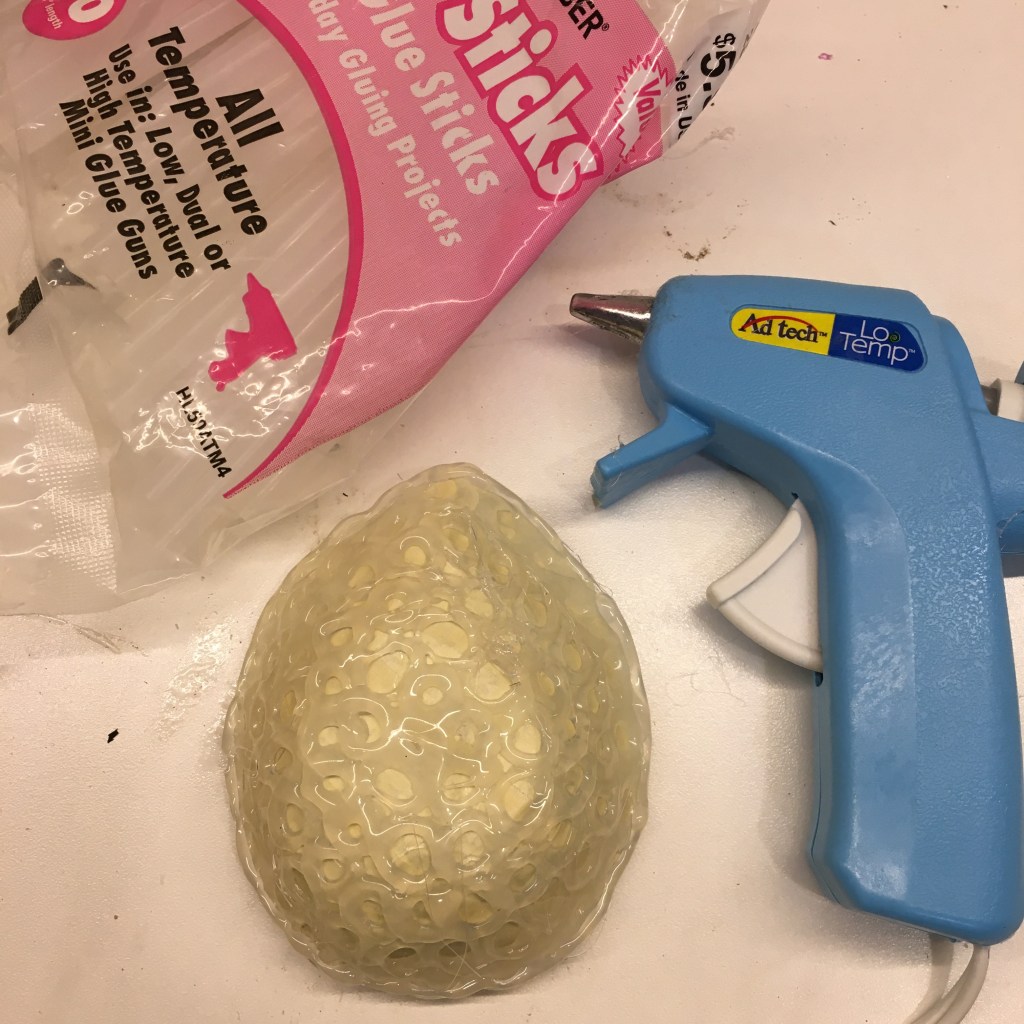
Good ol’ hot glue. The corner stone of the insta-crafter. After failing at attempts with other materials to make a mask frame, I turned back to this tried and true basic crafting staple. It works. If you didn’t see my previous post, I’m making mask frames to give a pocket of air inside a homemade mask with the idea that it will be easier to breathe without the fabric pressed against the nose and mouth.
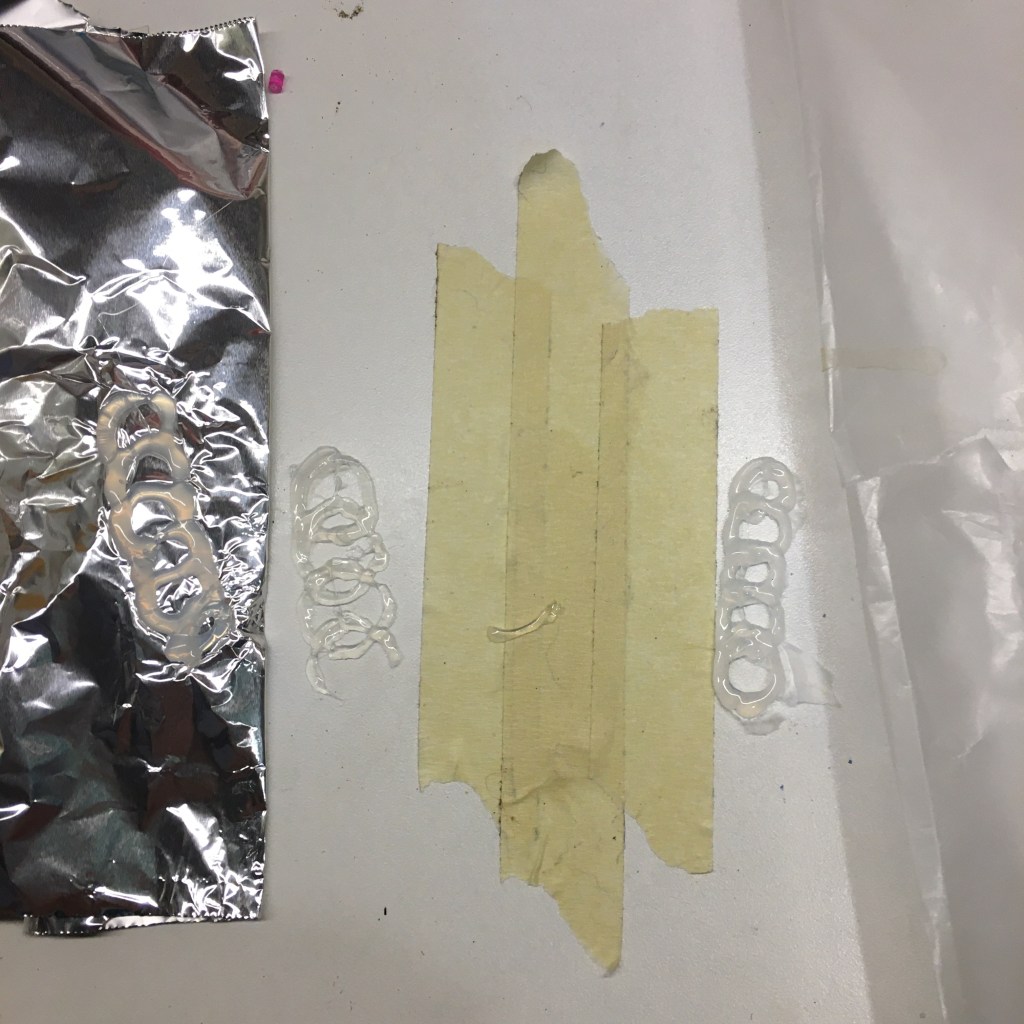
First I tested the adherence qualities of my all temperature hot glue by applying it to aluminum foil, masking tape, and wax paper. Once cool, the hot glue would not come off the aluminum foil, tore off strips of wax paper, but removed cleanly from the masking tape.
Testing how easy hot glue is to remove from aluminum foil, masking tape, and wax paper
To make a mold, I fit a chenille stick around my daughter’s nose and mouth, then sculpted aluminum foil around the chenille stick to form a dome. I then covered it with three layers of masking tape. With the hot glue I made small connected circles over the entire mold. I used all temperature hot glue with a low temp glue gun.
Hot glue mask frame on mold
I put the finished frame in the refrigerator for a few hours (it probably doesn’t take this long, I just got distracted and forgot about it). While it was still cool, I was able to cleanly pull the frame from the mold!
Hot glue mask released cleanly from the mold
The frame is flexible, but sturdy enough to hold its shape. When smashed or inverted, it returns to shape. It will be stable at room temperature and should be OK up to 120 degrees F (50 degrees C), although I will still wash it in cold water. It could be used now by sliding it into the pocket of a mask, but I want to investigate sewing it into a neck gaiter type mask. That post to come later!
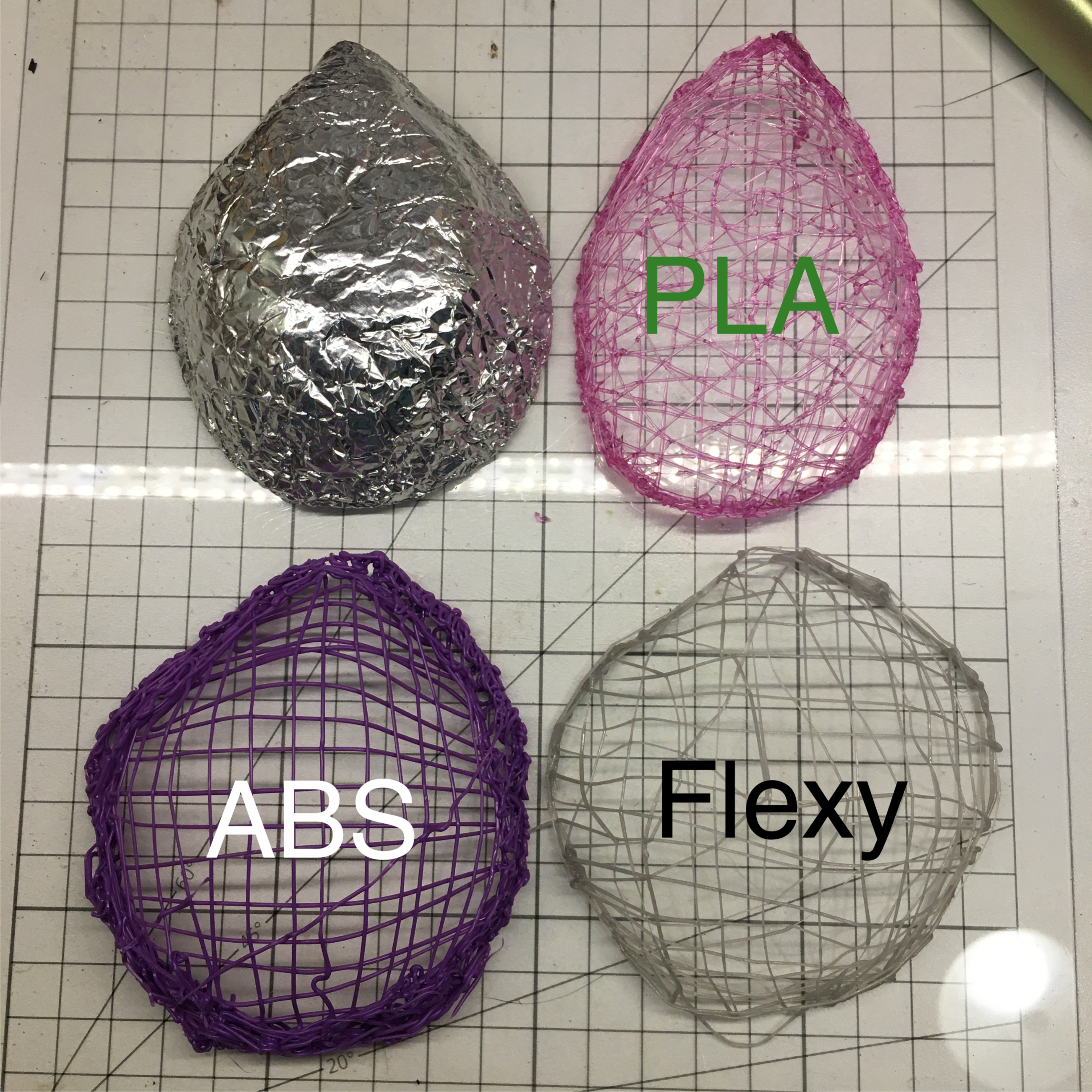
Sometimes things don’t turn out the way you hope. I had a grand idea of making mask frames (to hold the fabric away from the nose and mouth to make breathing a little easier) with a 3D printing pen. I thought this might help my youngest keep her mask on for longer time periods. I was super enthused and ordered all three types of material to test: PLA plastic, ABS, and flexy.
Testing materials with a 3D pen
I used a chenille stick and aluminum foil to make a form for the mask. The plastic (PLA) stuck just enough to temporarily adhere to the form, which made forming the plastic easier. The ABS was harder to work with, but I found making small overlapping circles worked better than making long straight strings. The flexy was interesting to work with as the resulting mesh is very flexible, but it didn’t have enough strength to be a frame. I also did some destructive testing, because I would rather know how it breaks before I sew it into a mask. PLA and ABS do break when pressed flat, but not as much in the areas made of overlapped circles. I settled on using PLA and tiny circles, and managed to make and destructively test one frame before the pen broke. Ugh. I decided to just order some from Amazon. Then the first order was lost. Still waiting on the reorder.
3Doodled mask frame, prior to destructive testing.PLA frame after destructive testing









 Critters and Craft