Blocking transformation

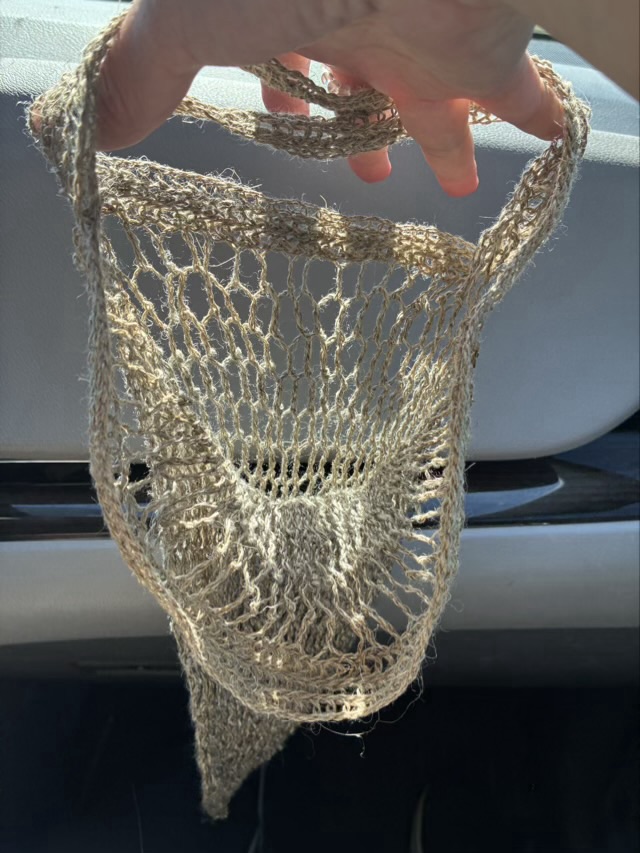
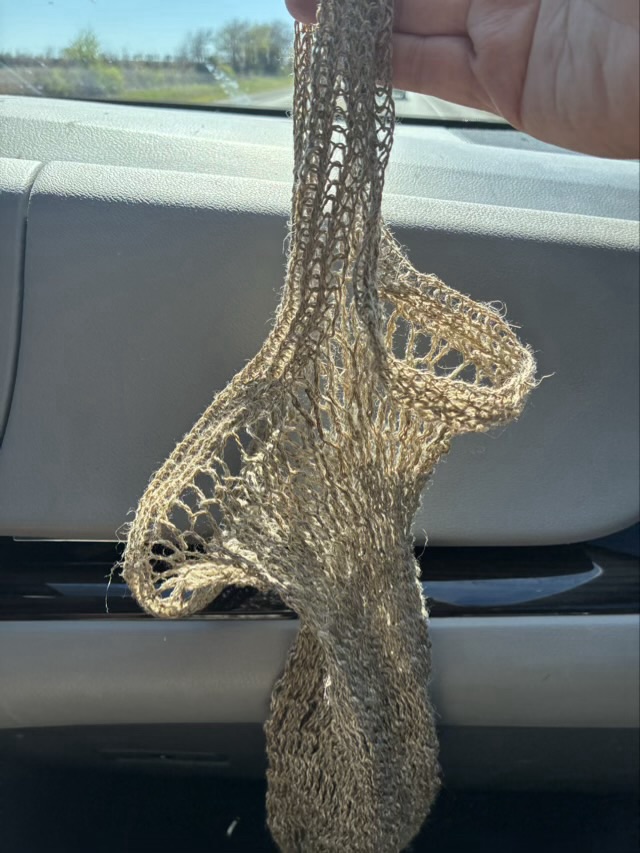
Photo description: linen loop and twist net bag

I finished twining and stitching a linen string bag using long line flax and a loop and twist construction. I would twine a section, then loop that section, so the bag was made with a continuous length of string. I did not used any tools other than my fingers. As you can see in the photo above it looks a little wonky. I took it to the sink, gave it a soak in tap water, then laid it out to dry. The transformation was remarkable.

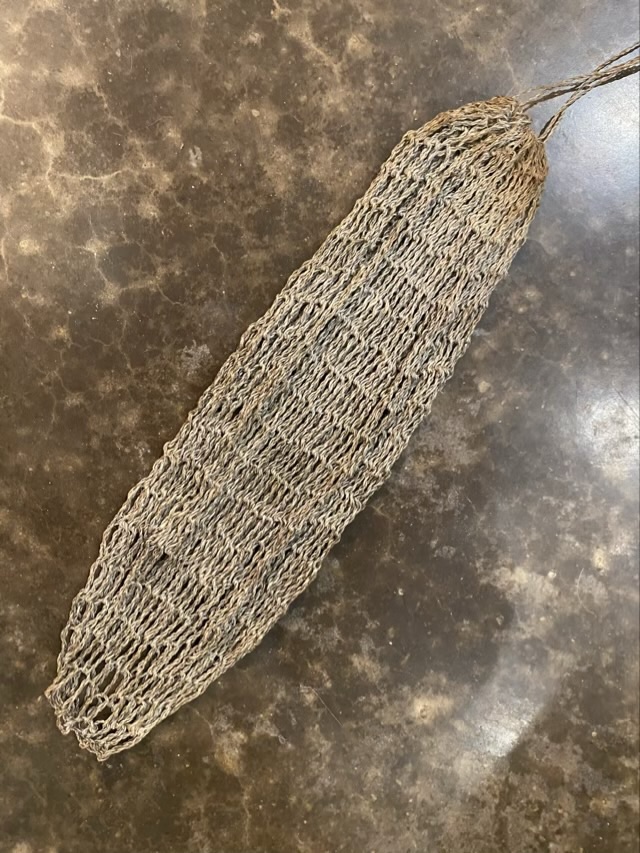
Photo description: same bag after blocking

The bias twist in the stitches eased and it straightened out nicely. What wasn’t nice was the rust colored stains on the top.

Photo description: discoloration at the top of the bag

I used a different batch of flax for the last few rows, and I think something on my well water reacted to something in the flax, which is disappointing. I washed it with gentle laundry soap and laid it out to dry again.

Photo description: same bag after washing with gentle detergent

The rust color lessened, and now it looks more like a different batch of flax at the end, rather than a stain.

I’m also not pleased with the string ties. They are functional, but would be terrible to use to carry anything with much weight. The flax would hold, but the thin cord would cut into the flesh holding it. I do have an idea how to fix it.

Hang dry or lay flat

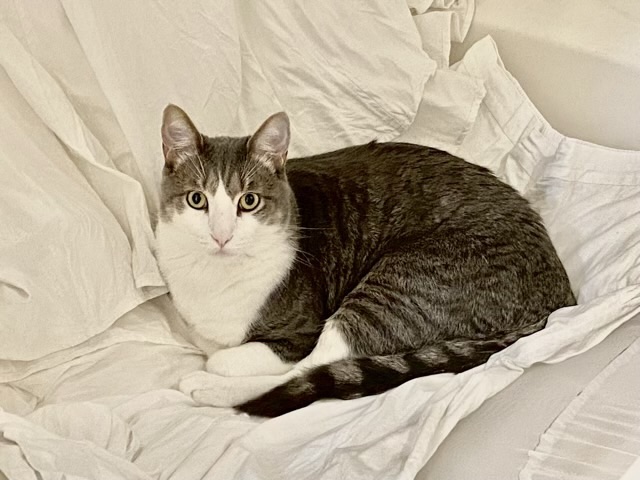
If you have cats, hang dry your linens, else they will become cat beds.

Photo description: gray tabby cat laying on white linen that has been laid flat to dry on a nylon drying rack

Vintage linen calendars

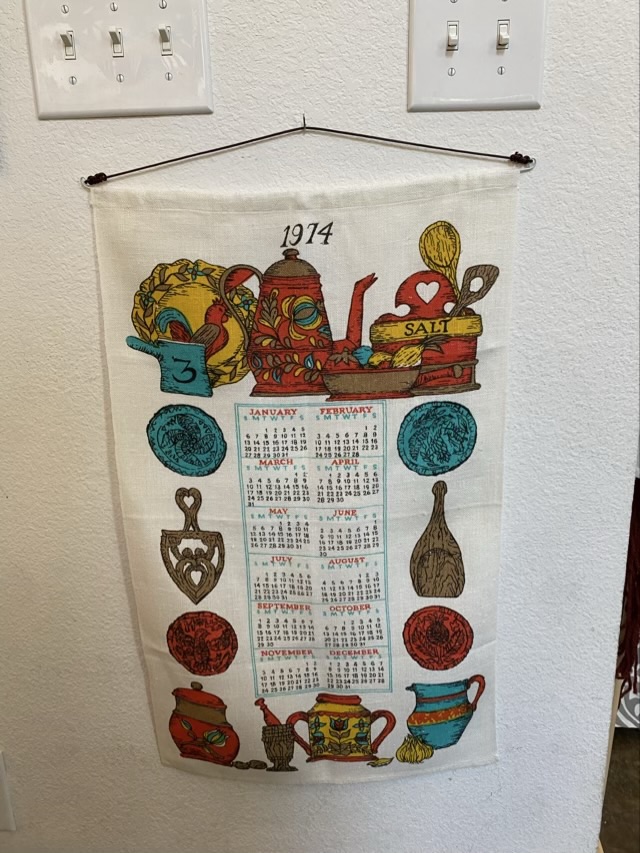
My sister brought me some linen towels from the 70s. I liked the prints on them, so decided to use them as decoration. They all had a narrow sleeve at the top, so I cut down wire hangers to make hanging rods.

Photo description: white wire hangers cut with lineman’s pliers and the ends looped with needle nose pliers

I took leather cordage and tied it to the wire loops.

Photo description: calendar towel from 1974 with wire and leather hanging hardware

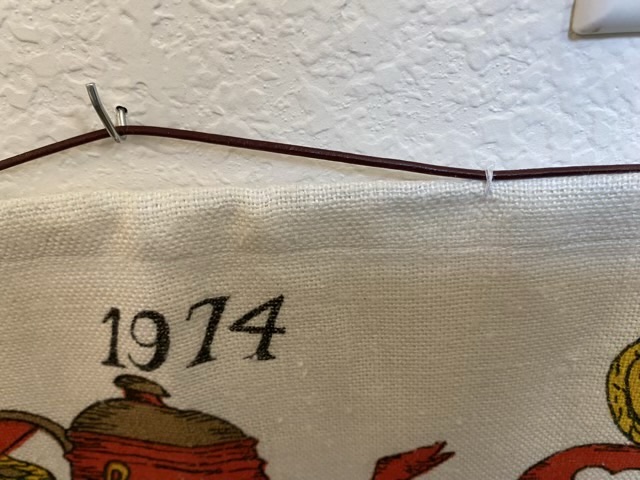
I didn’t like how the wire sagged, so I tacked the linen to the leather about a third of the way in with cotton thread.

Photo description: closeup of tacked section
Photo description: same towel hanging on the wall, but with thread tacks and no sagging, towel has drawings of kitchen implements
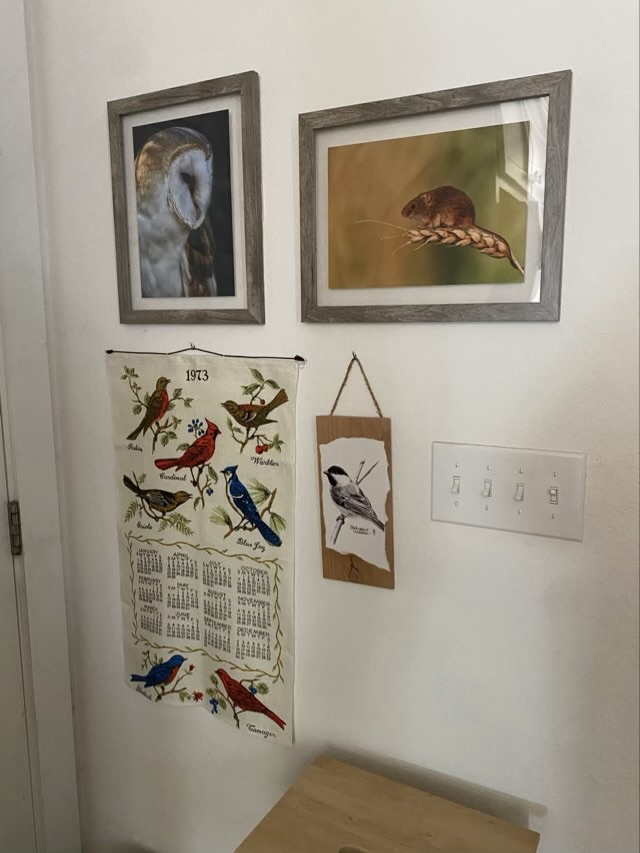
Photo description: linen calendar towel from 1973 with birds hanging on the wall with new hardware along with chickadee art, and photos of a barn owl and field mouse by Oliver Hellowell

The production of calendar towels began in the 1950s and was an invention of Stevens Linen Works in Dudley, Massachusetts.

Kits!

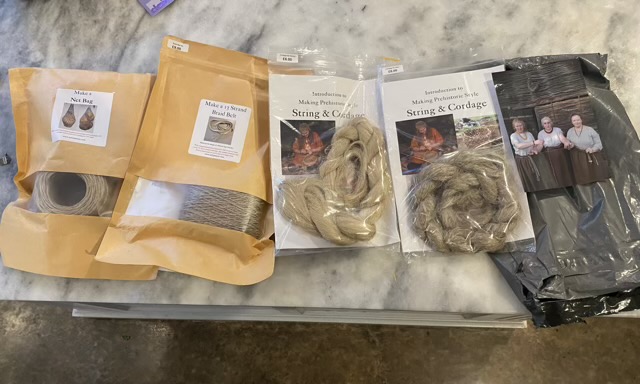
I read that Sally Pointer, an expert in Heritage Education in the UK, had developed a new pamphlet on making cordage and although I know how to make cordage, I wanted to see how she recommends construction. Since the kit is coming from the UK, with air mail prices, I maximized my kit to mailing cost ratio and bought four kits for the same mailing cost as one kit. So excited.

Photo description: string bag kit, braided belt kit, flax cordage kit, and hemp cordage kit from Sally Pointer

I follow Sally on Facebook and YouTube and thoroughly enjoy seeing the historic recreations she makes and appreciate her dedication to education.

Uh oh

Well, I thought Thor the cat was mostly interested in wool, but I found this former ball of linen yarn out of its bag and in another room from where I left it.

Photo description: loose tangle of orange colored hand spun linen yarn on the concrete floor in front of a closed door

Here is the culprit, looking pleased with himself on Griffin the dog’s bed.

Photo description: large gray tabby cat in a larger brown faux fur pet bed

I don’t believe he ingested any yarn, and I was able to wind the tangle back into a neat ball without any knots. The yarn ball is back in the project bag, and hung up where the cat can’t stick his head into it. Yeah, I love yarn and I love cats and cats love yarn. It is a timeless love triangle.