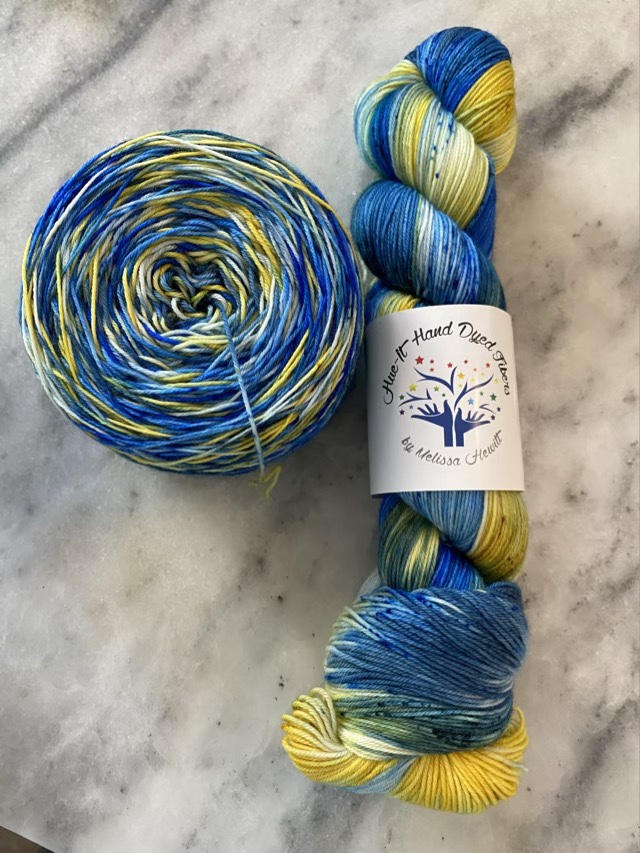
Skeins and yarn cakes

Yarn cake (left) versus skein (right)

I bought some beautifully dyed yarn from a hand dyer. In the dying process, the yarn is left in skein form, which is basically a large circle secured in several places with twists of yarn. To store the skein it is twisted and one end tucked into the other. The skein form is beautiful, and shows off the dye, but is not friendly for direct use. It must first be wound into a ball or cake to be nice for crochet or knitting. You can have one person hold the skein open on their hands, and hand wind a ball, if you have someone with extra patience. Or a swift does the job of holding the skein open, and there are many types. I have an umbrella swift (named thus because it opens like an umbrella). I also have a ball winder (sometimes called a new wool winder), that has a rotating handle and makes center-pull yarn cakes. The sound of the Swift and ball winder turning makes a nice swoosh and clickty clack I find soothing.
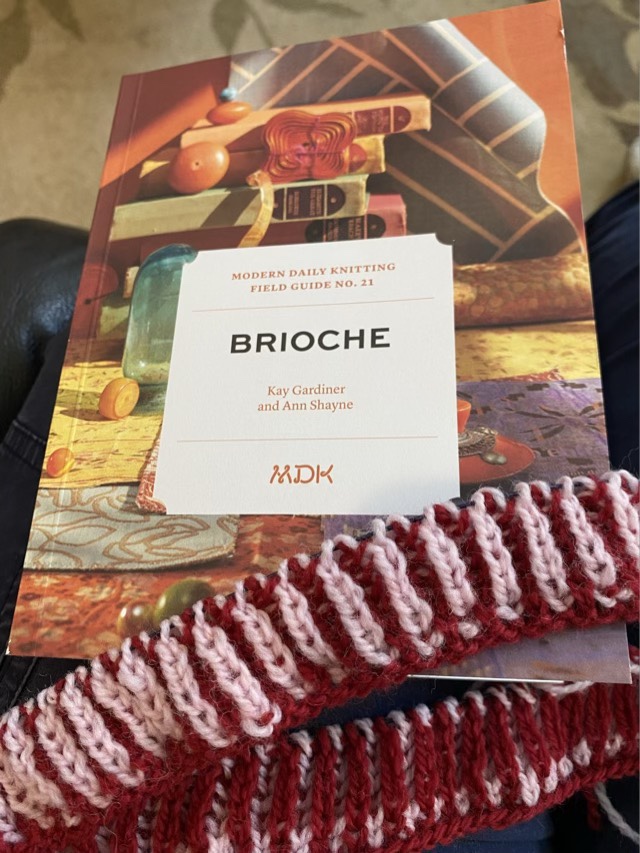
Brioche

Surprisingly, this post is not about bread. Brioche is also a style of knitting; it is often used with two colors of yarn to beautiful effect. The technique first caught my eye when I was scrolling Pinterest (rabbit holes!!) Then Modern Daily Knitting collaborated with Nancy Marchant (brioche guru) on a new Field Guide with four beginner brioche patterns. I couldn’t resist. Today starts a new MDK knit-along for the first pattern in the book. This is my first attempt at a knit-along, so we’ll see how it goes!

Learning brioche knitting

I’m sure no one else is counting, but I’m acutely aware that I am now in the middle of three knitting projects. Hm.

Update on Grandma’s blanket

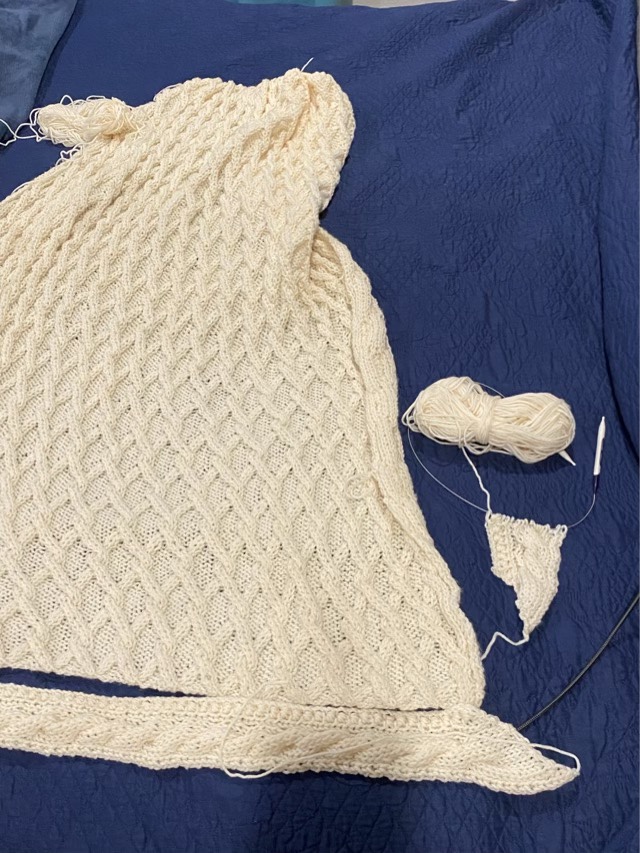
I’m still working on my Grandma’s last unfinished project. I’ve been knitting along on the main body of the blanket and I had a chilling thought. What if I don’t have enough yarn to do the border? I have an idea of how long she intended it to be, but what if I’m wrong? What if I’m missing a skein or two? Yikes! Deep breath. I’ll just make the borders now, while I have plenty of yarn.

Grandma’s blanket with one border side complete

The top and bottom border strip are a fixed length, so I’m starting with those. For the side borders, I will knit them as long as I think the blanket should be, but not finish the taper, rather I’ll put the stitches on a stitch holder, and if I need to rip out, I can do so. Then I can go back and put 90% of the rest of the yarn into the central field. When almost all the yarn is gone, I can finish the side tapers and sew it all together. I don’t need to save yarn for the tassels called for in the pattern (I don’t like tassels, they just get tangled), so I just need to save enough to piece it all together. I have a plan.

UFO Discovered

I was digging through my yarn stash and found yet another inherited unfinished object (UFO). This one I found in my husband’s paternal grandmother’s basement, along with the yarn.

Unfinished doll sweater

Not sure why the project was abandoned with only one sleeve left. A bit of trial and error led me to US size 6 knitting needles, and I could feel the seam in the other sleeve, so knew it was knitted flat then sewn up. I counted the visible stitches and added two for the seam. I knitted the sleeve from the top down, ending with a few rows of ribbing.

Very fuzzy inside

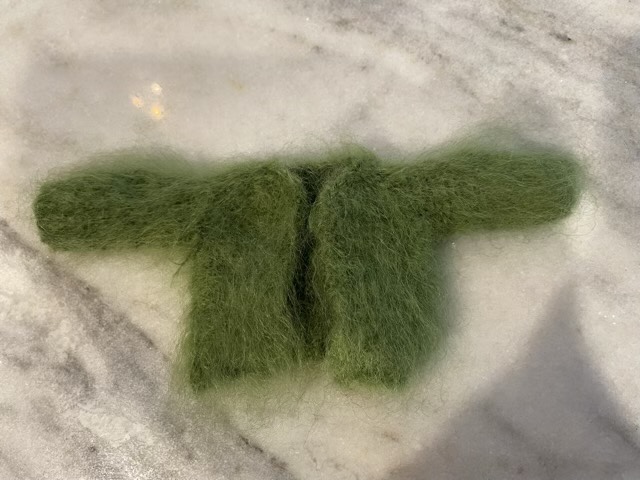
There was more mystery about the little cardigan; the inside was very, very fuzzy. Was it brushed? What was going on? Some insight occurred when I knit the sleeve. The yarn had a long halo (fibers that stick out from the spun yarn), and when knitting the garter stitch, those long fibers hung out on the purl side of the garment because of the mechanics of forming the stitches. So the inside was significantly more fuzzy than the outside. Some time rumbling about the bottom of several yarn stashes probably helped the condition as well. After finishing the missing sleeve and blocking the cardigan, I decided the fuzzy must be embraced. I turned the sweater inside out and gave it a brush to raise and align the fibers. It is so fuzzy, the inside out seams don’t even show.

Finished sweater, inside out, blocked, and brushed

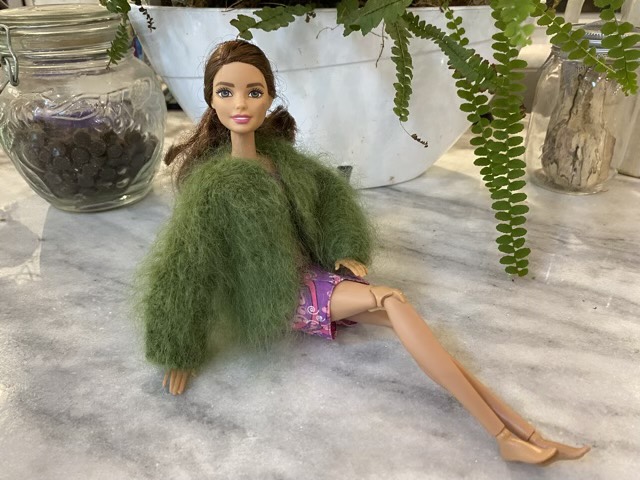
The cardigan has a very mossy look. There was just enough yarn to complete the sleeve and sew up the seams; I trimmed about 3” of waste once the ends were woven in.

Made to Move doll modeling the cardigan

Starting small

I was curious about how a top down cardigan might be constructed. I purchased a knitting pattern, but was quickly overwhelmed reading through. I decided I needed to start small, with scrap yarn, so found free instructions on how to knit a cardigan for a doll. I don’t need as much yarn or time for doll clothes as I would for human-sized apparel, it gives me a good idea on how construction proceeds, and it makes my youngest happy.

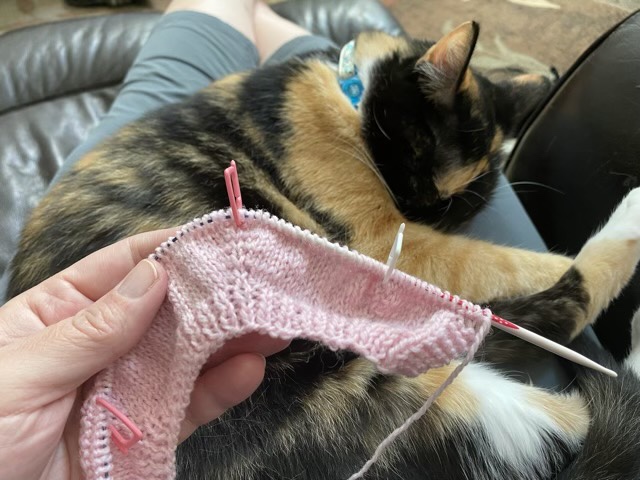
Starting a doll cardigan, top down

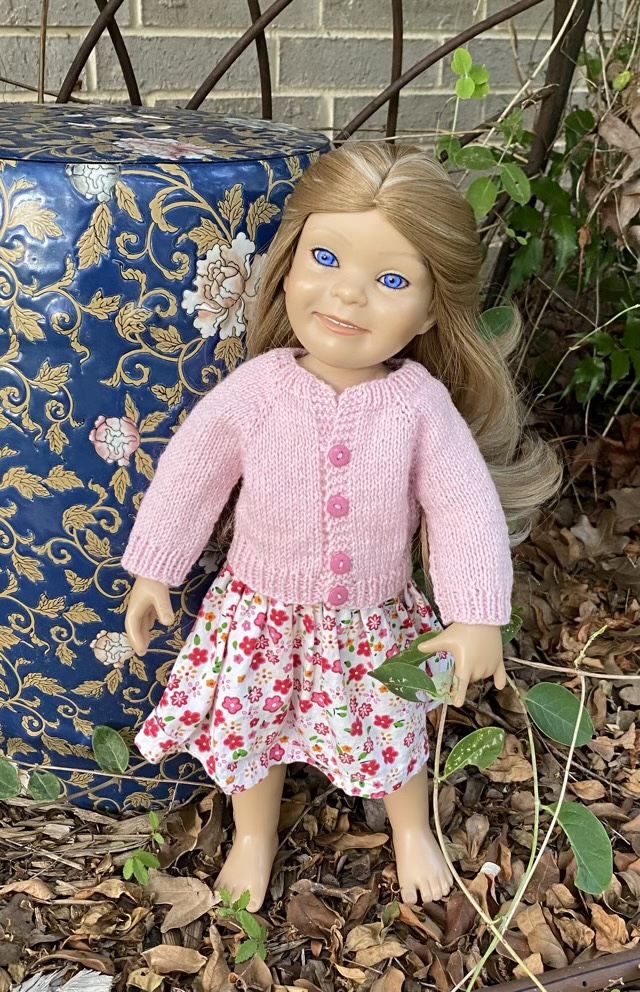
So a raglan sleeved cardigan knitted top down is a brilliant thing. There are less seams to match, and it is easier to do custom sleeve and body lengths (which my entire family needs). My doll sweater has some mistakes, but the purpose was to understand, not be perfect. I’m quite pleased with the knowledge gained.

Finished raglan cardigan with pink buttons on a 16” doll

I have made human sized garments, but they have been mostly ill fitting. But I feel my knitting skills are improving, and I am ready to move on from hats and scarves. I do have two in-process projects to wrap up before rushing onward, perhaps this idea will provide motivation.