I finally mounted the samples from spinning Jacob’s sheep on a fiber page.
Photo description: Jacob’s sheep 12×12 scrap book page with four paper bobbins of spun and plied yarn, unspun roving in a bag, nålbinding swatch, knit swatch, crocheted swatch, and woven swatch
I do like spinning Jacob’s sheep wool. I like the natural color variation, and it makes me happy to see the colors spiral together. The sheep are wicked cool looking too.
My swatches are getting more consistent and closer to my 4×4 inch goal.
I think it took me so long to put this together because my fiber books are undergoing transformation, mostly in my head, but there are things I want to do differently. I have a new cover design coalescing in my brain, and I think I shouldn’t pre-cut my blank pages with my Cricut cutter, but hand cut them to fit each project. Changing that the unspun fiber goes into a bag instead of a box was a great move. Now to implement the rest.
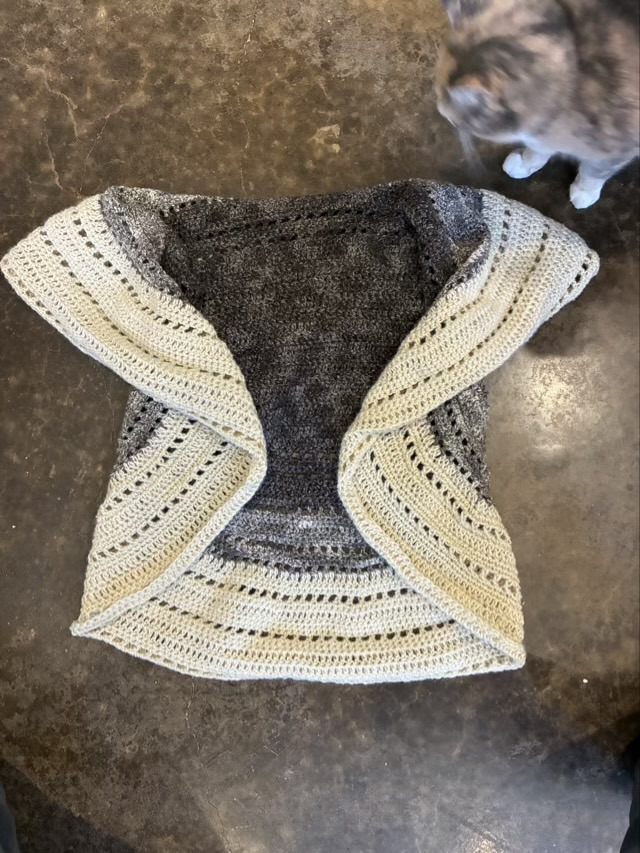
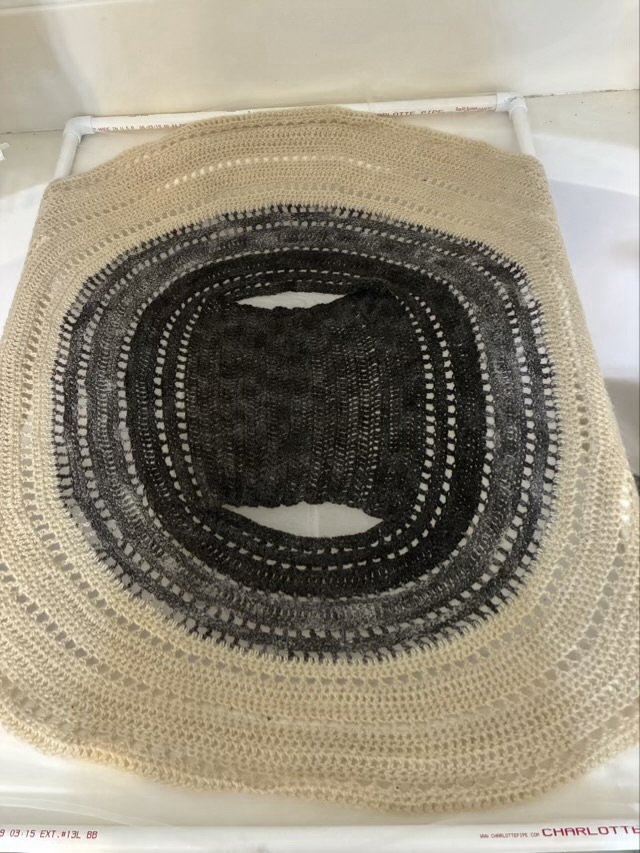
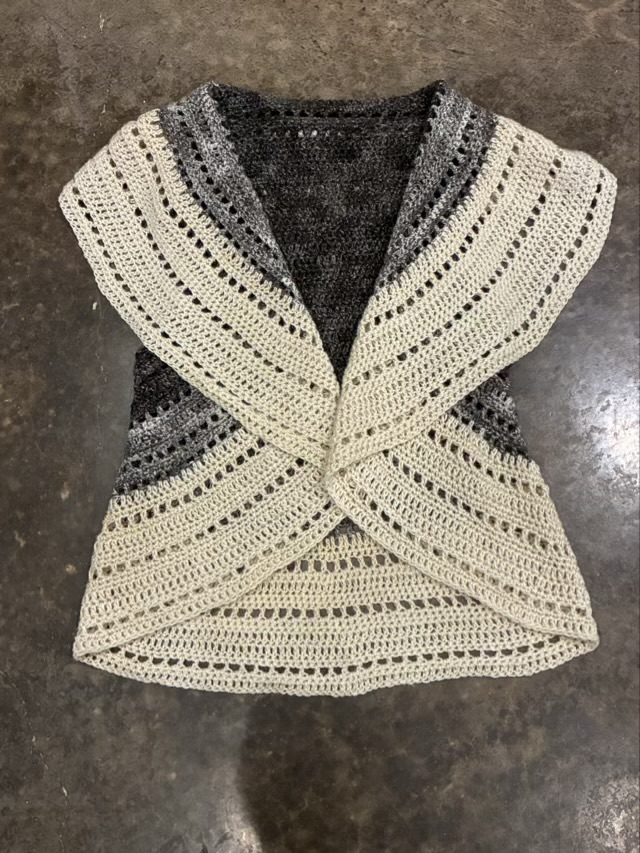
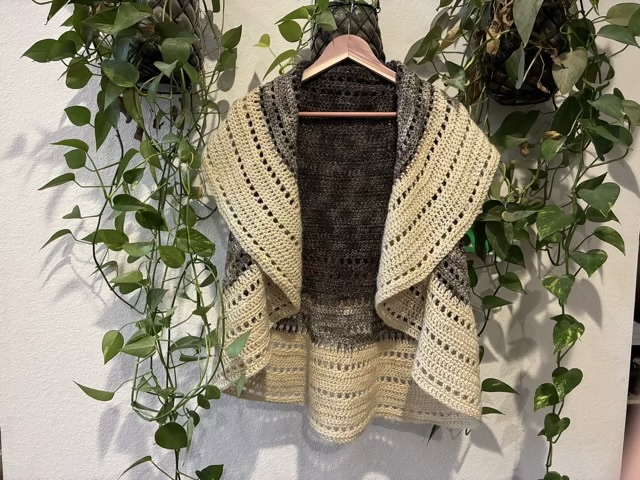
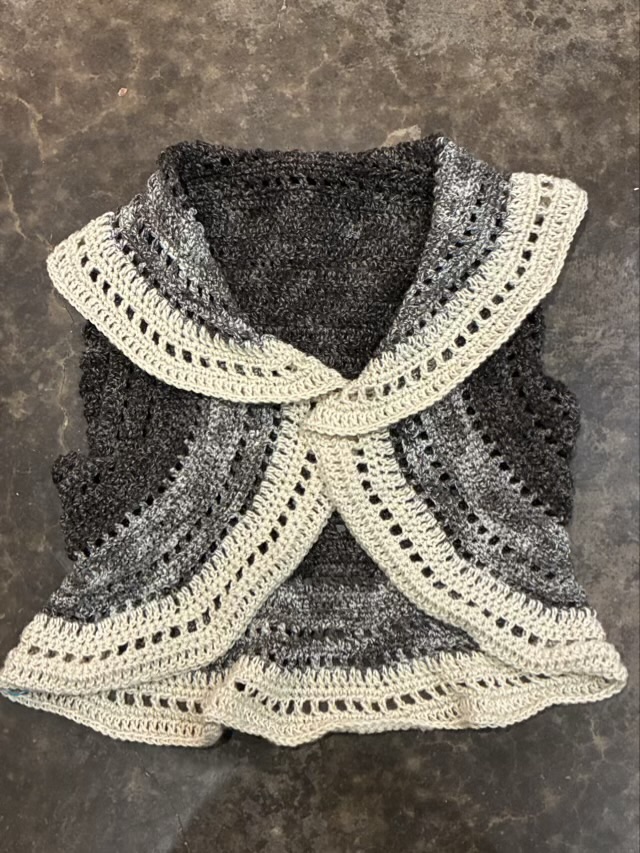
When I’m not sure how much yarn I have, I try to pick a pattern that is flexible. This circle vest from LazyTCrochet Designs fits the bill. It is crocheted from the inside out, and the circle can expand. One downside of the pattern is that it only has two sizes, s/m and l/xl. It has instructions for expanding the circle for coverage, but that only goes a few more rows. The idea is expandable though, and the pattern is inexpensive.
Photo description: in-process circle vest crocheted with hand spun Jacob’s wool, pattern by LazyTCrochet Designs
I used the darker of my hand spun Jacob’s wool yarn for the center, then the lighter color for the next band. This is as far as my Jacob’s wool could take me, aside from a few small scraps. The vest needs more rows, so I’ll add some hand spun Teeswater wool for the next row. I just need to finishing spinning it first. Both Jacob sheep and Teeswater sheep are on the endangered list and part of the “Shave ‘Em to Save ‘Em” initiative by the Livestock Conservancy. I’m considering calling this my “Shave ‘Em Two Save ‘Em” vest since it will have two breeds from the list. Unless I end up needing a third breed, then I’ll have to rethink the pun.
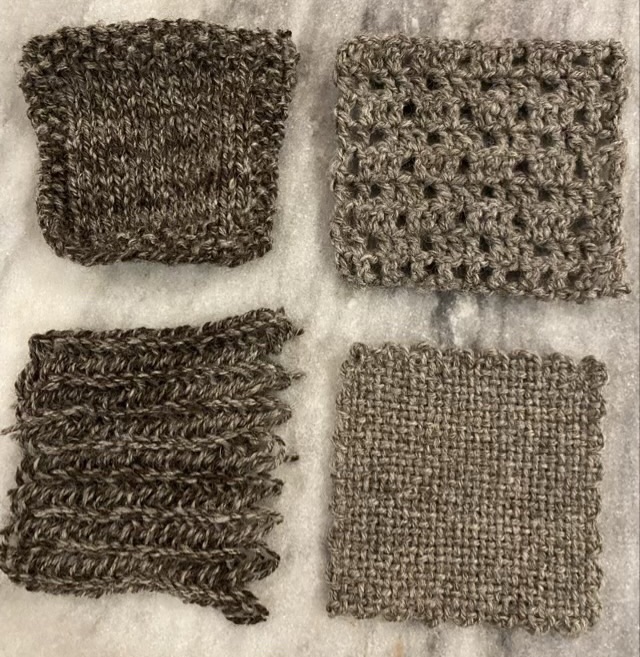
I started on the swatches for Jacob’s wool, and then finished them all in a day, even the nålbinding. I must have thirty other projects I’m not working on. Hm.
Photo description: four squares made from hand spun Jacob’s wool: knit (top left), crochet (top right), cut open nålbinding (bottom left), woven (bottom right)
I had two large cakes of yarn, and two small nostepinne balls, so I used the smaller amounts to make the swatches. I hope to make something wearable out of the larger cakes of yarn.
I used my hand spun Jacob’s wool yarn on my new Zoom Loom. I did the three preparatory wraps a little looser this time (as instructed) and it helped ease the way when it came to weaving.
Photo description: three layers of wrapped Jacob’s wool yarn on a 4 inch Zoom LoomPhoto description: Weaving started with a six inch needlePhoto description: finished plain weave square
I’m in awe that these little woven patches lay flat, both with the Samoyed yarn and the Jacob’s wool yarn.
I’ve wound my handspun 3-ply Jacob’s wool yarn into center pull balls. But how much do I really have?
Photo description: two cakes of yarn and two center pull balls of yarn in different shades
Hand woven magazine published an article about yarn balances. I followed their instructions to make a balance and used acrylic yarn of a known weight per yard.
Photo description: yarn balance with known acrylic yarn on the left and unknown yarn on the right
Because of my scientific background, I have to do my math by using the factor-label method (here is an explanatory video). I know that the yarn on the left is 142 grams per 241 meters, so my 120 cm weighs 0.071g, a weight I would not be able to measure with a kitchen scale. My hand-spun yarn that balances measures 97 cm. I now have the weight per length and can calculate yardage. (Oh yes, I completely mix my metric and standard measurements, but as long as all the labels cancel properly, we’re golden.)
Photo description: scratch pad with hand written yarn math for all four shades of yarn
To see how accurate the calculations are, I measured the lightest ball of yarn by laying out a yard with tape on a counter. I measured 29 yards. I put a section of the yarn on the balance, did my calculations and predicted 33 yards. This is a 12% difference in weight, which I find an acceptable margin for error. When planning a pattern, you should have at least 10% more yarn than what is called for. In the case of my hand spun yarn, I will pick a pattern that needs at least 12% less than 530 yards I have.
Photo description: silver ball of yarn with scrap paper hand written math
This was an interesting exercise, and confirmed what I felt when looking at the yarn: it isn’t enough to make a vest. It may be enough the make a hat or two.