Dye fail

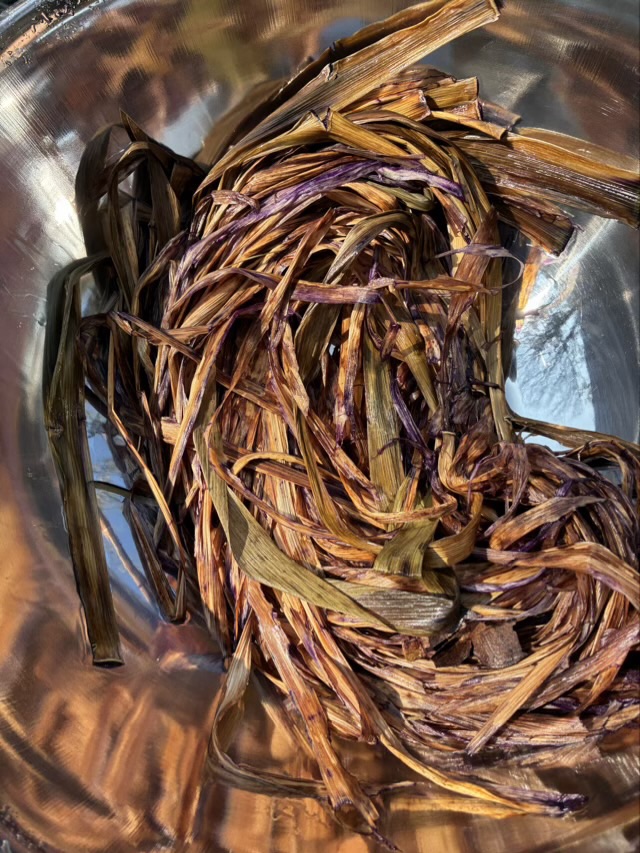
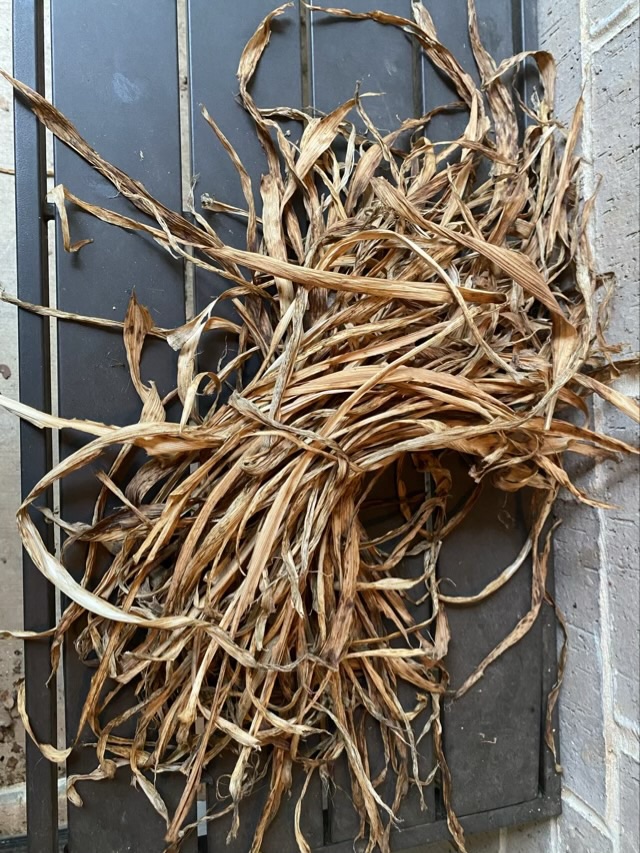
I’m not a dyer. I don’t like dye. I don’t like the accidental stains, the bleeding, the quasi-chemistry that is more art than science. But I thought I would try to dye some dried iris leaves. I pinged my wild basket group, and one person said she dyes iris leaves with regular dye meant for cotton. I bought some Rit dye for cotton and natural fibers, followed the instructions for the hot water dye, thinking that had the most chance for success. I added salt and dish soap as instructed, and about a quarter of the bottle of dye. I put in the rewetted leaves. I stirred. The dye and leaves refused to connect. I added a cup of vinegar. I stirred. I added the rest of the bottle of dye. I stirred. I checked that the temperature was staying at 140 degrees Fahrenheit on the stove. I stirred for 40 minutes. The leaves should have been absolutely black for the amount of dye that was in the bath. They were stubbornly the same original color. I drained the dye bath outside and rinsed the leaves, and rinsed, and rinsed (have I mentioned how much I detest dyeing?) and rinsed some more. There were faint purple streaks in the iris leaves, but not even close to the color I was hoping for. I thought I rinsed it enough, but when I handled the leaves, my fingers turned purple. The dye liked my skin better than the iris leaves. Arg.

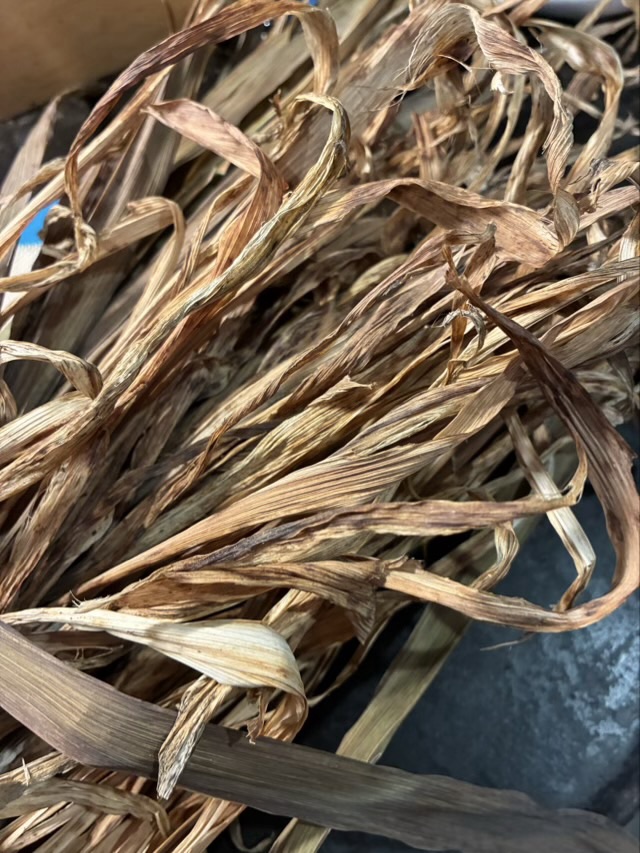
Photo description: dried iris leaves
Photo description: iris leaves after rinsing, the faint bits of purple disappeared, well, didn’t disappear, it left the leaves and stained my fingers instead

I went back to my post in my basket group to report the failure. I noticed another person said they soaked iris leaf pulp in mordant before dying. When I feel less vitriolic toward dyeing, I will research mordant, and maybe look for a book on dyeing that has the actual chemistry explained. Right now I would rather stick with natural colors that don’t stain my fingers.

Inside vs Outside

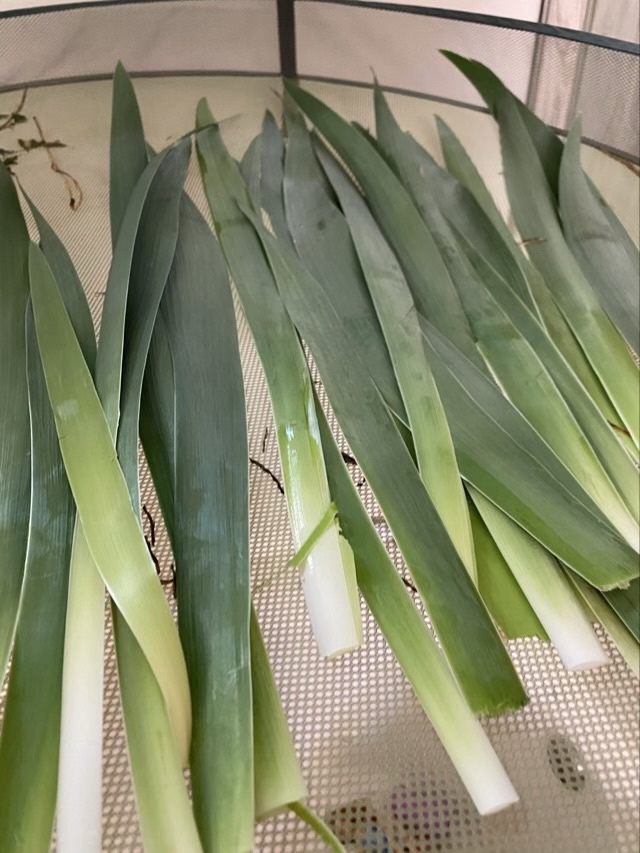
In April I gathered some iris leaves and let them dry inside on a drying rack.

Photo description: freshly picked iris leaves on a mesh drying rack
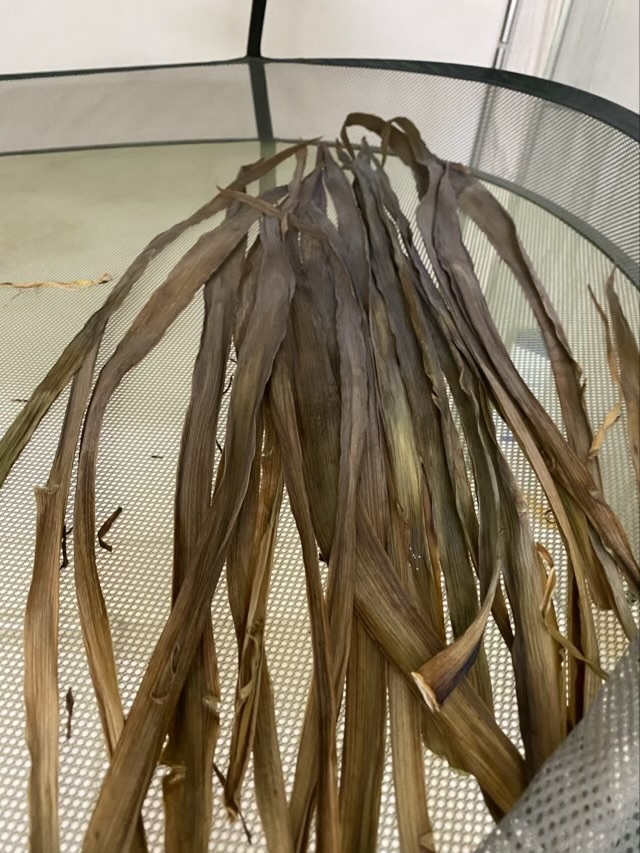
Photo description: same iris leaves after five months
Photo description: dried iris leaves gathered from outside in September

I was surprised at the color difference between iris leaves dried inside, and those left to dry outside. The inside leaves are so much darker, but the color is more uniform. The outside dried leaves are more golden, but with streaks of black. What isn’t surprising is the grasshopper bites on the leaves left outside on the plant. There isn’t much grasshopper activity in April, but as the summer rolls through, and most of the other greenery turns brown, the grasshoppers go after the iris.

The next step is to see if there are any differences in how the leaves weave up.

Update: Twined bracelets

I added a few more twined bracelets made from different natural materials and had a whole wrist full of test subjects.

Photo description: six twined bracelets with labels: Bark, Daylily, Corn, Daffodil, Iris, Grass

The daylily is the oldest at 12 days, corn a close second at 11 days, then daffodil, bark, grass, and iris all at 6 days. The bark knot didn’t want to stay tied, but they all survived showers and regular wear. What they didn’t survive was my sensory overload. It felt like they were getting tighter around my wrist, although photographic evidence doesn’t really show a difference.

Photo description: same bracelets six days later

Because the bracelets were bothering me, I subjected them to a pull test. The surprising result was that the daylily bracelet did not break. The others all ceased to be connected. The bark, grass, and iris all had the stop knot pull open, the corn leaf and daffodil broke along the length of the twining.

Photo description: twined bracelets broken from pulling

The lone daylily bracelet was allowed to remain on my wrist. I made this of dead and partially dried daylily leaves that were lying near the base of the plants. Because the leaves were not completely dried they were easy to twine without breakage, but they also had some shrinkage which causes the twine to separate and be a little spring-like. We’ll see how long it lasts on my wrist. It is light and not biding with a little give, so it has a chance.

Basket experiment: Iris and Daylily

I gathered dead leaves from the base of several iris and daylily plants at my folk’s house, along with some daylily stems. To make them flexible I wet a large towel and wrapped the leaves and stems with it, leaving them in the towel for a few hours.

Photo description: gathered materials laid out in an old terry cloth towel

I chose ten daylily stems for my base stakes and did a plain weave 5×5. I then twined iris leaves around the stakes, creating a square basket. To add a new leaf, I folded the old leaf end into the new leaf end, twisting them together to lock it in.

Photo description: basket in progress showing very long stakes and several twined rows

I still need to study how to do borders for the top. I ended up clipping the stakes short and tucking in the twined ends for this basket.

Photo description: twined basket with cut stakes
Photo description: side of twined basket
Photo description: bottom of twined basket

I left the basket at my folks’ place to dry. The leaves had spots of mold, so it shouldn’t be used for foodstuffs, but after a solid coat of sealer, it could be a desk basket.