Crochet star, first attempt

Looking at the embroidered star I posted about a couple days ago, I wondered if I could crochet the star into the top of a hat.
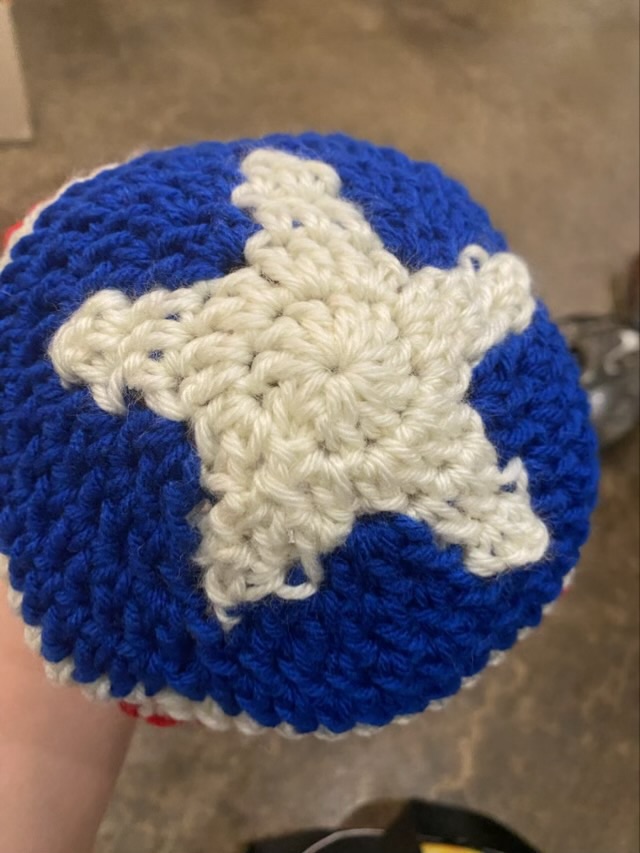
Photo description: crocheted white star with blue background

I started with ten stitches in a magic circle with white yarn, and did the second row still all in white, increasing each stitch. On the third row I added in the blue for the background and did the increases for the round in blue. I carried the white and blue yarns around, and switched color on the last move of the prior stitch. I finished with a row of blue, then made alternating rows of white and red down the sides. (I actually managed to make a beanie this time, instead of a beret, because I found the white yarn that matched the weight of the red yarn.)
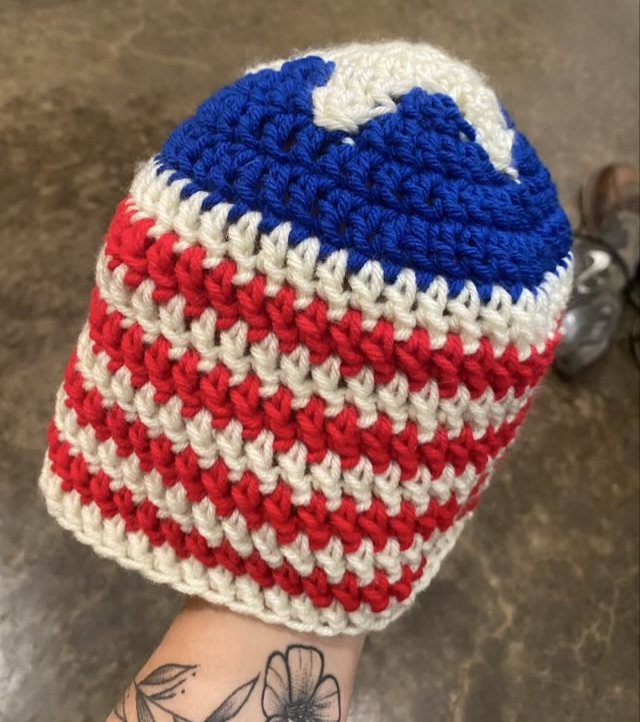
Photo description: alternating rows of white and red crochet for the sides of the hat

I think I can make the star better. The nature of crochet makes it twist a little left, I think I can use that trait to make the points pointier.
Texas beret

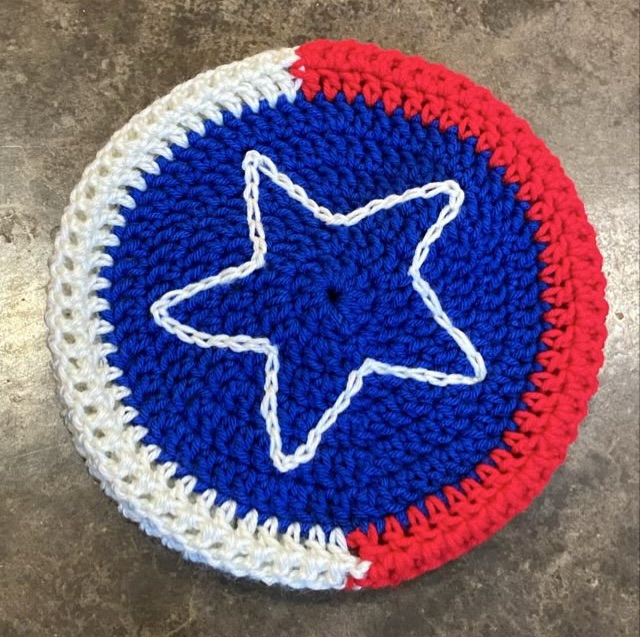
There was red, white, and blue in the acrylic yarn I was given, and I had the idea of making a Texas flag beanie with a blue top and the sides red and white. My beanie-to-beret mistake here was I used a crochet hook a size or two too big, and the white yarn was a smaller diameter than the red and blue. The crown spread out flat instead of making a gentle curve, so once again I changed the plan to make a beret. The white yarn was the softest, so I used that for the single crochet ribbed band. To finish it off, I embroidered a star outline with the white yarn.

Photo description: blue crocheted circle rimmed with half white, half red, with a chain-stitch embroidered star in white on the blue
Photo description: band side of the hat showing the ribbed band inside the white and red sides

To get the two halves of the hat different colors, I didn’t work in the round, and didn’t carry the yarn, but rather worked half the stitches in white, switched to red, joined the white at the other side, chained 2, turned the work, and did the red back to the white, picked up the white and stitched to the red. All stitches are double crochet (American notation).

Bumpy beret

Once again distracted, I decided to try a crochet puff stitch to add some texture to a hat. And again, my circle expanded flat instead of nice curve, so I finished it as a beret rather than a beanie.

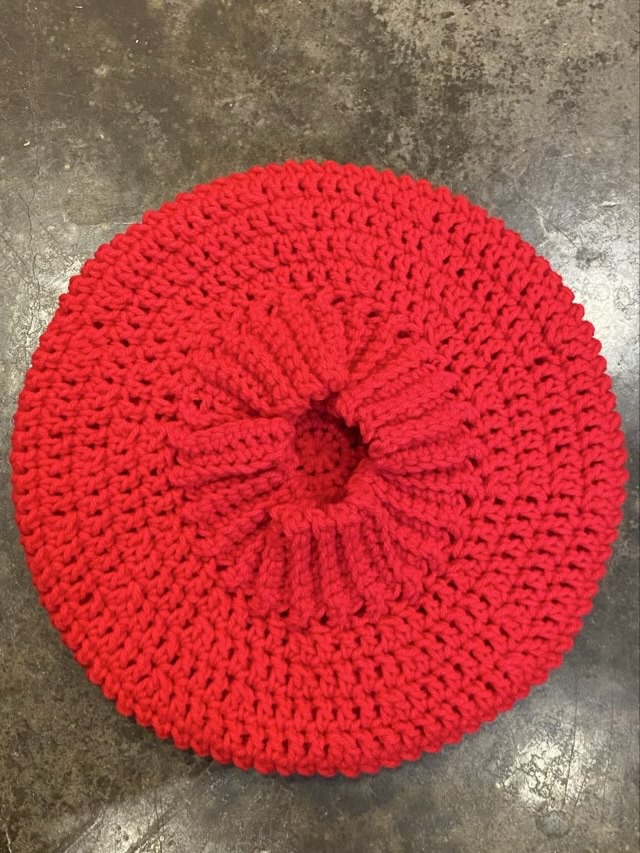
Photo description: red acrylic beret top with seven puff stitches per row, staggered, alternating double crochet rows with single crochet plus puff stitch rows
Photo description: underside of the same beret showing the double crochet rows finished with a single crochet rib band

A puff stitch uses techniques from both increase and decrease stitches. Essentially you increase six double crochets in one previous stitch and finish by decreasing them all together so the stitch count doesn’t change. The width of the row does, however, which is why my circle just kept expanding.

Wavy beanie

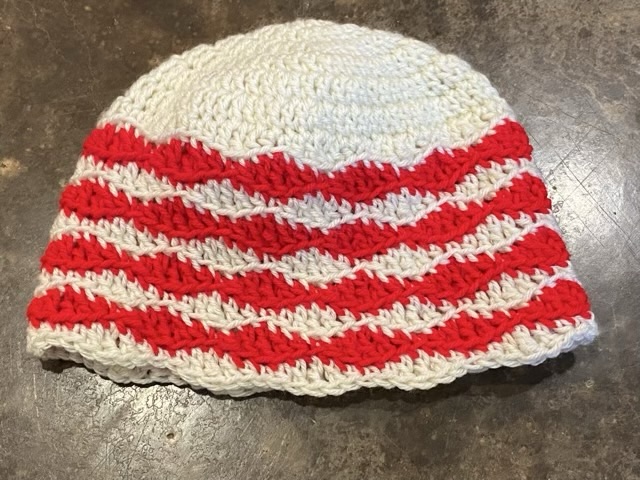
Next on the hat docket: stripes! But with a twist, or rather, a wave. I started the beanie with rows of double crochet in white yarn, then used a combination of single, half-double, double and treble crochet stitches.

Photo description: white and red crochet beanie style hat

Technical details:

In a magic circle 12 double crochets (dc)

Row 1: 2 dc in each stitch (24 stitches)

Row 2: 2 dc, 1 dc around (36 stitches)

Row 3: 2 dc, 1 dc, 1dc around (48 stitches)

Row 4: 2 dc, 1 dc, 1 dc, 1dc around (48 stitches)

Row 5: 2 dc, 1 dc, 1 dc, 1dc, 1 dc around (60 stitches)

Row 6: chain (ch) 1, *half double crochet (hdc) in next stitch, dc, treble crochet (tc), dc, hdc, sc. repeat from * around. Before completing last hdc, join in new color. Slip stitch to the beginning of the round. Don’t cut old color, don’t carry the old color around.

Row 7: ch 3 (counts as tc), make all stitches in the back loop: *dc, hdc, sc, hdc, dc, tc. Repeat from * around. On last stitch join in first color.

Row 8: ch 1, *hdc, dc, tc, dc, hdc, sc. Repeat from * around.

Repeat rows 7 and 8 until desired hat length is reached.

Tips: when lining up the rows, the tallest stitch pairs with the previous shortest, so the tc will always go in a sc, and vice versa. Putting the stitches in the back loop gives a nice line to the wave.

Oops, it’s a beret

I’ve drifted off firmly into the realm of experimentation in this round of crocheted hats. Because I had red, green, and white in the stash of acrylic yarn, I wanted to experiment combining the colors with a spike stitch. A spike stitch drops one loop of yarn down a row, making a long V shaped yarn embellishment. I stuck with my standard double crochet hat pattern, making spike stitches every three double crochets and switching colors every row. I did not think that one loop of yarn would change the width of the row, but it did. Instead of getting a nicely rounded beanie, I had a flat circle. Hm.

Photo description: flat crocheted circle with rounds of alternating red, green, and white acrylic yarn, the spike stitches mixing the colors like a star burst

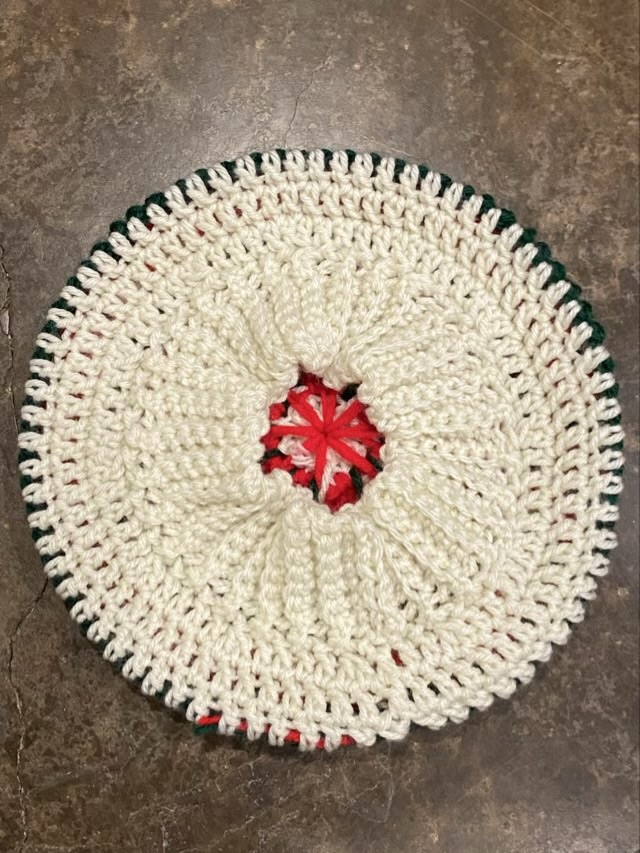
Time to make it a beret instead. I switched to using just the white yarn with no spike stitches, and the fabric immediately made the turn without decreases. I didn’t have to make decreases until round three. Then I switched to a single crochet parallel rib for the last band. The ribbing is very stretchy and although it looks in the picture like a small opening, it expands to fit a head, and lays flat for storage (happy accident).

Photo description: under side of the beret all in white with three rows of double crochet and a band of single crochet rib