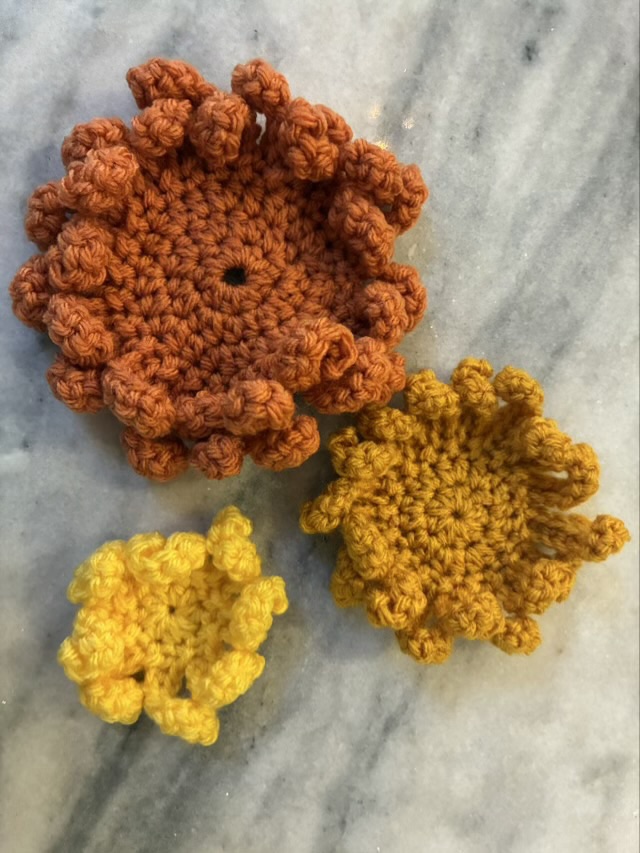
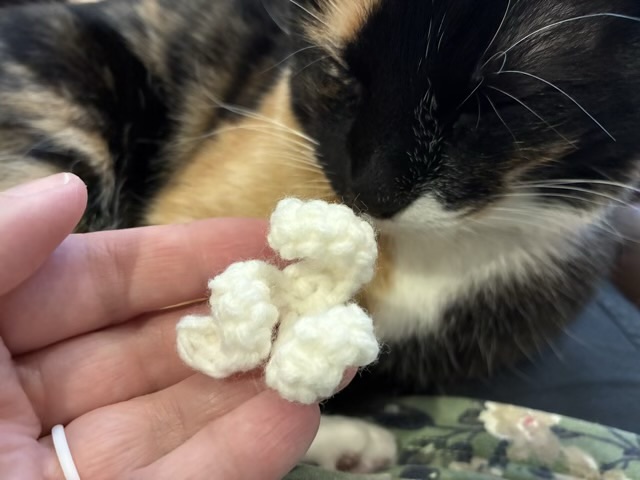
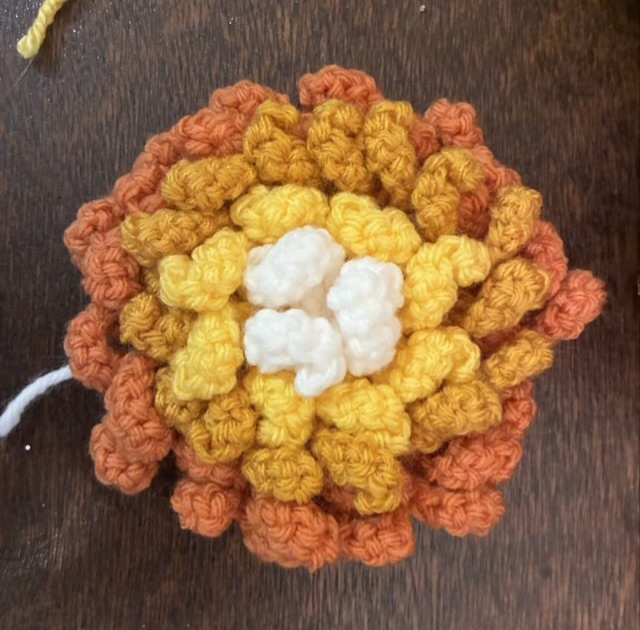
I’m experimenting with crocheted flowers for my wreath. To make a mum-like flower I used four colors of acrylic yarn and made four layers of petals, each with the same type of “petal” but with different diameter centers and thus different numbers of petals.
Photo description: first three layers for the crocheted mum in shades of yellow and orange showing the difference in center size and petal countPhoto description: center layer in white acrylic yarn with no center and just three petalsPhoto description: the assembled crocheted mum with four layers of color from white to yellow to orange
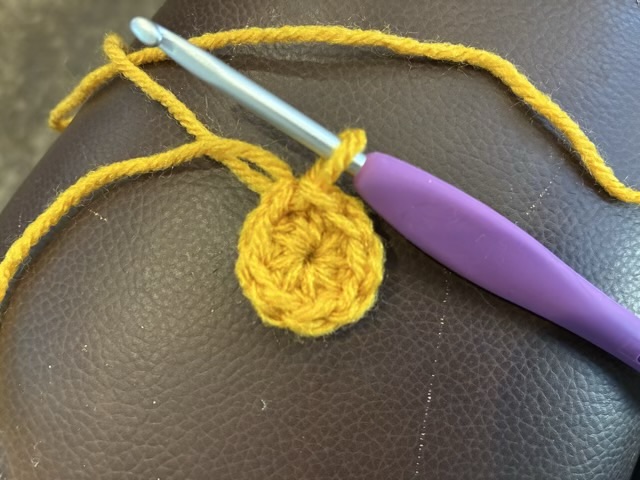
To make the layers, half double crochet into a magic circle eight times, slip stitch to join.
Photo description: eight half double crochets into a magic circle, with the circle pulled tight and slip stitched into the first half double crochet
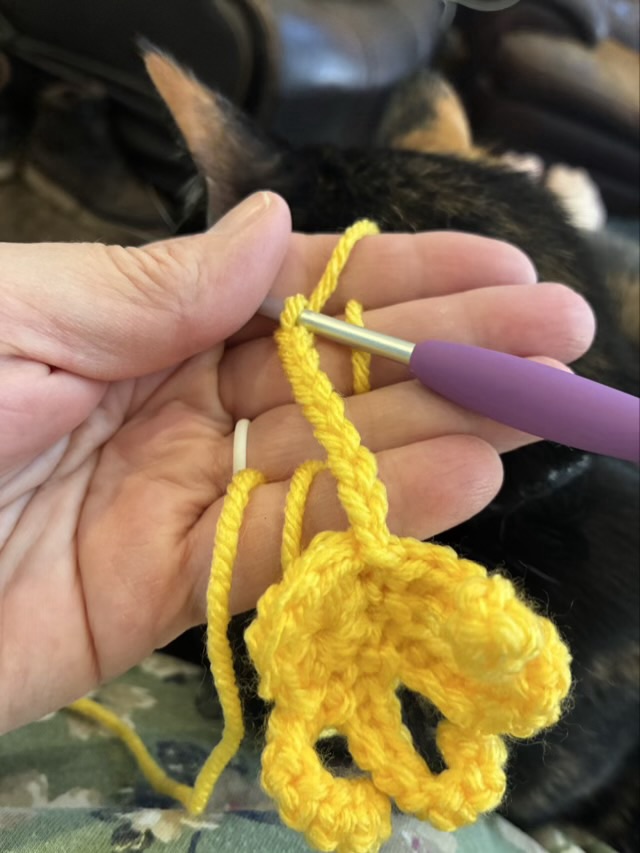
To make the petals, chain 9.
Photo description: yellow petal layer with the start of a petal with nine chain stitches
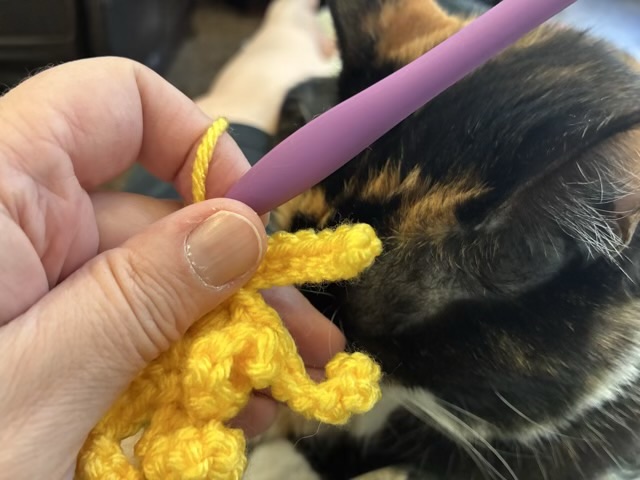
Skip the first chain and single crochet eight along the rest of the chain.
Photo description: single crochets along the chain to give the petal width
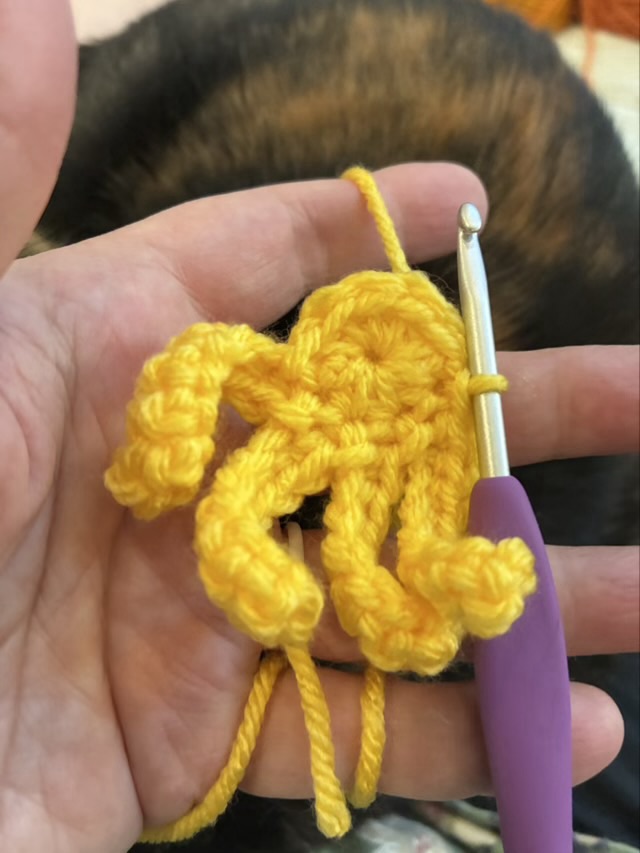
Slip stitch into the next double crochet on the round. Then make the next petal.
Photo description: four petals completed on the yellow round
For the other layers, add a round of half double crochet increases to the center before adding the petals.
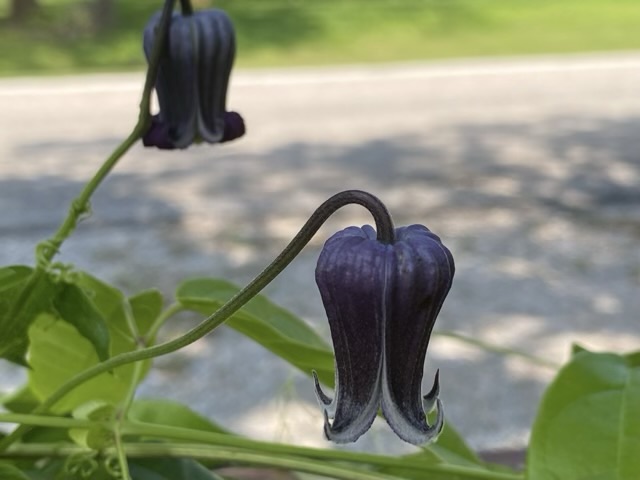
My husband spotted something unusual coming up out of our crossvine, inverted pitcher-like purple flowers that were very different than the crossvine’s peachy-orange vessel flowers. The iNaturalist app gave us the category “clematis and leather flowers”. Searching leatherflowers, the purple leather flower, Clematis pitcheri, was a visual match. We certainly didn’t plant it, but it is quite welcome!
Photo description: two purple leather flowers coming up between crossvine leaves
For those curious, the flower is quite robust, and the curling tips feel very much like leather (as a leather worker, I feel confident in that assessment.) I did not dissect a bloom, but if it continues to do well and produces more than just three flowers, that will be a future project.
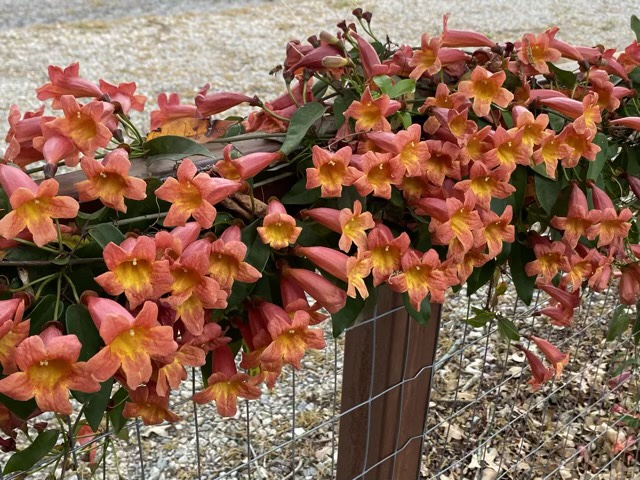
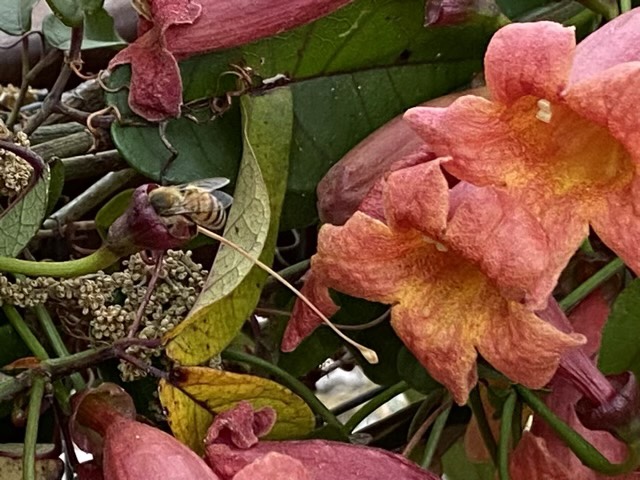
The crossvine flowers are starting to fall away. The profusion of blooms was truly spectacular this Spring. Unlike azaleas, the crossvine will bloom again, several times, before next Winter.
Crossvine flowers fallen to the groundCrossvine in bloomBee visiting the stem after the bloom has fallen
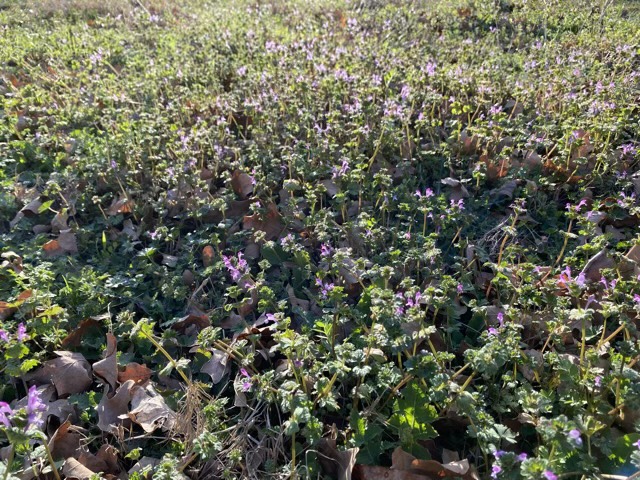
Yup, spring. And a wetter spring than we’ve had in a few of years. We have a bumper crop of henbit, with its pretty purple carpet, in our meadow as well as throughout the countryside and town lawns (the ones that go natural, at least).
Henbit in the morning light in the meadow
It was easy to pick a handful (for at least the past two years it wasn’t), and offer a snack bouquet to the chickens.
Chickens considering a henbit bouquet
This is the time that I get a little wistful that my hens can’t free range the meadow, but I haven’t done a metal sweep of the whole meadow, oh, and there is the plethora of predators. There’s that. Everything likes to eat chickens.



 Critters and Craft