Change of plan

Ripping out knitting or crochet is just a matter of pulling. When I decide to undo a looped project, it isn’t that easy. I had started a new loop and twist bag, but then learned of a new-to-me ancient technique of looping around a core cord. That sounded much more interesting to try than continuing on a second iteration of the same bag I’ve made before. So I pulled out the knots, first the twist, then the knot, for each loop.
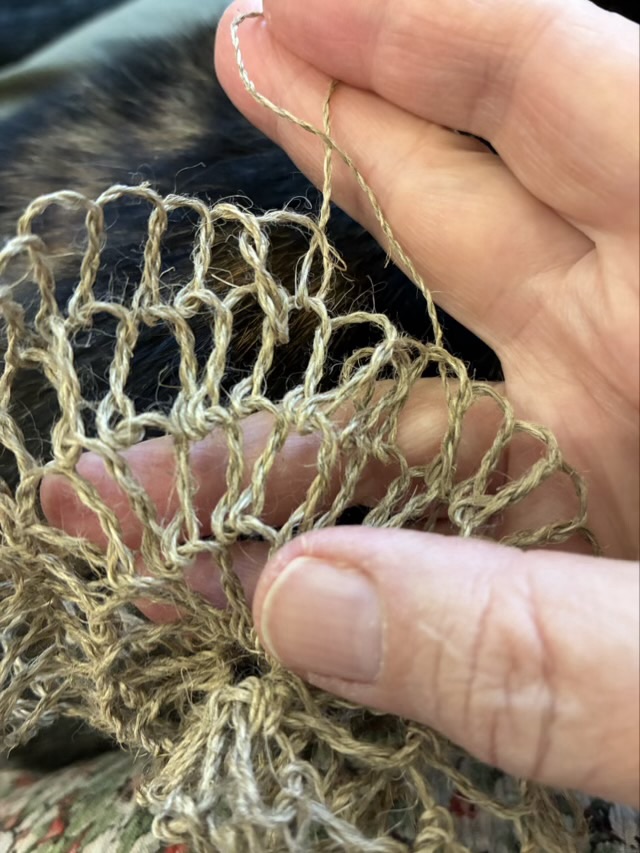
Photo description: one twist removed from the beginnings of a loop and twist net bag

The whole of the cord has to be pulled back through each twist and loop, and since I made the cord as I went, I had quite a lot of twined flax to pull through. Eventually it was too much and I kept dealing with tangles, so I cut the cord. I was able to recover a good bit of hand made twine, so it was worth the effort.
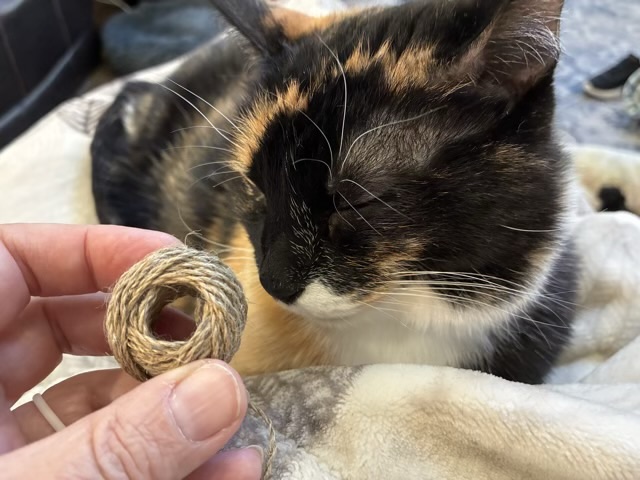
Photo description: small ball of recovered flax twine, with Izzy the calico cat as a background since she sat on my lap the whole time I was pulling out knots

This recovered twine will become the core for the loop around a core construction of the next project.

Blocking transformation

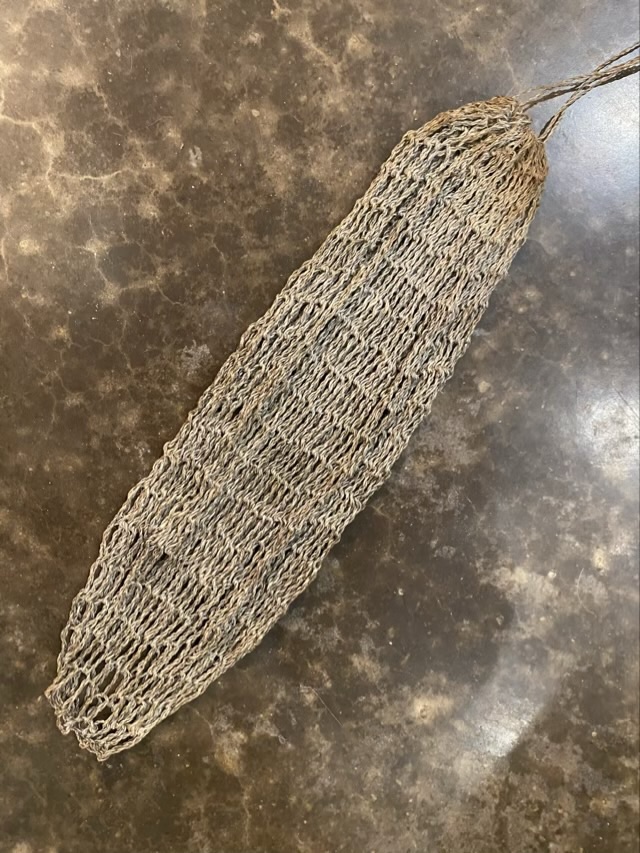
Photo description: linen loop and twist net bag

I finished twining and stitching a linen string bag using long line flax and a loop and twist construction. I would twine a section, then loop that section, so the bag was made with a continuous length of string. I did not used any tools other than my fingers. As you can see in the photo above it looks a little wonky. I took it to the sink, gave it a soak in tap water, then laid it out to dry. The transformation was remarkable.

Photo description: same bag after blocking

The bias twist in the stitches eased and it straightened out nicely. What wasn’t nice was the rust colored stains on the top.

Photo description: discoloration at the top of the bag

I used a different batch of flax for the last few rows, and I think something on my well water reacted to something in the flax, which is disappointing. I washed it with gentle laundry soap and laid it out to dry again.

Photo description: same bag after washing with gentle detergent

The rust color lessened, and now it looks more like a different batch of flax at the end, rather than a stain.

I’m also not pleased with the string ties. They are functional, but would be terrible to use to carry anything with much weight. The flax would hold, but the thin cord would cut into the flesh holding it. I do have an idea how to fix it.

Smarter with flax

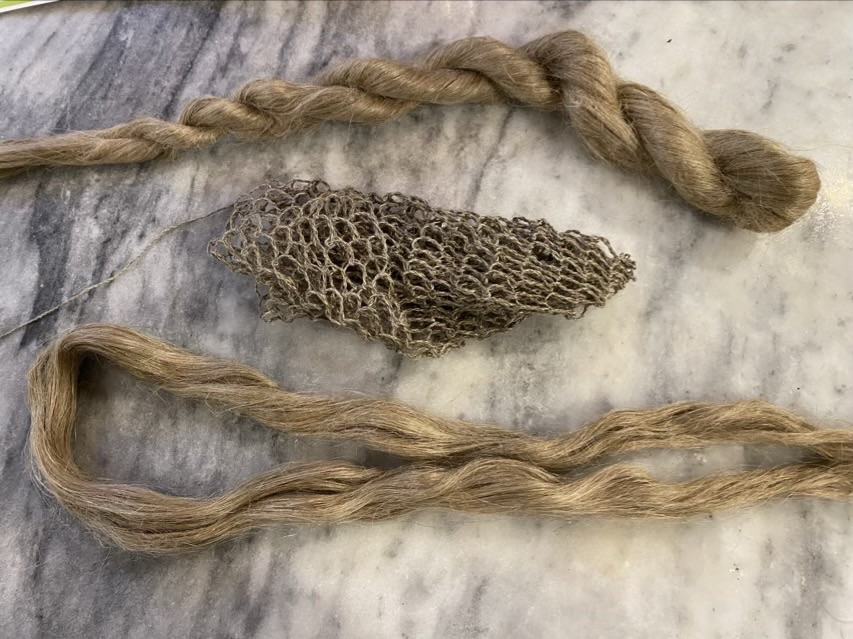
I started a twined loop-and-twist bag from a flax kit from Sally Pointer, historical educator. With the flax strick from the kit, I drew the fibers from the middle, which created horrible tangles of tow flax at the ends. (Tow flax is shorter lengths of flax, line flax can have strands over three feet.) When I ran out of long line flax, I attempted to continue with combed tow flax, which is doable, but I really like twining with long line flax, so I ordered another strick from a local company. I was smarter with this bundle of flax fibers, and actually read the flax passages in “the Practical Spinner’s Guide” book series. I separated out a section of the new flax, and put the rest aside.

Photo description: flax strick (top), twined loop-and-twist bag in progress (middle), smaller section of long line flax untwisted (bottom)

There are several methods of dressing flax to reduce tangles when spinning or twining, I chose to tie a ribbon around and drape the section over my shoulder. I sit on a high backed chair when I twine, so I can keep tension on the fibers by leaning back.

Photo description: section of flax tied with a ribbon to keep the fibers neater

I’d like the bag to be big enough to hold a pound of wool or so. The expansion capabilities of the loop-and-twist bag are quite extraordinary.

Snarl

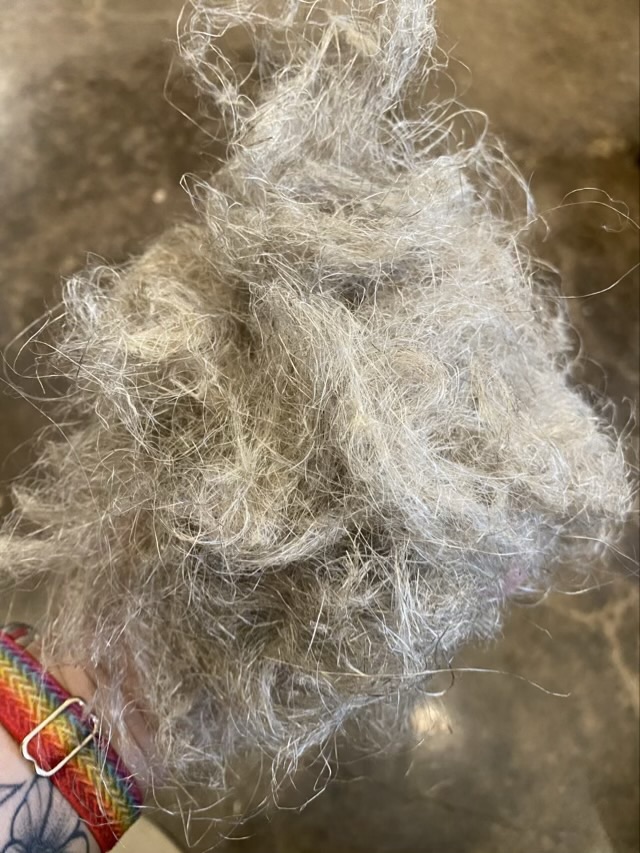
I am twining flax to make a loop and twist string bag. My source fiber was a strict of hackled flax: a bundle of long flax fibers. I should have spread the bundle out to make it easier to select a few fibers and pull them free without creating an unholy snarled mess. I’m learning.

Photo description: double handful of tangled flax fibers

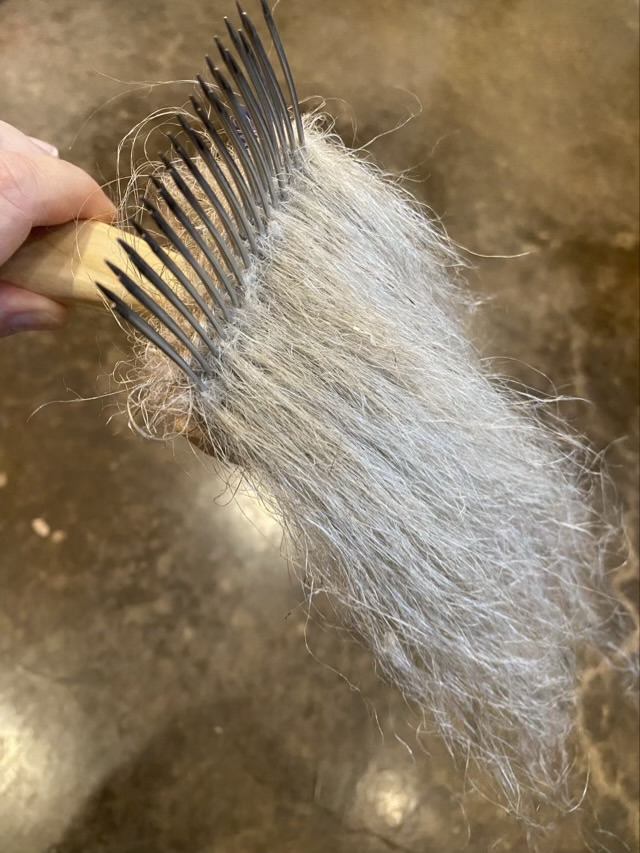
To recover what I could, I combed the tangle with my wool combs (I don’t have a hackle, yet.) This exposed the untangled fibers so I draw them from the comb and keep twining.

Photo description: flax fibers combed with wool combs

I found another bundle of flax in my fiber stash, and am going to continue making my bag bigger, but will be more careful pulling the long line flax from the next strict.

Bag progress

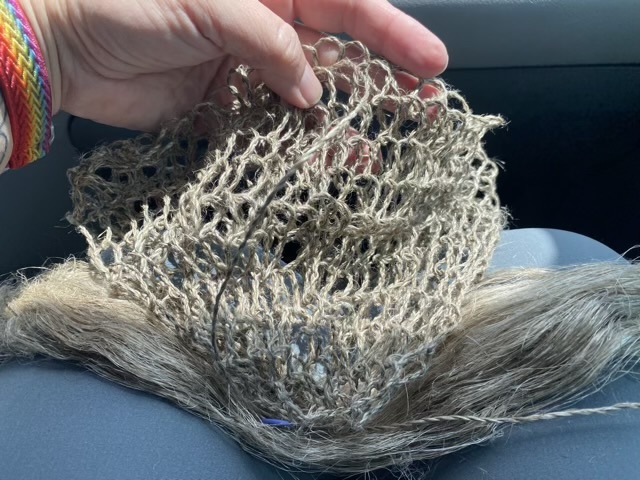
Photo description: loop and twist bag in progress next to flax fiber

After about 14 hours of riding in the car, I figure I have put about 12 hours into my loop and twist bag that I am twining from flax fiber as I go. I like the work because I can enjoy the scenery as we drive. I can both twine and loop mostly by feel (I do look when I join in new fiber.) I’m drawing my fiber from the center of the bundle, which I don’t think is the best way, because I’m getting tangles that have to be pulled out. I tried from one end, but the tangles were worse. I should lay out the fibers like flax spinners do, but space in the car is limited, and flax fibers can be over three feet long. The plan is to continue to twine until I run out of untangled fiber, then clean up the tangles and twine the string for the closure.