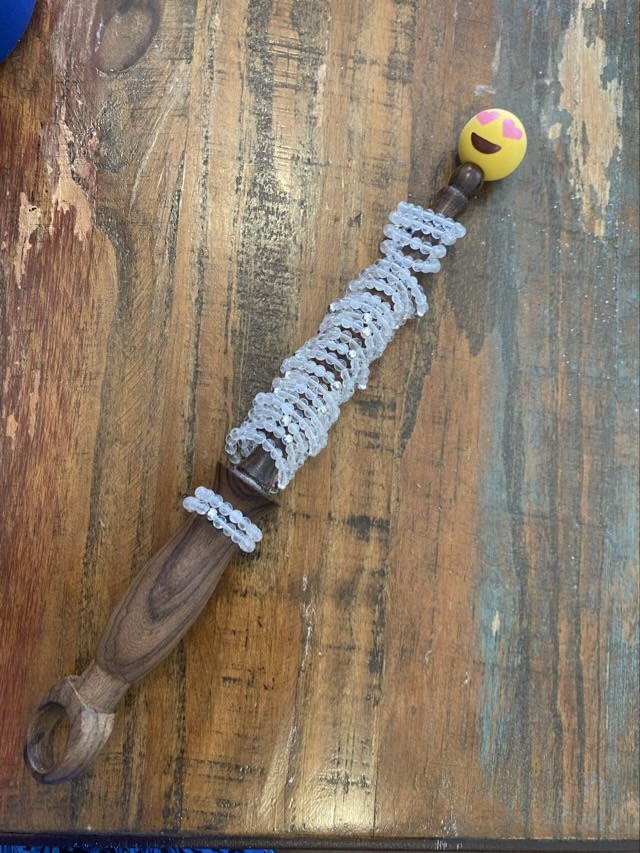
My turned rosewood distaff made by Enid Ashcroft is a beautiful piece of work. I appreciate that the top end is just the right size for a pencil topper, and not only does it function well for its intended purpose of holding fiber for spinning, it can also function as a ring holder. Pictured below it is holding many sizes of quartz bead rings.
Photo description: ring distaff holding rings with a heart eyed emoji topper
The thought process that lead up to this discovery was “I need something that will keep these rings in size order during transport.”
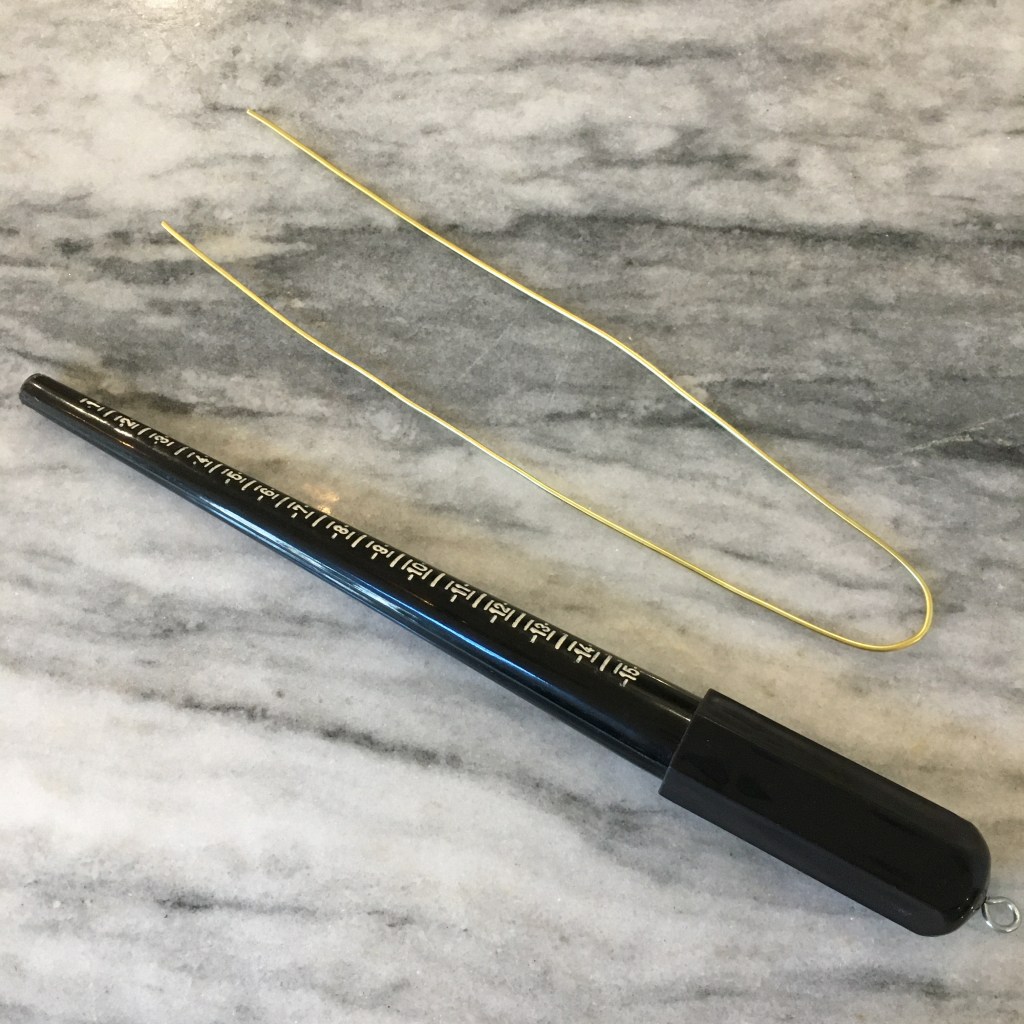
I found this article by Kim Caulfield which talks about distaffs for fiber management and has images of ancient distaffs. I love my rosewood distaff, but it doesn’t work well with the rolags I’ve been making when I card fibers. I noticed that the pictures of the distaffs in the article are smaller and made of bronze or glass, so I decided to try to make one out of wire. I had gold colored 14 gauge aluminum wire in my stash and used about 24” of wire.
14 gauge wire and ring mandrel
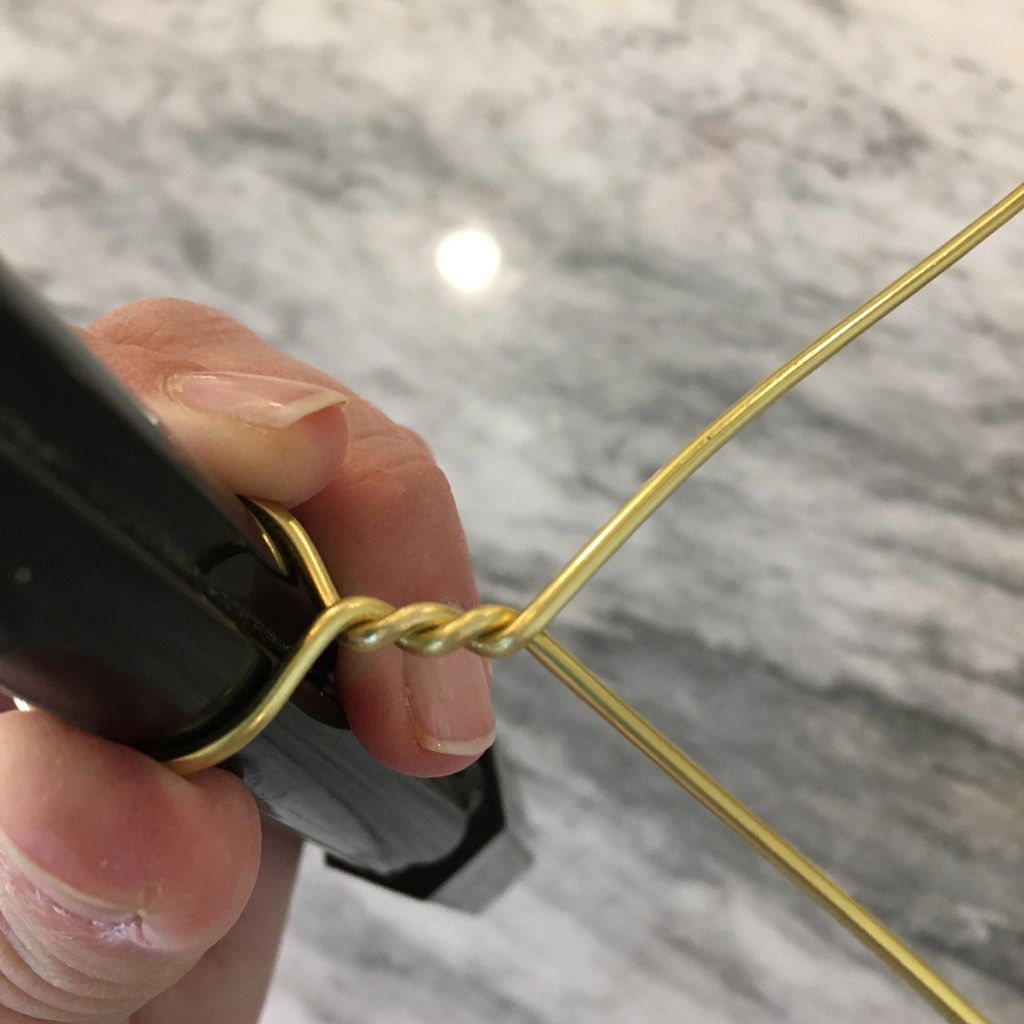
I used the ring mandrel to form the loop at the end, then twisted the two strands of wire together in a spiral about 8” long. I originally thought that the ring was worn like a wedding ring, but it is really used to stabilize the distaff, so I made the loop bigger than my finger.
Forming the ring and starting the twist
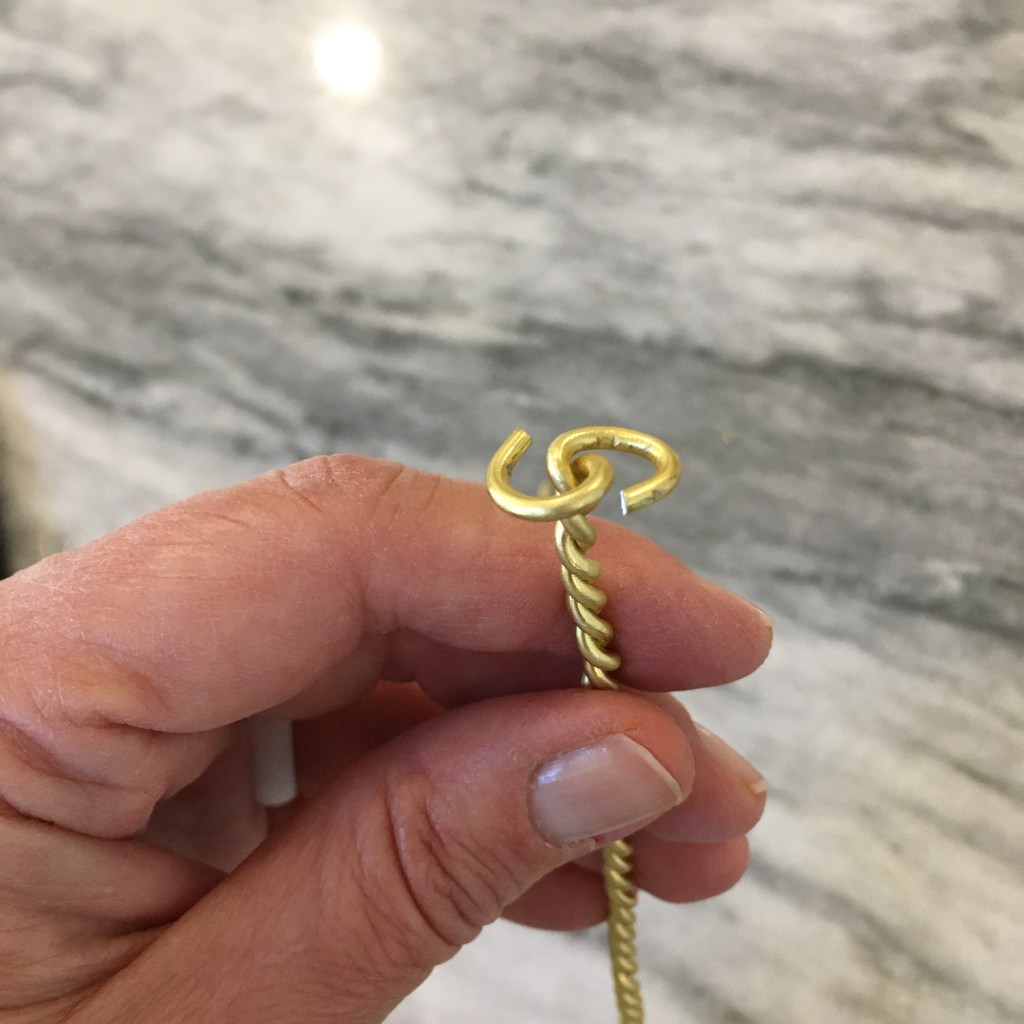
At the end of the twist I needed something to catch the fibers. Most of the ancient examples have a little bird, I think because the beak is sharp and will catch in the fibers. Rather than a bird, I made a spiral. It works well to twist it into the end of a rolag, then gently wrap the rolag around the shaft.
Spiral end
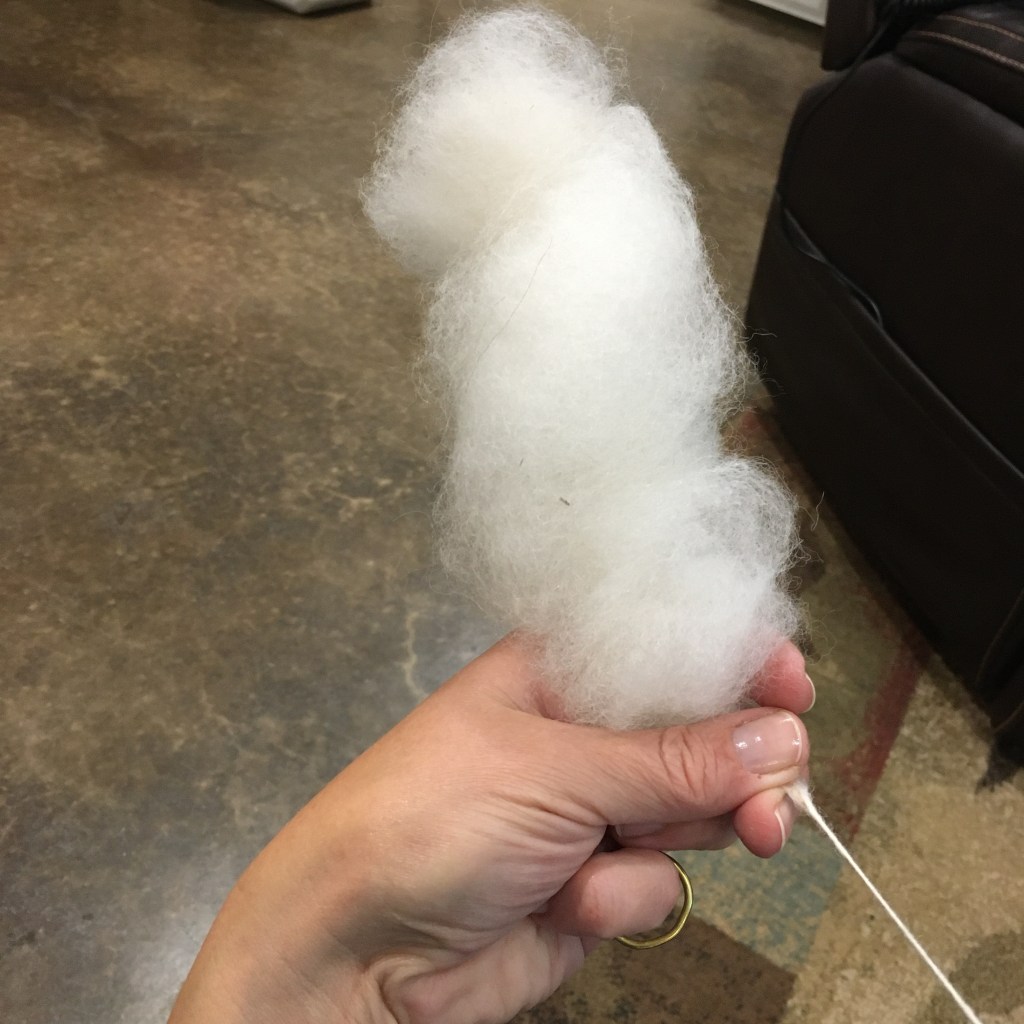
This distaff works so well with the rolags! The aluminum is extremely light, and it holds the fibers well so I am less likely to catch errant fibers in the twist of my yarn. A few fibers do get caught in the twist of wire, but it is a simple matter to free them.
Wire ring distaff in use with rolag of carded alpaca fiber
In the picture above I have an extreme wrist angle because I had trouble getting a photograph showing the fiber, the yarn, and the ring. In practice the distaff makes it easier on my wrist than working without one.

 Critters and Craft