First hen loss

Navi the hen has slipped this mortal coil. She has been struggling with impacted crop probably since last August. She was fine over the winter, crop heavy, but behaviorally fine, but the heat of summer caused her crop to expand until she was laying down more than walking. It came to two choices, put her down or try crop surgery. Turns out it wasn’t either/or. My eldest and I performed the crop surgery as described in Gail Damerow’s “Chicken Health Handbook”. We worked for 30 minutes before we couldn’t take the smell anymore and I couldn’t get anymore of the impacted material out. We cleaned her up and put her in the isolation ward. At first she seemed much better and was alert and more active. As time progressed, however, she was laying down again. Her crop was still full of matter, about the size of a billiard ball (this after we cleaned at least that much out). We made the decision to end her suffering. I followed Gail Damerow’s advice again this time from the book “Raising Chickens” and used the “suitable time-honored method” of dislocating her neck. It was not easy for me, but it was easy for Navi. I attempted a necropsy, enough to see that her crop was indeed still completely impacted with decaying grass and she would not have improved. My eldest joined me for the necropsy, and we even used masks infused with peppermint oil to mask the scent. It didn’t. I could not bring myself to do a complete autopsy. She was nothing but skin and bones and had been starving for a very long time. We built her a funeral pyre in the fire pit. We even added some twig boats to speed her journey. My youngest decided we needed a eulogy, so we shared some nice things about Navi the chicken, and my youngest is also working on gravestone designs. It is going to take me awhile to stop counting to 12.
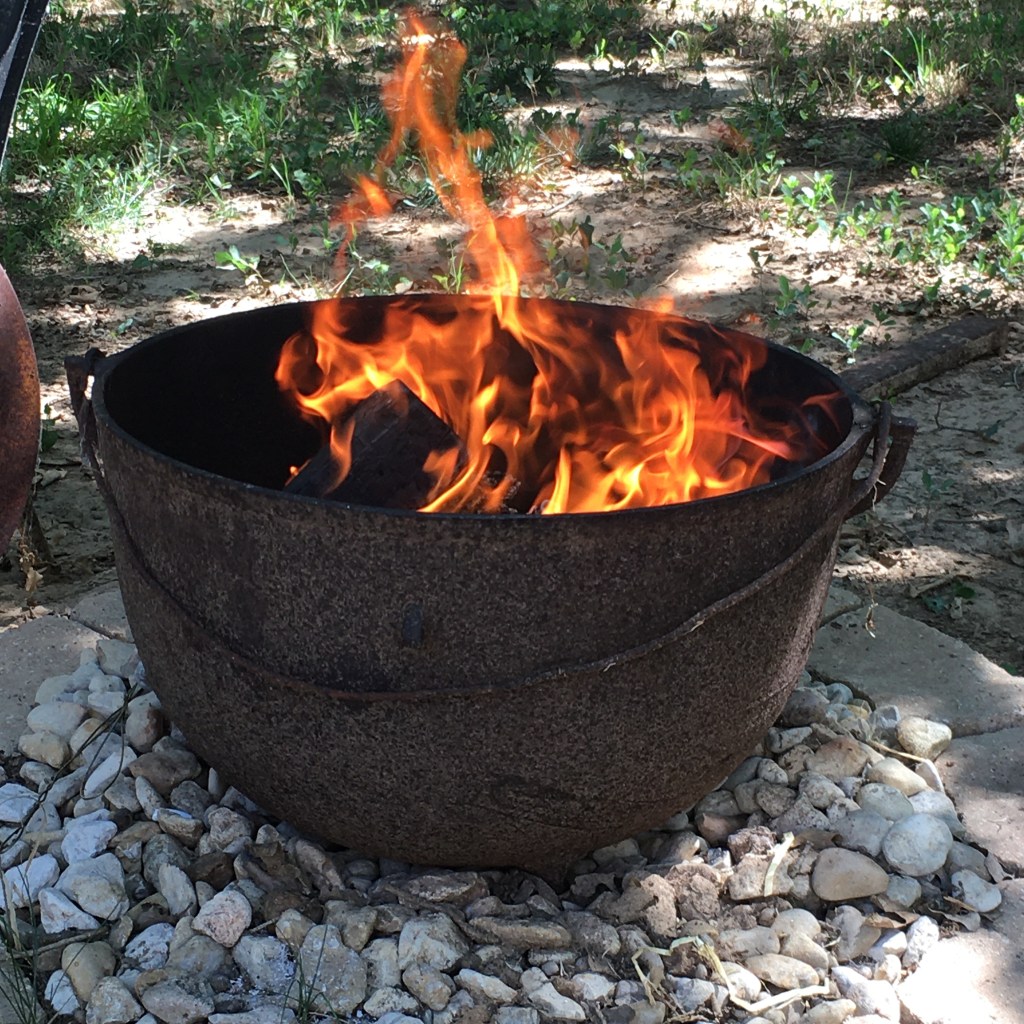
Navi’s funeral pyre

Chemistry

Had to dust off my chemistry degree to tend to Navi. The treatments for impacted crop were not working, so we moved on to treatments for sour crop, thinking that she has a fungal infection in her crop. I’m still following the advice in “The Chicken Health Handbook” by Gail Damerow. For sour crop, she recommends a flush, then treatment with Copper Sulfate. To make the Copper Sulfate drinking solution, first you have to make a stock solution, then add a little of the stock solution to a gallon of water. This is where my chemistry neurons had to be dusted off, and frankly I had to consult with my chemist Mom, because inorganic chemistry has never been my strong point. I made the stock solution and drinking water, which promptly turned cloudy and a little while later had precipitates at the bottom.

Copper Sulfate Solution made with softened water (precipitate formed)

Copper Sulfate solution should be clear. I figured out that it was probably that I used softened water from the sink, so remade both solutions using Reverse Osmosis water. Ah, a clear solution. My Mom hypothesizes that the precipitate was probably Copper Chloride Hydrate. I could have tested the precipitate, but I had already used the solution for a root killer in the yard, pouring it on poison ivy and saw briar stems. Copper Sulfate is a fungicide and a root killer.

Copper Sulfate solution made with reverse osmosis water (clear!)

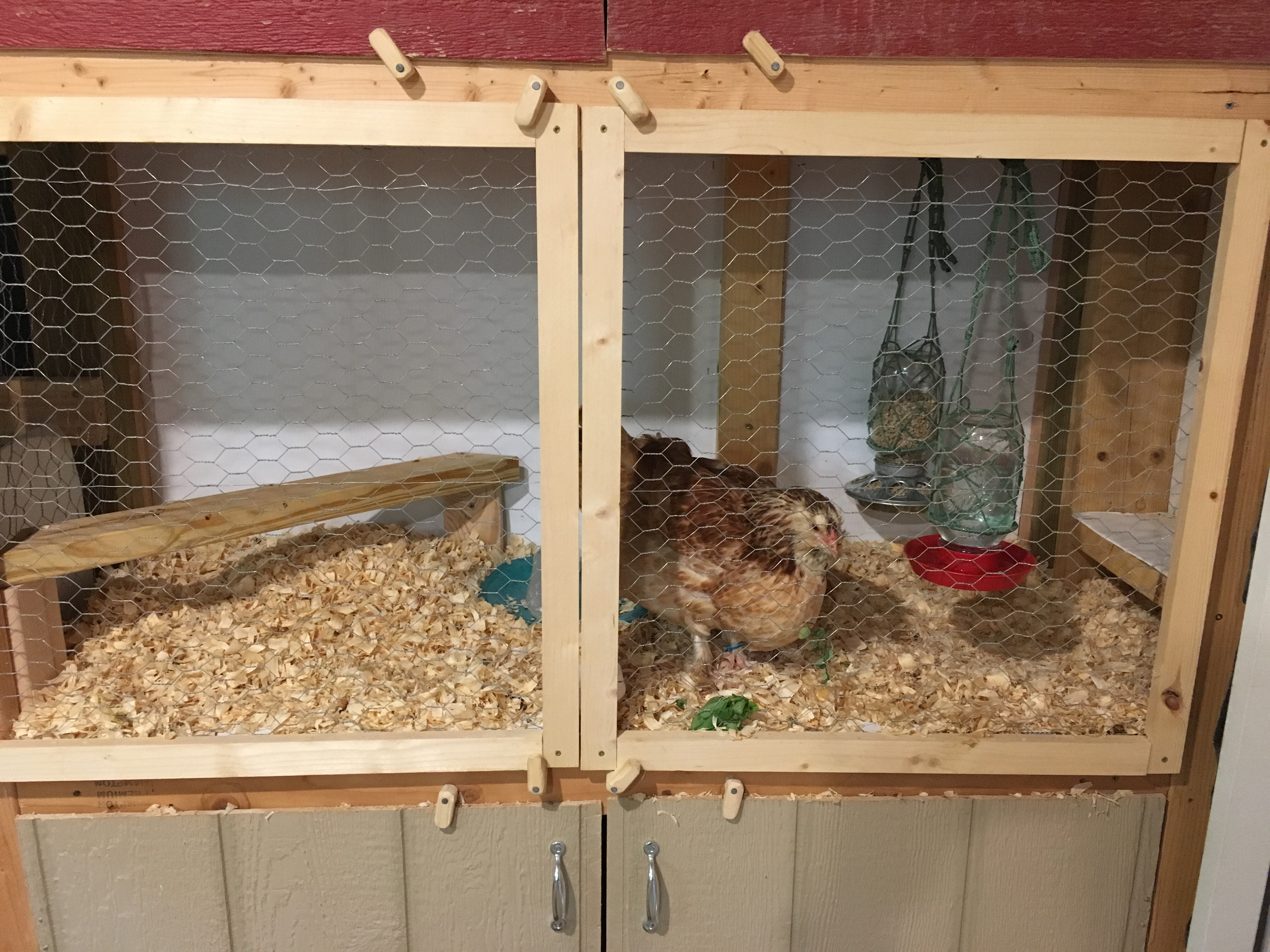
We’ll see if this treatment helps Navi. She is in isolation, but I’m glad I took my Dad’s advice because the isolation ward is at a good height, I can lean in, and it is plenty big for one chicken. Navi can see the other chickens, has a roost, food, water, and even a small foot bath. Although with her medicated water, she only gets a frozen water bottle on a plate so she doesn’t drink foot water. Ugh.

Navi in the isolation ward

Isolation and eggs

What an eventful day. We have had our first eggs (!!!) and put the first chicken in isolation.

Navi in the center

The move to isolation came first. I noticed a couple days ago that Navi had a larger crop than everyone else, like softball size and squishy. But she is eating and moving around, and I kept checking in the afternoon and evening. After consulting with my Mom and the chicken health book, we decided to check again in the morning to see if her crop empties. The isolation is to be able to observe her droppings and catch her before she hit the food bin in the morning. We decided not to make any further measures because her breath is not sour smelling as would be the case with sour crop.

Navi in isolation ward. She has a roost, but came off it when we left.

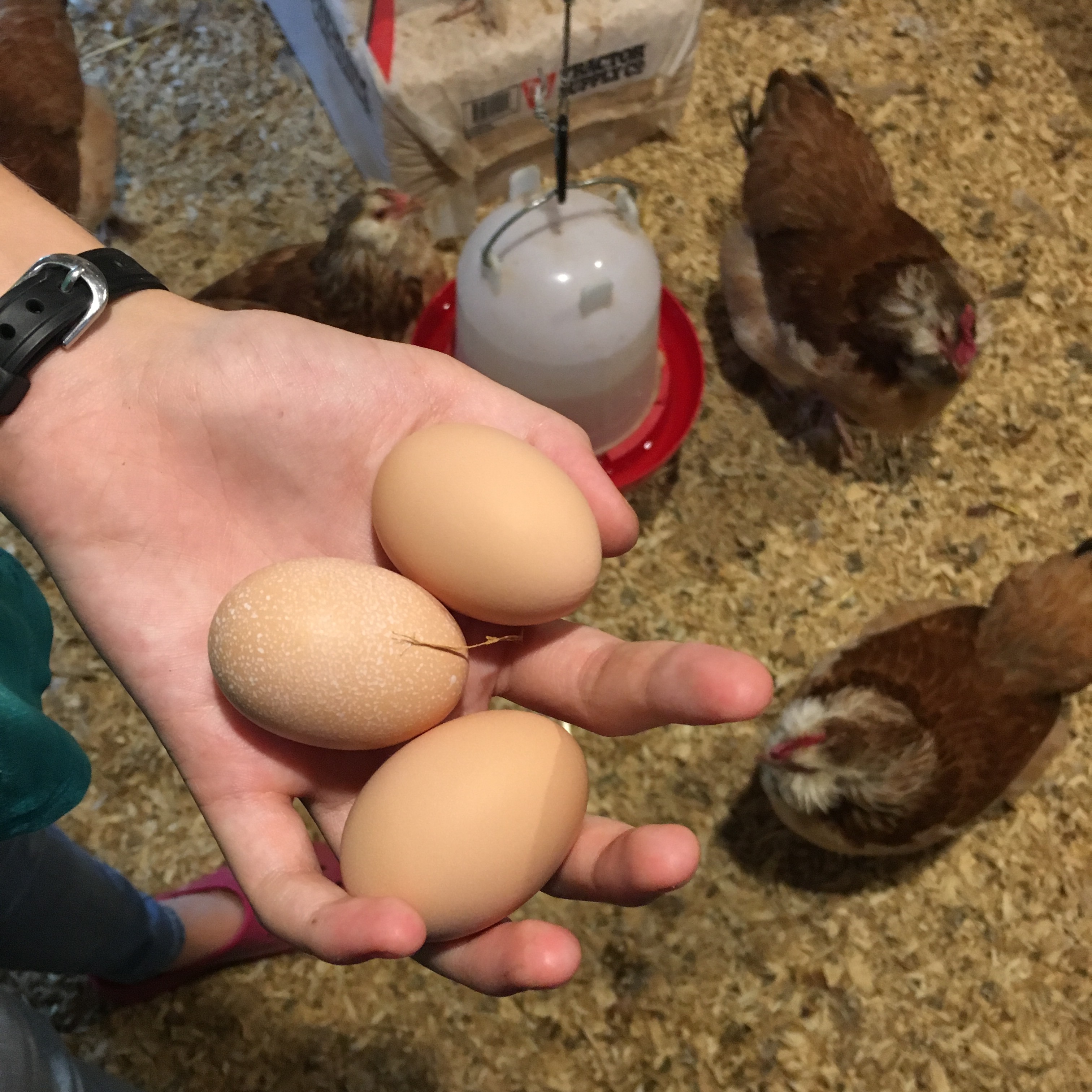
While setting up the isolation ward (I had been using it for storage), my eldest asked if I had checked the nest boxes for eggs. Honestly I had not in a couple days because I had resigned myself to no eggs until the chickens were 8 months old. So she checked. Not only were the nesting boxes behind the curtains visibly sat in, there were eggs in both bins! Holy cow! Three itty bitty eggs! (Yes, I weighed them! 38g, 38g, and 35g, which is about 1.3 ounces each. Extra small eggs.)

First eggs!!!