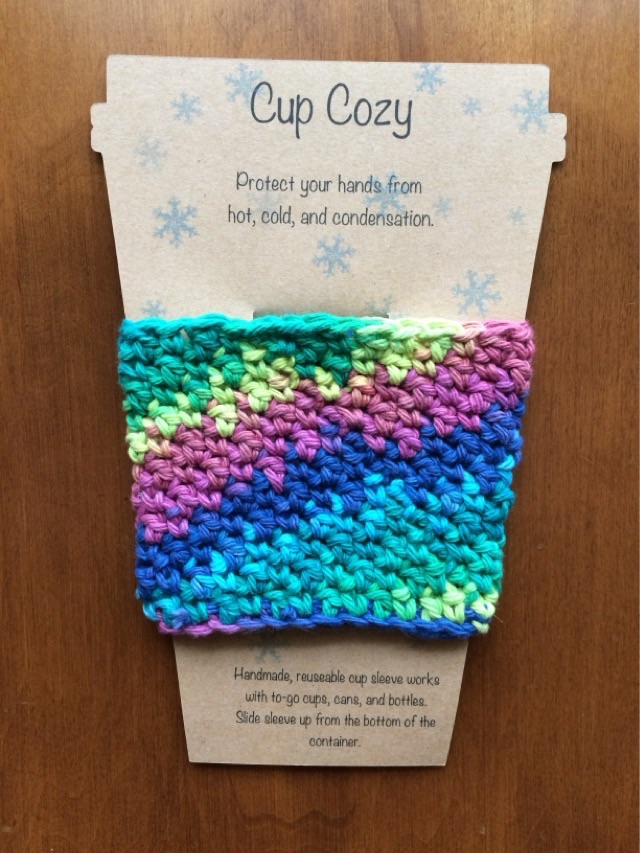
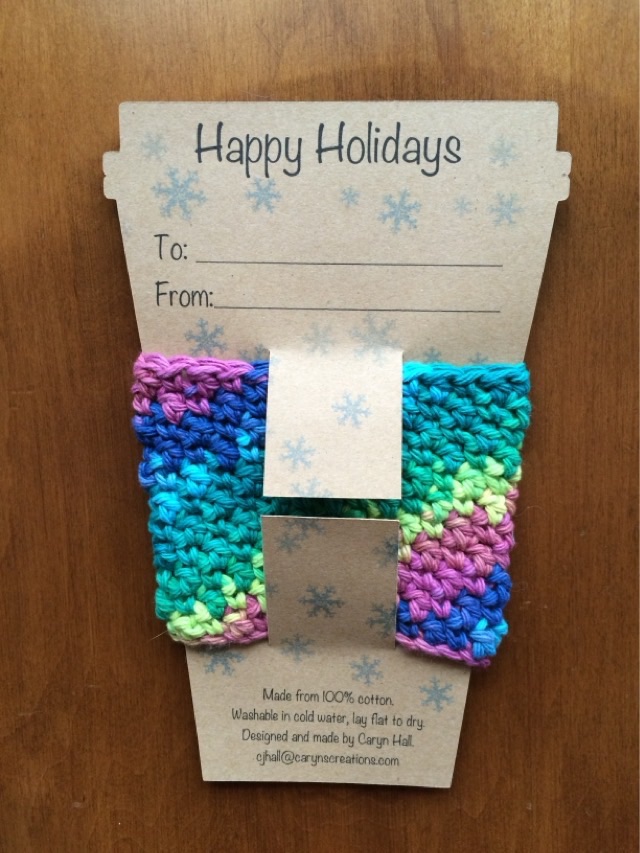
In December 2015 I was crocheting cup holders, and even went as far as designing packaging.
Photo description: front of a crocheted cup holder on flat paper “cup” that says “Cup Cozy” with a diagonal striped rainbow cozy (serendipitous pooling)Photo description: back of the same cup cozy with flaps to hold the crochet in placePhoto description: stacks of different colored cup cozies
I made these as teacher gifts for my kid’s teachers, which is why the back “to” and “from” are blank, so we could decide later which went to whom.
Cup Cozies are a good way to use up scrap cotton yarn.
In October of 2015 there was a pumpkin display at the school library. The pumpkins couldn’t be carved because of the smell and mess, but could be painted or decorated. My youngest was very into Splat the Cat, so I crocheted a cover.
Photo description: Splat the Cat crocheted pumpkin cover
To get the fur, once the crocheted form was done, I brushed it with a boar bristle brush to raise the fibers. It worked quite well. The ears are also crocheted then brushed, with pink felt glued inside. The eyes are ping pong ball halves with green doll safety eyes installed. The nose is a safety nose on gray felt with an embroidered mouth, and hot glued inside place.
The best part is that the cover can be removed and reused.
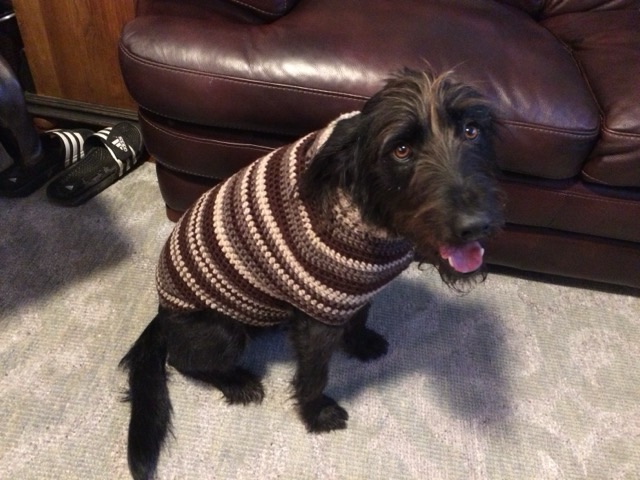
Photo description: Griffin the dog wearing a crocheted striped dog vest
In October of 2015 I crocheted our dog Griffin a sweater because we thought he would be cold outside with his single coat of fur. I made stripes and crocheted in the round. It came out a little snug and getting him in and out of it wasn’t fun for anyone. Turned out he didn’t care about the cold at all. I always meant to make him another bigger sweater in Gryffindor colors, because that would be funny, but he was just as happy without.
Yeah, scrolling through old pictures was a kick in the gut this time. Lots of pictures of pets that are no longer with us.
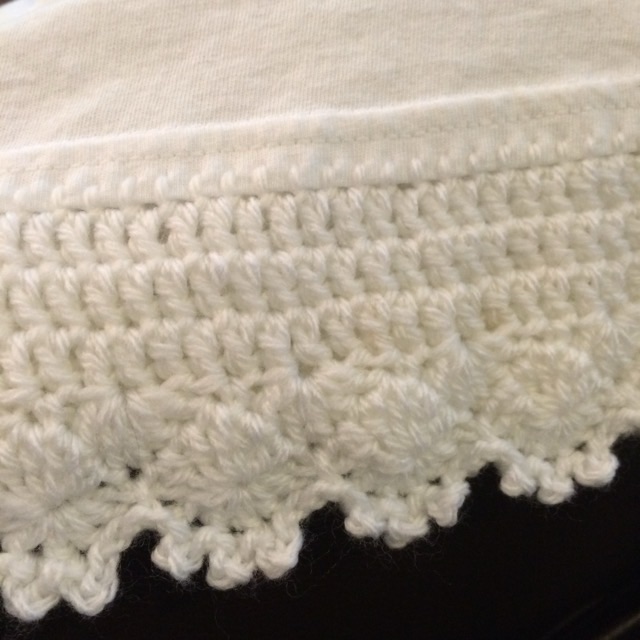
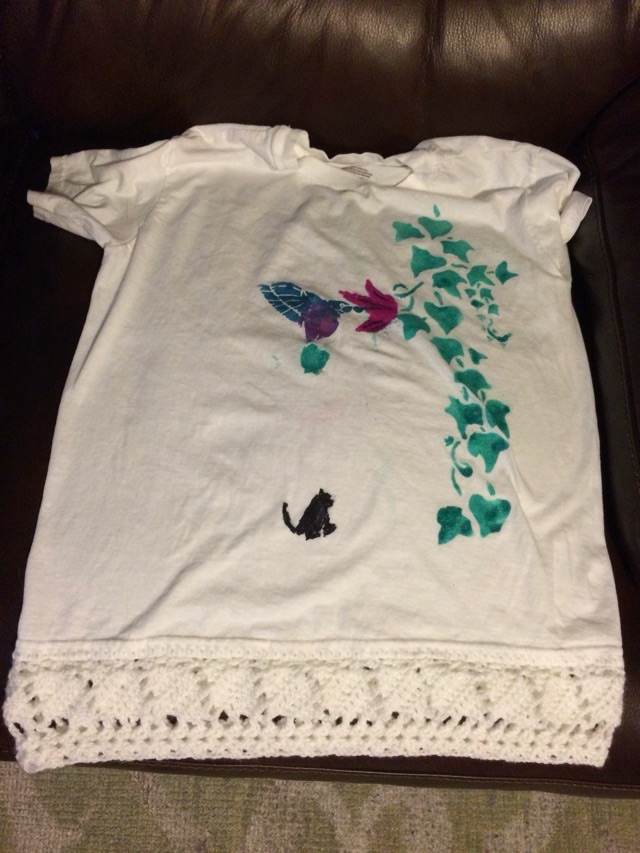
In August 2015 we bought white t-shirts for my kids to decorate with fabric markers and paint. The shirts were a little short, so I crocheted along the bottom hem to give them some length.
Photo description: white t-shirt with the handwritten words “It doesn’t matter what species you are to be friends”, with drawn hand and paws and wings and legs, with a crocheted bottom hem about three inches wide using double crochet, shell stitches, and picotsPhoto description: close-up of crocheted edge showing a blanket stitch base on the original t-shirt hem, three rows of double crochet, two rows of shells, and finished with slip stitches and picotsPhoto description: different white t-shirt with ivy and hummingbird stencils, and a small black cat, with a different style crocheted hem
I don’t have a closeup of the second shirt’s hem, but it does show one of the problems that can occur with an applied edge: drawing in. I prefer my shirt bottoms to be straight, or even flare out, rather than draw in, but I do like the leaf pattern. I think my kids wore their shirts at least once before they outgrew them?