I put American Bison wool insoles from the Buffalo Wool Company in my shoes to help give them some cushion, and I knew I would need to keep them up and away from the cat. Thor the cat loves natural wool, and he loves my shoes, so I was taking a large gamble combining the two. For a couple weeks I was very good about keeping the shoes up on the shoe rack, then I was reminded why when I set my shoes on my chair before my morning walk and came back to a suspiciously happy cat cuddled in next to the shoes.
Photo description: black Vionic walking shoes with American Bison wool insoles sitting in a leather arm chair with a gray tabby, eyes closed, cuddled next to the shoes
The insoles remain unmolested, but I must be vigilant.
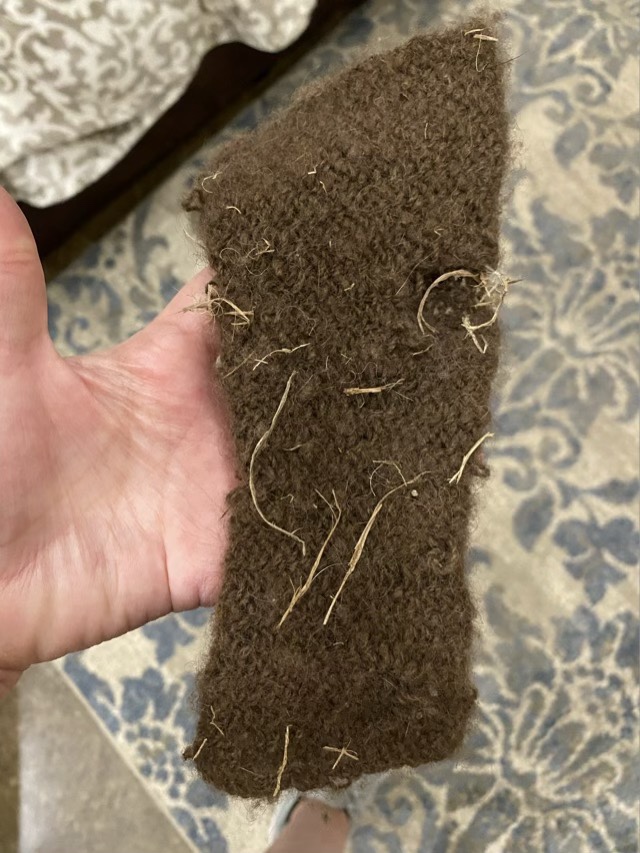
Thor the technical kitten (since he is still under a year old), likes to carry around his toys. One of his favorites is a wrist warmer that I nålbound from home spun bison down. Materials alone make it a pricey toy, but if time invested is considered, it vaults into precious territory. Apparently he took it on a field trip to the catio, then back inside, because I found it on the rug covered in dried grass.
Photo description: Brown wrist warmer made from American Bison fiber, covered with bits of dried grass. There is some felting, and a couple pulled loops in the fabric.
Allowing the wrist warmer to become a toy was a calculated event. The one donated to the cat was a tight fit and I wasn’t wearing the pair. Now it becomes a test of how durable I made the spinning and nålbinding. I’m actually quite amazed that it is holding up to kitten attentions as well as it is.
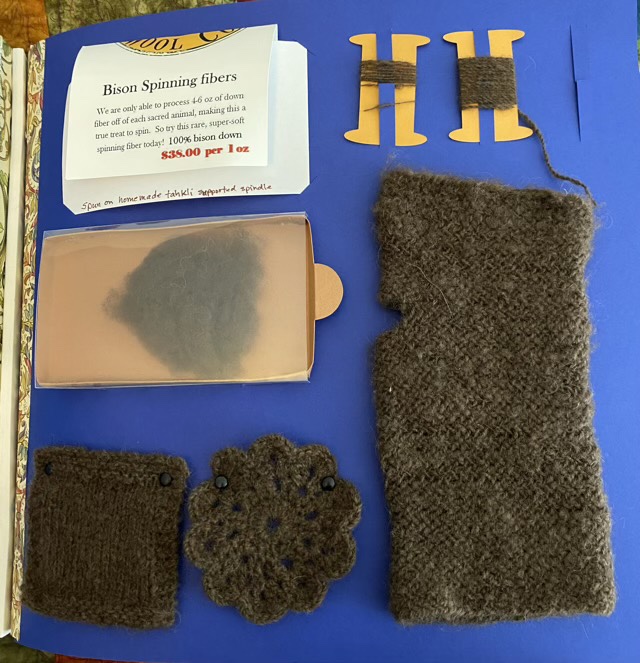
I actually spun this bison fiber before I started my fiber book. I used a tahkli spindle and spun fast and fine, then made a two ply yarn. I experimented with singles spun in both the S and Z directions, then nålbound wrist warmers (blog post here). The second, tighter wrist warmer continued to get tighter as the fibers felted together, until it was uncomfortable to wear. Then the kitten found it and had a hay day. So I dedicated the first piece to the book. I had some leftover yarn so did up a knit swatch and a crocheted lace round. I didn’t save any single spun yarn, so had to deconstruct some plied yarn for the page.
Photo description: Clockwise from top left: “Bison Spinning Fibers” card; single ply yarn; two ply yarn on a paper bobbin; one nålbound wrist warmer; crocheted lace round; knit square; loose bison fiber
Bison down fiber really is a luxury fiber. It feels like spinning clouds and the yarn is so soft and so very, very warm. It is definitely one of my favorite fibers. (And yes, this is an absolutely shameless plug for my neighbors, The Buffalo Wool Company. Fantastic people, even more fabulous dedication to the preservation of the American Bison.)
Buffalo down sounds like it comes from buffalo wings, but it is not feathers but the fine hair from the North American Bison. I love the opportunity to work with local fibers (and support local) and was so excited to find a nearby supplier of buffalo down. I grew up eating buffalo; it is a great low fat protein. To be able to use more of the animal is fantastic. The Buffalo Wool Company (thebuffalowoolco.com) uses fiber sheared from the hides of bison being processed for meat. Usually this fiber would be burned off, but they collect it and make hats, gloves, socks, and spinning fiber!
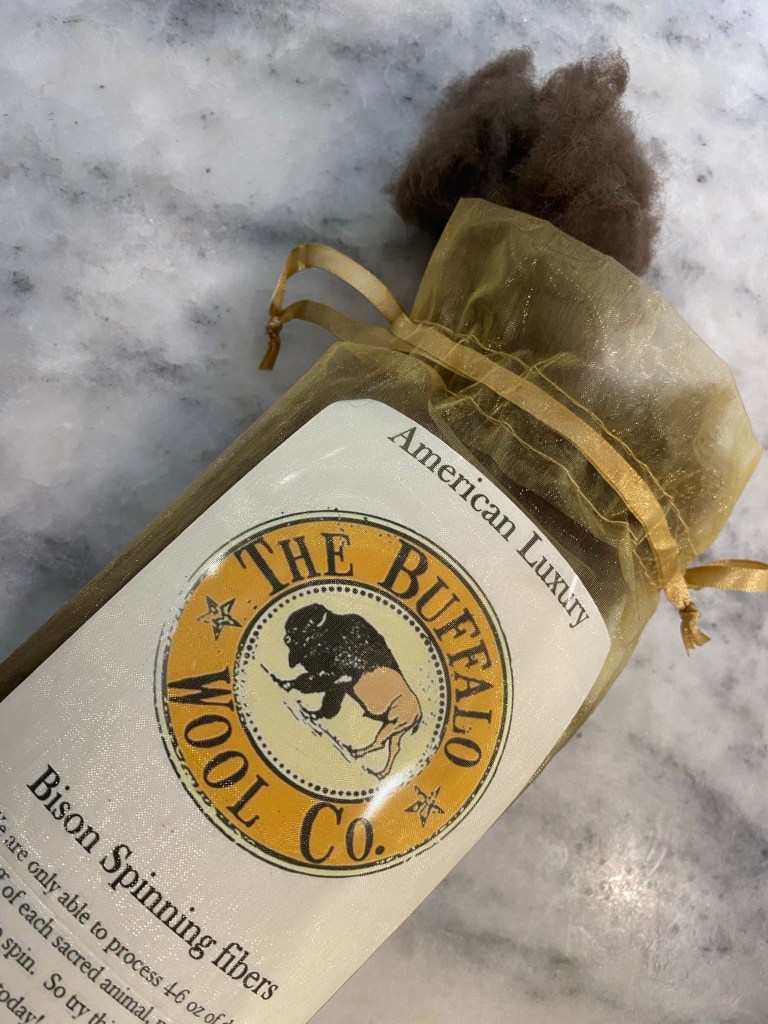
My buffalo down came in a beautiful golden bag
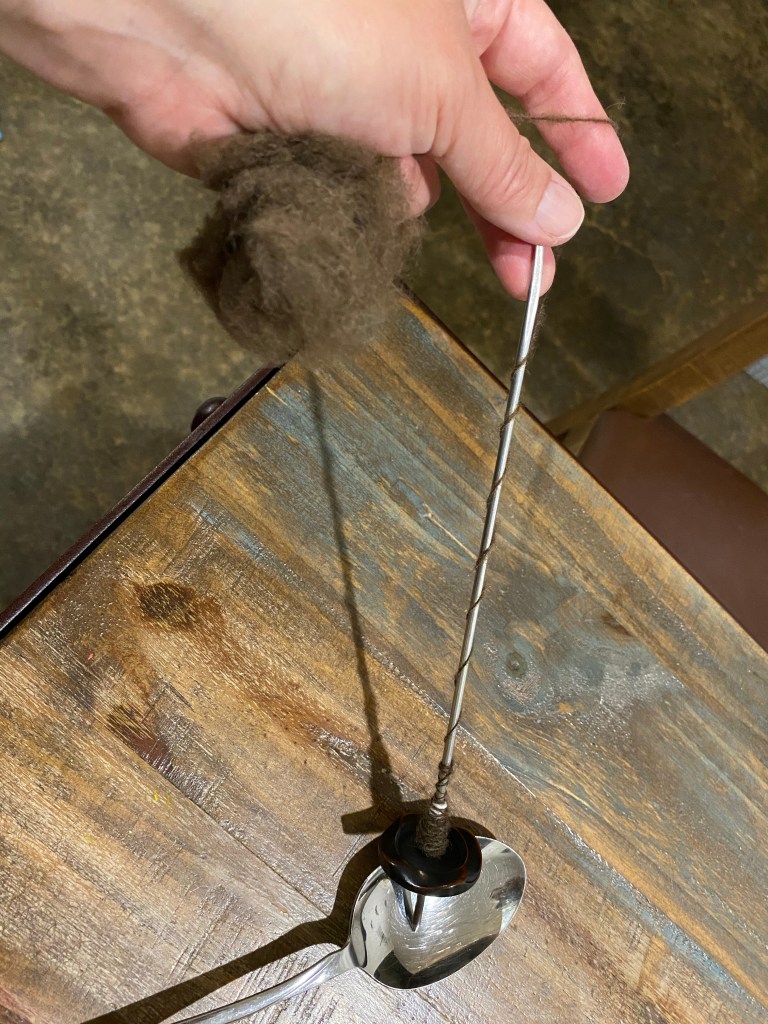
The owner was kind enough to share spinning tips as well. He said to spin “fast and fine” and to hold a small amount in my palm and spin off the pinch. I decided to use the tahkli spindle I made from an old button since it spins very fast and works well for cotton which is also a short fiber. I’m sticking with my spoon as a spindle rest because the handle is convenient.
Spinning buffalo fiber with a homemade tahkli spindleHolding a small amount of fiber in my palm and spinning from the pinch (photo credit to my eldest)
It took me a bit to understand spinning from the pinch, but once I did, spinning went much smoother. The yarn is fine but fluffy! I spun until the cop wouldn’t stay put on the shaft, then wound it onto a small wool bead that my mom made. This is much easier than starting the ball with yarn! Some of the single is very thin, I was surprised when I didn’t break any of it winding it into a ball. I weighed everything and figured that I spun 6 grams of fiber. I pulled another 6 grams out of the bag to spin another single, then I will ply! I am really enjoying the spinning! The fiber is well prepared — I had no waste! (Yup, three exclamation point punctuated sentences in a row. I’m that excited.)




 Critters and Craft