Alpaca hanks

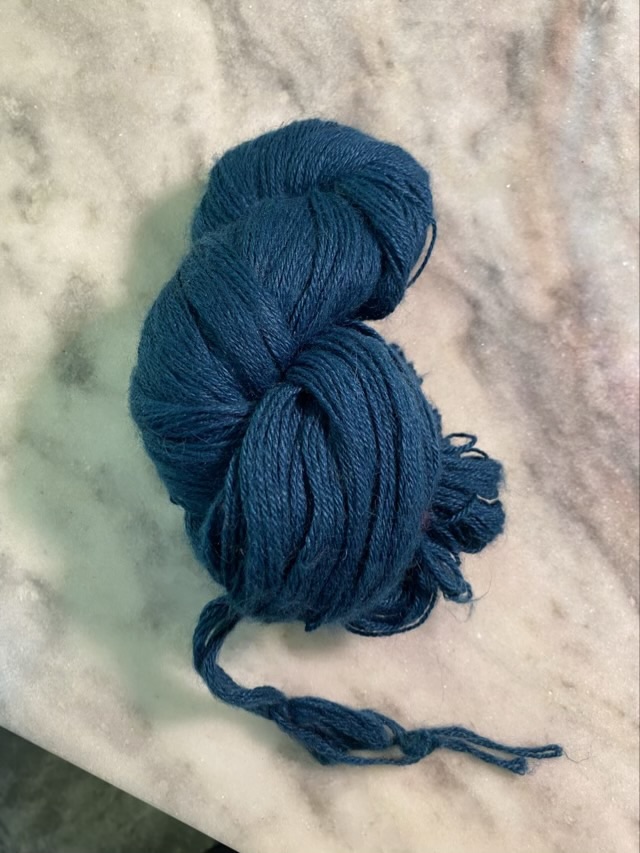
My parents-in-law recently took a trip to South America and brought me back three hanks of beautifully spun and dyed alpaca yarn. I immediately set to opening up the hank to put on my yarn swift and use my ball winder to make a center pull ball, which is easier to use for knitting and crochet. I was met with resistance.

Photo description: beautiful teal twisted hank of alpaca yarn in a familiar twist and tuck storage configuration
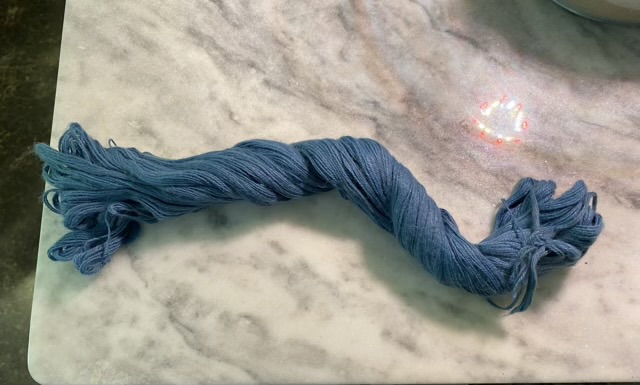
Photo description: gray-blue hank of yarn opened up from the storage twist with familiar strands of yarn tying the loops of the skein together at the ends

The hanks looked like what I was familiar with buying in the States, a large circle of wrapped yarn, twisted and tucked end in end for storage, but when I opened up the skein I did not find a continuous circle and it dawned on me that the wrap was different. I employed the arm power of my eldest to investigate.

Photo description: olive green alpaca yarn held on two arms showing figure 8 wrapping

The hanks were not wrapped in a loop, but instead used a figure 8 style wrap. Easy enough to handle with an extra pair of arms, but definitely not compatible with my yarn swift. My eldest obliged me by holding the yarn while I wound onto a wool winder.

Photo description: Wool winder mounted on the back of a chair (I’ve never tried this before, and it actually worked very well)

Once I figured out how the hanks were wrapped, I was impressed with the way the figure 8 kept the strands in decent order. I am a firm believer that there are many ways, and I love finding out about other methods.

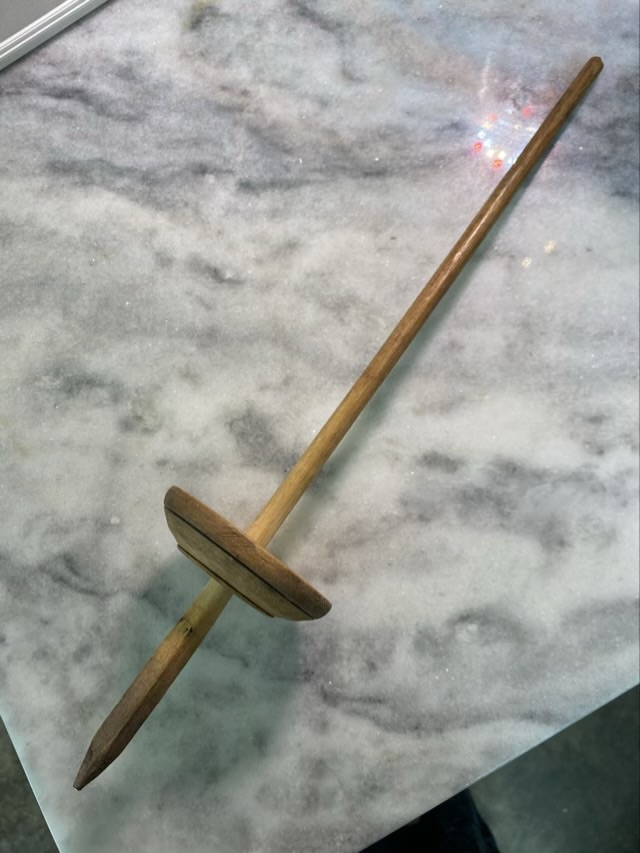
My mother-in-law also brought me a spindle; the spin on it is beautiful and it also is slightly different than what I’ve seen.

Photo description: working spindle with bottom whorl. The shaft is square below the whorl but rounded and long above the shaft. The shaft shines where it has been rubbed smooth by fingers turning the spindle.

P.S. Sometimes I get my terminology swapped. The original post used the word “skein” in place of “hank”. I think I have fixed all instances.

Accessory Roulette

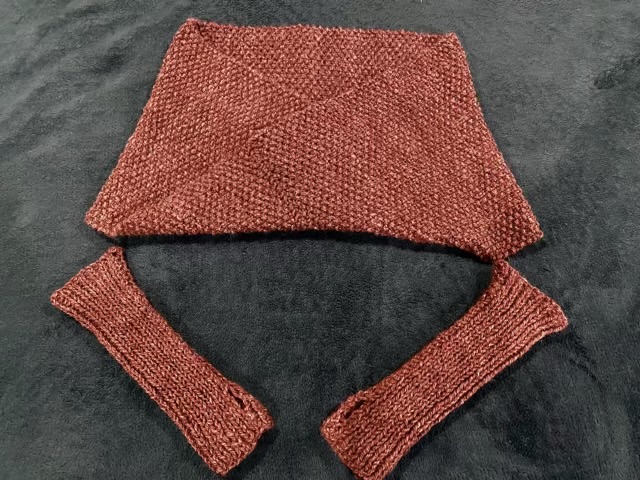
When I started knitting with my three-ply hand-spun merino/alpaca yarn, I wasn’t sure how much I would have. So the plan was to go a flexible route. I intended to make a wrap around scarf with sleeves, but rather than start with the sleeves, which locks me into the pattern, I started with a moss stitch on the body of the scarf (sleeves can be added later). When I knit the scarf long enough to go around my shoulders, it was obvious that I wouldn’t have enough to knit the additional third and have sleeves, so I made the scarf section into a shrug by sewing it into a Möbius ring. The Möbius shape allows the shrug to fit the wearer both at the shoulders and the elbows. A straight tube has less adjustability.

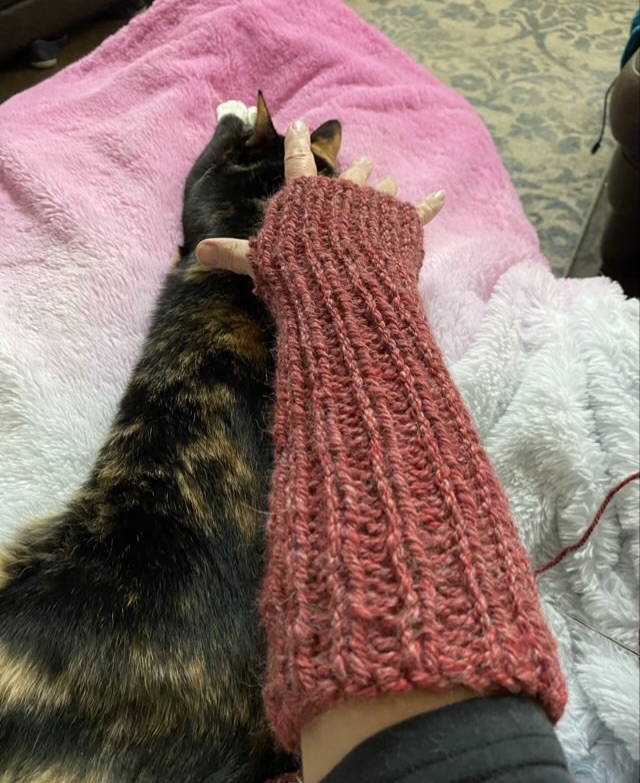
I then knit two long fingerless gloves in a rib stitch. To keep the gloves even, I worked from both ends of the yarn cake with size 11 circular needles, working both gloves flat at the same time. When they were long enough (I didn’t run out of yarn this time), I sewed up the sides and left a thumb hole (many thanks to my crochet friend for the suggestion!)

Photo description: hand spun, hand knit shrug and long fingerless gloves
Photo description: trying on one fingerless glove, calico cat for scale

The shrug and gloves have the same aesthetic as a scarf with sleeves, but with more flexibility for styling. And if you run out of yarn, at least there is one finished useable item.

Caking yarn

Because of the bulk and quantity of yarn I produced on the Ashford Traveller spinning wheel, I decided to let time set the twist rather than do a wet block. Setting the twist in freshly spun yarn gives a more balanced yarn which doesn’t kink up when slack, making it easier to work with be it knitting, crochet, or weaving. A quick way to set to twist is to get the yarn wet and let it dry (there are many variations, but it boils down to this). Time will also set the twist; sitting under tension for a while lets the fibers relax and accept their formation.

Photo description: three-ply bulky alpaca merino blended yarn wrapped on a niddy noddy
Photo description: very thick skein of bulky yarn

I did not have to transfer the yarn to a niddy noddy, I could have wound it directly to a cake, but I wanted to see it in skein form. It was an overfull skein, though, so wasn’t as pretty, but I wasn’t willing to cut the yarn, or make a bigger skein. Oh well. I wound it all into cakes using a Royal New Wool Winder.

Photo description: four cakes of bulky yarn

I have many projects that need completing before I can get to this yarn, so it has some time to sit and settle. It is all queued up though, with the needles and the knitting plan in the bag with the yarn cakes.

Blocking the swatch

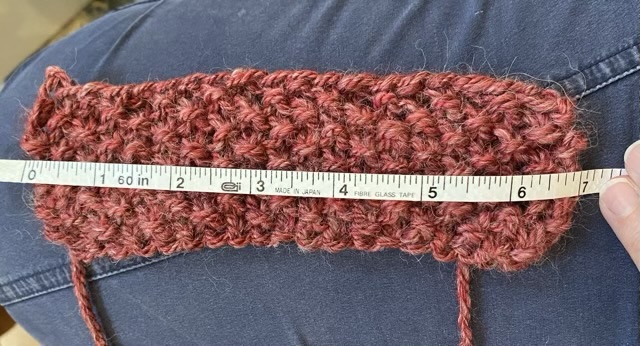
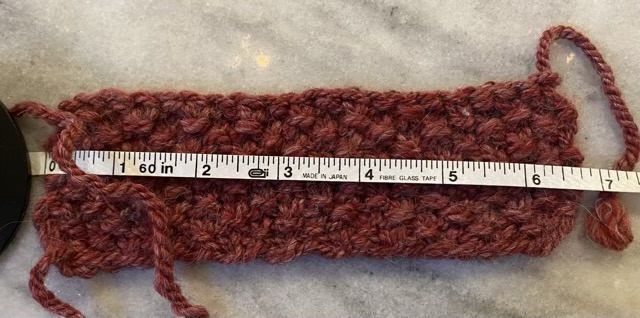
My small swatch of hand-spun merino/alpaca dyed yarn experienced a small amount of shrinkage after I rinsed it and let it dry.

Photo description: moss stitch swatch straight off the needles measuring 7 inches
Photo description: same swatch after blocking measuring 6.75 inches, but looking more tidy

The good news is that there was no visible bleed when I blocked the swatch. I was concerned that the beautiful dark red would bleed.

Dividing the last

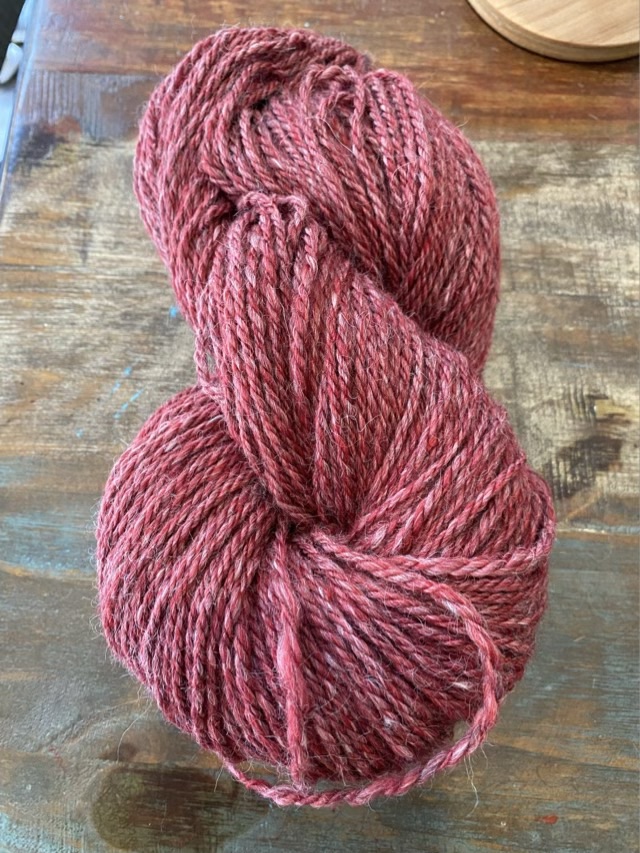
I spun up nearly a whole bag of alpaca/merino roving, filled up six small bobbins of singles, and two large bobbins of three ply yarn. The roving that remained was not enough to fill three more small bobbins, so I weighed it and divided by three.

Photo description: “rose hip” dyed alpaca and merino roving divided up into three roughly equal parts and put back in the bag, separated by clips. Ashford Traveller spinning wheel in the background with left over single spun yarn on the bobbins.

Dividing the roving worked well, but I still had one bobbin run out of single spun before the other two when I was plying. To use up all the singles, I chain plied the last bits. Since chain plying creates a slightly different yarn than plying from three bobbins (there are U bends in the yarn, but it is still three ply), I knit up my swatch with this last bit of yarn. So I didn’t loose track of which part was chain plied, I knit straight off the spinning wheel. The yarn was nicely balanced, so this wasn’t difficult.

Photo description: knitting a moss stitch swatch straight off the spinning wheel

My spinning and plying created a “bulky” yarn, about 8 wraps per inch (wpi), so I knit with size 11 needles by Prym.