Wasp invasion

The wasps found a hidden area between the rafters in the overhang in the run to build their nest. I’m not sure how I didn’t disturb them before this, but when I went to fill the far hanging water for the chickens, they certainly let me know they were there now. (There might have been some hollering on my part as I ran.)
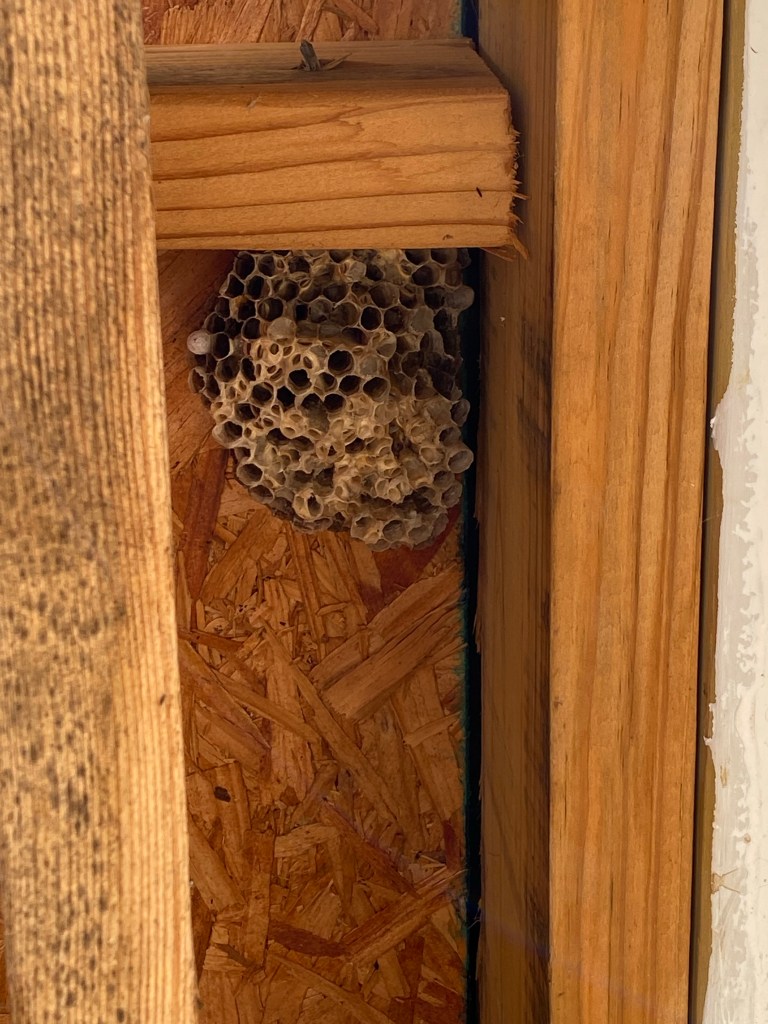
Looking up at a large wasp nest

Here is another good reason to have multiple watering stations. I abandoned the far water containers near the nest, knowing the chickens have access to water at three other spots. I waited until dusk, when the chickens were up for the night and the wasps were quiet, then soaked the nest with wasp spray. Thoroughly. In the morning the spray was dry and the wasps were gone. The instructions on the can recommend waiting 24 hours before removing the nest, but I’m going to wait until it falls down on its own. I’ve read that wasps are territorial and won’t nest where there is another nest. Some people even put up fake nests to deter wasp activity. I had an old nest up on the other side of the run for nearly a year and while it was there, no other wasps nested in the area.
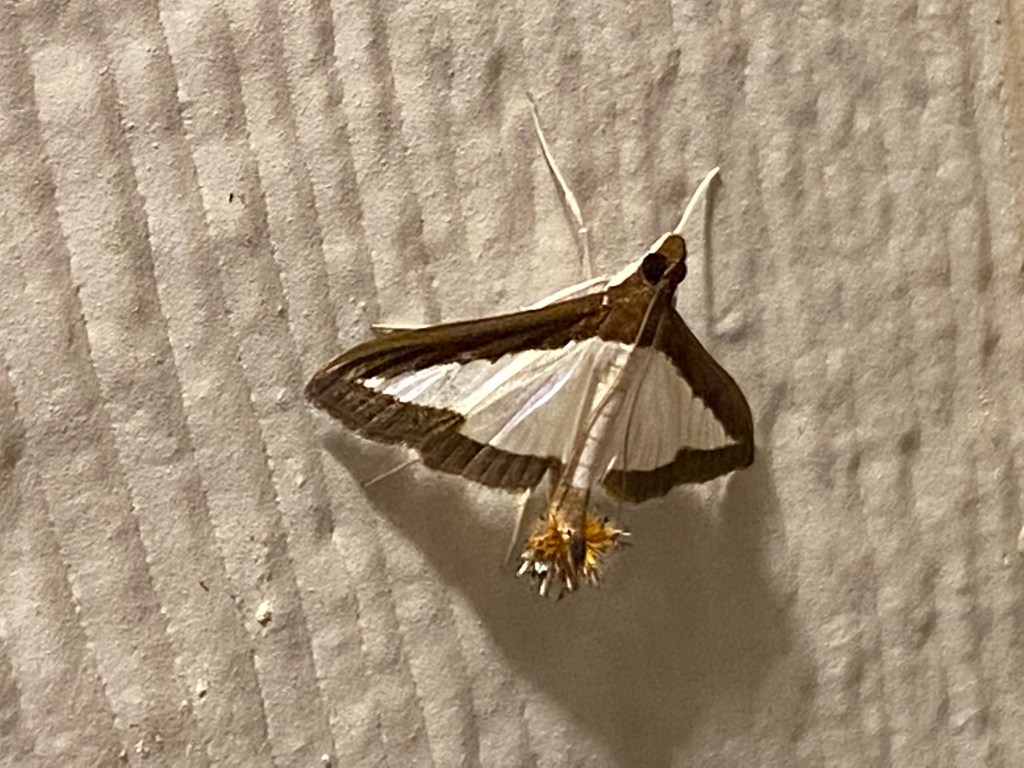
Melonworm moth

Here is another new-to-me critter, a Melonworm moth. I saw him (most definitely a male) when I stepped outside in the early morning. What I thought was a spider hanging off his abdomen are hair-pencils, and are used in the moth’s courtship rituals. Here is a video of him shaking his pompom. (OK, shaking is the wrong word, wafting it through the air is a better description for the very slow movements.) Their favorite host plants are squash and melons. I just planted winter squash. Go away little moth and leave my cucurbits alone!

Male Melonworm moth

Passion flower vine

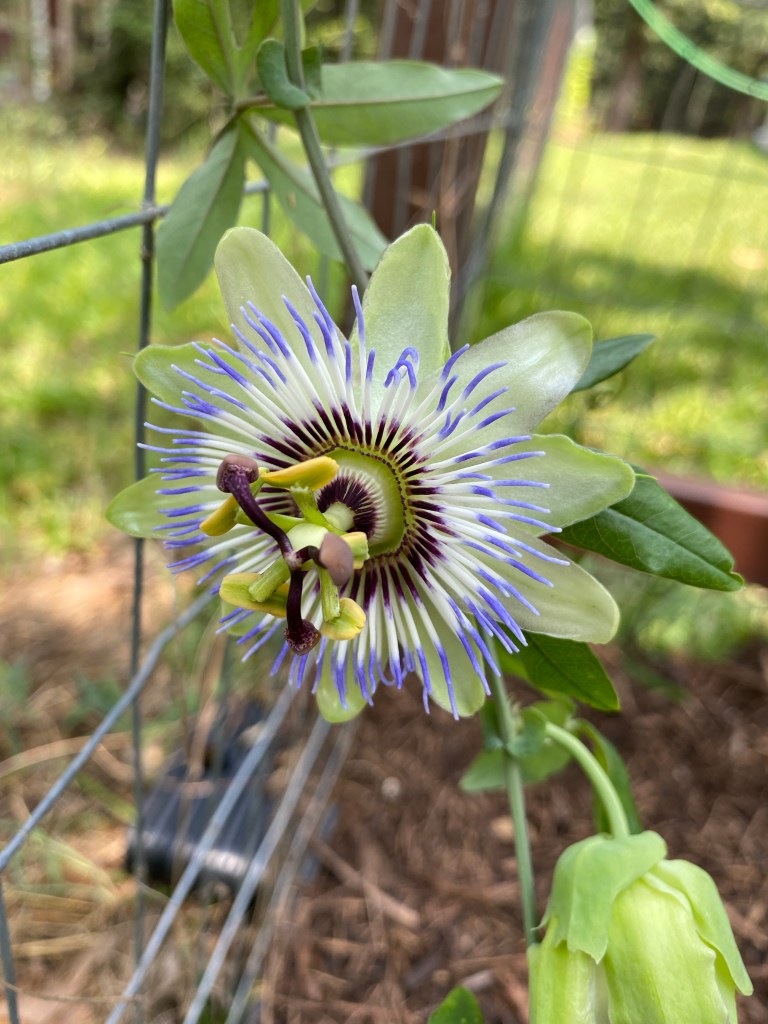
Our favorite garden place had a sale on passion flowers, so we planted three in the new raised bed my husband built. Passion flowers have amazing structure, are host plants to several butterflies, and some varieties are actually native to this area. The fruits are also edible.

Blue passion flower bloom

I believed that planting a host plant would mean we would get more butterflies. We saw some beautiful orange caterpillars with striking black spikes, which iNaturalist says are Gulf Fritillary caterpillars. I was so excited!

Gulf Fritillary caterpillars on new growth on a passion vine.

Then they ate all the leaves. All of them. On all three vines. They even broke open one of the fruits and ate most of that when the leaves were gone. I don’t know if the passion vines are going to survive.

Caterpillar preparing to pupate

Then I see the caterpillar on the fence hanging upside down and starting to form a chrysalis. I really do hope the vines can recover, because it is wonderful to watch the life cycle.

Gulf Fritillary chrysalis

I will leave the vines be until next spring, hoping!

Morning of the gecko

Remember when I mentioned ebbs and flows? Well this morning had a surge of geckos. It started with Izzy the cat pointing out the large house gecko on the wall in the house.

Izzy spots the first gecko

Izzy (cat), Missy (dog), and I (human) chased the gecko all over the wall, behind a coat rack, which chose that moment to come loose from the wall (I’ll address the fixing of that tomorrow), then down on the floor. Izzy would trap it, then I would push her back and try and scoop up the poor gecko, the gecko would leap from my hand and we would repeat the actions. Missy just wanted in on the action. After the poor gecko was tired out, I was finally able to get him in my hand and take him outside. Good news, his tail was still intact!

The moment before freeing the house gecko outside

The next gecko, a tiny little thing on the window going to the catio was not so lucky. Izzy caught and ate him. The third gecko my eldest found at the front door was able to escape cat and human clutches and remain free in the outdoors. The previous week held no gecko chasing frenzies. Ebbs and flows.

Emergence

So. Many. Cicadas.

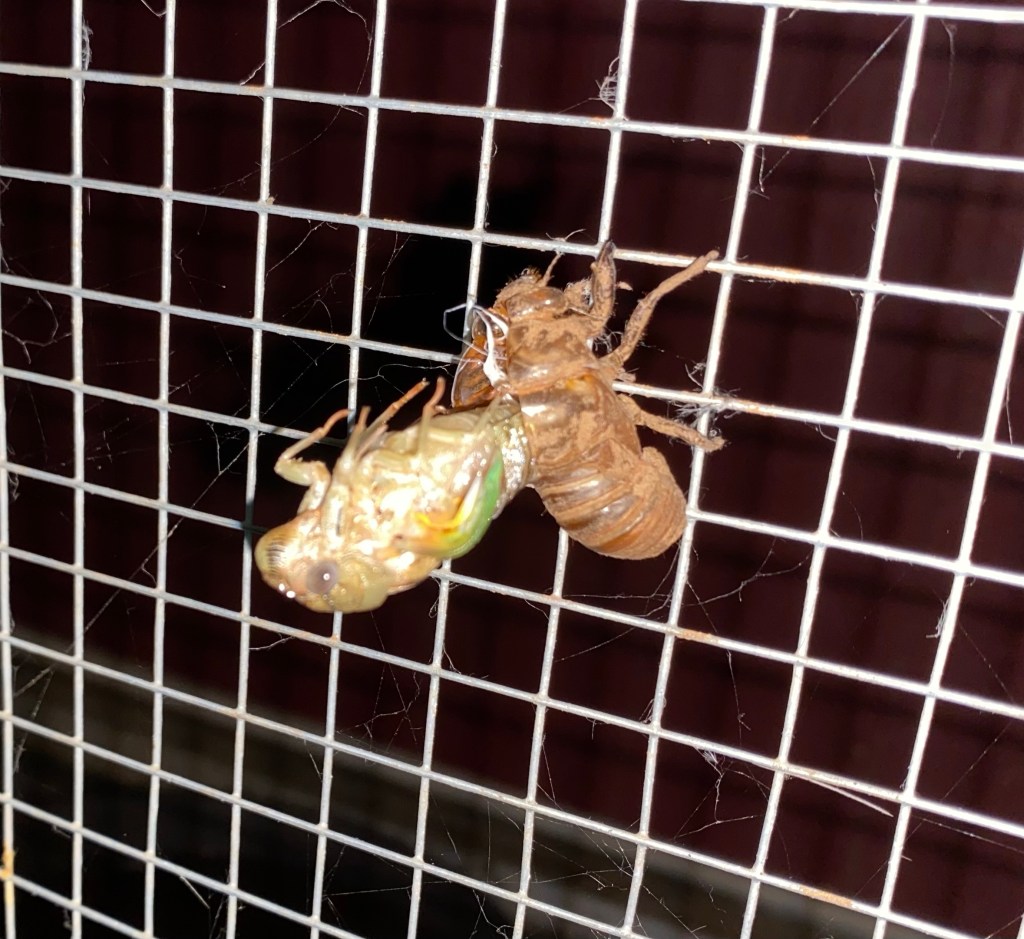
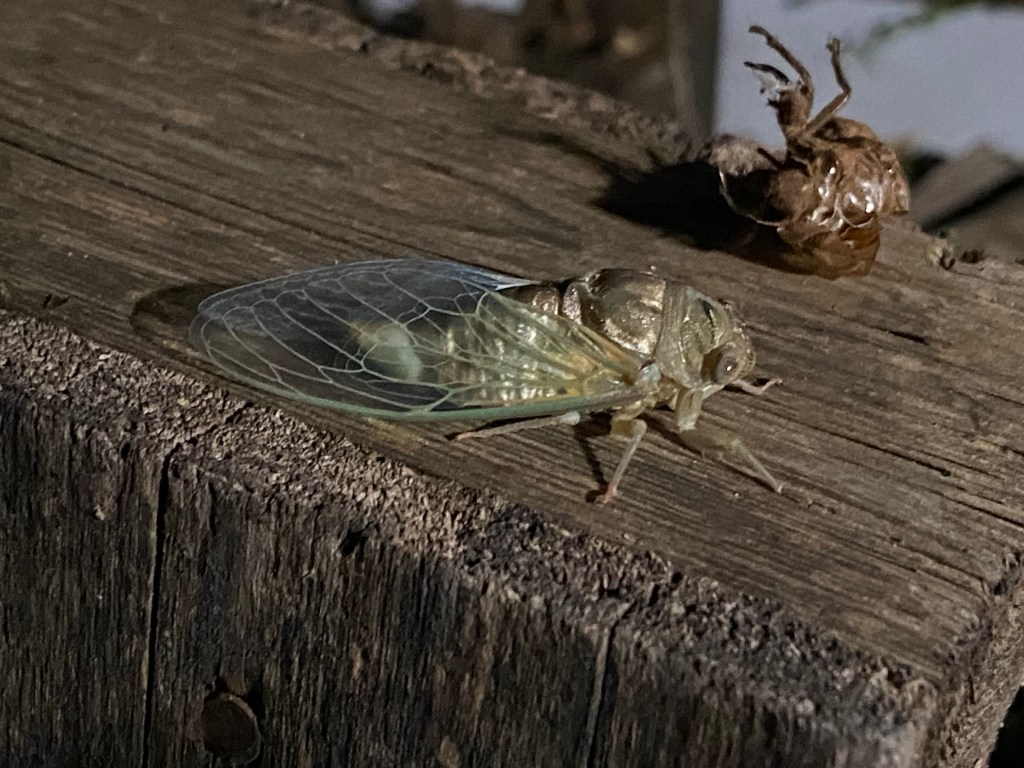
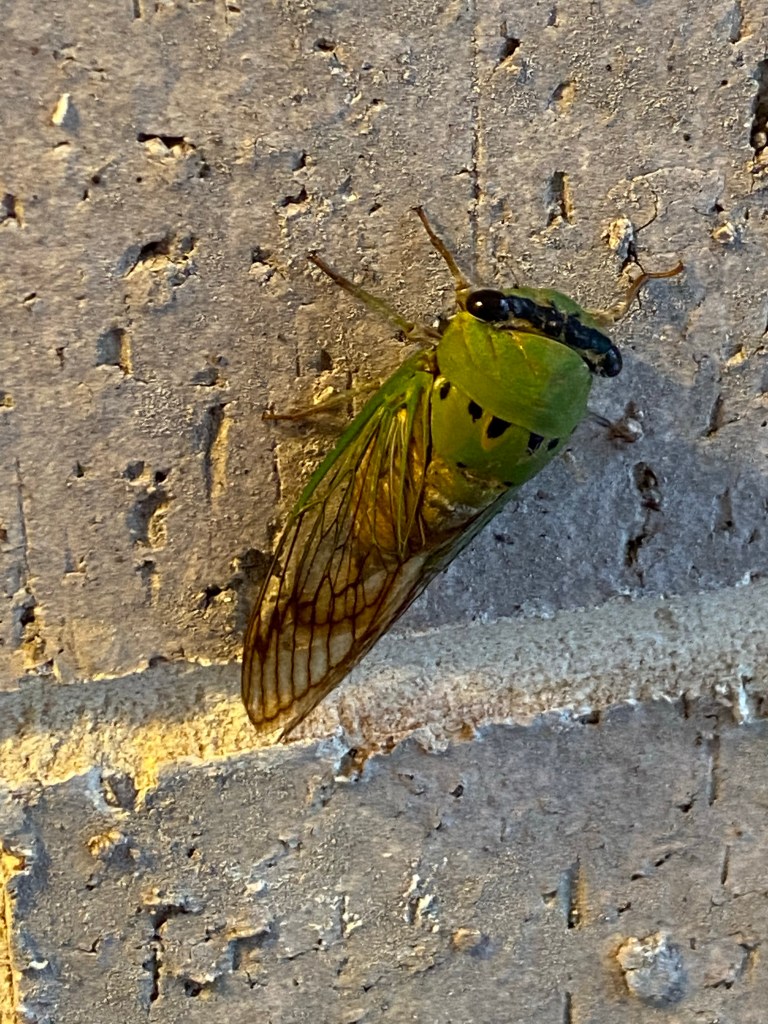
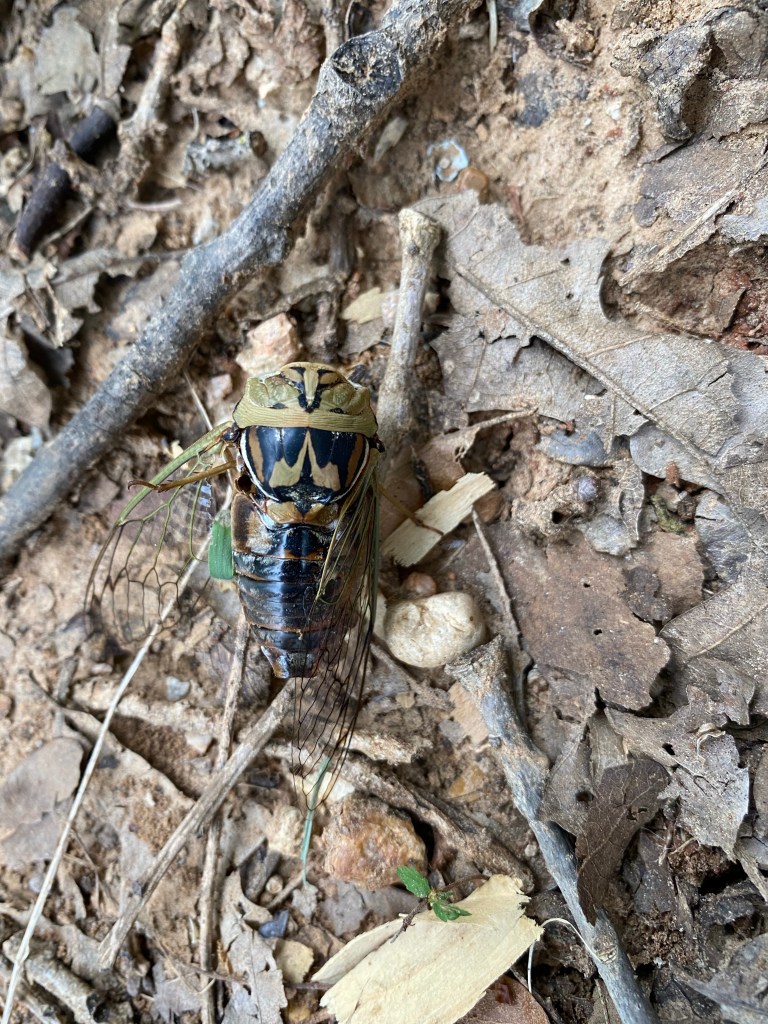
I have found cicada shells before, and seen adult cicadas, both living and dead, but haven’t witnessed a cicada emerging from their final molt. I have now, in spades. Every evening when I go to close the people doors on the coop, there is at least one cicada crawling out of its nymph form. I have to be careful not to crunch one in the door, and have had to relocate a couple so I could safely batten the hatches. Here are some of the pictures (not of the same individual).

The back of the cicada nymph has cracked and the adult is starting to emerge
Adult almost free of the shell
Newly emerged adult out of the shell (I had to move this one because it started the process in a door frame)
Living adult cicada on the brick of the house
Deceased cicada in the leaf litter
Empty cicada nymph shell