In the snowy landscape of the last storm, the trail cam picked up the image of a raccoon.

Raccoon spottings have been few and far between.
In the snowy landscape of the last storm, the trail cam picked up the image of a raccoon.

Raccoon spottings have been few and far between.
As we sat iced in and watched the birds eat seeds, I took pictures. I managed to get shots of most of the menagerie. The iNaturalist app helped me with identification.


I did not get photos of the titmouse, or the blue jay, or the crows. The jays and crows kept their distance, but the titmouse were all over the feeder, so there wasn’t really a reason they did not make the roll.
One of the entertainments during the cold lockdown was watching the birds on the back porch. I threw seeds out onto the snow (haha, “snow”, it was solid ice), and we watched from our kitchen table. I saw one unusually colored bird and snapped some photos. SamBiology on iNaturalist figures it is a piebald dark eyed junco. Neat.


Piebald: having irregular patches of black and white.
“Piebaldism is a genetic condition caused by the improper migration of melanocytes during development. As a result, birds develop irregular, unpigmented (white) patches on their feathers or skin, while the rest of their body retains its normal pigmentation.” – Nature’s Way Birds
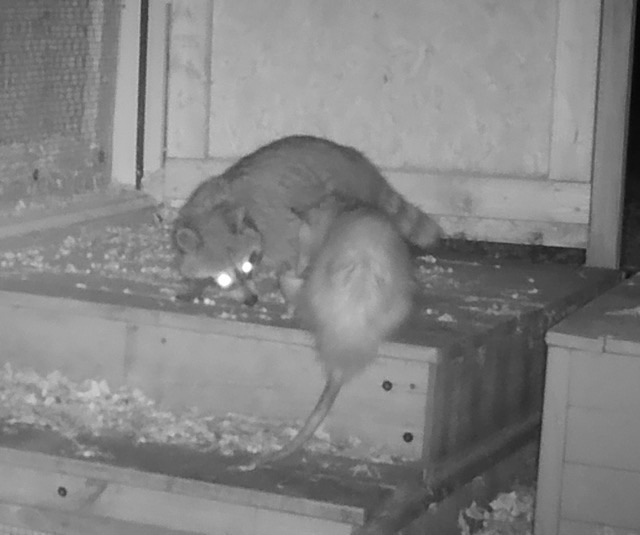
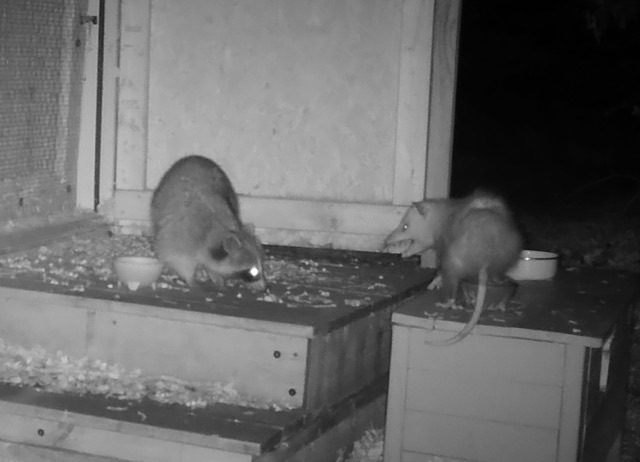
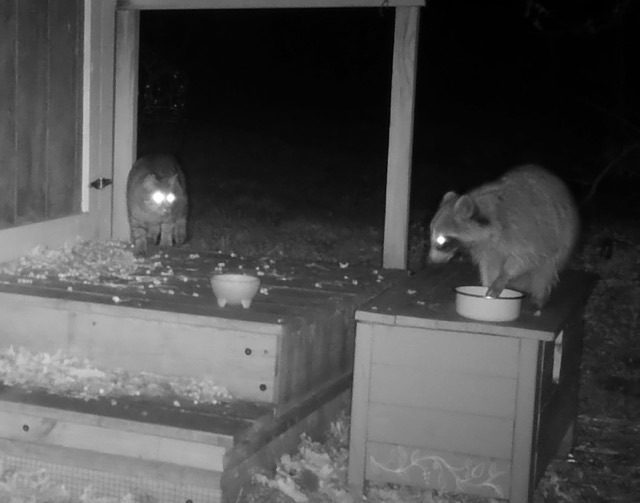
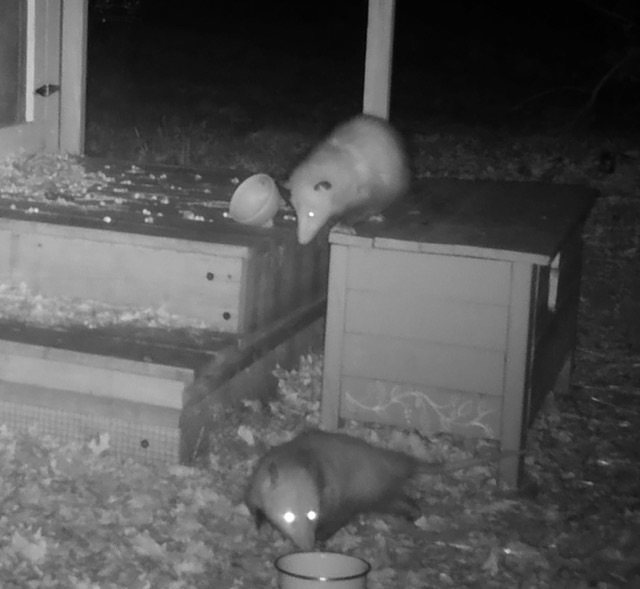
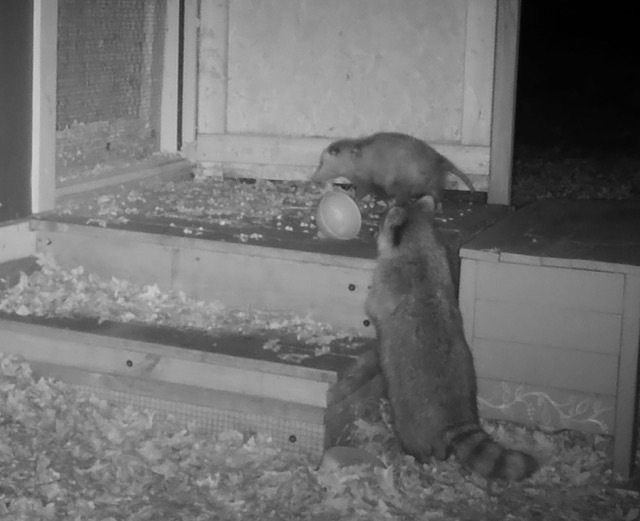
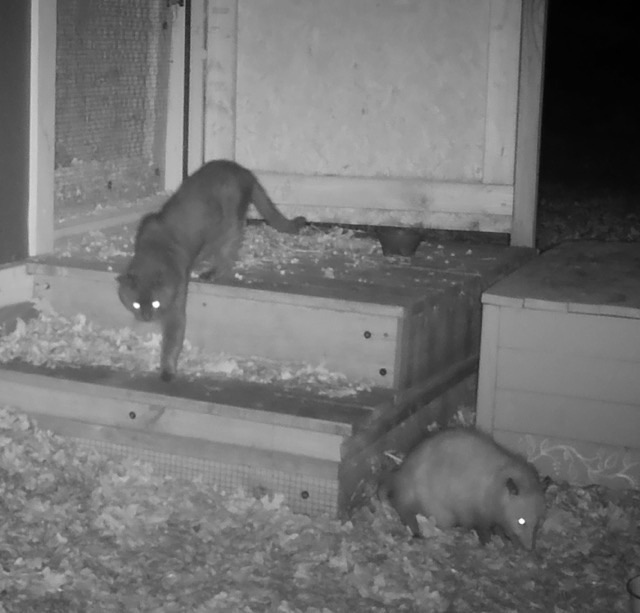
I think I’m seeing three different opossums on the trail cam closest to the coop.


I had to look up the lifespan of a wild opossum: 2 years. So a three-year-old opossum would be elderly. Now I’ll be watching for another glimpse of them.
I am pleased that my new trail cams give me enough resolution to identify individuals.
I’m glad I moved the trail cam up the tree. Now I’m getting faces instead of haunches.