Morning of the gecko

Remember when I mentioned ebbs and flows? Well this morning had a surge of geckos. It started with Izzy the cat pointing out the large house gecko on the wall in the house.

Izzy spots the first gecko

Izzy (cat), Missy (dog), and I (human) chased the gecko all over the wall, behind a coat rack, which chose that moment to come loose from the wall (I’ll address the fixing of that tomorrow), then down on the floor. Izzy would trap it, then I would push her back and try and scoop up the poor gecko, the gecko would leap from my hand and we would repeat the actions. Missy just wanted in on the action. After the poor gecko was tired out, I was finally able to get him in my hand and take him outside. Good news, his tail was still intact!

The moment before freeing the house gecko outside

The next gecko, a tiny little thing on the window going to the catio was not so lucky. Izzy caught and ate him. The third gecko my eldest found at the front door was able to escape cat and human clutches and remain free in the outdoors. The previous week held no gecko chasing frenzies. Ebbs and flows.

Emergence

So. Many. Cicadas.

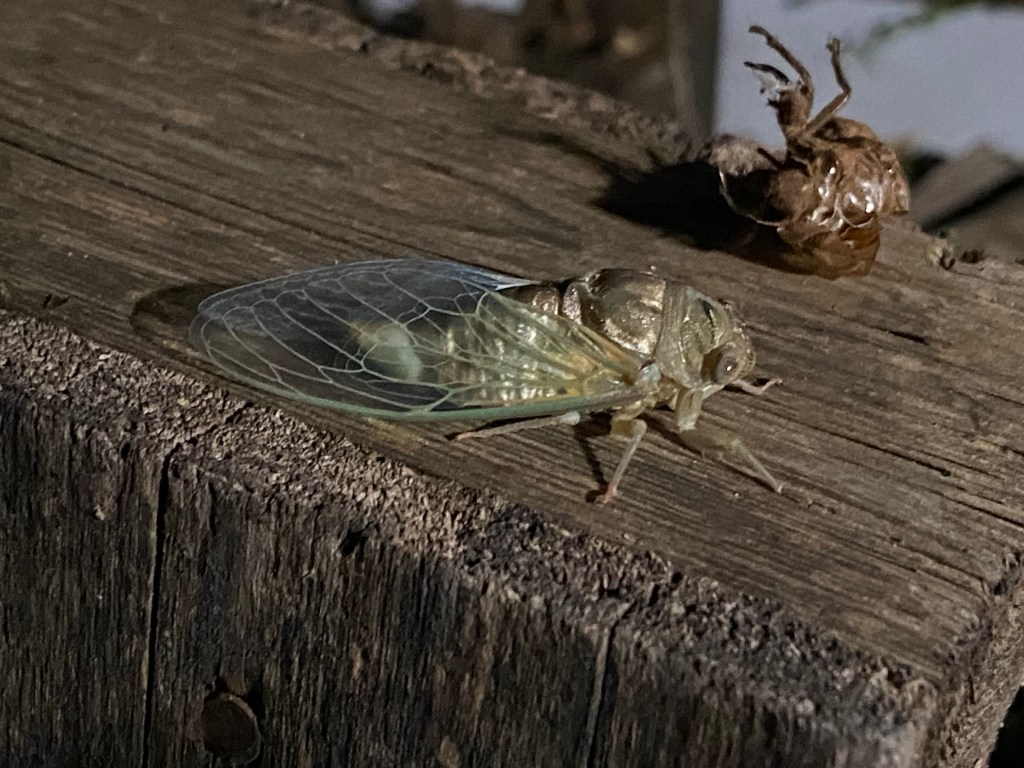
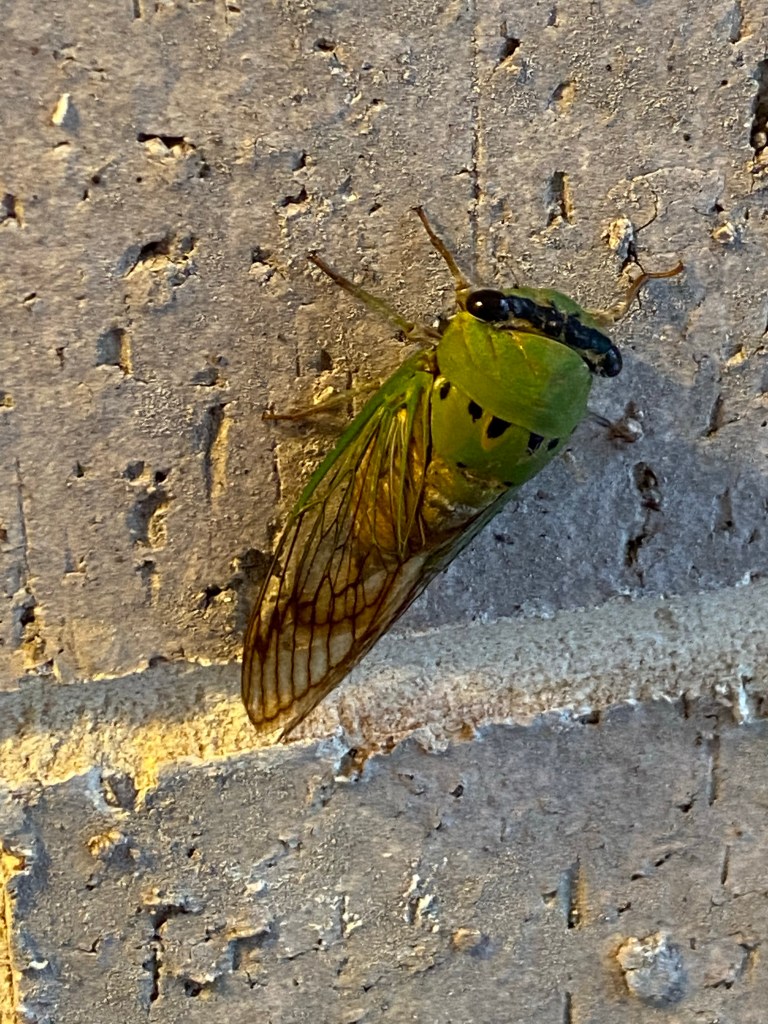
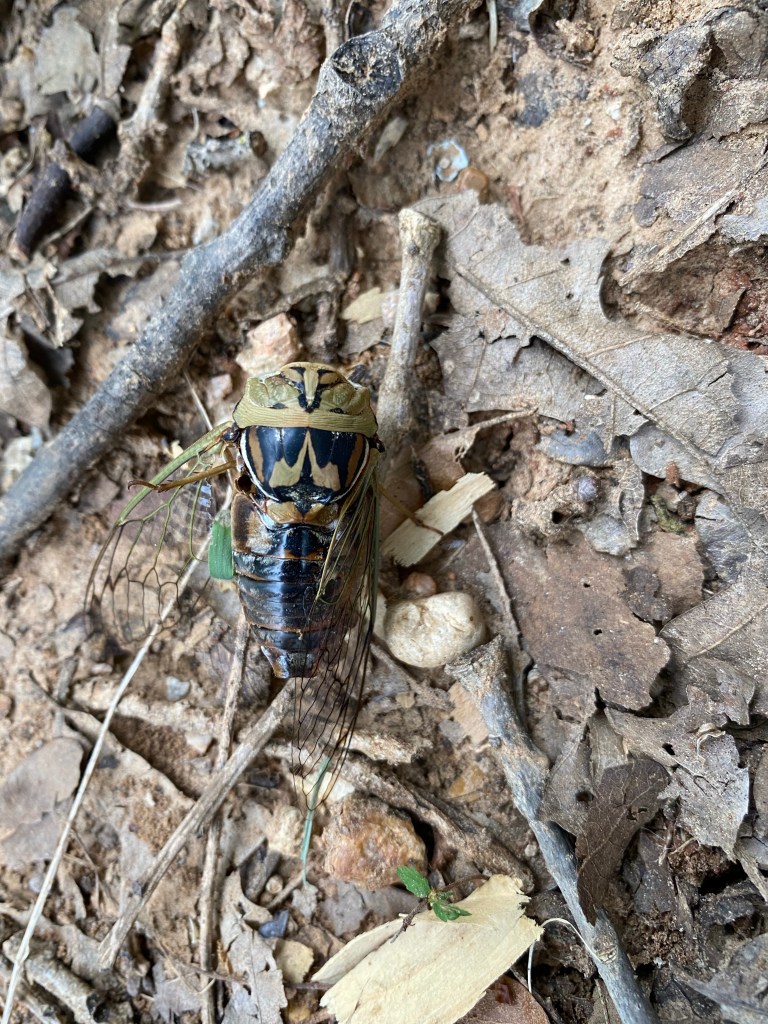
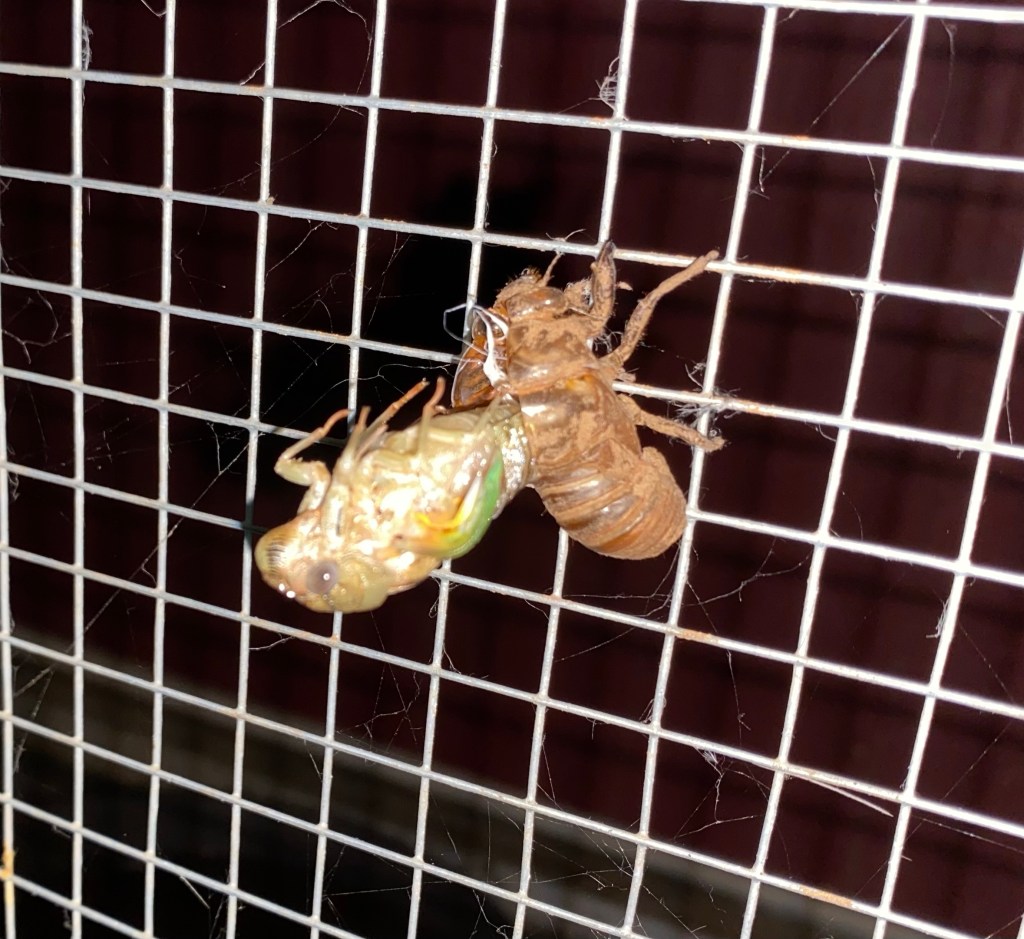
I have found cicada shells before, and seen adult cicadas, both living and dead, but haven’t witnessed a cicada emerging from their final molt. I have now, in spades. Every evening when I go to close the people doors on the coop, there is at least one cicada crawling out of its nymph form. I have to be careful not to crunch one in the door, and have had to relocate a couple so I could safely batten the hatches. Here are some of the pictures (not of the same individual).

The back of the cicada nymph has cracked and the adult is starting to emerge
Adult almost free of the shell
Newly emerged adult out of the shell (I had to move this one because it started the process in a door frame)
Living adult cicada on the brick of the house
Deceased cicada in the leaf litter
Empty cicada nymph shell

Disarming spider webs

When the summer heat starts to dissipate somewhat in the early evening, I open all the people doors in our coop to let the breeze through and bring the temperature down. Then before I head to bed I close the doors up again to protect the hens from late night predators. The worst part of walking around the outside of the coop at night is running into a face full of spider web. To say I make strange noises when suddenly draped with sticky gossamer threads is putting it mildly. So I have learned, finally, to use a flashlight to see the webs before I envelope myself, and how to disarm the trap so I can pass by.

Late night spider and web

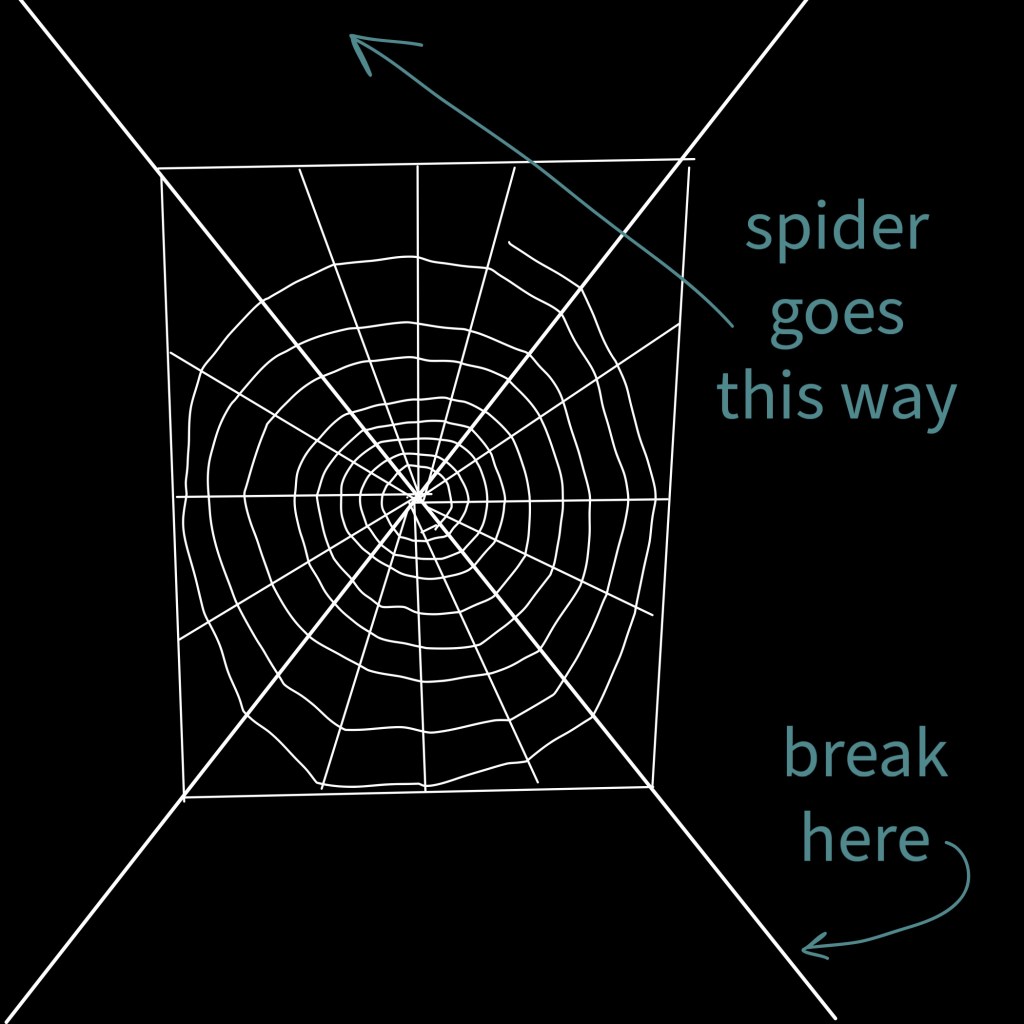
The webs spread across paths usually have three or four anchor points. It is amazing how these eight-legged critters establish the anchor lines as they drift around on the breeze, and equally wonderful that if you break one of the lines, the web collapses and the spider moves in the opposite direction. Away from the break and that which broke it! No spiders in my hair or crawling up my arm, no web across the path or on my skin, and eventually they stop setting up shop in that spot. This method of disarming also looks much more dignified than waving a stick in front of you as you walk, like a deranged wizard.

Bug day

It is fascinating how the world works in ebbs and flows. I recently had a bug day, where I saw more photo-worthy bugs in one day than I had in two weeks. Was I a little more alert that day? Was I thinking more than usual about bugs? Did catching bugs in Animal Crossing bleed over into the real world? Or where there just more bugs out where I could see them? I’m not sure the answer, but I will share the photographic fruit.

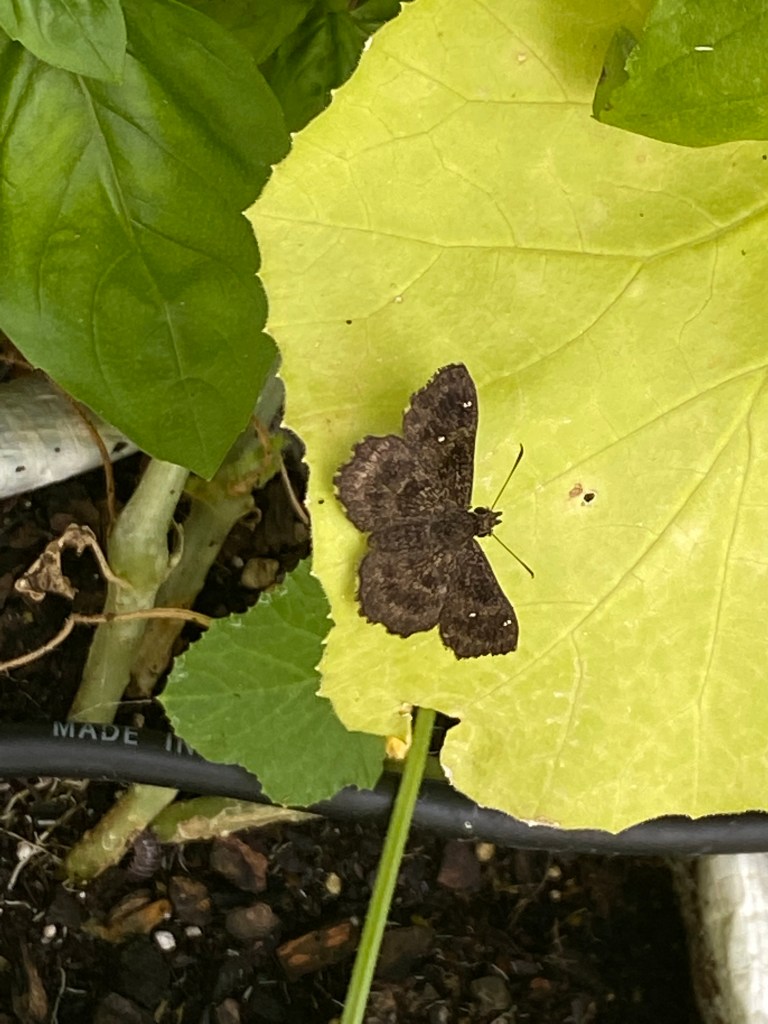
Scalloped wing butterfly on a melon vine leaf
Common Green June Beetle in an unusual position
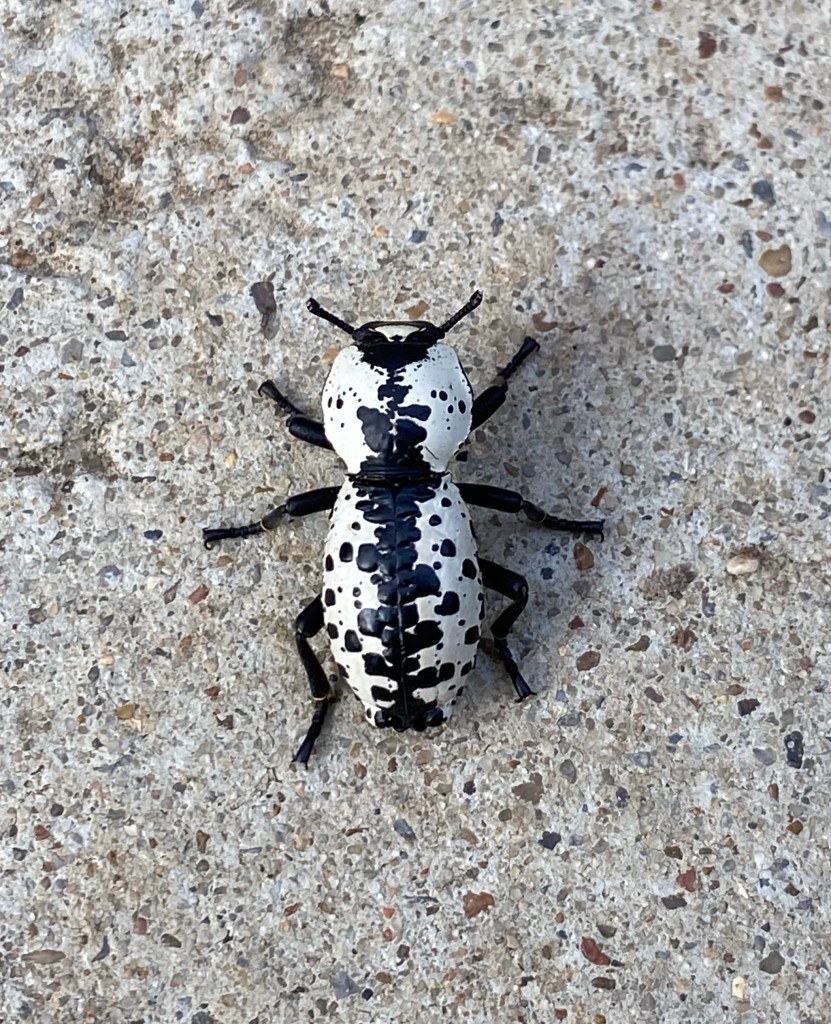
Texas Ironclad Beetle. Second one in a month!! Yay!

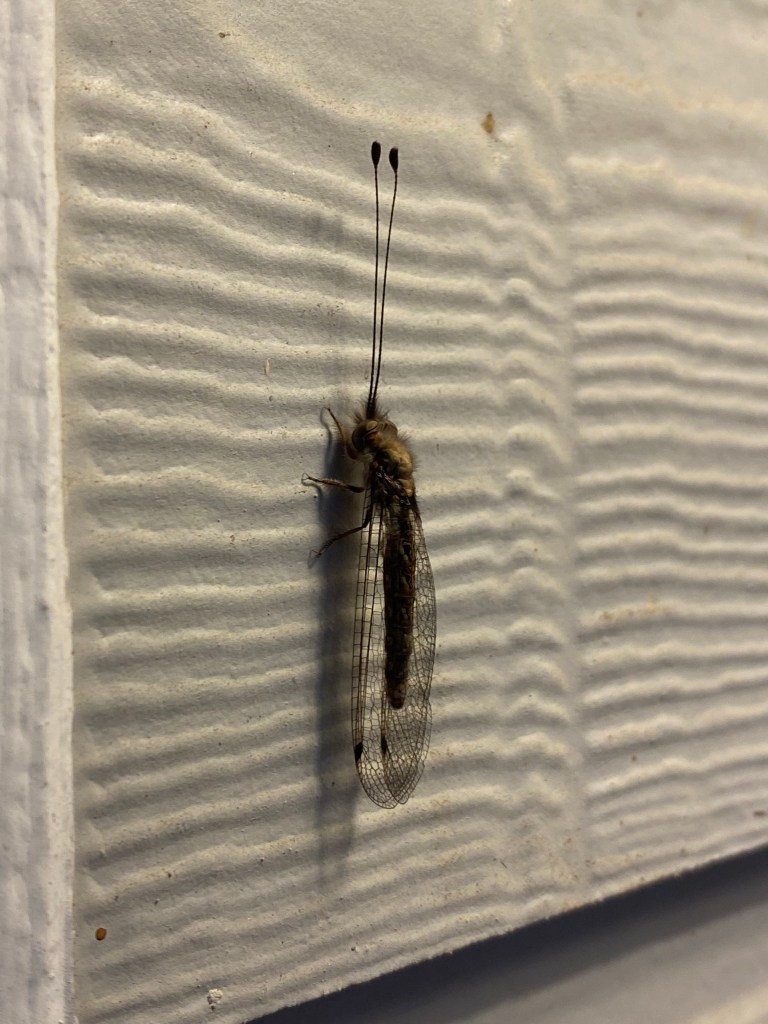
Owl fly

What has the antenna of a butterfly, eyes of a house fly, wings of a dragonfly, and rests like a damselfly? (I guess I gave it away in the title, huh?) I have never seen an owl fly before. This one was resting on the wall of the house under the light when I went out for my morning walk. iNaturalist gave me the ID, and internet research tells me they are predators of flying insects and are often mistaken for dragonflies. Hm. Maybe I have seen one before, then. How easy is it to see those distinctive antenna in flight?