Black hole

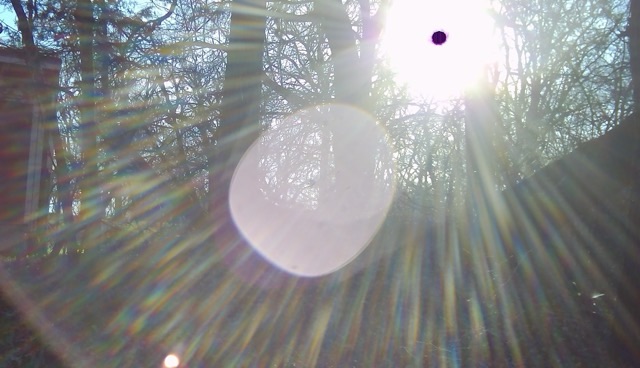
Photo description: trail cam photo with a black sun

Yes, it is April 1st, but this is a real photo from my digital trail camera. No, it is not the end of the world, the sun isn’t collapsing into a black hole, but there are quite a few things going on in this shot.

The sun looks black because it is so bright that it overloaded the sensors in the digital camera, which, when overwhelmed, sets the value to black instead of white. The white halo around the black dot is not bright enough to overload the sensor, but does washout the surrounding tree branches.

The rainbow rays shooting from the sun are a form of lens flare, and are an artificial artifact in photography, sometimes used deliberately for effect.

The amorphous white blob in the middle of the photo is most likely a sensor flare, where the bright sunlight reflects off the sensor then the lens, and then back to the sensor.

I don’t usually use my trail cam for avant-garde photography, so the fix for this was to make sure the camera wasn’t facing directly east or west so it wasn’t framing the rising or setting sun.
Cyanometer

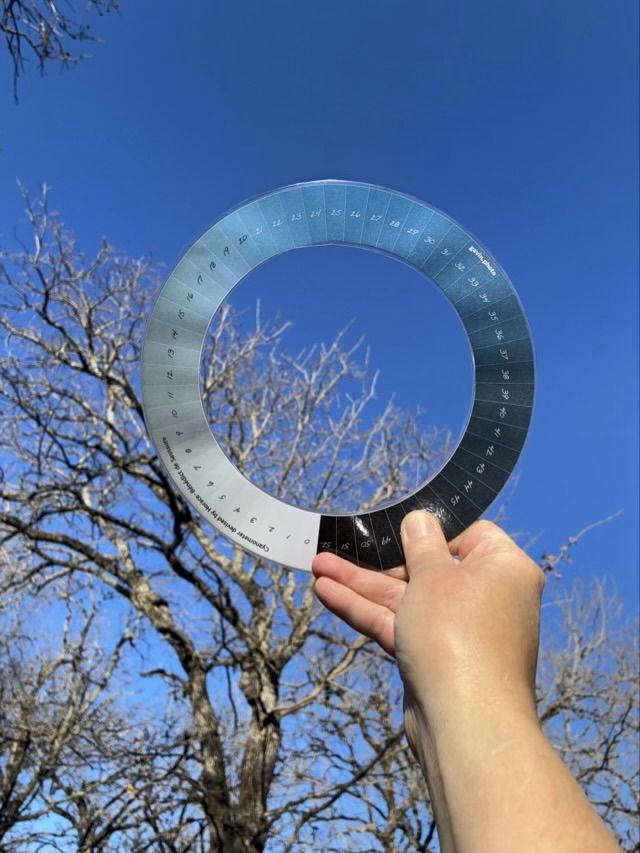
I had never heard of a cyanometer and was curious when I saw it scrolling my feed. It was invented in 1789 by Horace-Bénédict de Saussure and is used to classify the color of the sky. Gavin Gough has a good quality free printable here. My youngest is all about blue skies, so I printed her one and laminated it.

Photo description: cyanometer held up to the sky, matching color about 26, sun behind me

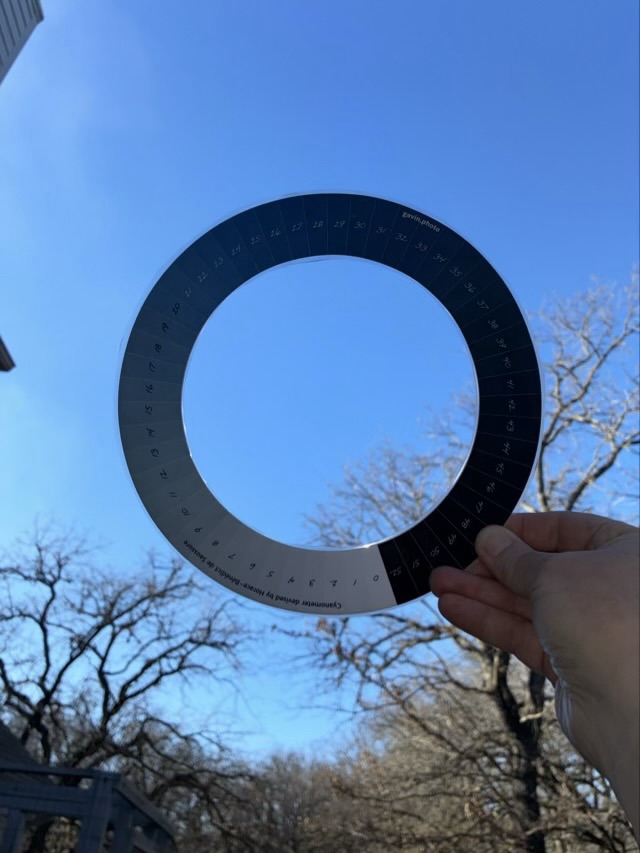
What my readings did not tell me, and what I had to discover in practice, was that you need a good light source on the cyanometer. Standing facing the sun, or in the shade, makes the colors too dark. I found using it with the sun at my back shining on the disc worked best.

Photo description: Cyanometer held up in the shade, which does not work well

Of course there are many other factors to collect when taking your reading: time of day, geographical location, angle in the sky, cloud cover. Painters and photographers use it as a reference. Overall an interesting little disc.

Size comparison

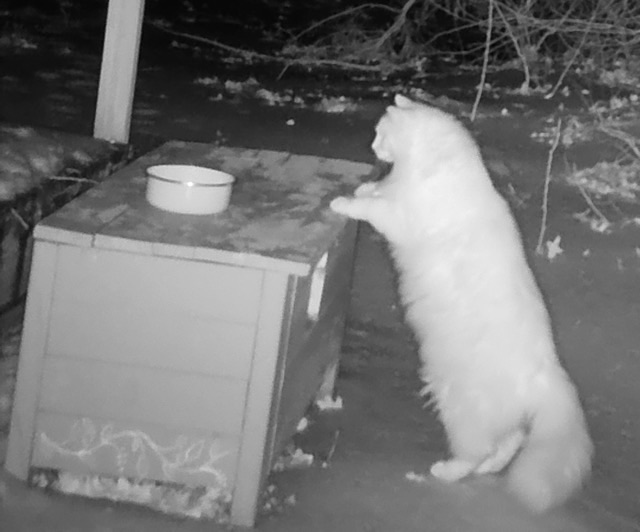
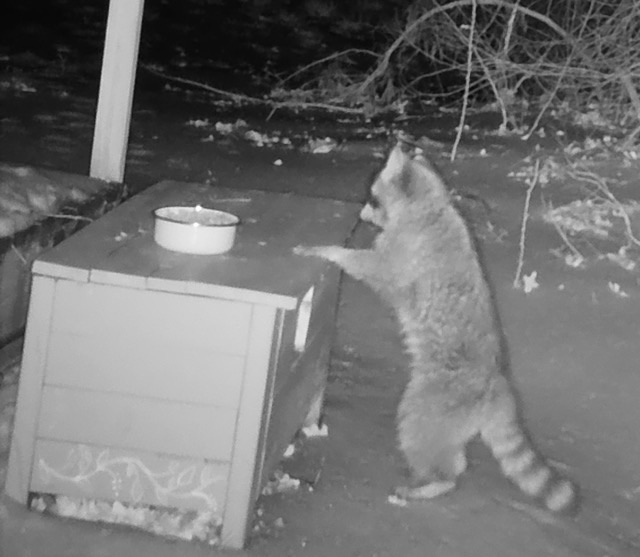
The trail cam pictures gave a good way to compare the size of the new raccoon vs a cat.

Photo description: night vision view of a long haired white cat with his front feet on a wood bench
Photo description: night vision view of a raccoon with his front feet on a wood bench

These two photos were also taken just under two hours apart, so the depth of the ice is the same.

The ice accumulation from the last storm did finally all go away. I can’t recall that I’ve ever seen it stay as long as it did in Texas. I still refuse to call it snow.

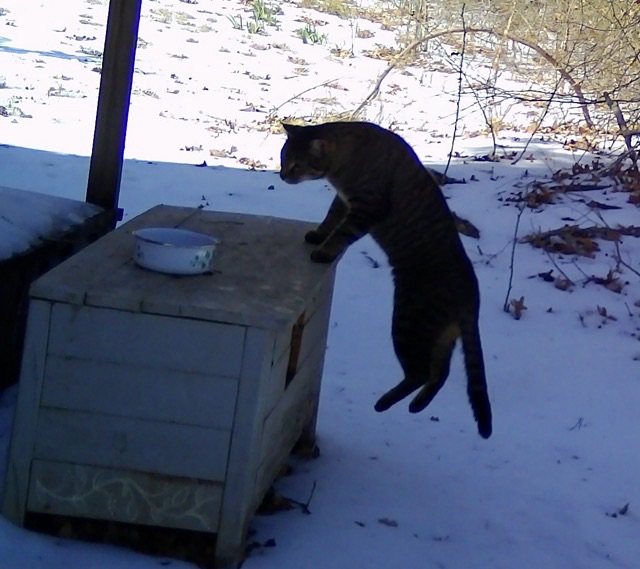
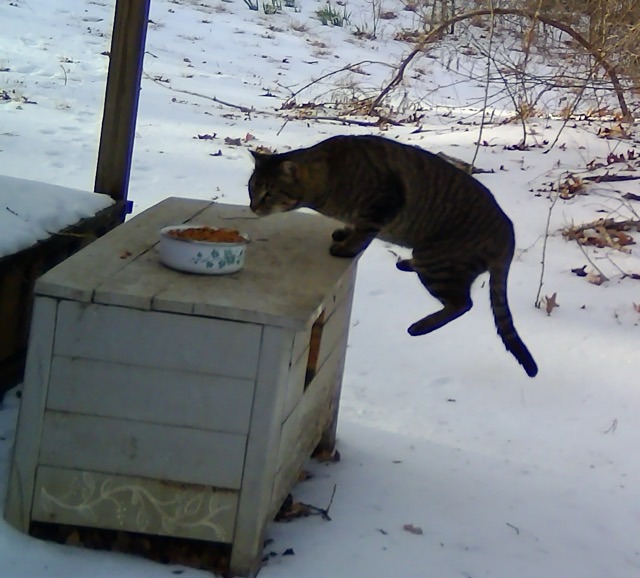
Mid-jump

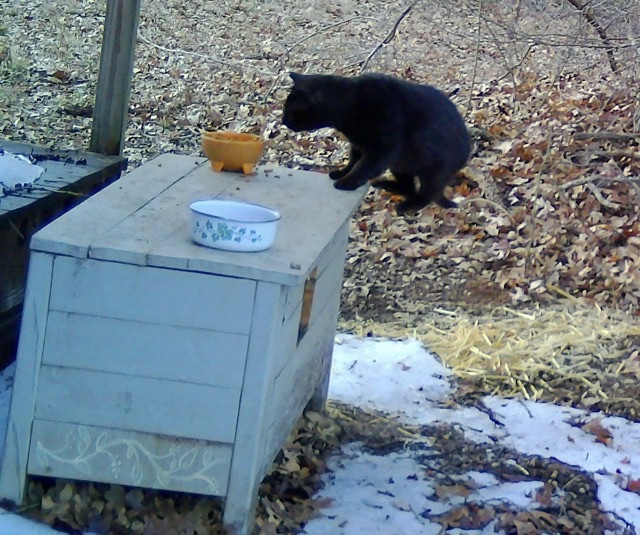
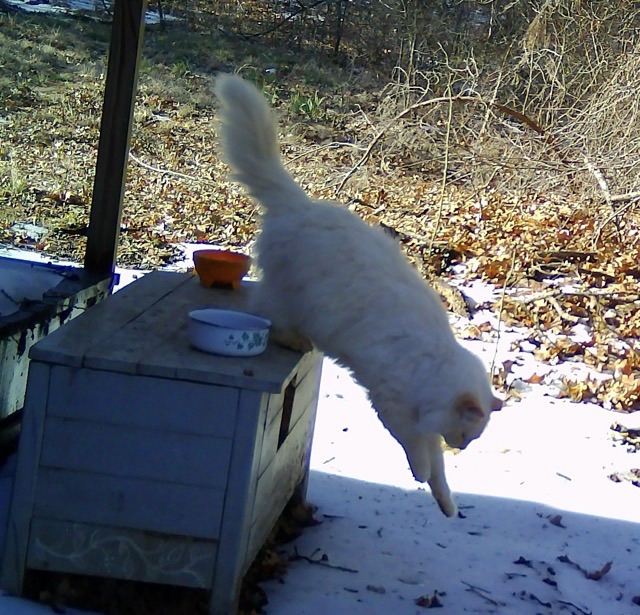
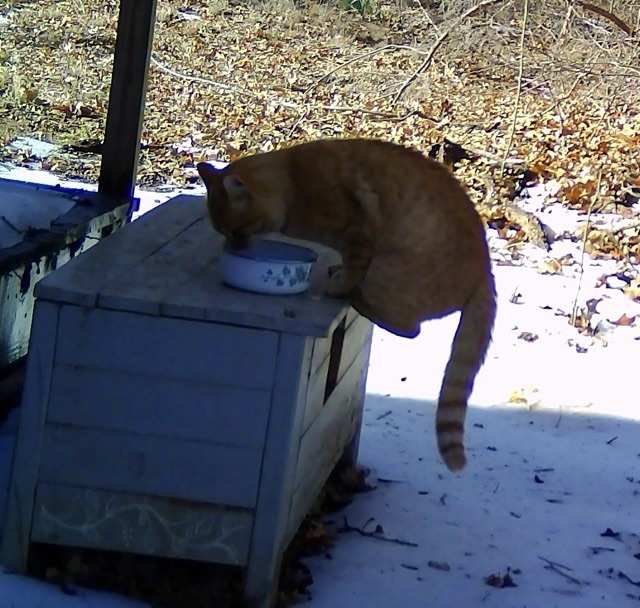
Scrolling through the trail cam pictures, I usually skip downloading most of the neighborhood cat pictures, but I noticed a trend as I scrolled. The camera was catching the cats mid-jump. Some of the photos are quite amusing, like the cat is awkwardly suspended.

Yes, I put out food for them, as do at least three of my neighbors. Yes, I get them fixed. They are excellent for snake and rodent control. None of them use the inside of the insulated cat house. I don’t think I designed it right.

Feline blend

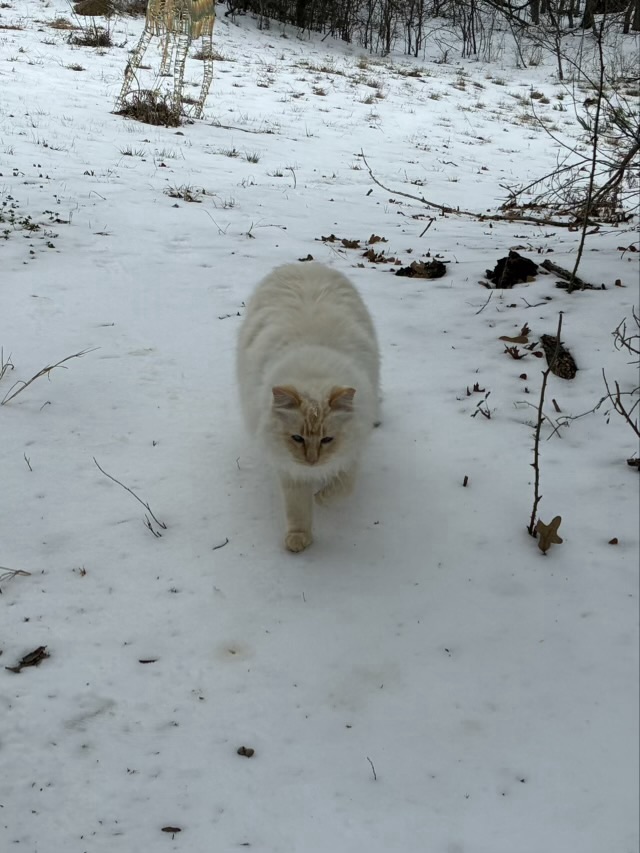
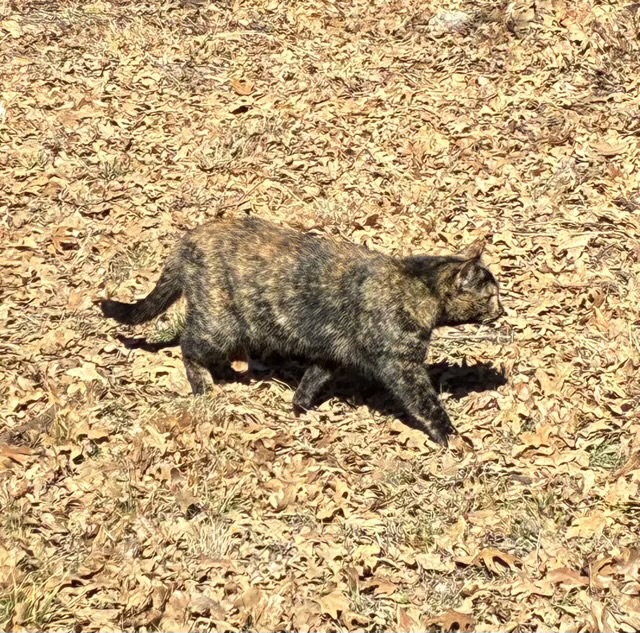
I photographed two neighborhood cats in camouflage environments in the last few weeks.

Photo description: long haired white cat in a field of Texas snow (hard pack ice)
Photo description: Tortoise shell cat in a field of fallen leaves

I would have loved to do a full photo shoot with these cats and matching backgrounds, but the white cat wants to be brushed and is not interested in posing, and the tortie is skittish, so phone pics will have to do.