Impromptu basket

Waiting for the outside cat to finish her dinner (she needs a guard while she eats because of Big Orange Tom), I was distracted by the honeysuckle runners reaching into the grass. So I grabbed a knife and trimmed the stems that were going out of bounds, which left me with a dozen or so long bendy pieces. The cat was still eating, so I made an attempt at a basket. I laid out six of the thicker stems as my spokes and used the other stems to twine around the spokes. When I ran out of material, I wove in the tops of the spokes. Huh. I can make a basket. There we go. The cat was long gone, at this point.
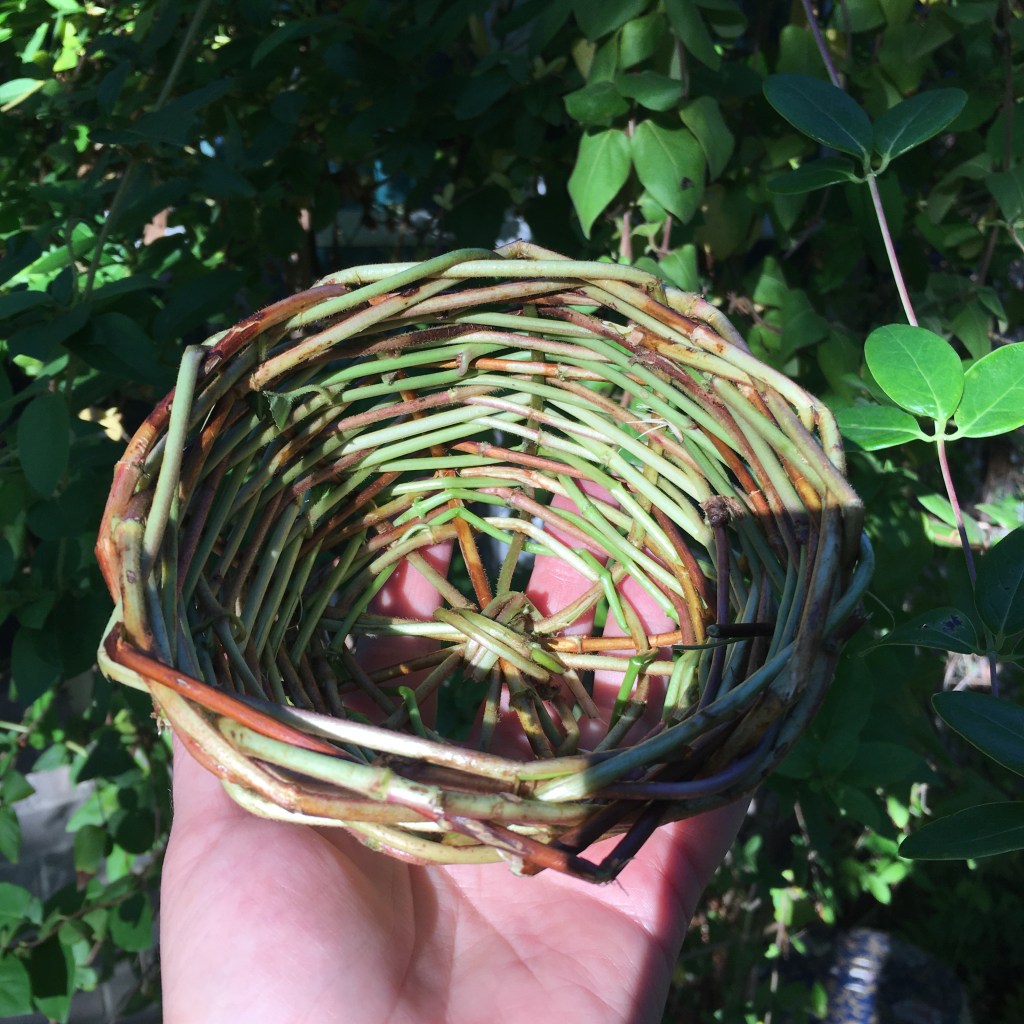
Fresh honeysuckle vine basket

It is a rough little basket, but was straightforward enough that I looked up honeysuckle basket making online for more information. It turns out the best recommended time to harvest honeysuckle vine is in the fall, and once harvested, the vines can be stored. Then the traditional method is to boil the vines to kill any bugs, assist in removing the bark, and make the vine more pliable before making a basket. So I’ll give that a try this fall.
Happy Mother’s Day!

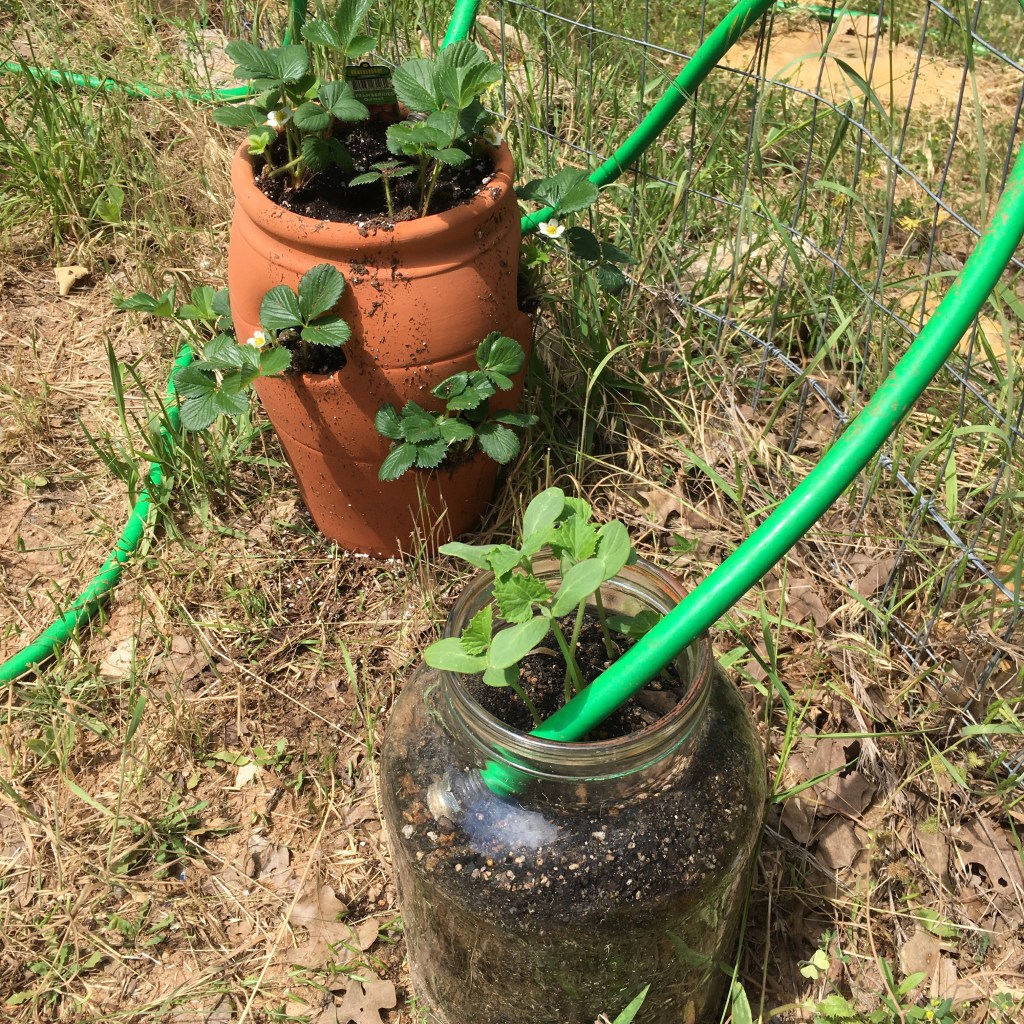
To all who mother. Here is my mother’s day gift: a strawberry pot with strawberry plants! I picked it up early, but the plants seem to be happy next to the cucumber jar, which is an old glass tea jar. The tea jar has a hole where the spigot used to be, so drains well. Time will tell if the cucumbers like it. There is more sunlight here than in the previous location. The water comes from my rain barrel, which was my gift last year. Yay growing things.

Strawberry and cucumber plants

Upcycled helium tanks

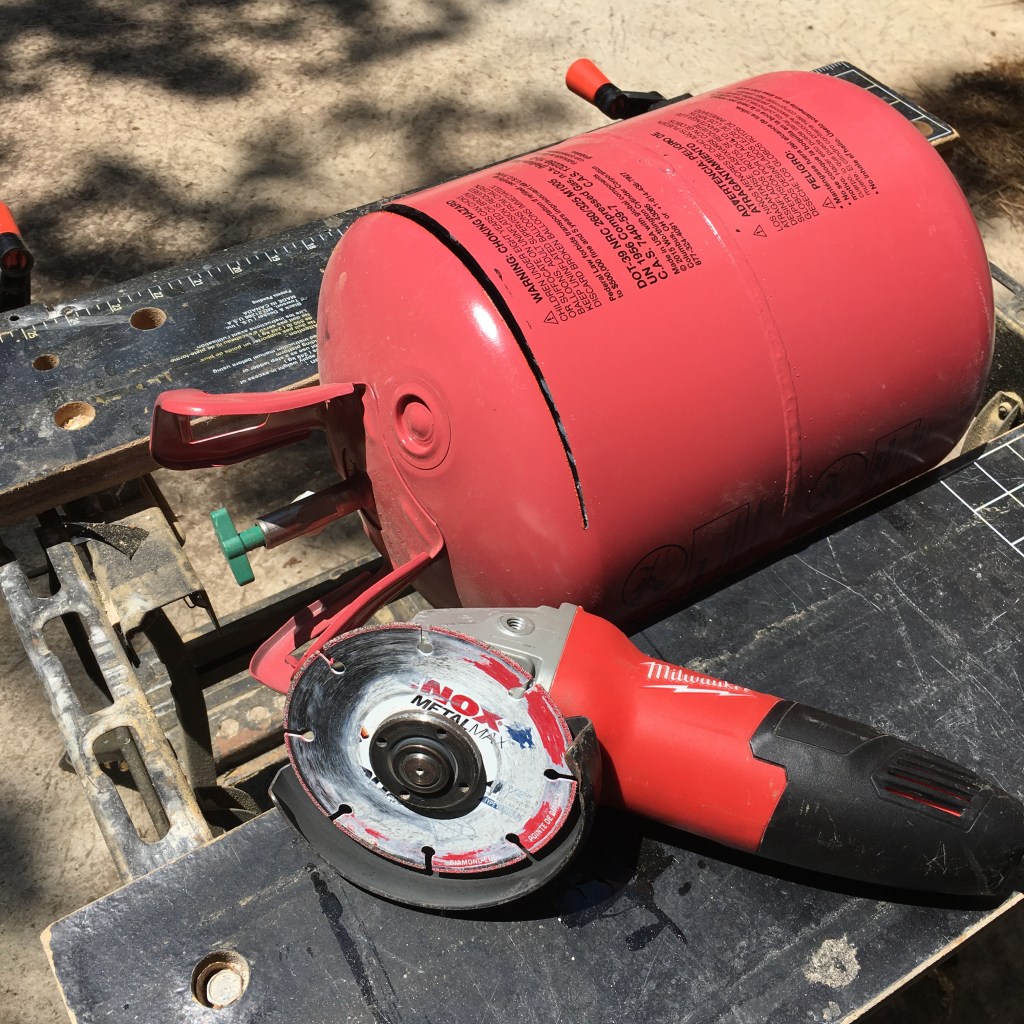
I’ve been holding onto some empty helium tanks, determined that I can recycle or upcycle them, rather than take them somewhere for recycling. My idea was to turn them into outdoor planters. So I got out the angle grinder and fit it with a metal cutting blade, then clamped the tank into my work bench so it wouldn’t wiggle.

Cutting off the top of a helium tank

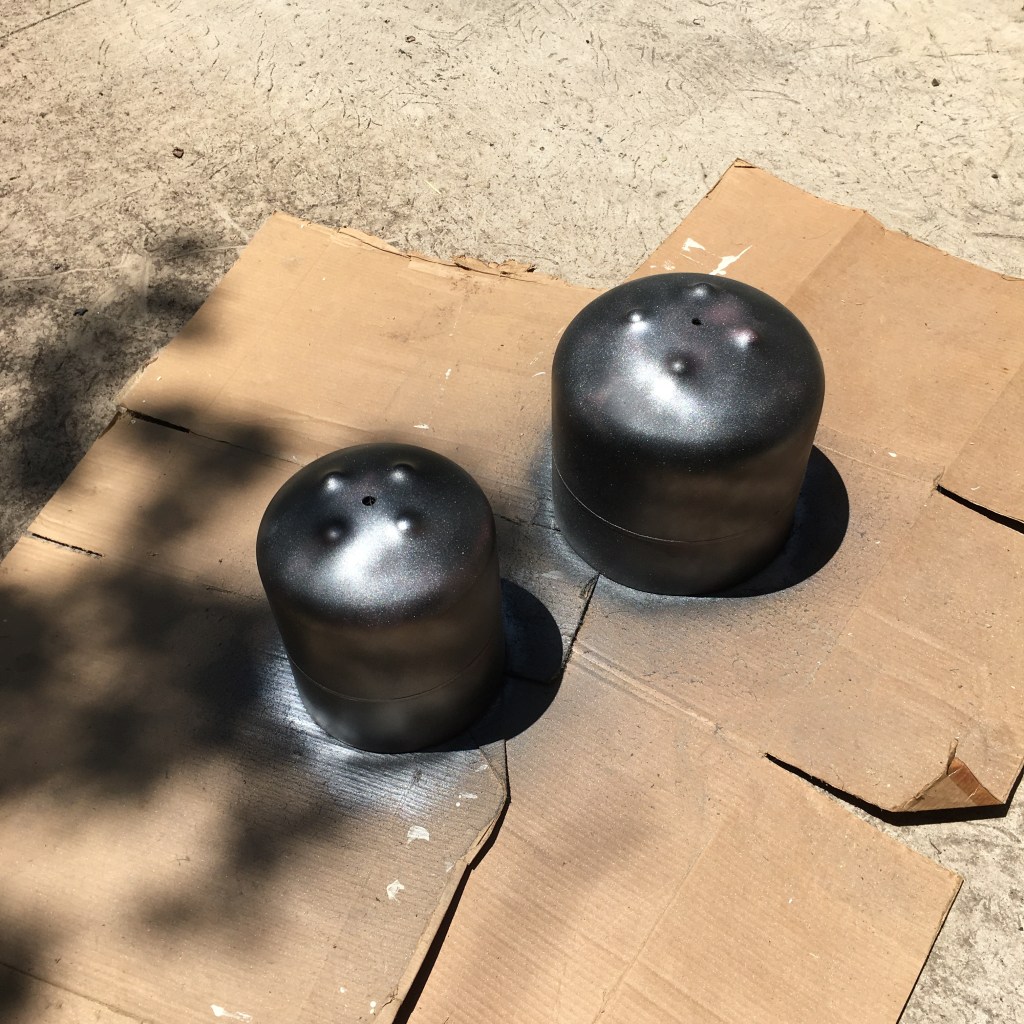
It wasn’t hard to cut the top off; it took longer to grind the edges so they weren’t vicious sharp. I did what I could with the angle grinder, then used a file. I then flipped the tanks over and drilled drain holes with a stepped drill bit. While my youngest wanted me to leave them pink, I just couldn’t do it. I used black and silver spray paint to obscure the writing.

Painted tanks

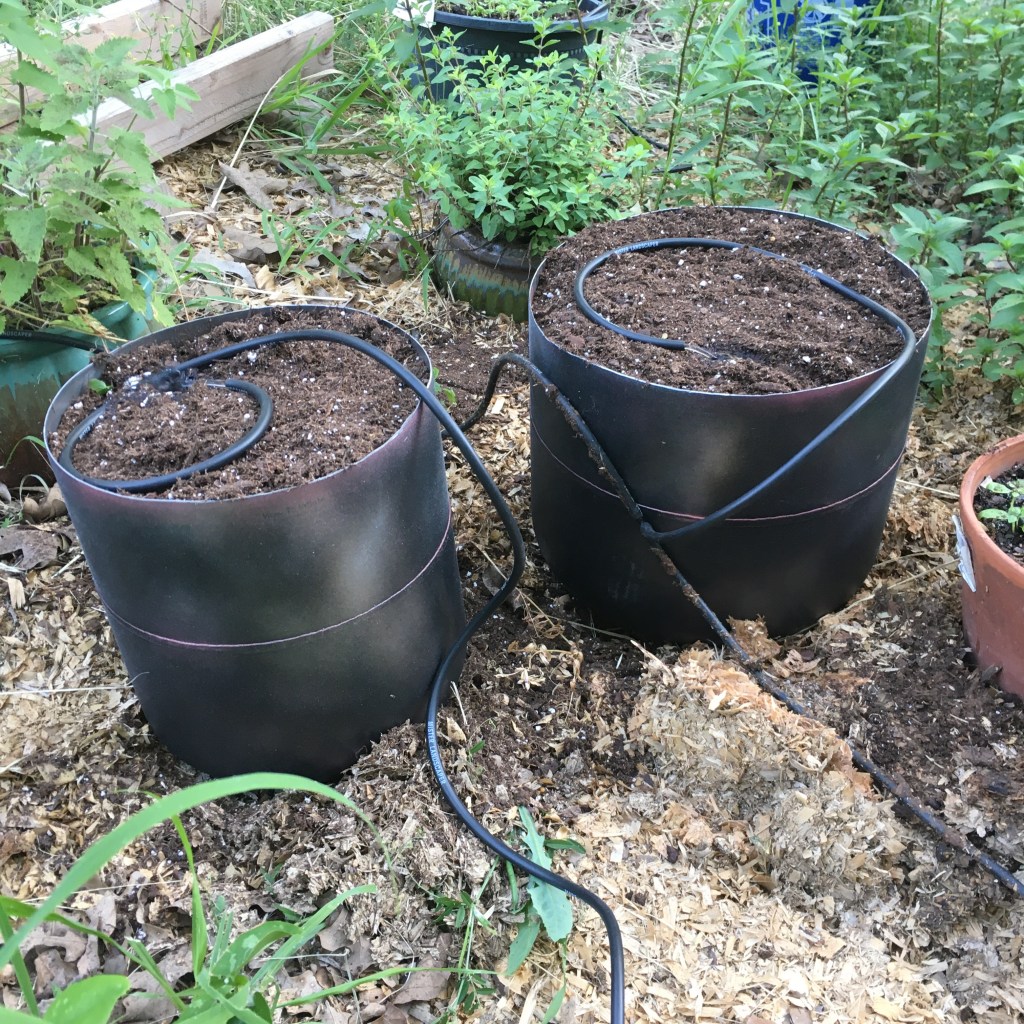
When the paint was dry I filled them with dirt and set up some extra drip line. I put onion seeds in one and watermelon seeds in the other. We’ll see if anything grows! At least they look good.

Upcycled helium tank planters

Honeysuckle simple syrup

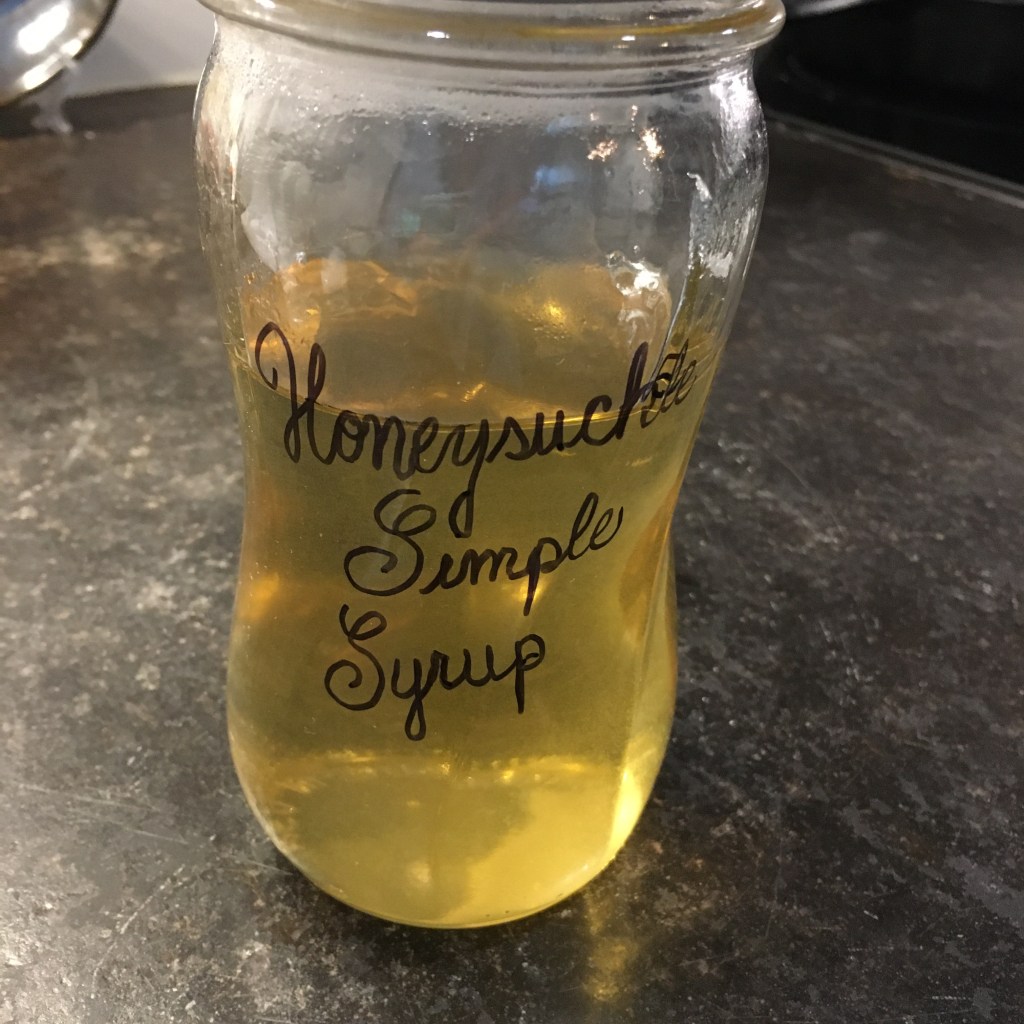
Honeysuckle Simple Syrup

In reading into japanese honeysuckle as an invasive species, I also found that it has culinary and medicinal uses. To try it out, I followed the advice from this article. I gathered fresh blossoms (about a cup), brought them to a boil in two cups of water, simmered down to one cup, decanted the liquid, and added a cup of sugar. It does have a pretty color and an interesting taste. I tried another batch with local honey, and the honey taste really overpowers the honeysuckle. However, since there are potential medicinal uses, the plant stays! I also read that the leaves are edible parboiled, and you can make baskets from the vines. It stays.

Honeysuckle Simple Syrup with honey

Honeysuckle

Japanese honeysuckle

The honeysuckle is in bloom again, and again I think wistfully that I can only share a picture and not the heady scent. Although if I could, it would probably knock your socks off. The source of the heavy fragrance is the Japanese honeysuckle that the previous owners planted. Turns out it is an invasive species. We have planted native yellow and red honeysuckle, which are also doing well, but not nearly as well as the japanese variety. I can see why it is a problem: it is hard to cut down something so pretty and fragrant. Ours is climbing on a metal arbor, so not strangling trees or brush, but I do need to keep an eye on the runners.