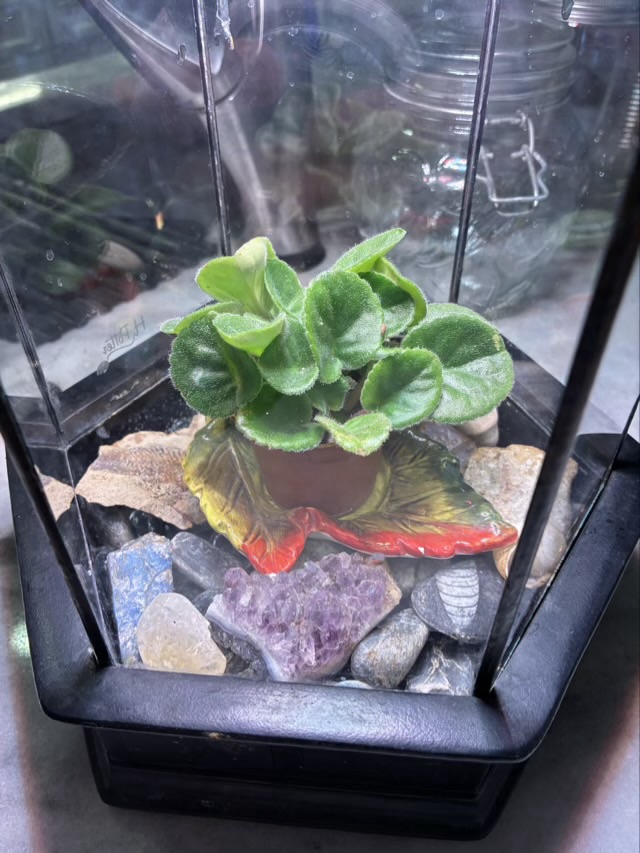
The mossarium I made in a case was not doing well. I tried adding a plant light and it was too much for some of the moss. After six months of steady decline, I decided to clean out the container and put in something else. I have a young African violet that I received from a friend that currently fits.
Photo description: small African violet sitting in a leaf shaped tea light saucer on a variety of rocks and stones inside a closed glass terrarium
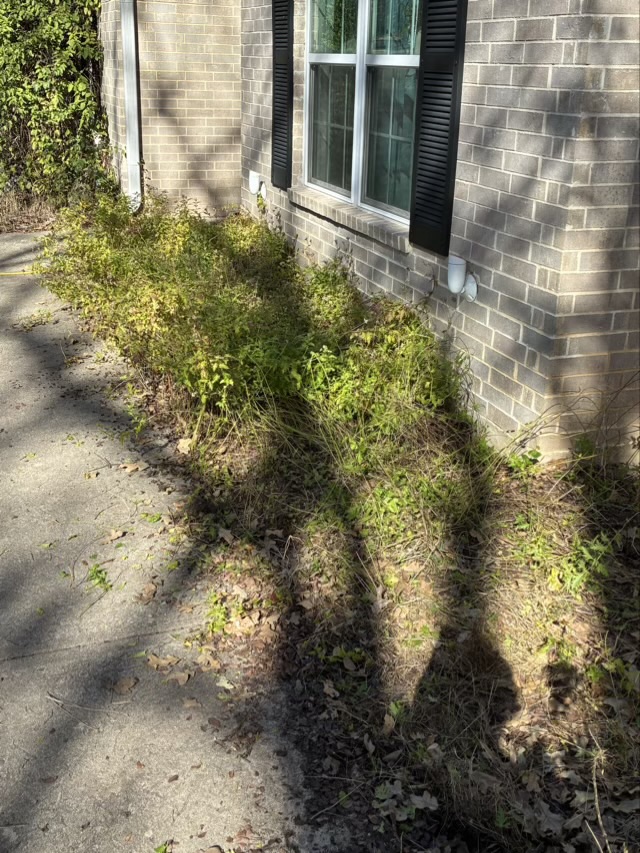
As much as I love Gregg’s Mistflower and the mass of butterflies that love the purple tufted blooms, the front garden bed was not the right environment. Even though it is one of the places in our yard that receives the most sun, it isn’t enough to keep the plant from bolting, growing too tall, and falling over onto the side walk. Mistflower also really doesn’t like being trimmed, it won’t flower if trimmed shorter, and the whole point is to flower.
Photo description: front garden bed full of bolted Gregg’s Mistflower
Gregg’s Mistflower is native to Texas and self seeding, so in order to remove it from the flower bed, I first pulled up all the plants, then dug out the top layer of soil.
Photo description: same front flower bed dug out to reach the clay underneath the amended soil
Tearing out the plants took about an hour. Digging down 3-6 inches across the entire bed took 5-6 hours. I put the seed heads in the meadow, where the sunlight is brightest, and I spread the dirt in the meadow and around the house in areas it was needed.
I am hoping this will also help with the chronic grass problem in this flower bed by removing the roots that kept coming up. I had one hardy hibiscus that was struggling in the lower light that I also replanted.
The next step is to fill the space with garden soil and mulch and plant different species.
Yes, it is December and I’m gardening. It is Texas.
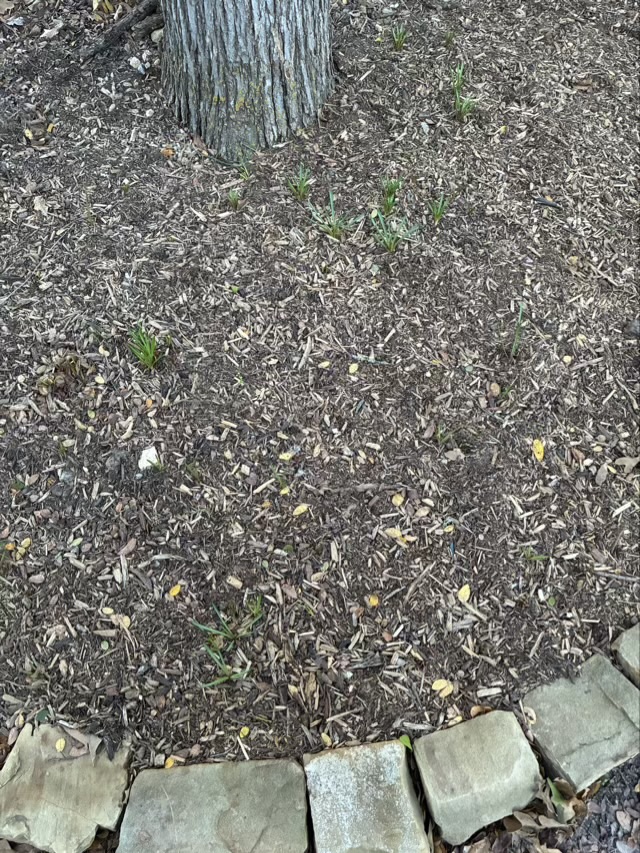
The grape hyacinths Dad and I planted in the new flower bed appear to be happy. We have growth both from the transplanted bulbs and the newly purchased bulbs.
Photo description: small clusters of green leaves coming up out of mulchy dirt
It always makes me nervous when the grape hyacinths start growing in Fall, but for the last few years the cold doesn’t seem to bother them, and in spring they bloom.
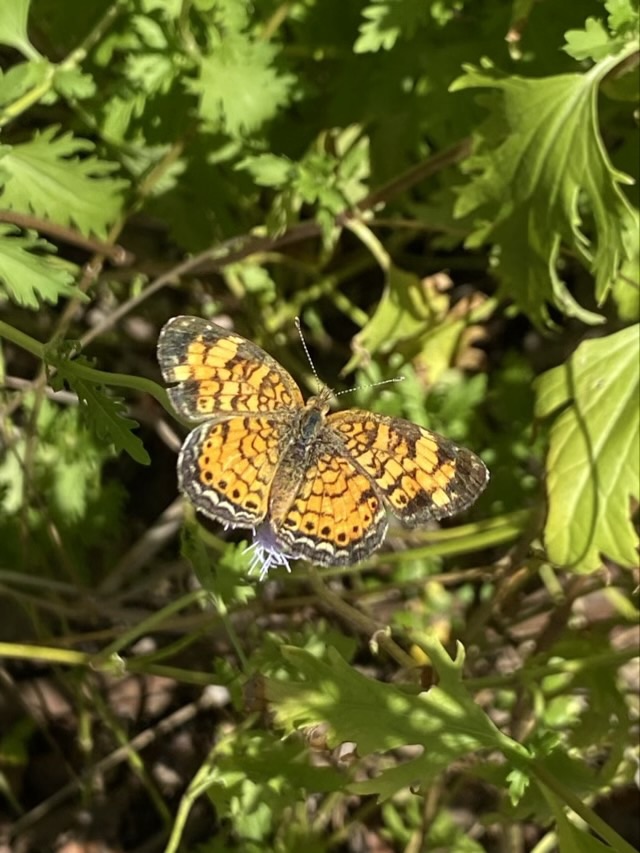
I did not trim back the Gregg’s Mistflower this fall. It is now tall and gangly, but blooming and full of fluttering wings. We have many Queen butterflies, but I’ve spotted some others visiting the purple tufted flowers as well.
Photo description: Pearl Crescent butterfly sitting on a Gregg’s MistflowerPhoto description: Clouded Skipper sitting on a Gregg’s Mistflower
Gregg’s Mistflower is native to Texas and in proper light conditions grows to 2 feet tall. The front flower bed doesn’t get enough sunlight which makes the plants gangly and closer to three feet tall before it falls over and grows up again from the fallen stems. Since it is native, at the end of the season, and after a nice solid rain, I’m going to relocate these plants into our meadow, which does get a little more sun. They are self seeding and spread and the idea of a meadow full of butterflies is attractive. They also bloom in both spring and fall, making them a valuable source of nectar.
One of my hanging plants started leaking from a crack in the bottom. I’m not entirely sure how a hanging pot cracks, but it definitely wasn’t leaking plant water last week. I had a spare pot, but it wasn’t hanging, so I attempted a macrame pot holder. I used cotton macrame cord leftover from a different project, and divided it into six strands. I folded these in half and secured a loop in the middle with a knot. I then used macrame style square knots to make the net part of the hanger. It took a few tries. I found that I need to leave enough room from the loop to the first knot for the pot to slip through. The knots aren’t perfectly spaced, but they are functional, holding the oval shaped pot securely. I finished the bottom by gathering all 12 strands and lashing them together with a separate strand of cord.
Photo description: very basic macrame plant holder for an oval pot
The zebrina plant looks sad because I had to cull 90 percent of it to get it into the hanger. I took cuttings from the culled sections to root out. This plant regularly goes from sad and spindly to lush and full, so I’m not worried about it.




 Critters and Craft