Bent cane weaving frame

I was trimming the yard, and took down a sapling (iNaturalist identified it as a type of elm) growing near the AC units where it didn’t need to be. I noticed that the diameter was similar to some bent cane weaving frames that have been popping up on my Pinterest feed. Because I am easily distractible, my next task became making my own frame. As I stripped the side branches off, I noticed that the bark peeled off easily, like that of a mandarin orange. The bark was flexible, strong and fibrous, so I roughly split it into thick strands and twined the strands together to make a primitive rope. I used this rope to keep the branch in a nice curved shape while it dries.
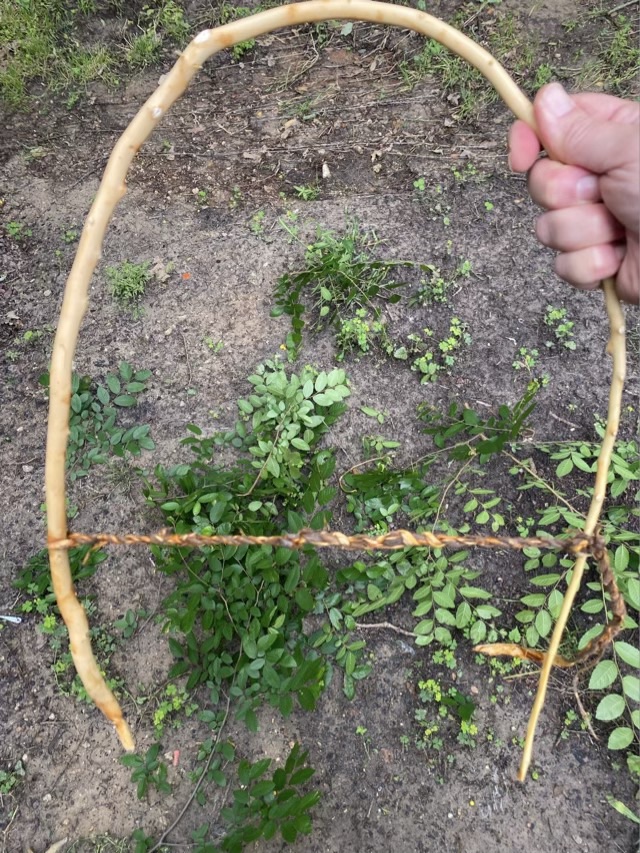
Photo description: stripped elm cane bent into a narrow arch and secured with elm bark twine

I think this frame is on the small side for the kind of weaving I want to attempt, but it was a good exercise, and I have an acre of woods to source longer cane.
Antelope horn Milkweed

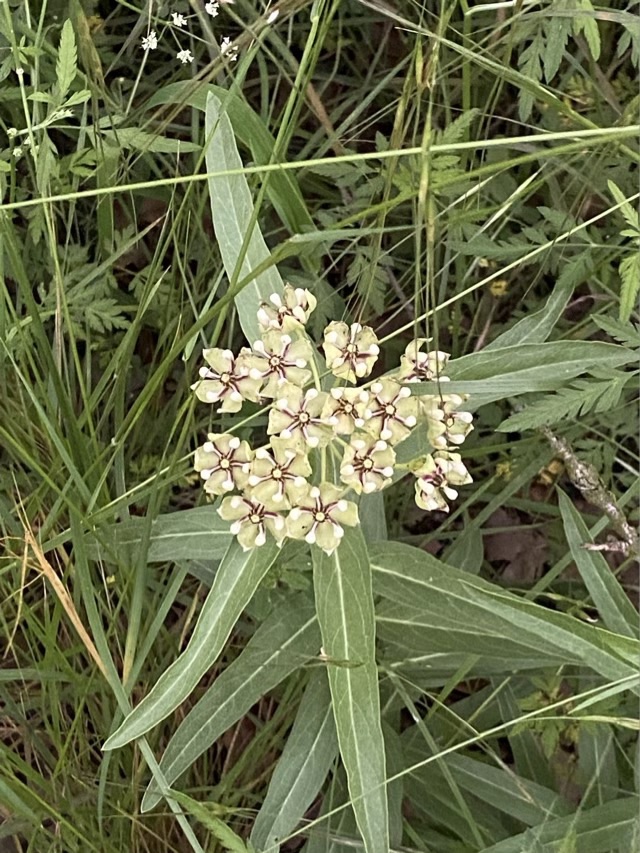
I was quite excited to find a milkweed growing in our meadow! The iNaturalist community confirmed it as an Antelope horn milkweed, which is a Texas native and a Monarch host plant. Yay!

Photo description: Antelope horn milkweed in bloom

Convergent Lady Beetle

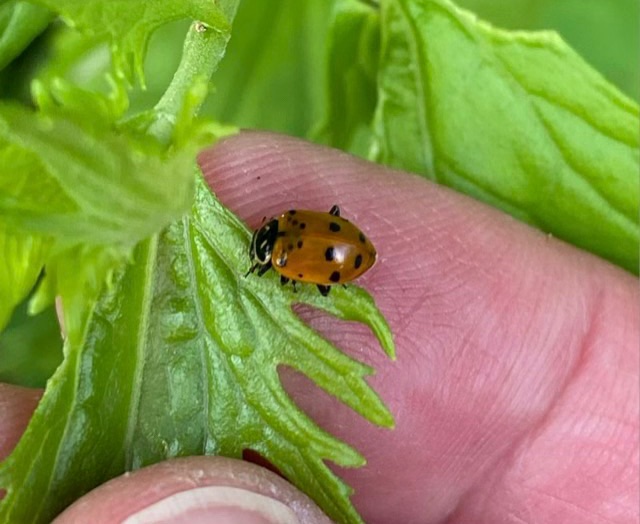
I learned something new when I snapped a picture of a lady bug resting on a Gregg’s mist flower leaf and uploaded it to iNaturalist. The name of my friendly neighborhood native is the Convergent Lady Beetle, because of the “two short white lines on the black pronotum (shoulderlike section behind the head) that converge toward each other.” (Mdc.mo.gov) The markings are harder to see in my picture, but these are the most common of the 500 lady beetle species in the US.

Photo description: Convergent Lady Beetle with my finger as the background

The Gregg’s mist flower is doing its job of attracting pollinators and helpful insects. Our front garden bed is full of the mist flowers and Common Yellow Wood Sorrel, which are also native and edible. The yellow and purple are nice together, and the density of their leaves is blocking out other unwanted growth, which means less weeding for me!

Bluebonnet patch

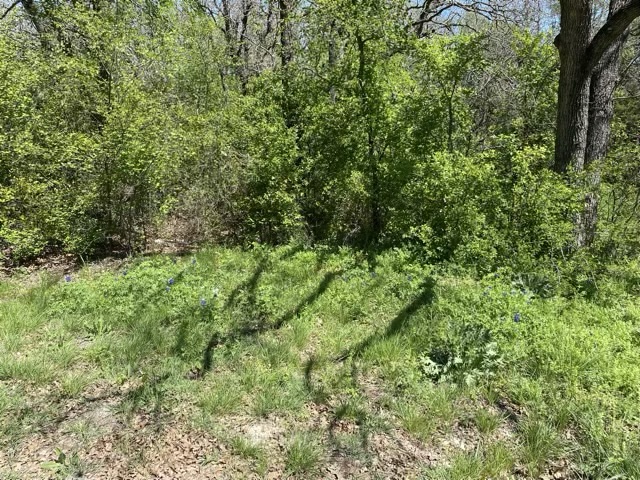
We have our own bluebonnet patch!

Photo description: grassy clearing with leafy trees in the background.

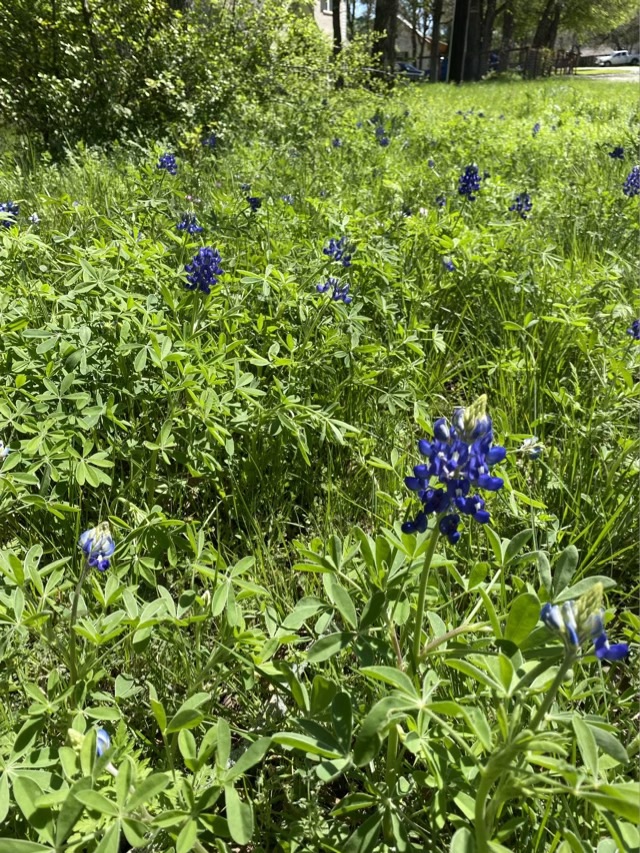
It looks like an April Fools joke, but it really is a bluebonnet patch. Here is a photo taken from another angle:

Photo description: sparse bluebonnets in a field of green, taken at a ninety degree angle from the first picture.

There are more bluebonnets in this area than last year; we’ve had a wet spring. Some of my neighbors’ yards are breathtaking with their bluebonnets. I’m hoping this patch continues to thrive and expand. We won’t mow it until late summer, when the state starts to mow its wildflower filled roadsides.

Signs of Spring

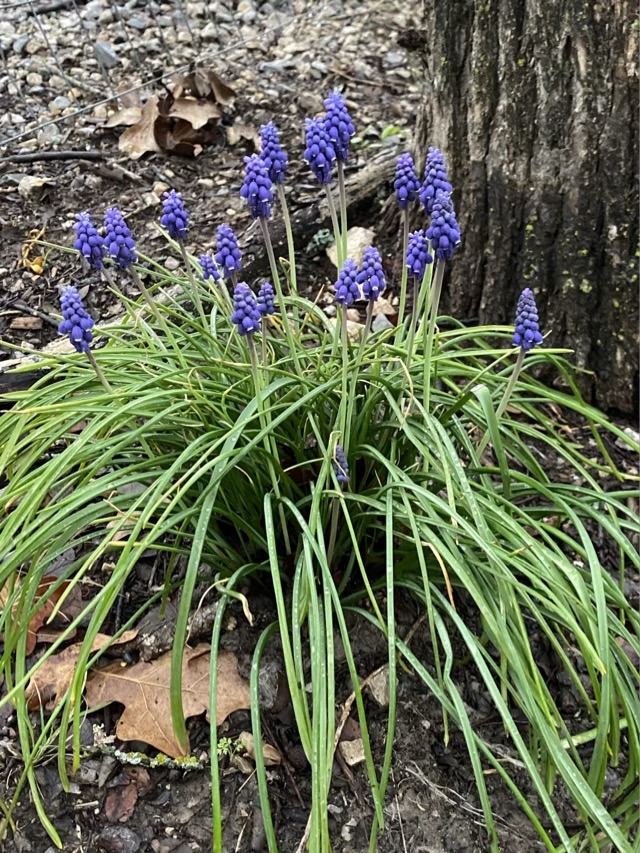
We are full on Spring here in Texas. It was quite a mild winter, and I was afraid the grape hyacinths were not going to bloom since they started growing their greenery at the end of last year, but they not only are in bloom, they are putting on a spectacular showing.

Photo description: uncultivated grape hyacinths with multiple blooms coming from one leaf clump.

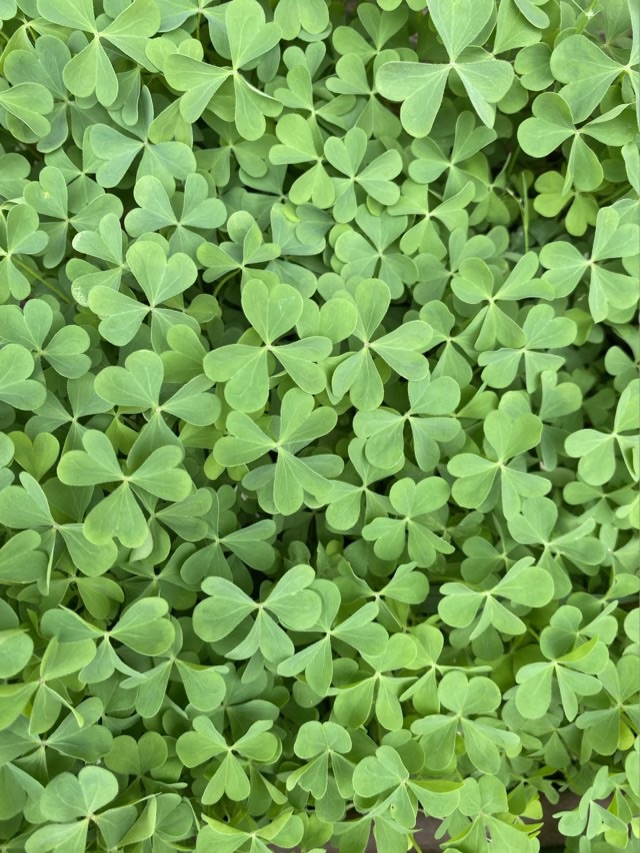
We have oxalis in the front bed, also volunteering, that started off as a dense carpet and with recent rains has become quite lush. I like oxalis because of the leaf shape and delicate yellow flowers that come later in the year. I think it makes quite a nice ground cover or border and does a fair job choking out other weeds.

Photo description: Oxalis leaves so dense I was able to get an entire picture filled with only oxalis.

We also have Gregg’s mist flower emerging from the area where we planted it last year. No photos yet, but very excited that it does well there.