Tiny egg

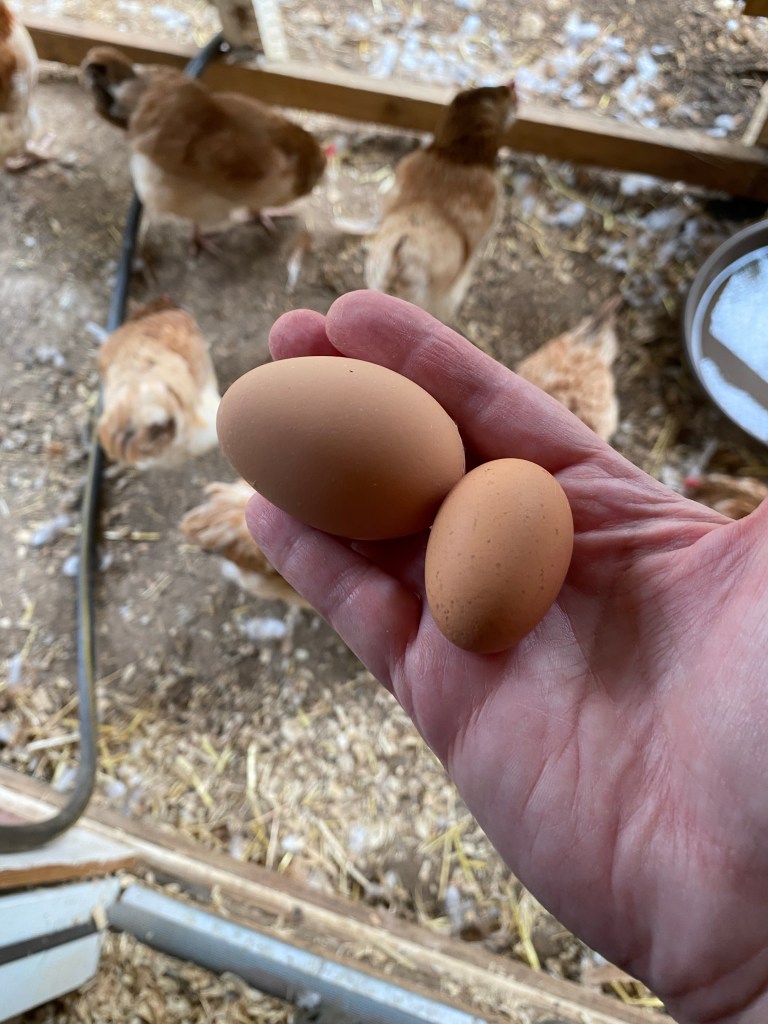
One of these things is not like the others.

Regular 48g egg (left), Tiny 22g egg (right)

I had a bit of a surprise in the nest box! A tiny little egg, less than half the size of what my hens usually lay. I’ve read that sometimes there are hiccups in the egg development process and eggs are produced without a yolk resulting in what some people call “fairy eggs”. I had to see if that was the case with this egg!

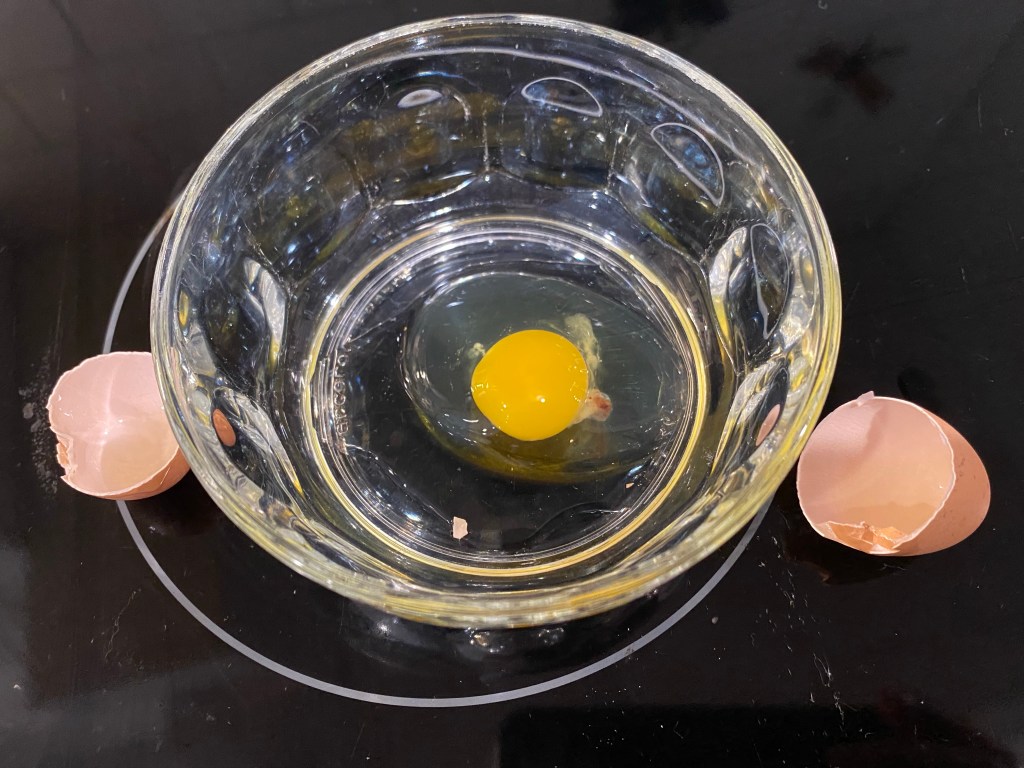
Tiny egg with tiny yolk

I broke it open and the egg did in fact have a yolk, just very small. A small perfect little egg. How interesting.

Another shell-less egg

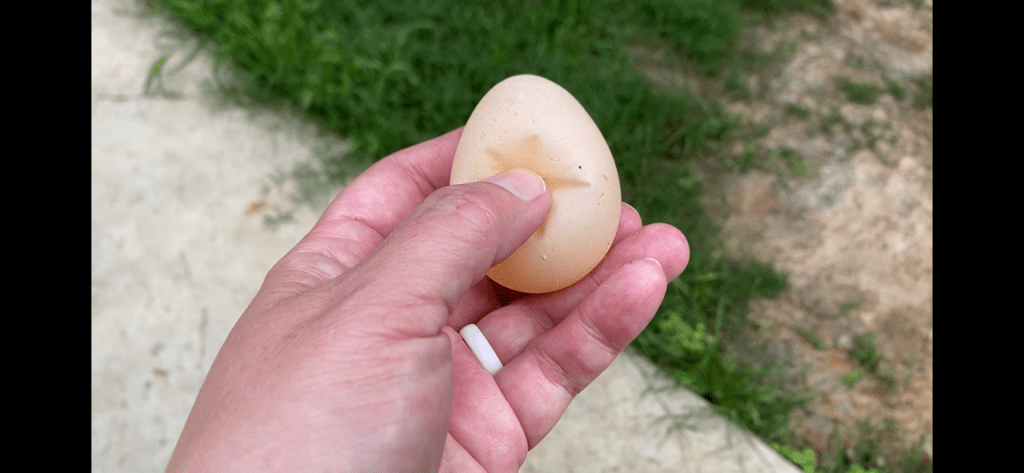
I found an egg under the roost with no shell again. It doesn’t happen often, but it has happened multiple times since they started laying. The egg membrane is intact, so it is possible to pick up, but it certainly has an interesting texture, much like an egg that has been soaked in vinegar to remove the shell, but without the bouncing. I recorded a video to show the squishiness, if you are interested. These eggs typically go to the dogs!

Shell-less egg

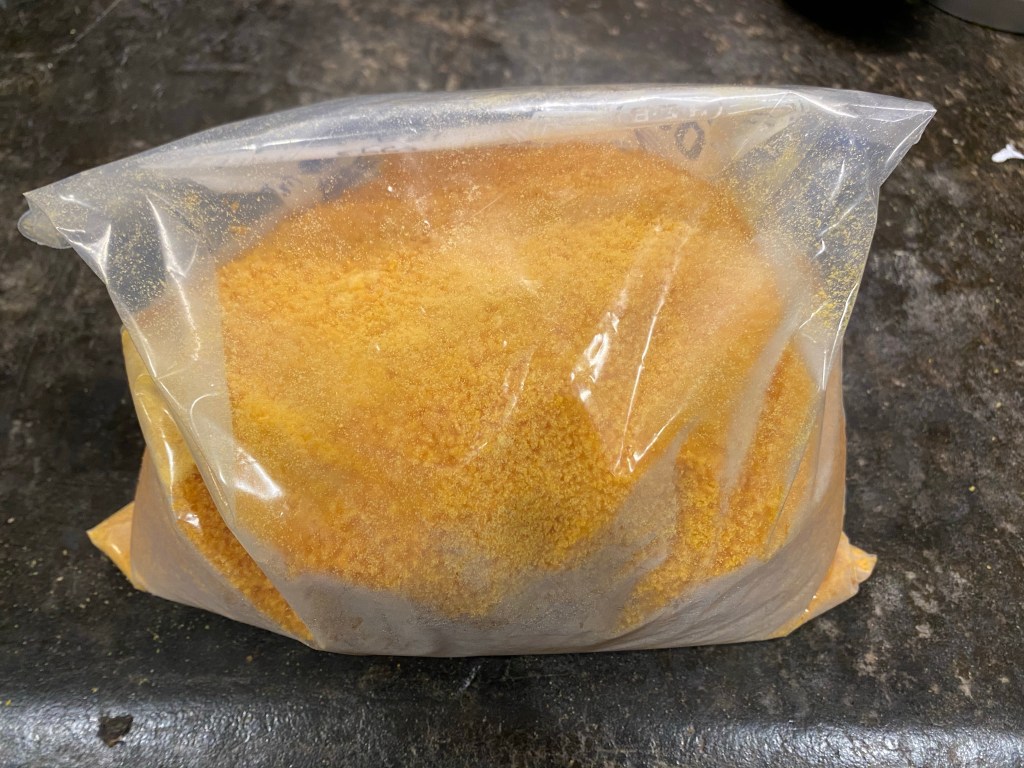
97 eggs

97 dehydrated and powdered eggs

So I can fit 100 eggs into a gallon bag. If they are dehydrated and powdered first! I follow the Dirty Gourmet’s instructions on dehydrating eggs, which works really well. Now to start a new bag and see if I can store enough to make it through the next molt and winter without buying eggs.

Powdered eggs

Powdered eggs is going to be my go-to method of long term egg storage! My hens are laying up a storm, and I finally had an excess of eggs to try dehydrating eggs. I followed the Dirty Gourmet’s instructions (here). I hand whisked the eggs until they were slightly foamy. Five 50g eggs fit in each of my fruit leather trays (I did two trays), just like hers did. I dehydrated at 140 degrees for 10 hours, then removed all the dry bits, but had to flip over a section on each tray and dry another couple hours. At this point it was bedtime, so I put all the bits in a gallon freezer bag in the freezer. In the morning I put all 10 dehydrated eggs in my food processor and blended until it was a coarse powder.

Dehydrated egg straight from the freezer processed in the food processor

I weighed the resulting powder and figured that each egg was reduced to 12 g. The Dirty Gourmet recommends reconstituting with 1 Tablespoon and one teaspoon of water. I tried that, but the eggs were still quite thick. I weighed an egg shell (7 g) and taking the weight of the whole egg (50 g), figured that 31 g of water was lost for each egg (that is 2 Tablespoons). I used this ratio to rehydrate 3 eggs worth of powder and made two batches of pancakes, one with fresh eggs, and one with the powdered eggs. Both mixed and cooked up fine, and my family said they couldn’t taste a difference. I think the powdered eggs made a slightly finer textured pancake. The best part is that I think I can probably store 50 dehydrated eggs in a single gallon bag. I am storing the powder in the freezer as recommended, but the space savings is considerable! I think I can also comfortably process 15 eggs at a go. Maybe I won’t have to buy eggs next winter. Maybe.

Almond and oat pancakes made with fresh eggs (left) and reconstituted powdered egg (right)