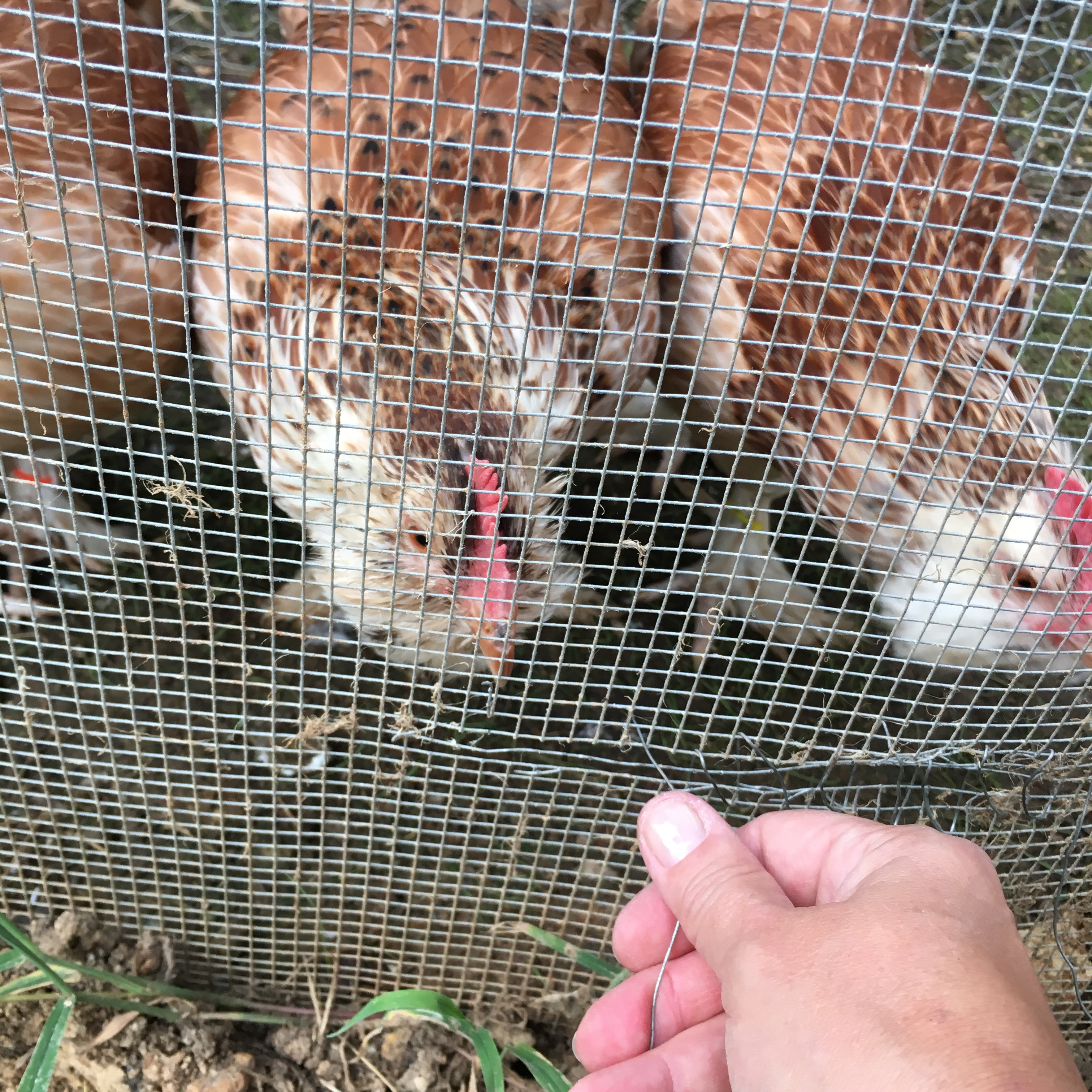
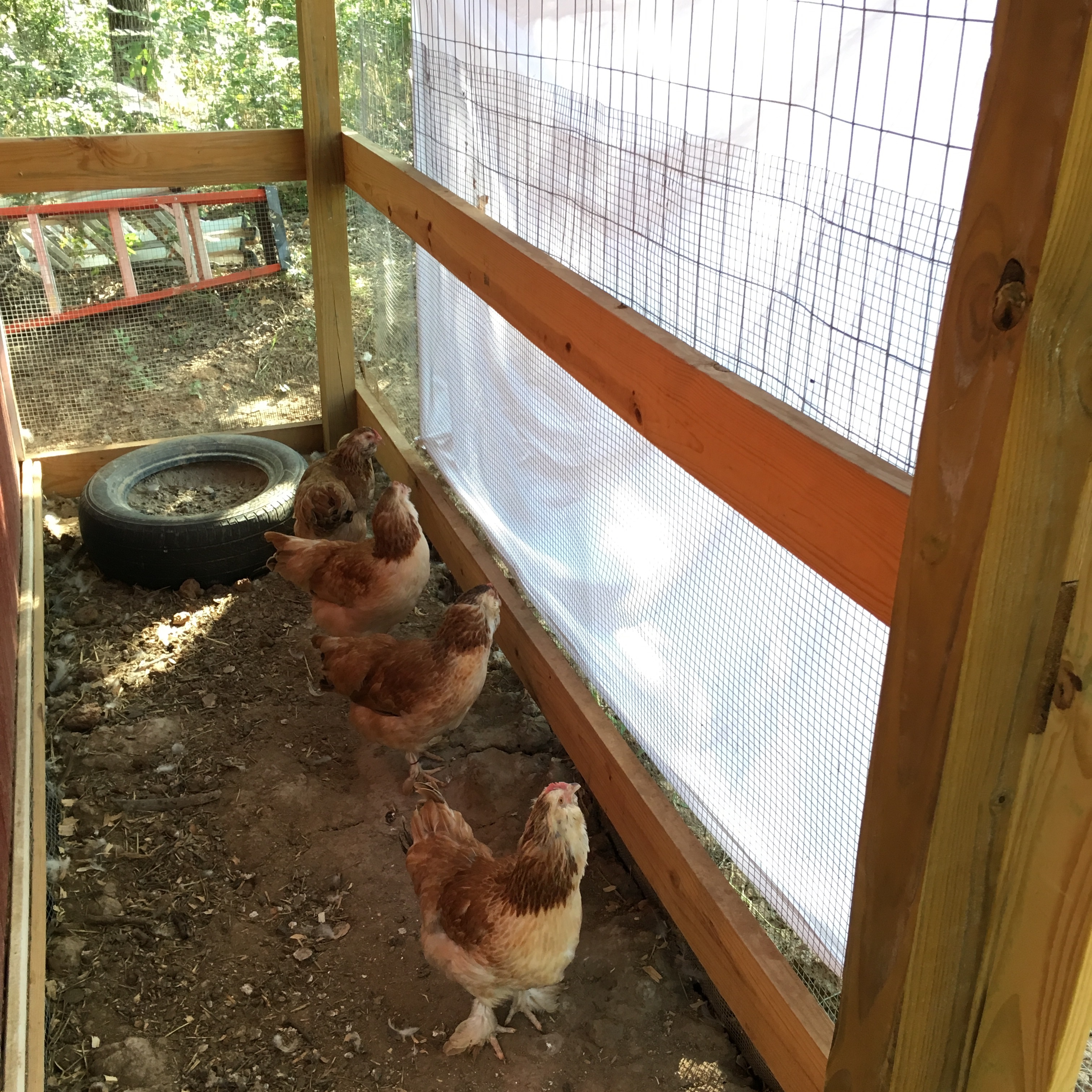
I’m not sure what happened to make a rip in the hardware cloth, but the chickens were very interested in how I was using wire to fix it. They are not great at poking the wire back through to me.
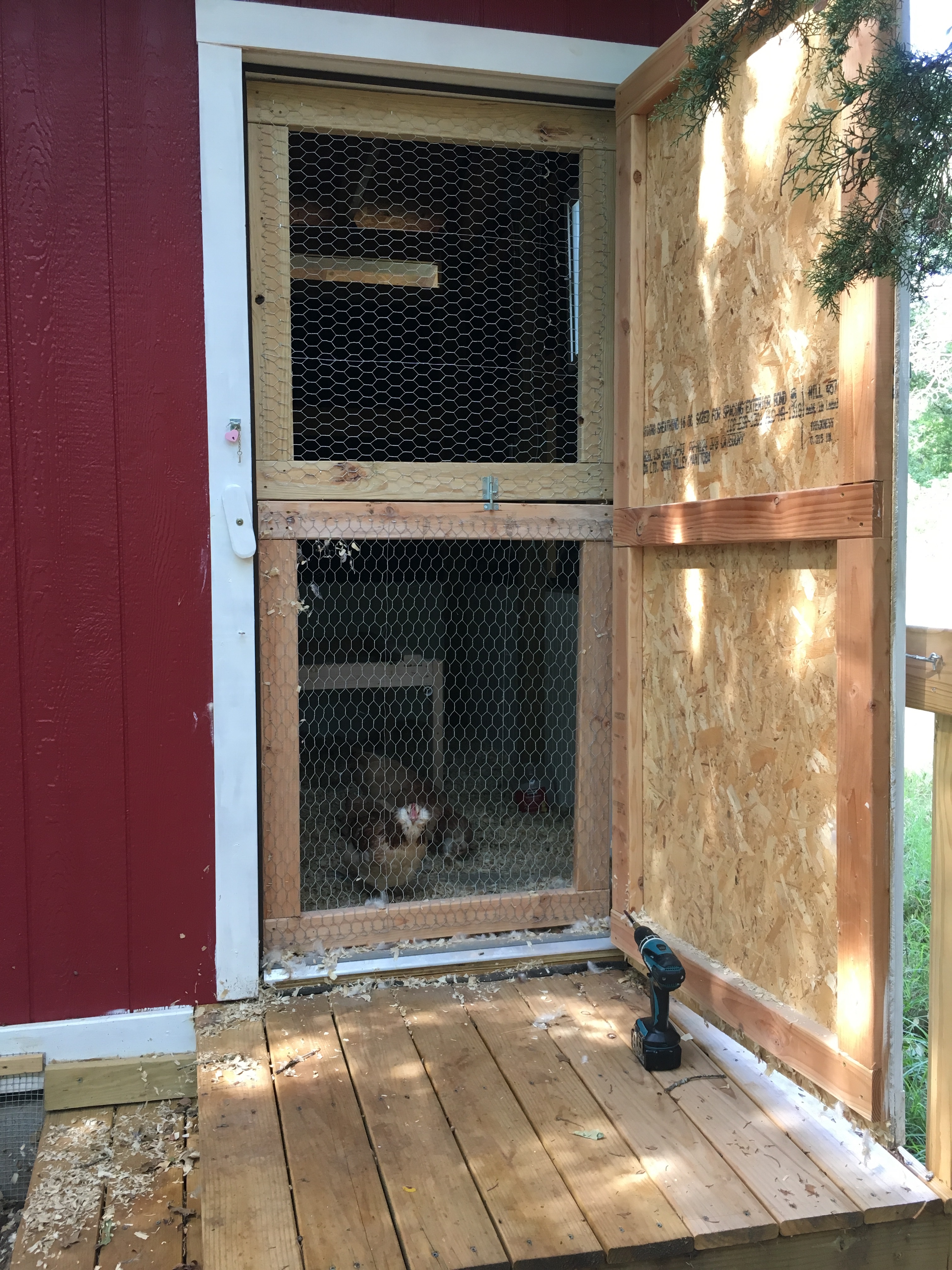
When the chickens were little, I put in a “screen” (it is covered in poultry mesh) door on the back doorway of the coop so I had a way to block them from following me out and to let a breeze go through the coop. I only made it half as tall as the door: they were little! But it didn’t take long for them to be big enough to eye ball that short door and I could see them judging the distance of the jump. So the solid door stayed closed for several months. I finally got around to making a top portion of the screen door!
Screened back door
There is another reason I finally tackled this, aside from that it is cooling down (slightly) and I can get more done outside. My youngest is still very wary of the chickens. Her interaction with them has lately been by Facetime (when I am in the coop, she calls my phone from her iPad). When the chickens eventually get around to laying eggs, I wanted to make a way for my youngest to look for eggs without going fully into the coop. So I rehinged the screen door, and I am planning on putting a nesting box on the wall near the opening. The idea is that she will be able to use the screen door as a block to protect her from the chickens. That is the theory anyway.
I’m using an unconventional thermometer out in the coop runs. It was designed to go on a fridge inside, but I needed it outside more than I needed it inside. Well, we had a big rain, and the thermometer doesn’t work well wet. So I needed a protective place to put it. It has a magnet on the back, and I have several pieces of scrap metal roofing left over from when my husband made the coop, so… voila! I drilled some holes so I could use screws to mount it on the wall of the coop, as as long as I was messing about, I also drilled holes for hooks. I also sanded the rough edges. Now I have a cute little board for a little organizing. Yay.
My DIY AC unit in the coop is attracting unwanted attention. The chickens have decided that styrofoam is yummy. Even though I have the cooler in a plastic bin, they can still reach in and pick out styrofoam. I put a piece of scrap board across the styrofoam cooler, but the long necked things just reached in further. They are even so bold as to sneak a pellet when I am changing out the ice. So a redesign was in order.
New air output using a plastic bottle
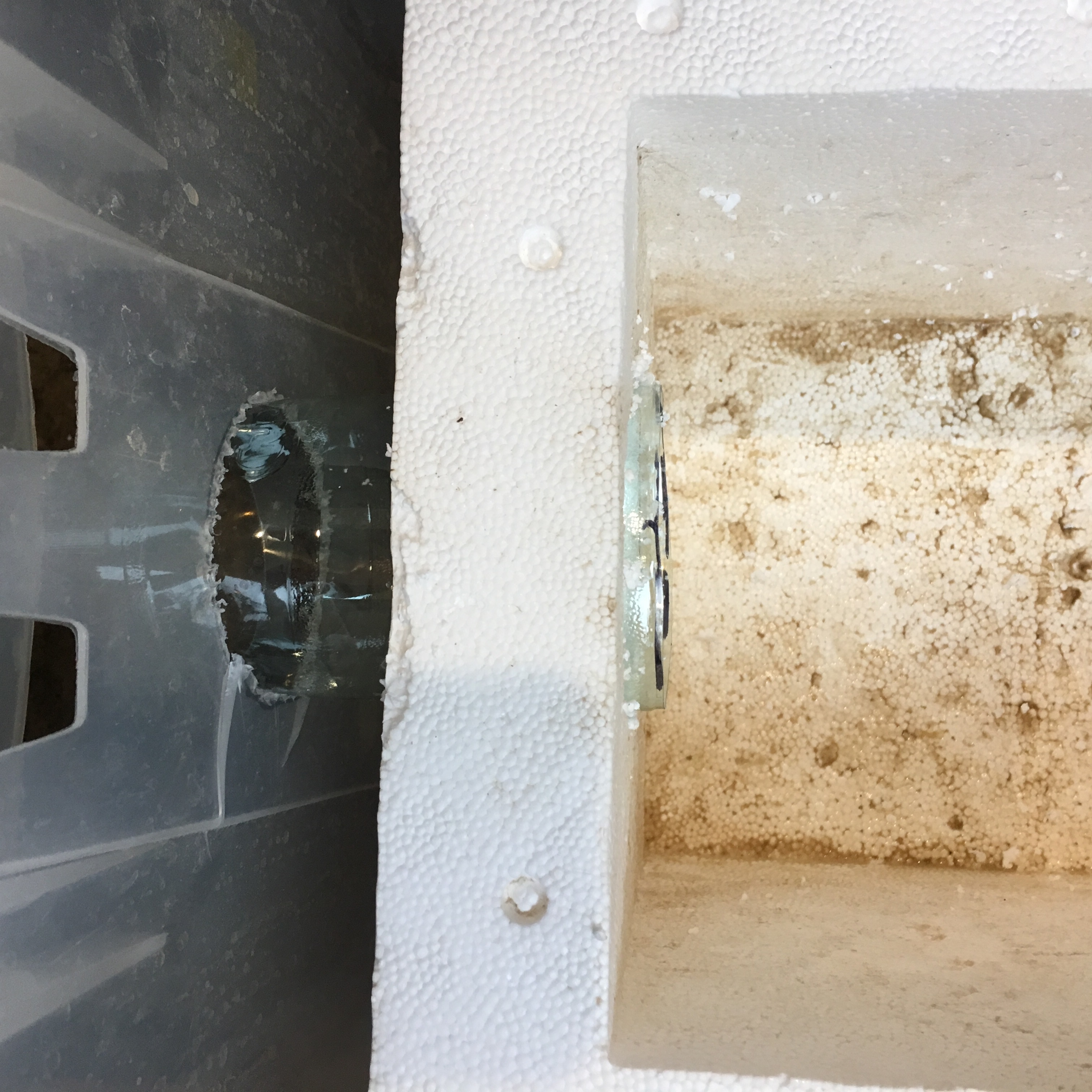
I discarded the old styrofoam lid, and cut a new output hole in the side of the cooler. Instead of a vacuum extension, I cut the top and bottom off a plastic bottle to make a tube, and fit that in the cooler. I cut an access port through the plastic tote as well. (It worked best to drill holes all along my cut line on the plastic bin, then cut.)
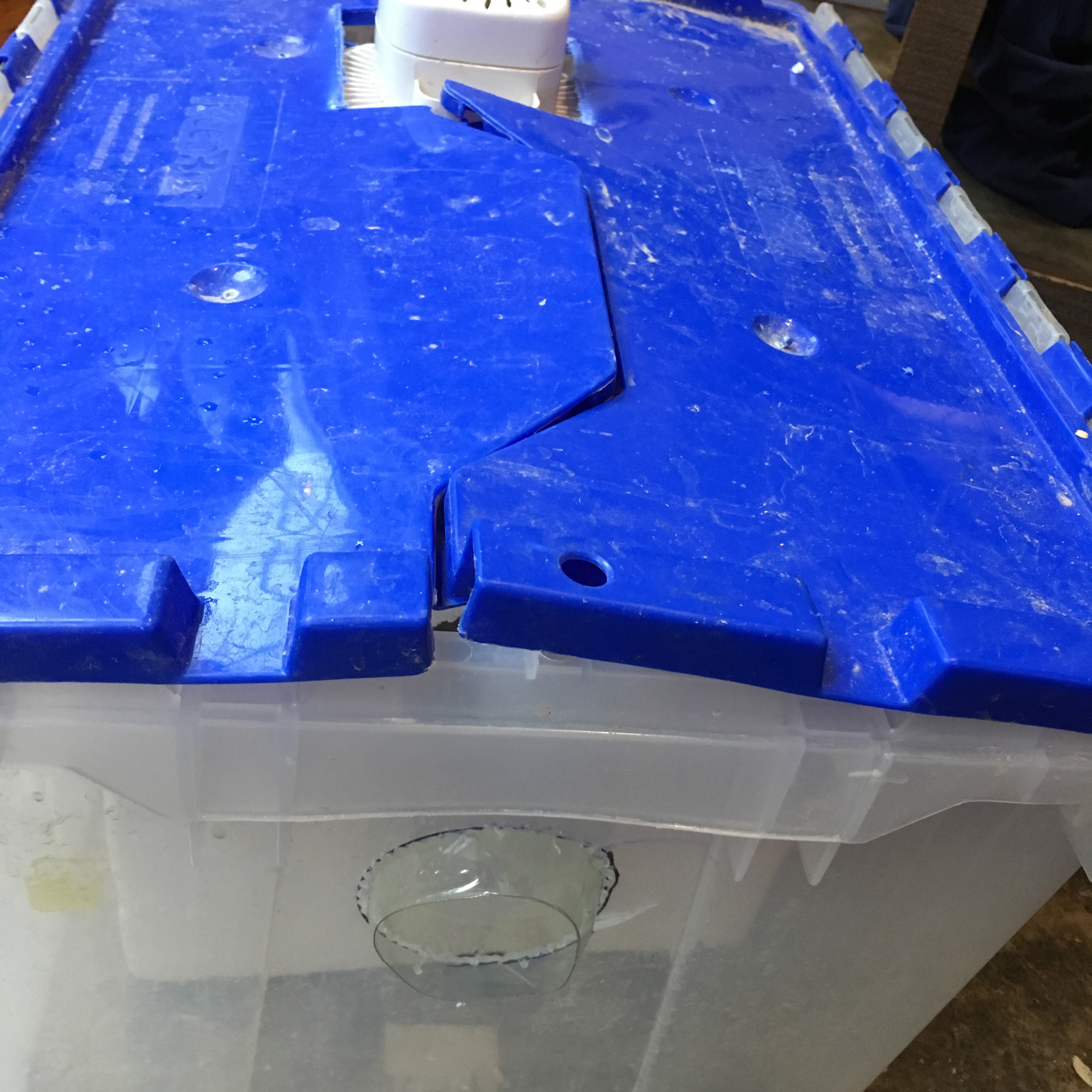
I cut a fan hole in a new styrofoam lid and fit the whole thing in the plastic tote. The back of the fan still prevented the lid from closing, so I cut out some of the lid to fit around it.
Reworked DIY AC coop unit
I hope this will keep the chickens from eating styrofoam!!! We are starting to cool down, but the highs will still be in the 90s for awhile.
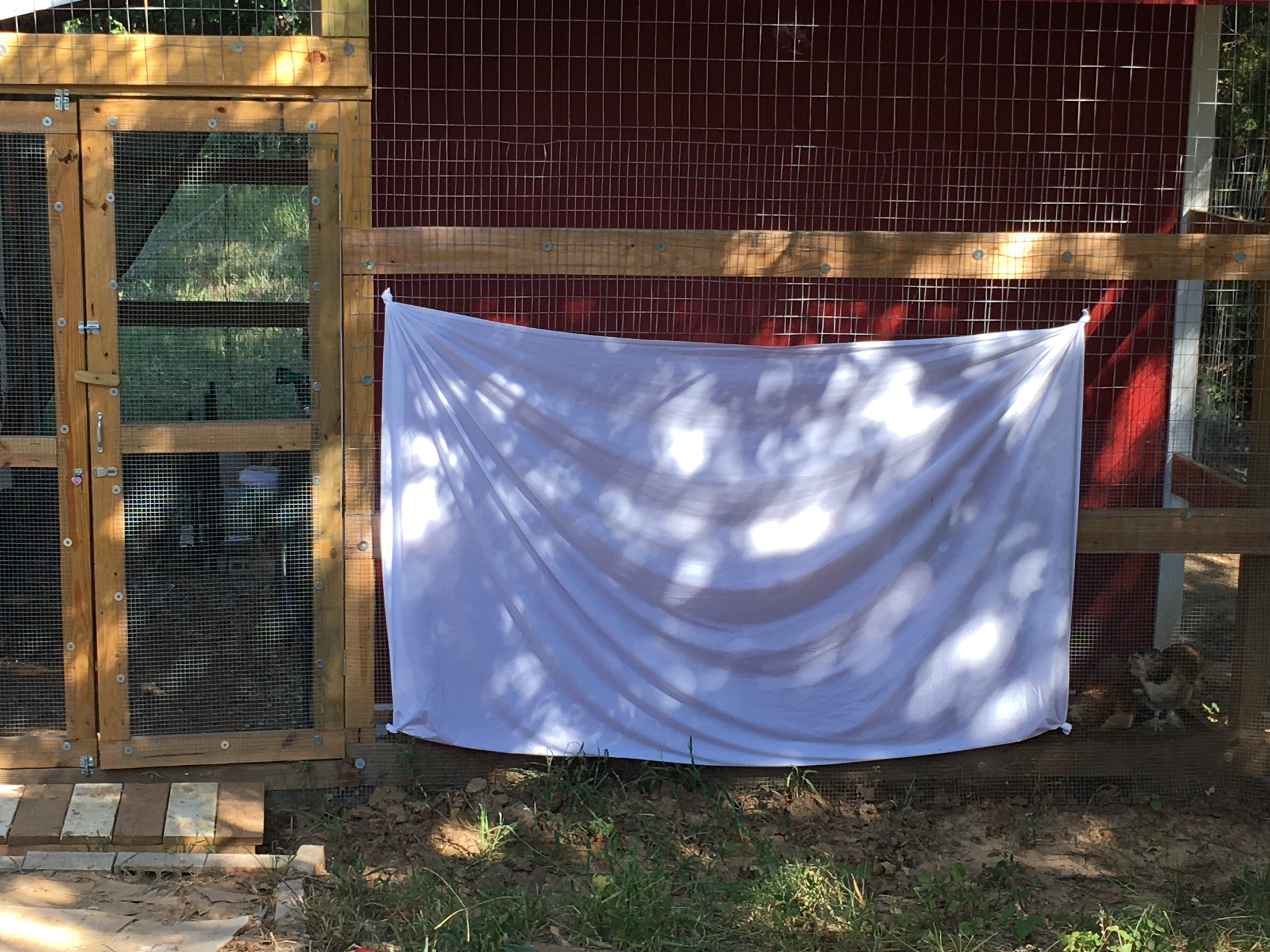
Another local chicken keeper posted that she puts up a sheet in the breezy part of her run and wets it down with water to get some evaporative cooling for her hens. I had to try it since the high temps have been over 100 degrees F for a week and are forecast to go another week (which is still better than the three months of 100 plus degrees last year).
New sheet is no big deal on the scary meter
So I grabbed a cotton flat twin sheet and tied it to the hardware cloth and wet it down with the hose. The chickens were not scared of it, which is a big plus. Time will tell if it provides them a more comfortable area.