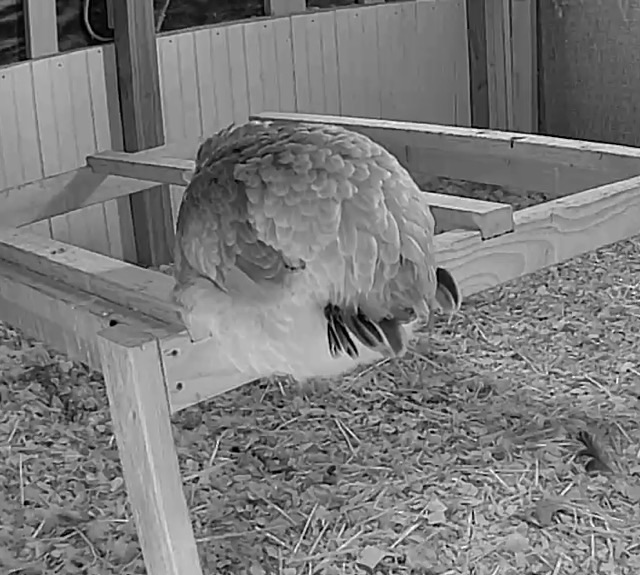
It has been cold here, very cold for Texas even in January, cold enough to get a reluctant nod from the north. Although they still scoff that we shut down for a little snow. Tropical problems. The chickens also think it is cold, and turn from sleek ground raptors to fluffy balls of stillness.
Photo description: Chicken on the roost with her feathers so puffed up she is spherical.
I have a hen, Seashell, sleeping in the nest box at night. Historically when this happens I take the hen off the nest and put her back on the roost with her sisters, which helps break the broody cycle, but this hen isn’t broody. There are no eggs in the nest, and haven’t been since September. They won’t start laying again until February, if they follow the same pattern as the previous three years. She started this behavior after we lost the last chicken, so I’m wondering if the hen that passed was her buddy and she would rather sleep alone than with the flock. Or the other hen offered her protection that is absent with the rest. The flock is quite clicky.
Photo description: Night vision photo of four nest boxes built in under a work bench, with curtains pulled aside, the back of a hen visible in the top right box. Pine shavings cover the floor, and there is a inverted wine bottle with dispenser for grit.
I have another hen sleeping off the roost, but that is Magic, who has periodic leg issues that impede her jumping up to the roost. She sleeps on her pedestal of pine in the left corner of the coop.
Photo description: Night vision photo of the inside of our coop, with three hens on the roost, one in the corner, and one in the nest boxes.
Another hen passed. She was looking quite ragged and tired, but didn’t seem distressed. She was with the flock eating and drinking, until she couldn’t. I gave her access to one last grubbly treat, and helped her access water, then let her lay in the coop where she grew up, surrounded by her sister hens. It is a hard call, letting go or assisting. Since she wasn’t in obvious pain, I chose to let her slip away on her own time. I’ve done the final scramble before, with force feeding and medicines and stress, both for me and the hen, and it really isn’t dignified, and completely unnecessary to put her through that in her last days. Hatchery quality hens only have a life span of about 4-7 years, and she was there. May her next life be as peaceful.
Photo description: My five remaining Faverolle hens eating grubblies in the covered run.
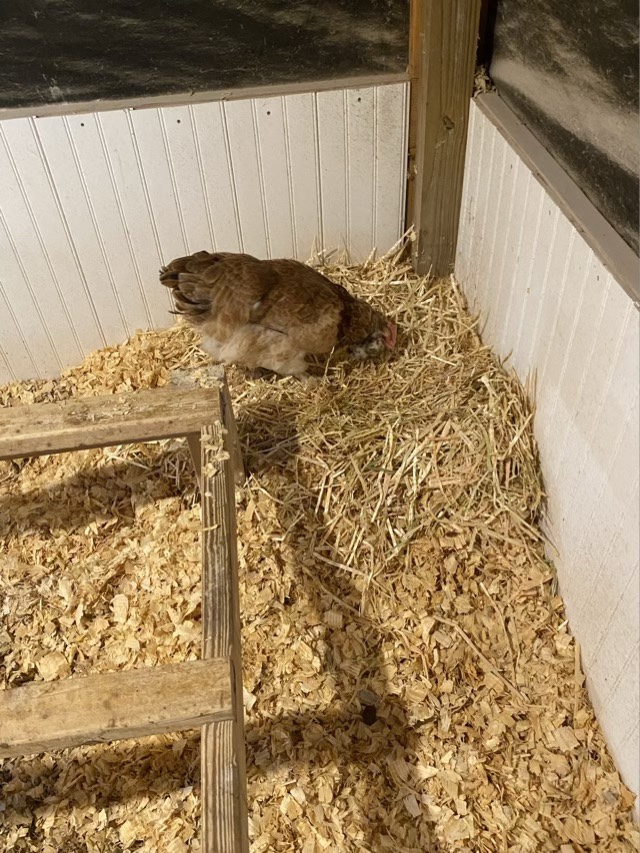
Magic the hen is having her recurring pain flareup. I think it has something to do with a leg joint. She hurts it, then has trouble walking, loses weight, it heals, she puts on weight, then she hurts it again. It is about a six month cycle. She is in the stage where she can’t jump up onto the roost at night, so I built her an elevated nest.
Photo description: Pine shavings built up in the corner of the coop next to the roost and topped with straw. Magic the hen has climbed the pile to investigate.
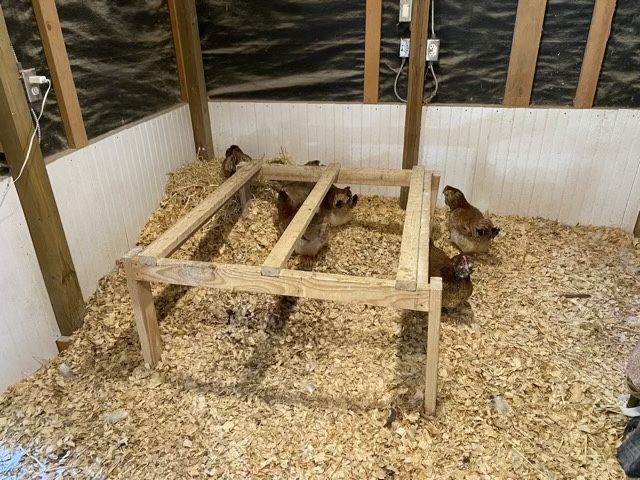
The other chickens had to check out what I did as well, but Magic was the first.
Photo description: Simple 2×4 wood frame roost with 2×3 removable roost bars. The pine shavings are built up in the corner nearly to the height of the roost, and all six chickens are headed toward Magic who is at the top of the pile.
This is the corner Magic huddles in when she can’t roost. She appreciated the elevation, and I feel better about her not getting bombed by the other hens in the morning.
Photo description: Night view, with five chickens on the roost, and Magic on her slightly diminished pine shavings pile in the corner.
I do have to rebuild the corner in the morning, because the chickens kick away the shavings looking for bugs, but I think this is less stressful for her than when I go in and place her on the roost at night.
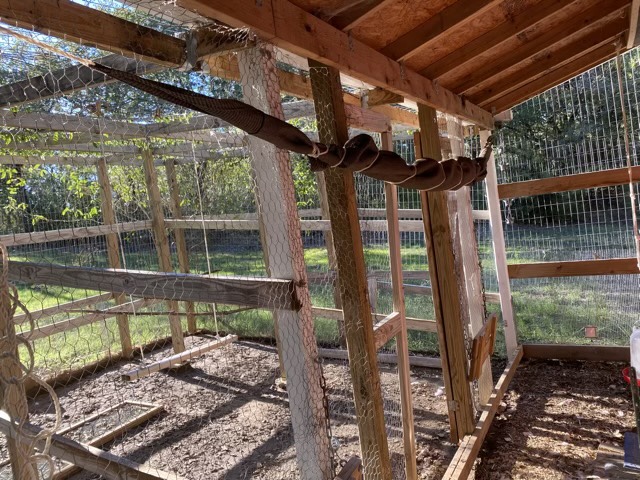
Each summer I put up a sunscreen in the coop runs to keep the afternoon sun off the feeder and the side of the coop. Each winter I take it down so the sun can warm the coop. Both operations are a pain, wrestling with the large triangle of fabric. Until this year, when one of those slow ideas finally bubbled to the surface and I thought to just roll up the sunscreen. It took a few moments to secure the roll, but should only take a few moments again in the summer to deploy the screen.
Photo description: View inside the chicken runs, under an awning, with a roll of fabric stretched across the upright posts.
I do believe that there are many ways to accomplish any task, and find it interesting how often the thought “why didn’t I think of that earlier” happens.




 Critters and Craft