Melon party

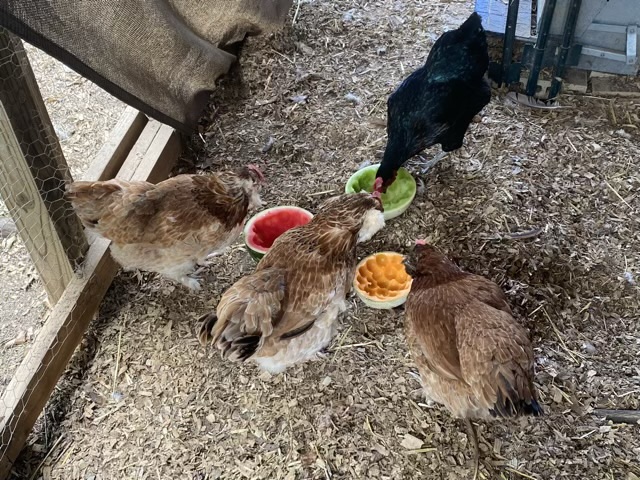
We made a melon ball fruit salad, which leaves a good amount of melon still stuck to the rinds. We took the emptied melon halves out to the chickens.

Photo description: three Faverolle hens and one Black Star hen investigating three different melon species in rinds: honey dew, cantaloupe, and watermelon

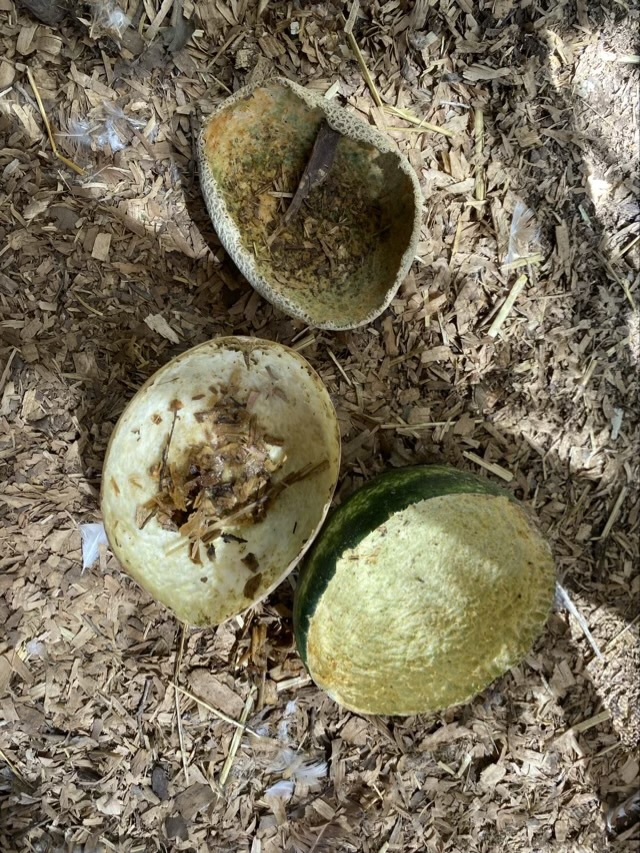
The hens were immediately interested, and when I went back the next day, the rinds were completely cleaned out.

Photo description: three empty melon rinds on the ground

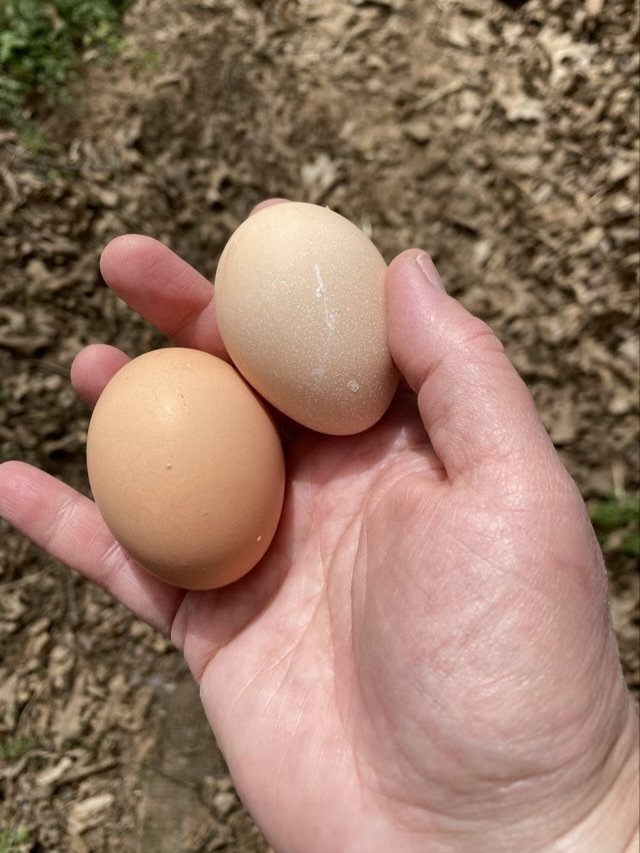
Two eggs!

Photo description: hand holding two eggs, one darker brown, one almost pink

So I have at least one Faverolle hen laying eggs. I’m shocked because they stopped laying last June, 8 months ago. They are nearly 6 years old, and their window of “egg rest” gets longer every year. The almost pink colored egg on the right is a Faverolle egg. Well, it is a hatchery quality Faverolle egg. Better bred Faverolles lay eggs that can more easily be called pink. Wing Ding the Black Star hen is a good layer and the other darker egg is hers. Another clue that the eggs were laid by two different hens is the weight. Wing Ding seldom lays an egg under 60 grams, my Faverolles almost never lay an egg over 60 grams.

Egg!

Wing ding the Black Star hen has started laying again.

Photo description: metal nest box lined with straw with a golf ball and egg

This is a really good demonstration of the difference between a good layer and fair layers. My Faverolles stopped laying in September and I’m not entirely sure they will ever lay again. They are coming up on their sixth year and their winter egg break keeps getting longer and longer. Even when they are laying, it isn’t every day, but closer to every other day. Wing Ding lays nearly every day. So if you are going for egg production, get a good layer. If you want sweet docile chickens and aren’t as concerned about egg production, then get Faverolles. Know that Faverolles will also be at the bottom of the pecking order if you have a mixed flock. Our flock has everything worked out so that no one’s feathers are being picked to extreme, but they have plenty of space and food and places to hide.

I’m mostly excited the Wing Ding is now laying eggs in the nest boxes in the big coop. The temporary outside coop we set up when the flock was separated gets terribly hot in the summer.

Cold in Texas

We do get some cold in Texas. I went to clean the chicken water and found large ice crystals growing inside.

Photo description: edge of an empty chicken water container with large ice crystals on the side

I have had the large container freeze solid, but haven’t seen these slow growth crystals before, which was neat. I also have a heated water bowl, so the chickens always have thawed water, even when everything else is frozen.

Chicken rock

One of my friends enjoys painting and has quite a flair for it. She had painted rocks at the chorus craft fair and I just had to buy the one that looked like Wing Ding! And then take a picture of Wing Ding with her effigy.

Photo description: Wing Ding the Black Star hen in molt standing behind the painted rock with a black chicken that I’m holding. Painting by Corinna Standlee.