Egg!

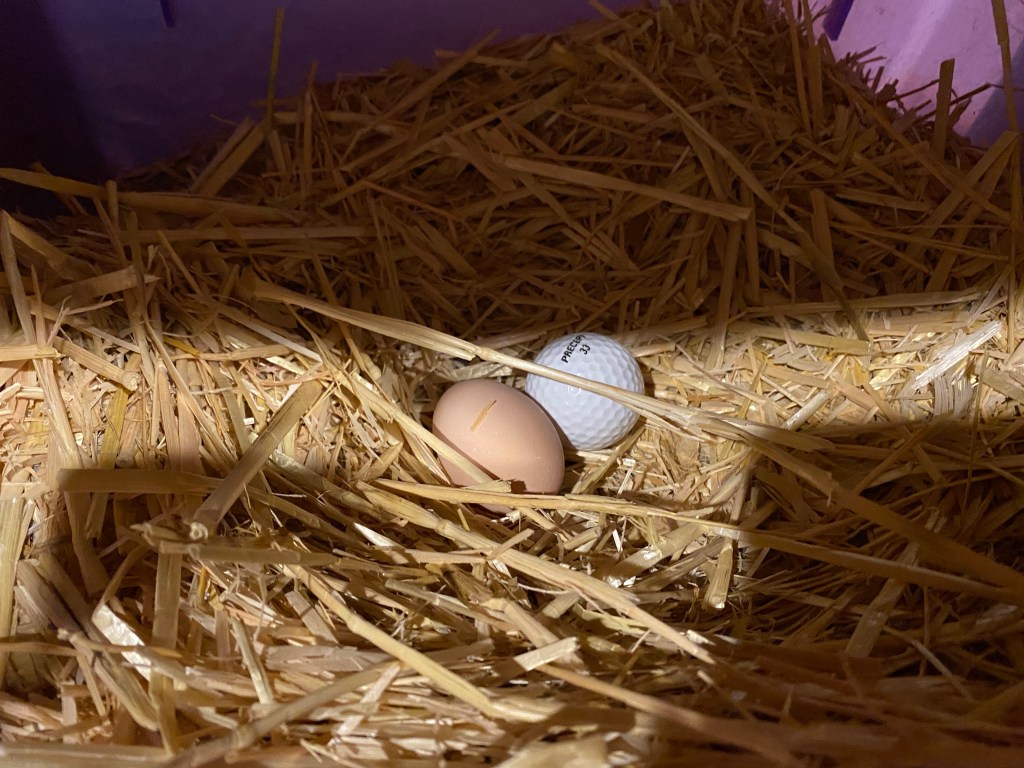
Found an egg! Hurray! It has been almost exactly four months since we’ve had an egg laid in our coop. I was optimistic when I saw Magic do her squat a couple weeks ago. She may be the one who produced this egg! This summer when they are in full production I am definitely going to try some more egg preservation methods.

First egg laid in four months! (And a golf ball, just in case they forgot where the nests were.)

Chicken enrichment

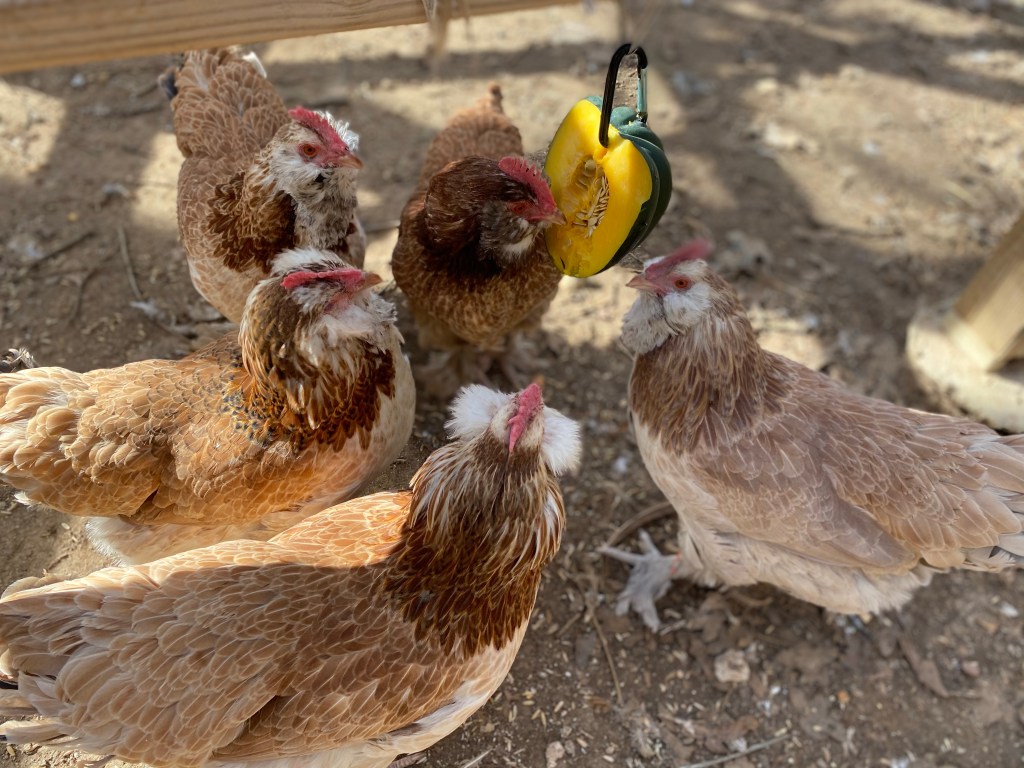
Not much growing in the coop, insects quiet, winter dreary, so I livened the hens life up a bit by putting their scratch in chicken toys. The balls are usually empty by the end of the day. The tube, not so much. The tube is harder to roll, and only has slits on one side, which may account for the lower use. I’ve had both kinds for awhile, but the balls have been used more (the tube was hiding in the back of the cupboard!) We’ll see as winter progresses if they figure out both devices.

Chicken enrichment treat balls

Apple peel wreath

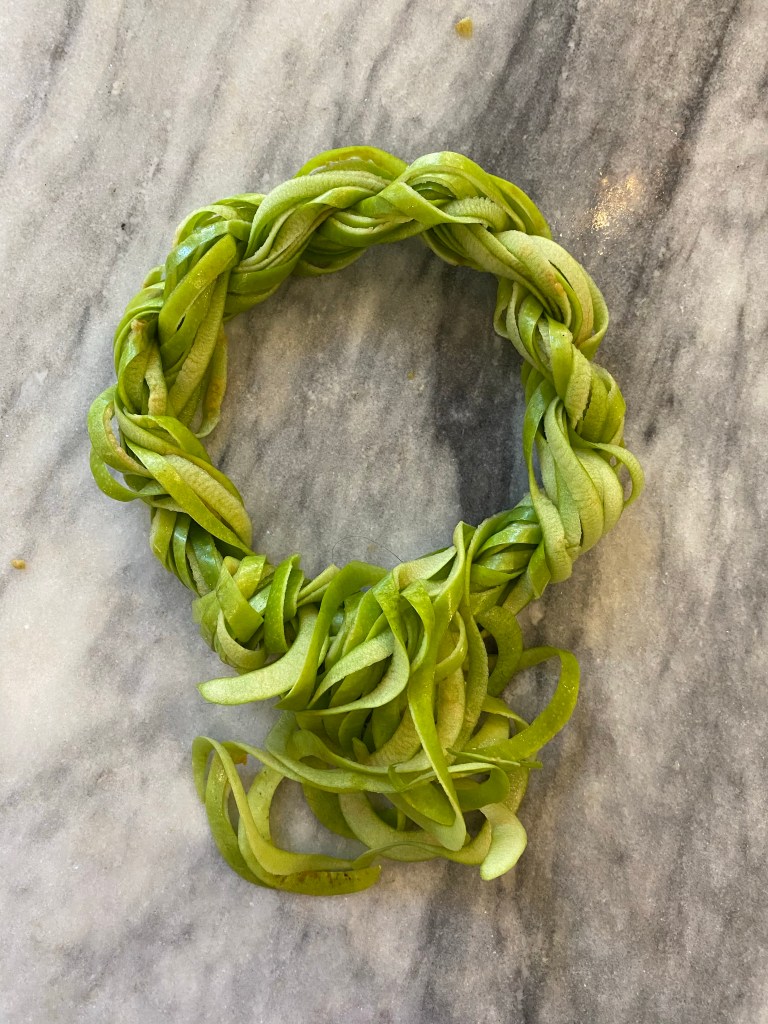
Twisted wreath made of apple peels

I made an apple pie, and had a bundle of peels left over. (I used a peeler/coring/ slicing device, I certainly didn’t hand peel all those neat strands!) The chickens love apple, but I don’t want them ingesting long strings, so I usually chop up peel, but this time I had the idea of twisting the strands into a wreath shape so the hens would have to pick off bits.

Chickens sampling the apple peel

I can say that I am not sad to see the end of this year, and am cautiously optimistic about next year.

Night time medicines

So I’ve read over and over that the best time to treat chickens is when they are asleep on their roosts. Not my chickens, until now.

Previously going into the coop at night meant the hens would be awake and would start moving around on their roost. They seemed to never sleep. This is what happened the first time I tried giving leg treatment for scaly leg mites at night as well. We had to keep track of who was treated by looking to see if their legs were shiny with the VetRx oil!

VetRx oil that we just used to treat dry legs on hens at night

Three days later we treated again. Same time, but I had moved the roost a little further from the wall to give room to get around, and we used a blue light instead of red. (We have a flashlight that has white, red, and blue options.) The night was also much colder. I’m not sure the light made the difference, but the hens did not have an escape party this time. They stayed in their place on the roost as I rubbed their feet and legs with the oil. We will continue to apply every three days until the skin on their legs no longer looks dry. This method is so much easier than chasing them around during the day!

Grubs

These are the oven dried grubs of the black soldier fly. They have more calcium than dried meal worms, so I switched when I noticed the hens’ eggs were getting thin (back when they were still laying, long, long ago). At first I mixed the grubs and mealworms, then slowly moved to all grubs. Most of the hens didn’t care, but I had two that gave me the stink eye for withholding the mealworms. Happily, after about two weeks, even the recalcitrant birds were chowing down.

Handful of dried grubs

No, I will not be attempting to raise these grubs. Flies drive me bonkers.

I have a hypothesis on the eggless condition of my hens. They have a large spacious coop, and although all the food is outside, they like to hang out inside frequently. I have windows in the coop, but they are north and west facing and don’t let in a huge amount of light. The chicken books says the hens need 12 hours of light to stimulate egg production. I don’t believe in keeping the light at 14-16 hours year round, but maybe I should install a timer in the coop so it is at least light in there when the sun is up.