What is double?

I’ve been baking more bread since I discovered that Heritage Wheat doesn’t bother my digestive system. Recipes cavalierly throw around “rise until double” and I have been bumbling along hoping I wait long enough (but not too long) for the dough to rise to “double”. So what is double? To see, I blew up three balloons, one 5” in diameter, one that was double the first in volume (6.3” in diameter), and one that was double the first in diameter (10” in diameter). Hm. The double in volume seems smaller than my successful proofs, and I have never achieved the size of double in diameter.
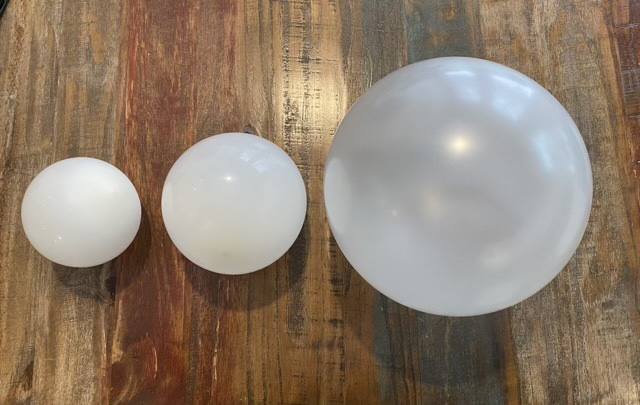
Balloon (5”), Balloon double in volume, Balloon double in diameter

So I went looking for an explanation and found this article. The author goes much farther into mathematical models, but at the end, suggests a better method: the finger poke method. With practice, one should be able to tell how long to prove dough by pressing on it with a finger and seeing how the dough reacts. If the dough springs back, it needs more proving. If the dough stays depressed, it is over-proved. Somewhere in the middle is the right time.

I now can’t get the Pillsbury Doughboy image out of my head. If this method is correct, he was under-proved, by the way. (Don’t know what I’m talking about? Here you go.)

Crescent rolls

Next on the list of things to bake with Heritage Wheat was crescent rolls. I missed these holiday staples during the 17 years of gluten exile! I tried a recipe from the internet (I should know better by now, but it had good ratings, and the reviews didn’t change the recipe, but alas), they were horrible. The whole lot went in the trash bin. The next day, after some research and soul searching, I selected a milk bread recipe from Paul Hollywood’s 100 Great Breads book. Rather than forming the loaves as in the recipe, I divided the dough in two, rolled each half into a thin circle, spread the circle with butter, and used a pizza cutter to make 12 slices. I then rolled each slice from the thick end to the tip, tucked the tip under, and placed it on parchment paper for the second proof. I baked per the recipe, and the rolls came out wonderfully! My family agreed, as the batch didn’t last long.

Crescent rolls made from Paul Hollywood’s Milk Bread recipe

Learning to make crackers

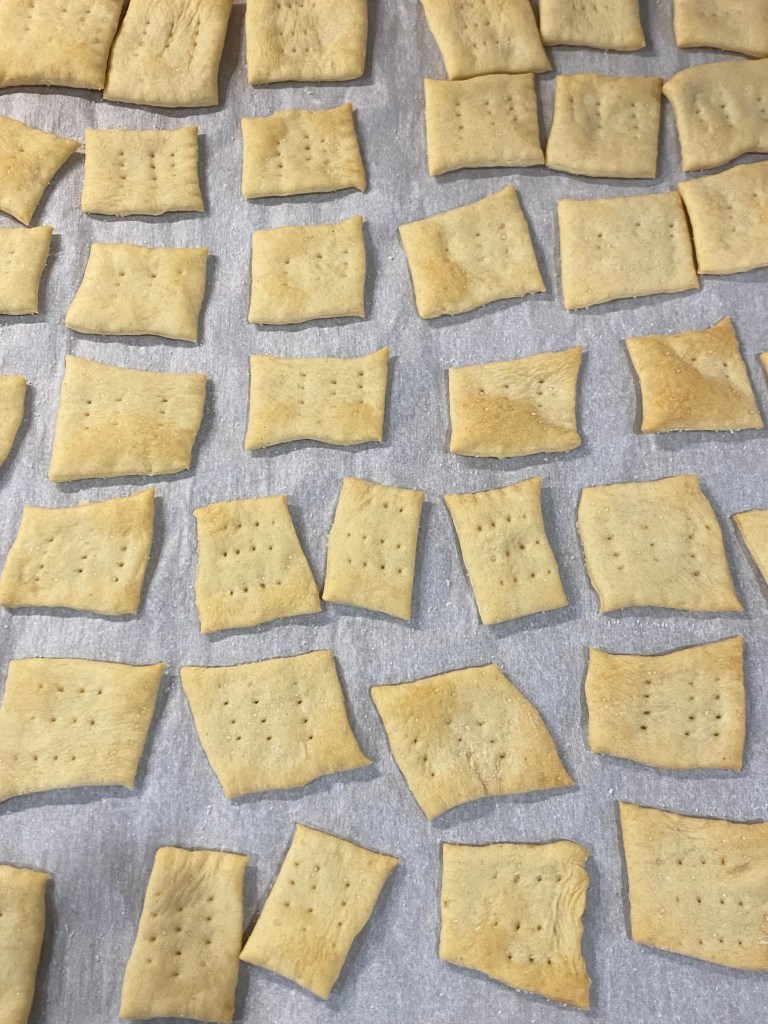
The next thing on my list to make with Heritage Wheat is crackers. Purchased gluten-free crackers are fine, but making GF crackers is daunting. With the gluten available in the Heritage Wheat, the process should be better. I tried one recipe that was quite simple, but called for the dough to be rolled out to 1/8”, which was far, far too thick. Instead I found a recipe from King Arthur Baking that worked very well. The dough doesn’t take long to mix, but then sits in the fridge overnight. Rolling it out thin and cutting it wasn’t hard, just took a little time. I did over bake some at the edges, and some in the middle didn’t crisp, so I stuck those back in the oven with the door open and the oven off. I think next time I make these I will bake them for about 10 minutes, then turn off the oven, crack the door, and let the crackers cool in the oven.

Traditional soda crackers made with Heritage Wheat

Surprisingly, these crackers tasted better on day two. They were also quite lovely crumbled into my tomato soup. Mmm.

Homemade crackers in tomato soup

Ok, so the soup came from a can, but the crackers were home made!

Wheat roll experiment

My youngest asked me for a roll challenge (what I would have called a taste-test, but we have used the You Tube inspired “challenge” idea to get her to eat many foods that she normally wouldn’t). My eldest suggested that this was a good excuse to bake bread. I think they both rather like that I have been baking fresh bread with Heritage Wheat weekly! So for this roll challenge I looked for a recipe that used whole wheat, and I found a really good one here.

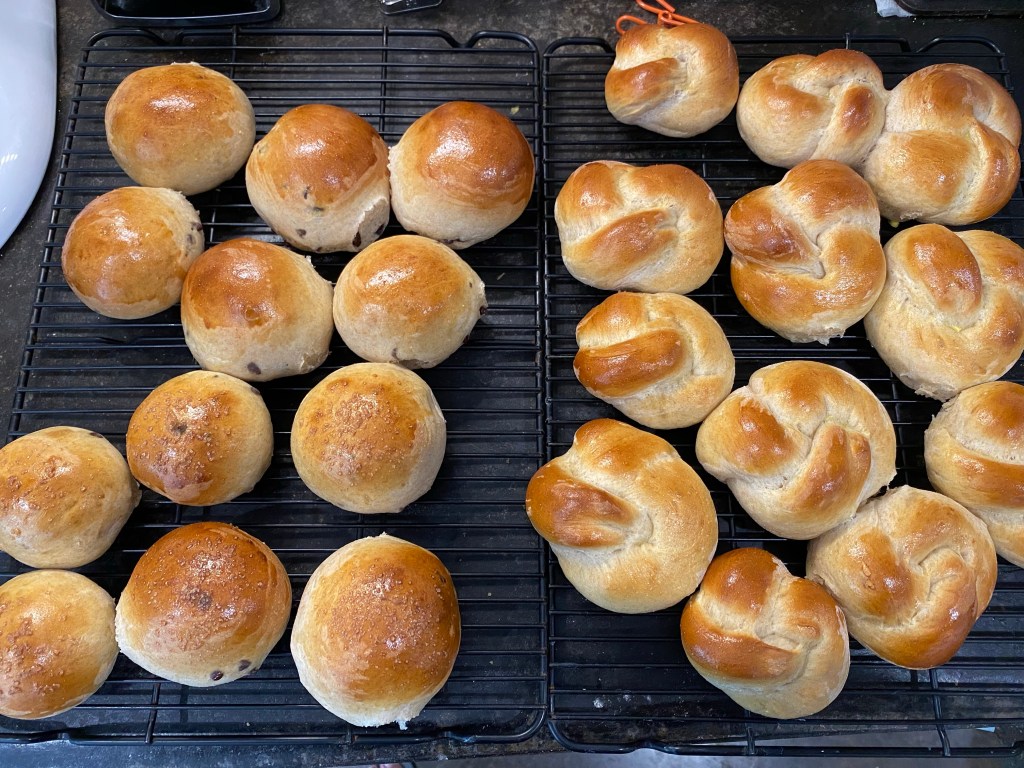
I divided the recipe in two, and added mini chocolate chips to one half, and left the other half plain. (The whole purpose of asking for a roll challenge was to get me to make bread with chocolate in it!) To distinguish between flavors I made the chocolate up as simple rolls, and the plain as knots. To add to the challenge, after brushing the rolls with egg, I sprinkled turbinado sugar on half the chocolate rolls. We now had three variations for our challenge!

Wheat rolls for a roll “challenge”

My youngest loved the chocolate chip rolls, but the rest of us preferred the plain. I do think that I need to learn more ways to shape rolls!

Crepes

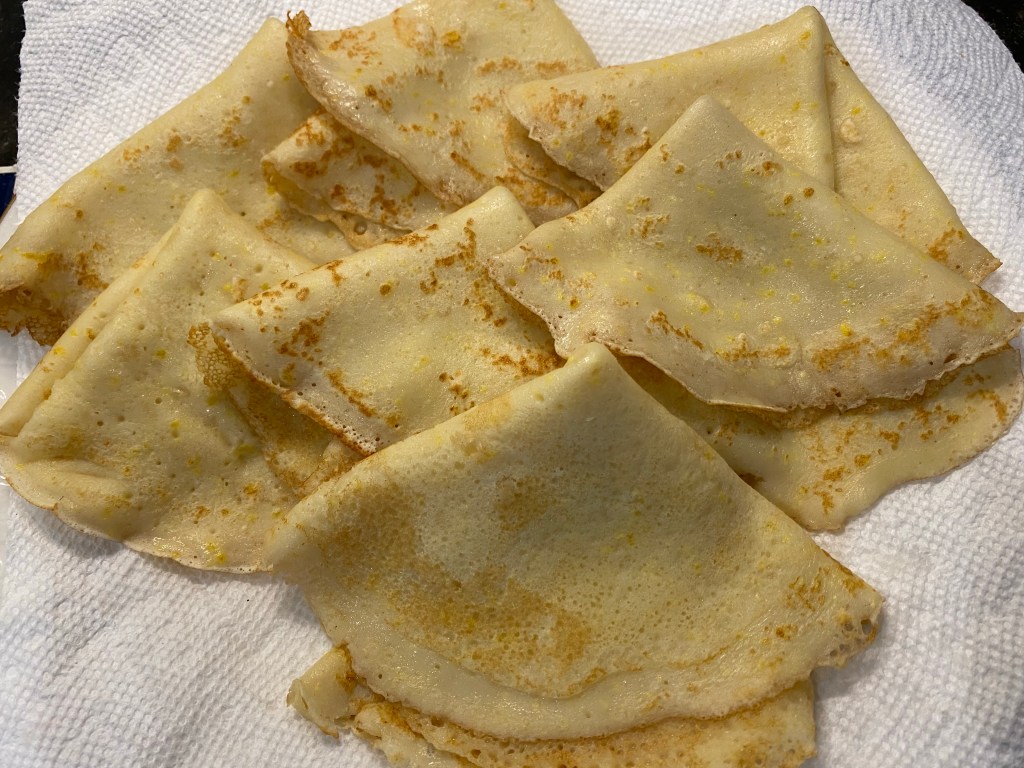
The hens are slowing down on laying eggs in the heat of the summer. I still get one to three eggs a day, but I thought I would get out the powdered eggs from the freezer and see how they do in crepes with my Heritage Wheat flour! Spoiler alert, the crepes come out well.

Crepes made with powdered eggs and Heritage wheat
  • 20 g powdered egg
  • 4 Tbsp water
  • 1 1/2 cups milk
  • 1 cup Sunrise Mills Heritage White Flour
  • 1 Tbsp vegetable oil
  • 1/4 tsp salt
  • Melted butter

Combine the powdered egg and water and let sit for about 10 minutes (I start this, then gather all my supplies, melt the butter, and preheat the pan to medium). Add the milk, flour, oil and salt and whisk until combined. Brush melted butter onto the hot skillet, then pour 2-4 tablespoons of batter into the pan (depending on the size of your pan) and quickly rotate the skillet to distribute the batter evenly. Cook until the edges are slightly golden and the crepe is easy to lift, then flip it and cook for a few more seconds. Fold the crepe in half, then in fourths and transfer to a paper towel lined plate.