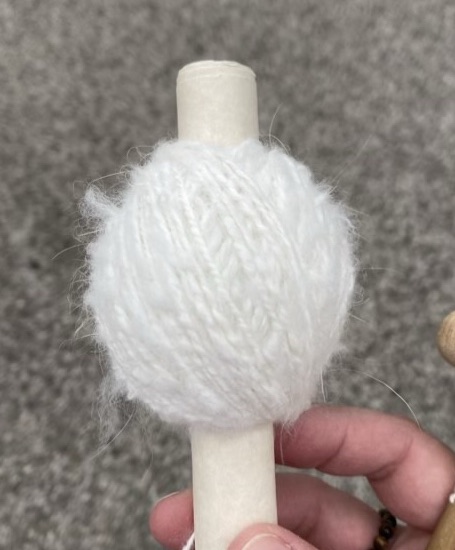
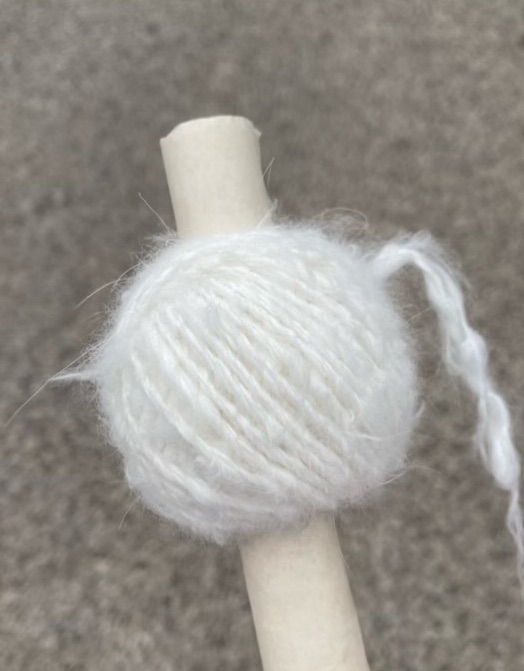
I did decide to cable ply my angora hand spun yarn to go from a two ply to a four ply.
Photo description: two ply angora yarn wrapped into a nostepinne style ballPhoto description: 4 strand cable ply angora yarn on a wood drop spindlePhoto description: cable plied angora yarn wrapped into a nostepinne style ball
I am going to let time set the twist, so wrapped the final yarn into a center pull ball. This is yarn spun from raw angora rabbit fur, not carded not combed, not washed. I’ll created my swatches for my fiber book before water touches the fibers, just to see what happens.
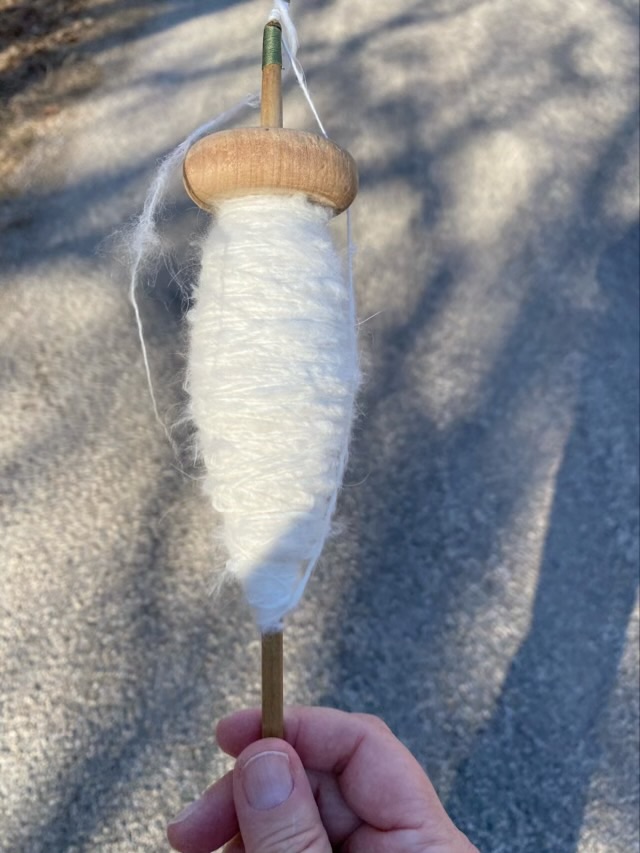
Photo description: two ply angora yarn on a wood drop spindle.
The yarn is still quite thin, so I think I will ply it again to make a four ply cable yarn. The bumpy texture of cable plied yarn will complement the fluffy nature of the yarn, I think.
Photo description: single spun angora rabbit fur on a wood drop spindle, asphalt in the background
I finished spinning the angora rabbit fur I purchased from a Texas rabbit farmer. I didn’t wash, card, or comb the fiber, just took it out of the bag and started spinning, which resulted in a more uneven spin, but was worth the experiment.
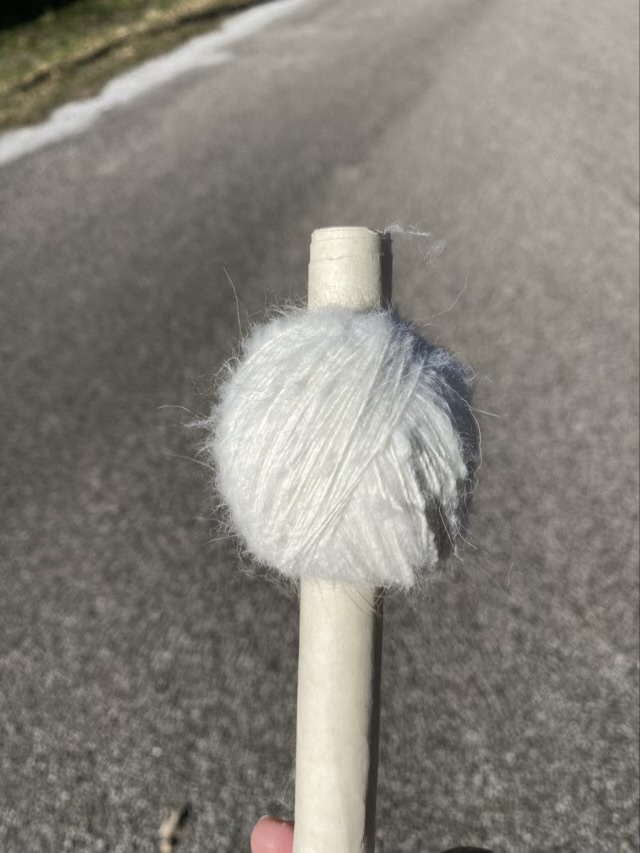
Photo description: single spun angora yarn wrapped into a center pull ball
The next step is to ply the yarn. In preparation, I wrapped the yarn into a center pull ball.
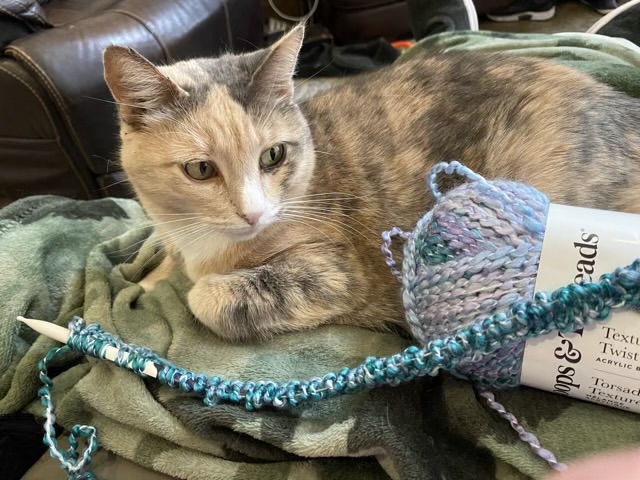
Photo description: Sophie the dilute calico sitting on my lap as I cast on a new knitting project
This is not my usual lap cat. Sophie, the outside cat that adopted us and moved inside, has decided that laps are warm and cozy, especially with a fuzzy blanket. She has not learned knitting etiquette yet, though, and thinks the yarn is for play. We’re working on it. Right now it is a balance of encouraging lap time and gently discouraging yarn gnawing.
The new project is a meditative piece using yarn gifted to me by my youngest. It will be a wide scarf done in garter stitch, so no pattern lines to follow, no perl stitches, just knit and turn.
My Dad has been experimenting with making hot sauce. I thought he needed a hot sauce holster for either sauces or spices so they are easy to grab, so I made him one from leather. I started the design process with card stock, so I could get the sizes and shapes right.
Photo description: gray card stock cut into various pieces with two spice jars, pencil, and ruler
Once I was comfortable with my design, I used Adobe Illustrator to lay it out digitally, including engraving and lace holes. I included a “test” rectangle, which was very helpful and something I will include in future design projects, because I was able to use those elements to test my laser cutter settings before committing to larger objects.
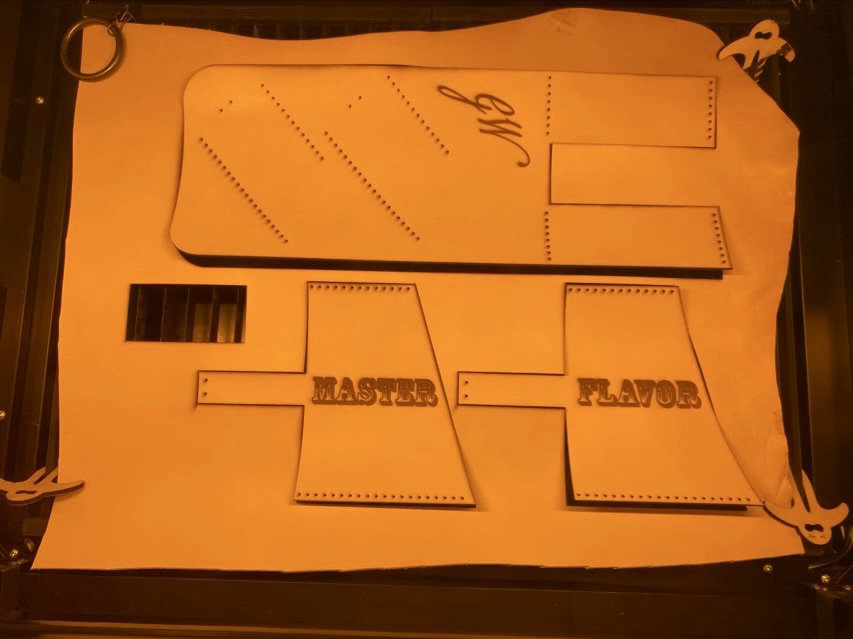
Photo description: four test runs of the word “test” and outline and hole cuts on scrap leatherPhoto description: leather still in the laser cutter, test swatch missing and three holster pieces engraved and cut
I rinsed the leather with water to remove the soot and smoke marks, then dyed it with leather dye.
Photo description: leather dyed with buckskin colored dye
I used waxed linen to sew the pieces together. I absolutely love how even I can laser cut the holes. Neat stitching is 90% hole placement.
Photo description: sewing leather at 90 degrees with waxed linen cordPhoto description: sewn leather holster with 3/4” grommet installed using Dritz pliers
I’m had some space at the bottom of the holster and thought that places to hang things are always potentially useful, so installed a gold hued metal grommet. I finally bought a pair of grommet pliers for this size, and it makes installation so much easier than hammering dies together.
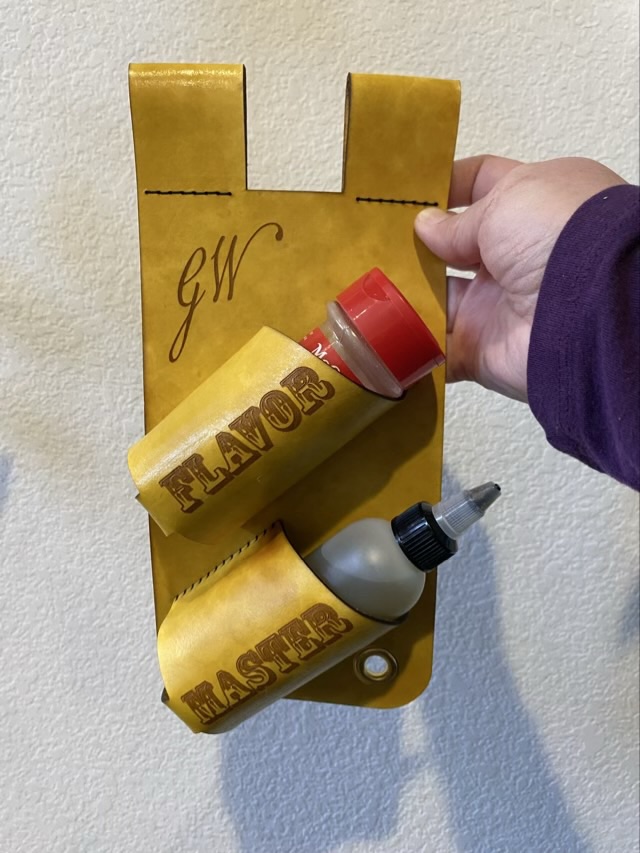
Photo description: Finished spice holster with one spice jar and one hot sauce bottle and the words “Flavor Master”
The holster is designed to hang from a belt, and since it is wide, I separated the belt loop into two sections so it can accommodate a belt loop if necessary.







 Critters and Craft