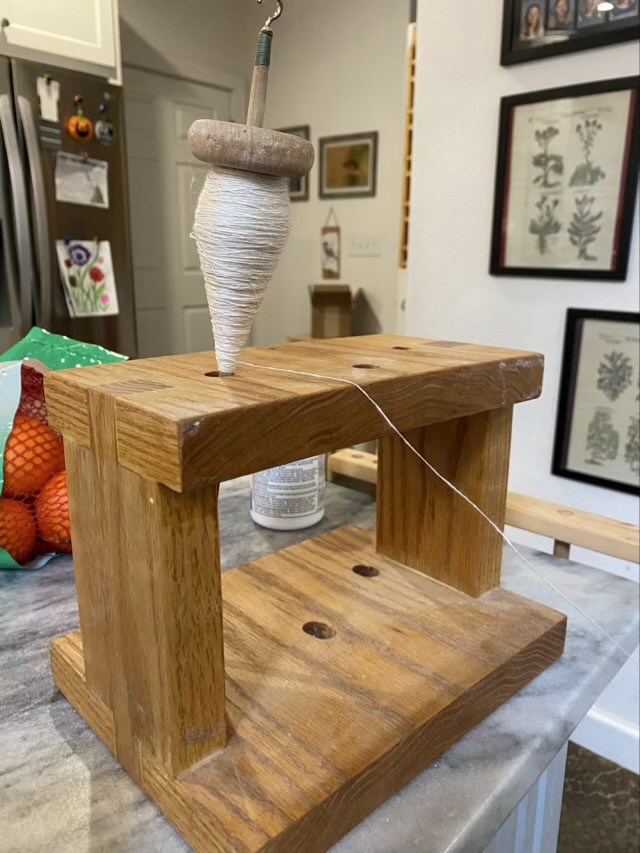
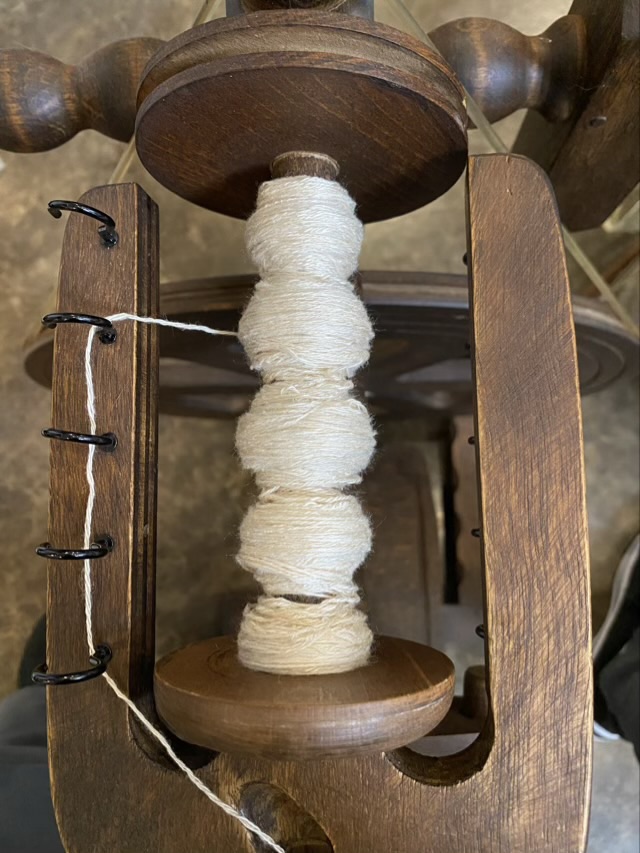
My single spun mint top fiber has been sitting on my drop spindle for awhile. I spun it so thin I really was worried about it breaking during the plying process. I finally took a deep breath, got out my homemade spindle holder, and chain plied with my vintage Befra Willy spinning wheel.
Photo description: oak stand with drop spindle full of single spun mint top fiber which is a cellulose fiber infused with mintPhoto description: Befra Willy flyer and bobbin with three-ply mint infused yarnPhoto description: three ply yarn wrapped onto a PVC niddy noddy
I wet the yarn on the niddy noddy to set the twist. I’m still not feeling and “coolness” from the mint infused fibers. Maybe that will come once the yarn is made into fabric?
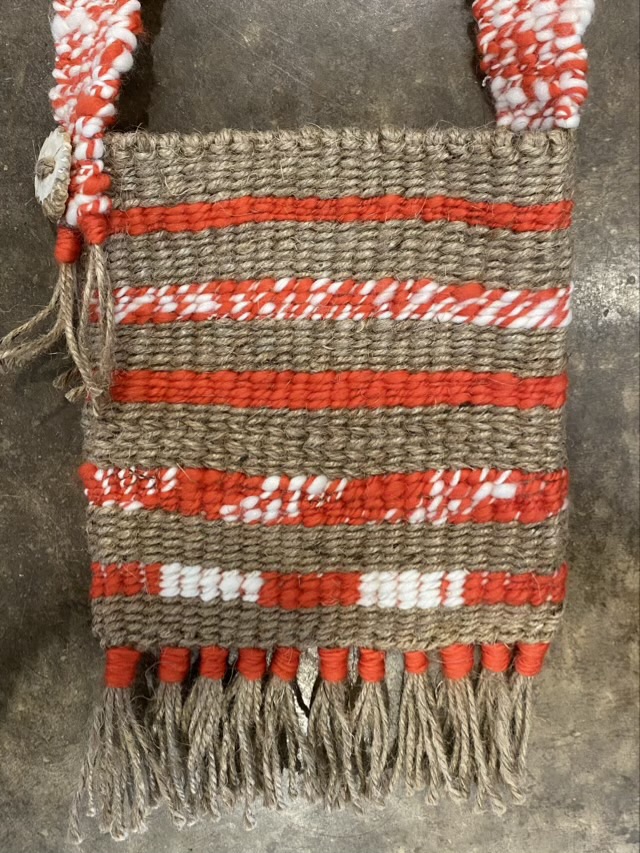
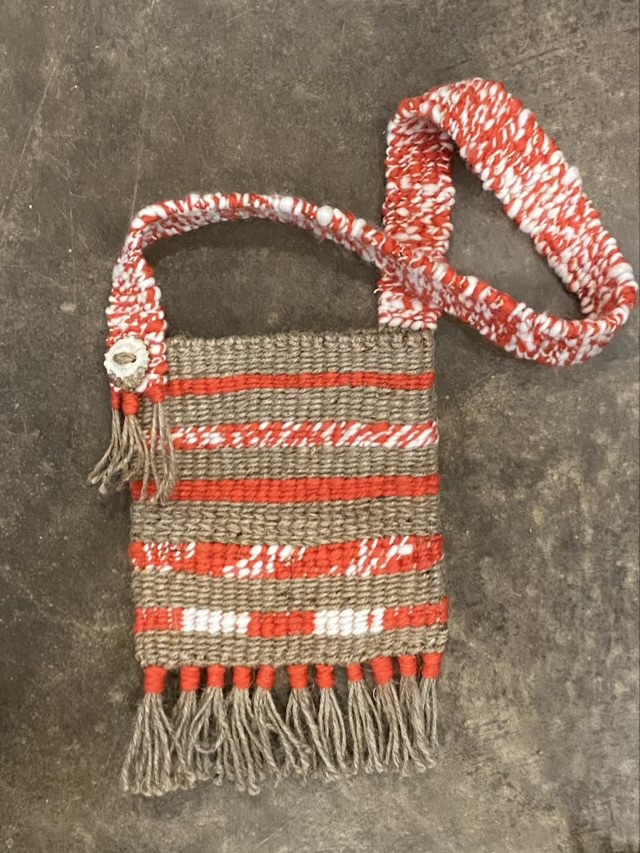
I have finished my twined bag. Yes, I was obsessed with making it and spent three days working on it. (Should I have been doing other things? Oh yes, but this was fun.)
I experimented with the weave as I progressed, not only doing stripes, but changing twist direction and number of twists between warp threads to control which color was on top, using this project as sampler.
Photo description: body of a twined bag made with natural jute and hand spun orange and white wool showing different styled stripes
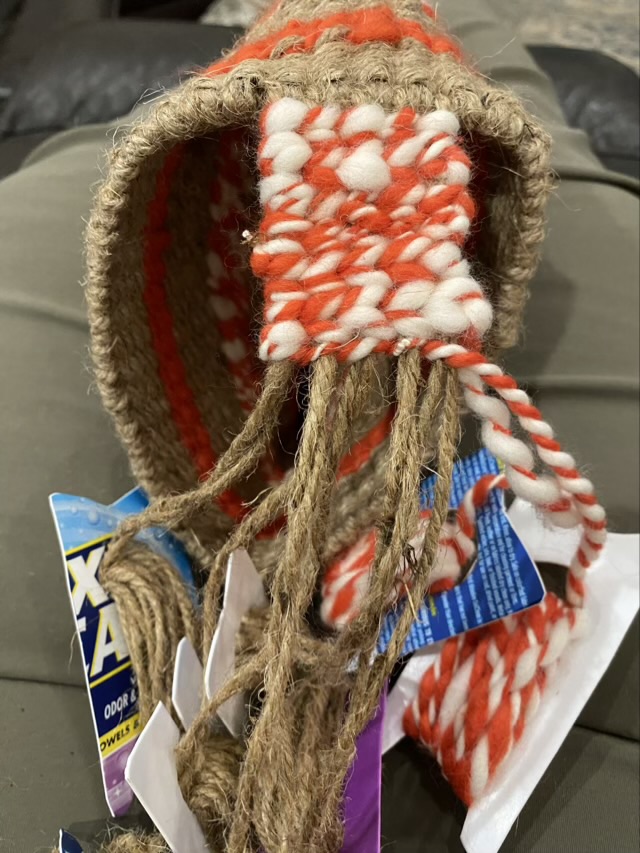
To make the strap, I threaded long strands of jute through the top edge of the bag, then used more hand-spun wool to cover the jute, reversing twine direction on each row, so as not to introduce bias twist in the final strap.
Photo description: starting the strap, with the excess yarn wrapped onto recycled plastic bobbins
I felt the other end of the strap needed some adornment, so I cut a slice of antler and drilled two holes to make a decorative button. It is sewn on, not functional, but I think it came out nice and coordinates well with the natural jute.
Photo description: antler decorative button attached at the other end of the strap.
I finished the bottom end of the bag and the end of the strap with tassels lashed with wool.
Photo description: finished twined shoulder bag made with jute, wool, and antler
I absolutely love this weaving technique. Want to learn more about twining a bag? There is an excellent book called “Twined Bags: A Historic finger weaving craft of the Native Americans” available from Livingston Press, written by Monica Newman Moore.
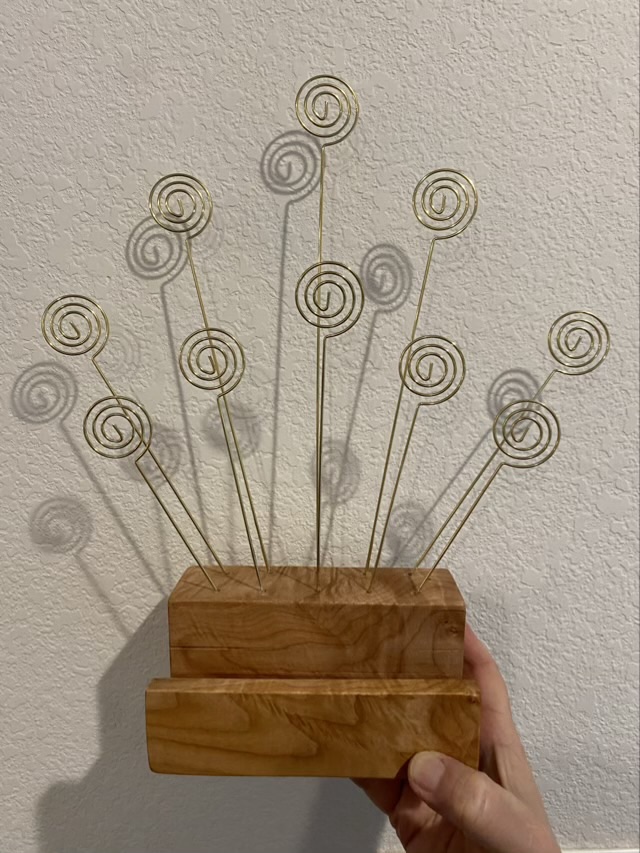
I have had it in my head for a while to make a new card display for the greeting cards I have for sale at my favorite coffee shop. I wanted something artsy that would show off the cards, but also have a spot for a stack of cards and business cards. I decided the take a block of flame maple from my stash and combine it with some spiral wire card holders.
Photo description: hand made card holder with flame maple base with storage slot carved in and embedded wire spirals for also holding cards
I used a two part epoxy to secure the wires in the holes drilled into the wood, then finished the block with Howard Feed-n-Wax. The feed and wax is my kind of product: it applies easily and dries within 24 hours or less, plus it smells nice.
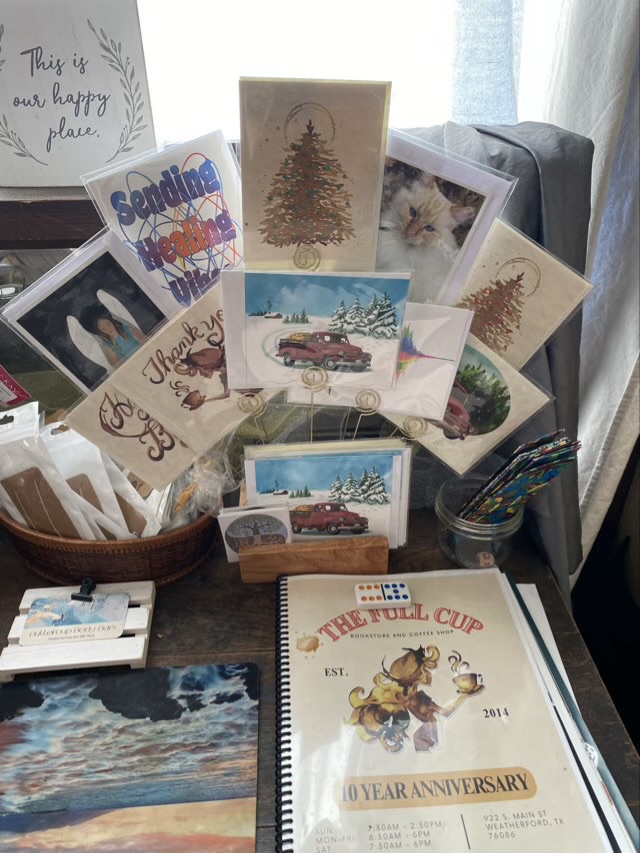
Photo description: card holder with cards for sale at The Full Cup in Weatherford Texas
The bouquet style display brings the cards up off the table and creates an eye catching arrangement.
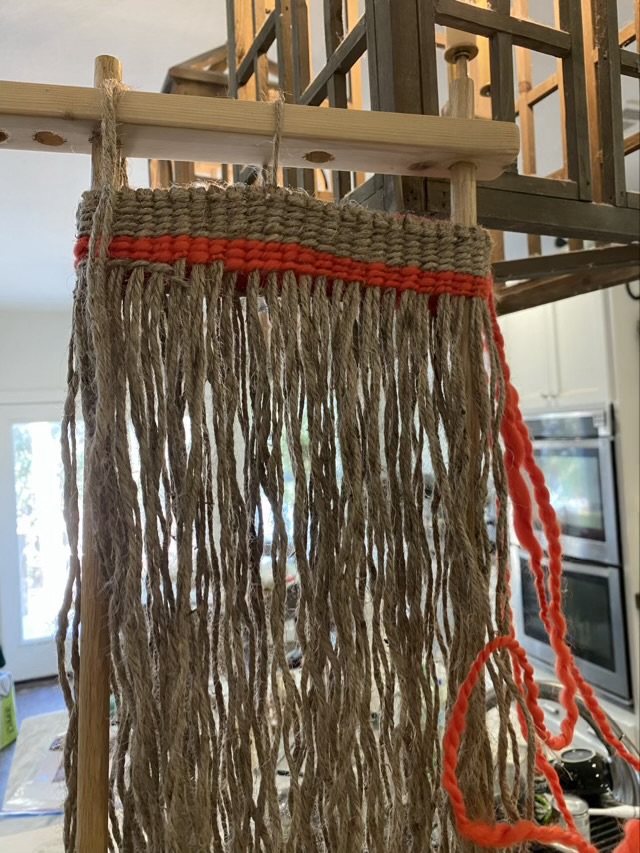
I have a crafting friend who taught me to twine a bag! I’m borrowing her wood frame, made by her husband, and using jute twine and her hand spun wool. Below is the picture of the progress I made on our crafting morning.
Photo description: wood loom with jute twine and orange hand spun wool twined around the upright poles of the loom with one stripe of natural jute and one stripe of orange finished
The warp is attached with larks head knots to a circle of jute at the top of the frame. Two longer strands are then twined around two hanging threads at a time, with one twist between each pair of warp threads. I love the open ended warp technique; it is so much easier to twine than on a loom where both ends of the warp are fixed in place. I also love twining, but to this point have only made cordage. This is the next step in my twining journey.
Twining is found historically around the world, and this type of twining with the open ended warp was used by Native Americans.
My friend also has a great book called “Twined Bags: A Historic finger weaving craft of the Native Americans” available from Livingston Press, written and signed by Monica Newman Moore. It is a very comprehensive book with instructions on the basic twining as well as tips on patterns.
Photo description: gray tabby with white face and chest half out of a gray and white fabric covered cat hide
I made this cat hide several years ago when Sophie was mostly an outside cat. I would bring it in when the exterminator came, and one day the cats decided they liked it better inside than outside. It is currently Thor’s favorite place to hide and ambush passersby. The picture above is presented to you today because the cat is just so darn photogenic.




 Critters and Craft