Tension ring

My youngest is showing interest in crochet. One of the hardest parts of crochet (and knitting) is keeping an even tension. To assist, I made a tension ring. Yes, I did model it off of one I saw for sale, but I used 14 gauge aluminum wire from my stash to make it. Aluminum wire is very malleable, so a larger gauge (smaller number) is needed to hold the shape under use, but it is still easy to form toa finger in order to get good skin contact.
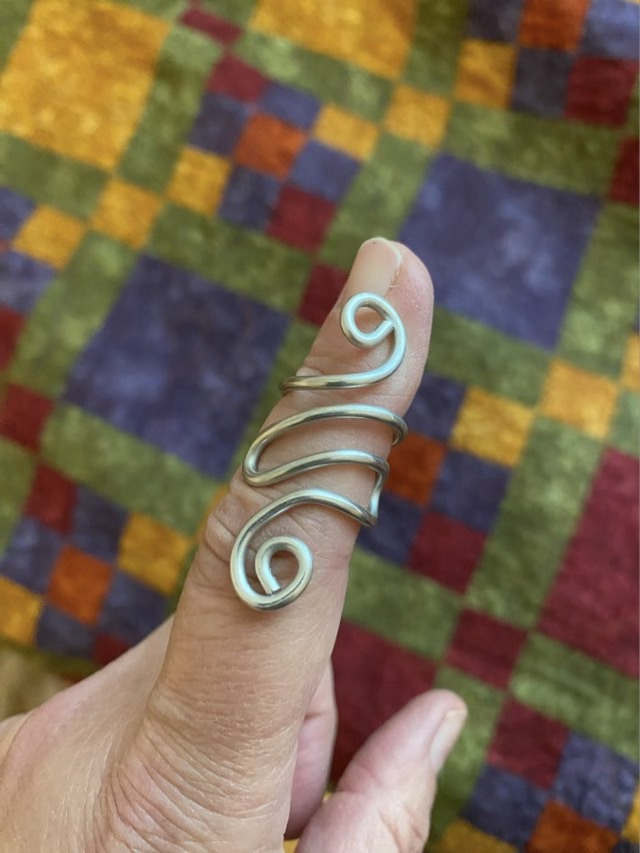
Photo description: aluminum ring made of 14 gauge wire with two spirals and two loops

The shape of this ring makes it easy to slide the yarn under either a loop or a spiral, or have multiple points of contact. The more contact, the more drag, the more tension. It was a game changer for my daughter, who went from only being successful with assistance to chaining on her own.
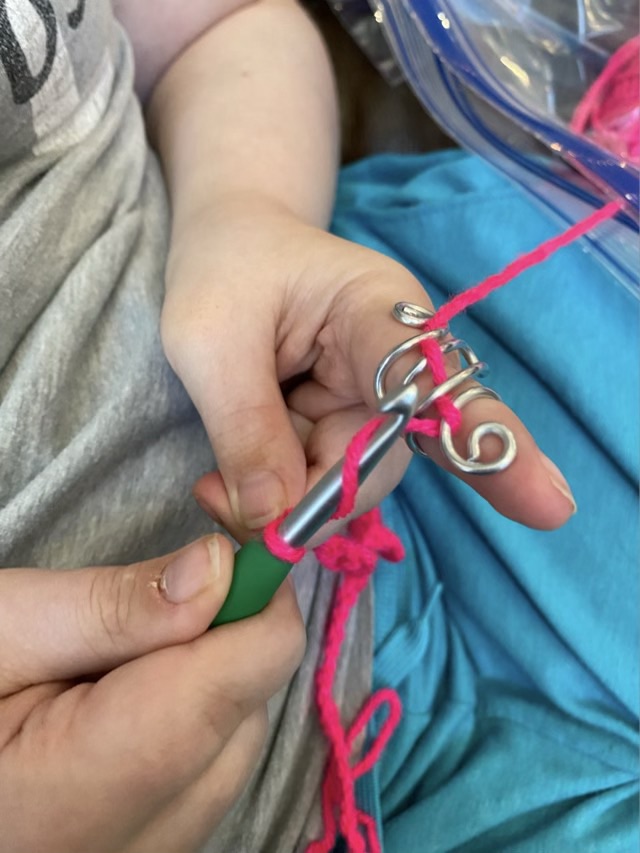
Photo description: my daughter’s hands making her own chain using the ring tensioner and bulky weight pink yarn

I then made the mistake of introducing the double crochet. Too many steps. When she shows interest again, we’ll try a slip stitch, which only has one more step than a chain (inserting the hook into the work). There are historically created items that are made with only a slip stitch, so she can still feel accomplished. Sometimes baby steps are what works, and breaking tasks down to parts, finding what parts can be delegated or assisted to order to be successful.
Compaction

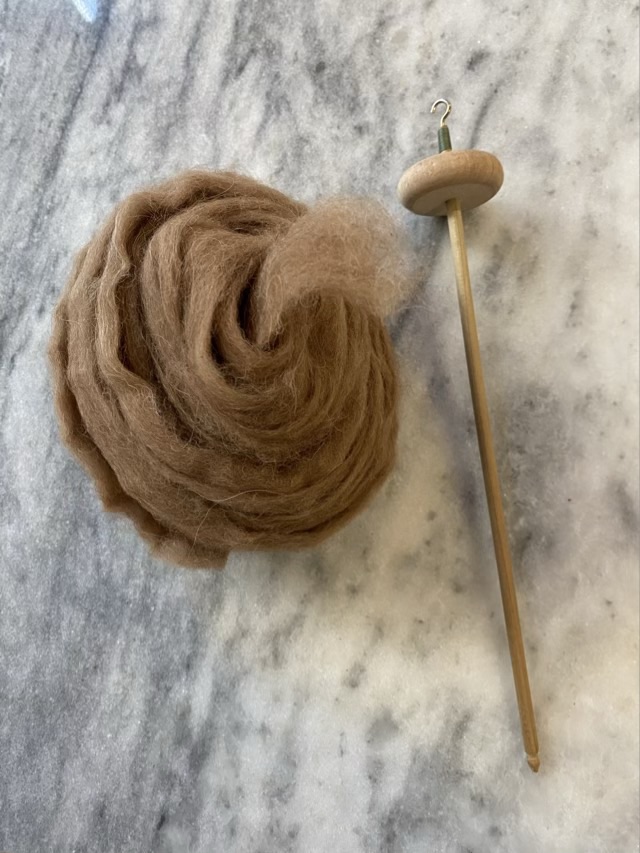
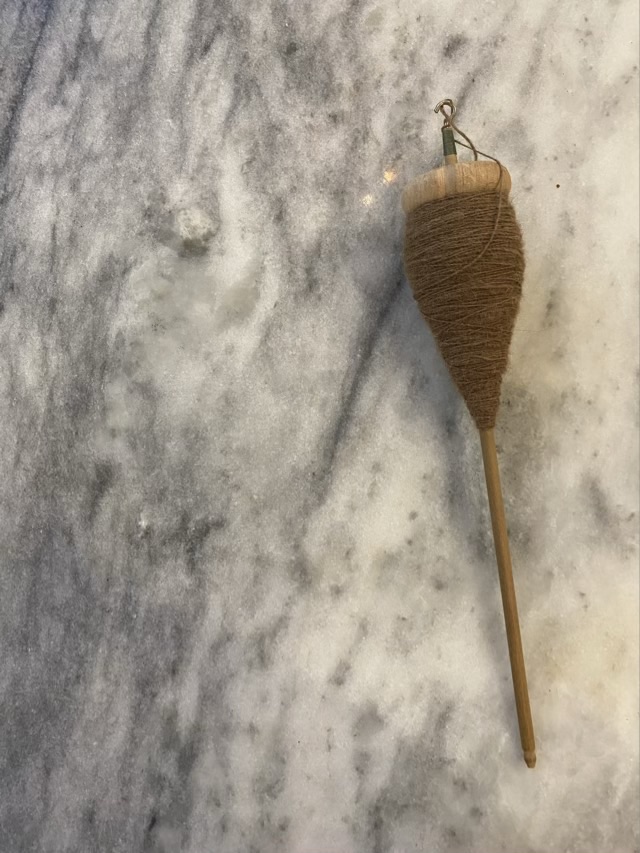
I thought this pair of pictures would be interesting. First is a bundle of camel fiber next to an empty drop spindle, the next is that bundle of fiber spun into singles on the spindle. There is a big volume change.

Photo description: camel roving wound into a loose nest next to an empty drop spindle
Photo description: full spindle in the same position

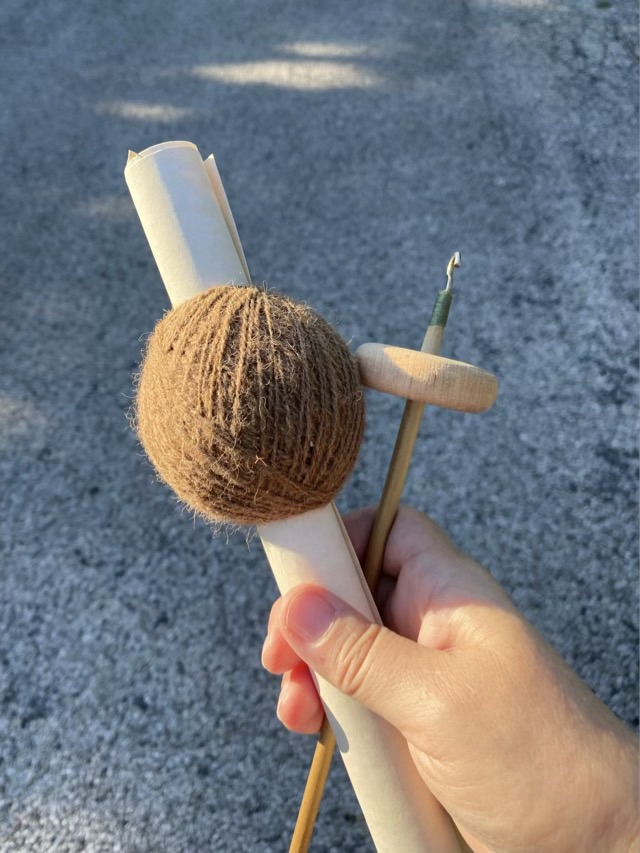
These pictures were taken 20 days apart. I spun for about 30-40 min 12-13 days during that time, giving an approximate time investment of 6-9 hours. Plying goes much faster, and I can make a 2-ply yarn from this yarn in 60-80 minutes (2 walks). Winding into a nostepinne style ball takes just one walk.

Photo description: 2-ply camel yarn wound onto a paper tube, spindle empty in my hand, asphalt in the background

Really it isn’t the time, it is making the walk bearable, and the zen I get from spinning.

Leather pan handle

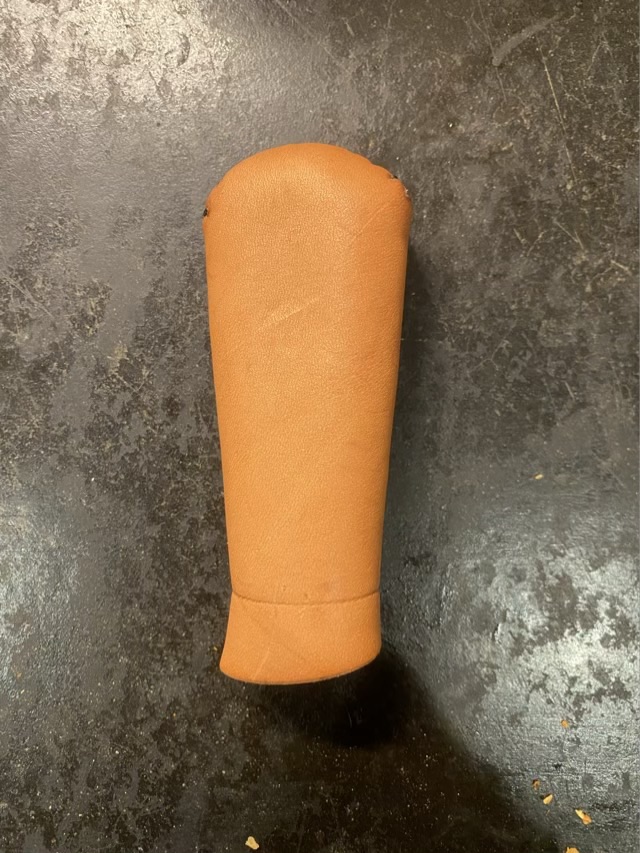
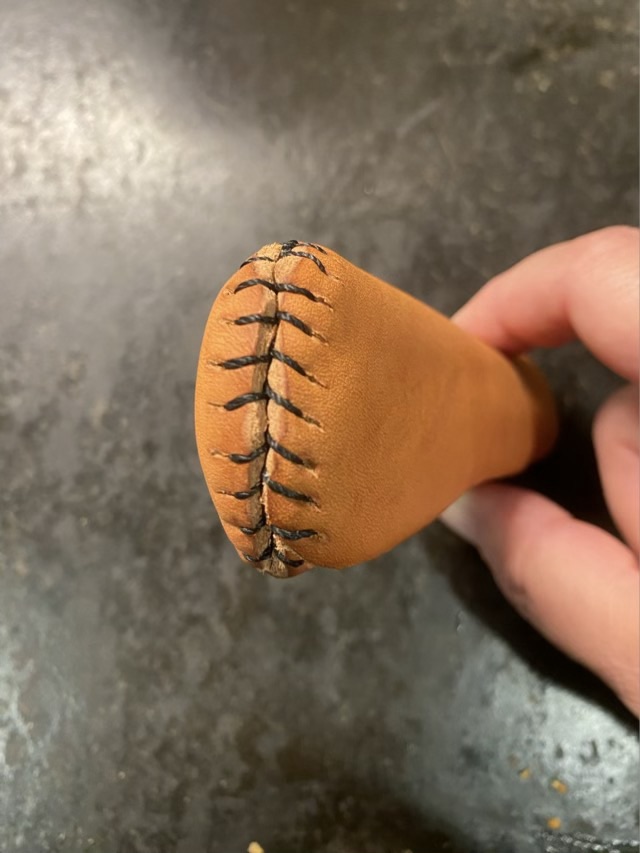
Dad put another leather handle for cast iron pans on his wish list, so I delivered. I used some unfinished tooling leather, cut it to shape, wet it, and formed it to the handle of my Lodge cast iron pan. The design is wrap around, with only the end sewn, so that it can slip on and off. I sewed the ends together with waxed thread using a baseball stitch.

Photo description: dried leather is pan handle, side view
Photo description: sewn end of the pan handle

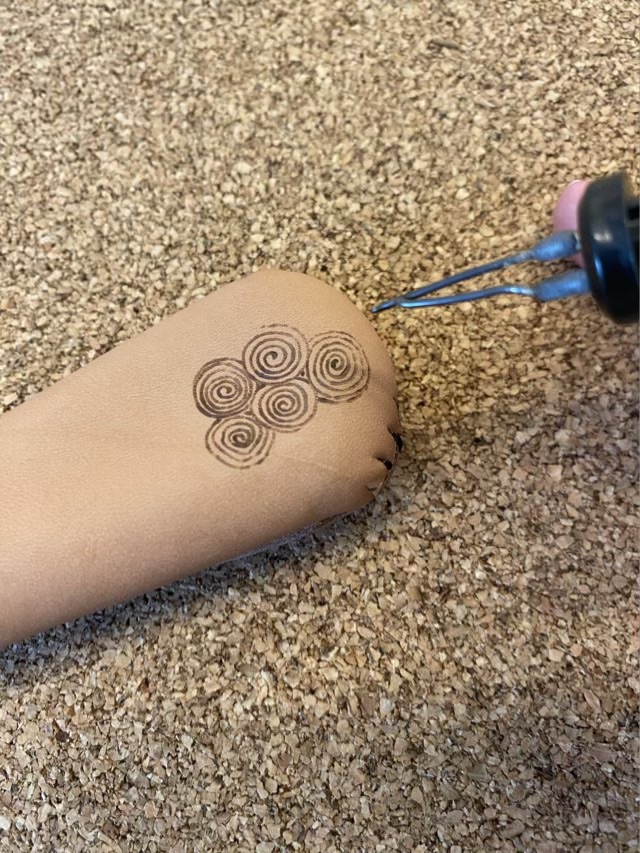
I wanted to add some decoration to this so turned to my pyrography setup.

Photo description: starting the decoration with spirals done with a pen tipped pyrography tool
Photo description: completed pyrography in Zentangle style, with spirals going to stacked tear drops to clustered bubbles finished with parallel lines

I finished the leather with Resolene, a leather conditioner that will protect against food splatters.

Fiber page: Shetland lace

The Baize Shetland wool was the first Livestock Conservancy Shave ‘Em to Save ‘Em fiber I purchased. I bought a 13 oz batt, and have been spinning it at demonstrations and fair booths. I’ve been quite remiss in actually making a fiber page! That is now rectified, and this wonderful fiber has a page in my sampler book.

Photo description: Post card from the breeder (top left), single spun and two ply yarn (top right), unspun wool as purchased scoured and carded (middle left), crochet round (middle right), two Shetland lace knit samples (bottom left), nålbinding (bottom middle), and a woven swatch with combed fringe.
Photo description: same page, but with the samples folded up to show the descriptions

Shetland wool is a joy to spin, and is definitely on my “will purchase again” list.

Fairy egg

I had a bit of a shock looking for eggs in the nesting boxes recently, a very tiny egg.

Photo description: brown egg on a scale reading 17 grams

I found it where the new chickens lays their eggs, so I’m certain it came from one of the Black Star hens. I broke it open and there was no yolk.

Photo description: cracked egg with only egg white, no yolk

Maybe the term fairy egg comes from the thought that something stole the yolk? That would be old school fairy thinking, not the new tiny jingling sparkly fairies. Either way, it is not something concerning for the health of the chicken, just a hiccup in the production system. I do believe I have something going on with egg production, though. With six hens I’m finding maybe one egg a day. It could be that they are all older, 5 years old, well past prime laying. It could be the stress of a new pecking order or the heat. There could also be something stealing the eggs, although not fairies, but likely a snake sneaking a snack.