My wrapping on a Turkish drop spindle is getting better. This is two plied soy fiber on a flexible filament 3D printed Turkish spindle that I bought at a fiber festival.
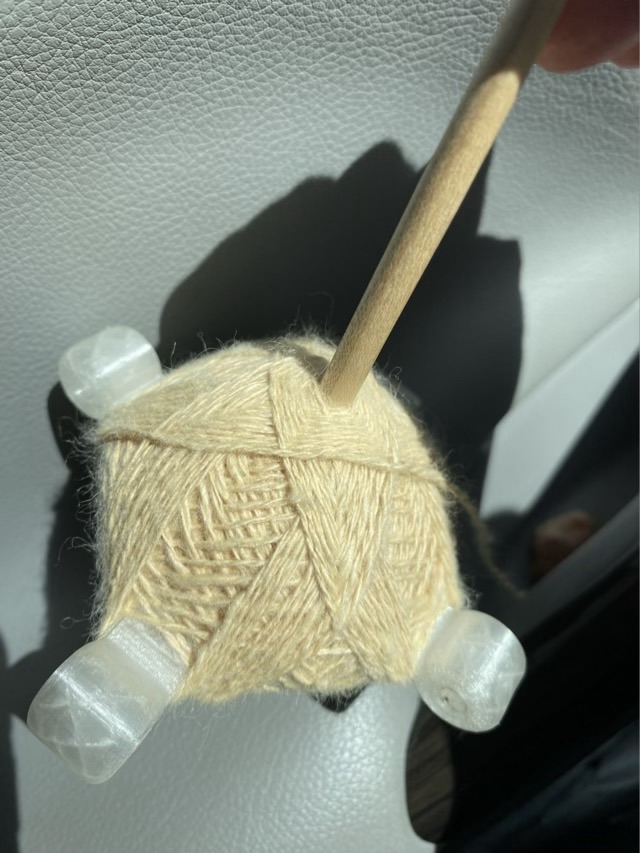

My wrapping on a Turkish drop spindle is getting better. This is two plied soy fiber on a flexible filament 3D printed Turkish spindle that I bought at a fiber festival.
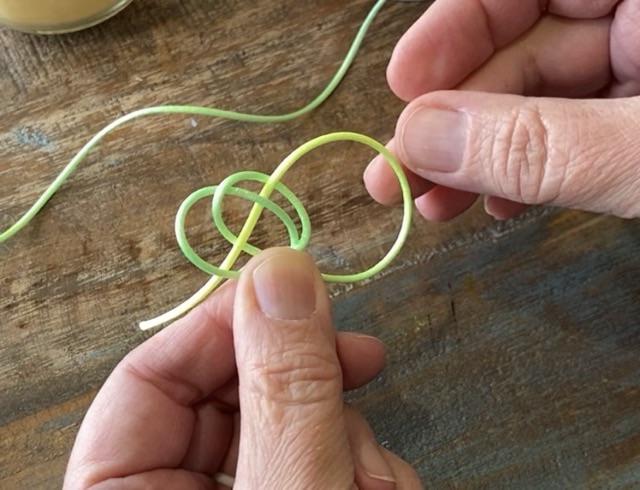
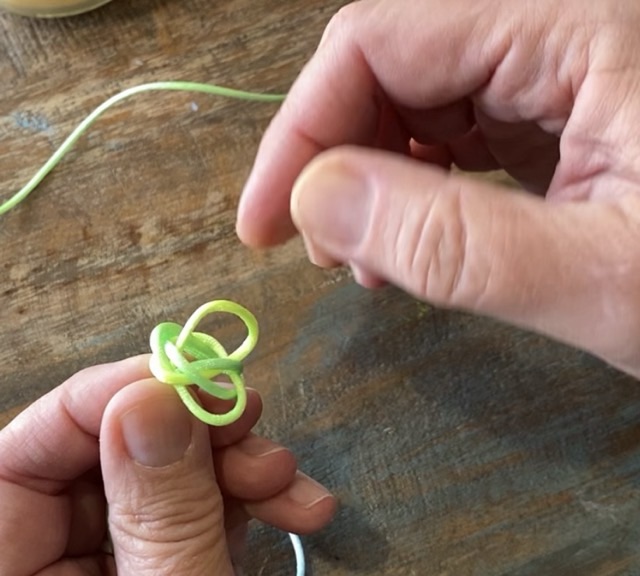
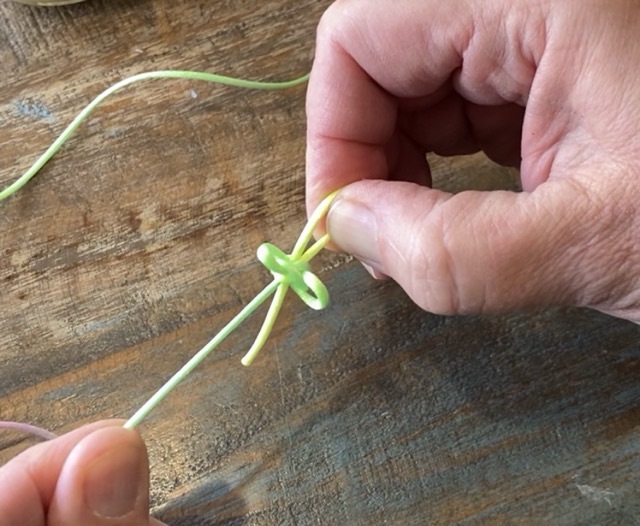
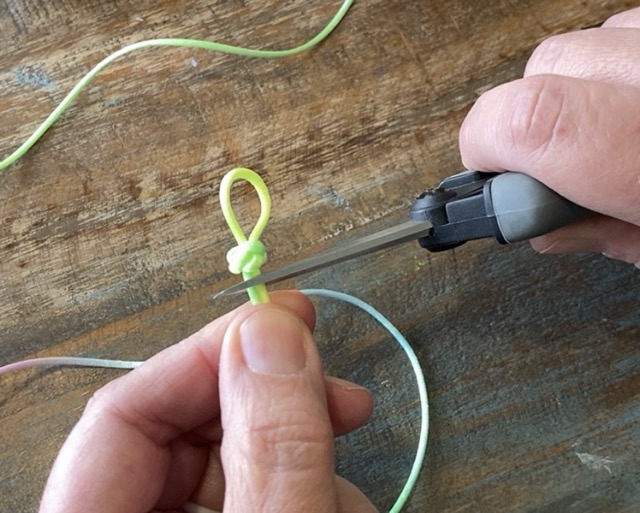
Making Celtic button knots is one of my favorite things to do. I use them for decorative ends, jewelry clasps, and now I have a way of making stitch markers for knitting! It is a great DIY for the stitch marker exchange at your favorite fiber meetup.

Here is my DIY video. It is a single take and you can hear my dogs pacing around me in the video, but all the data is there. For those that prefer pictures and words, I’ve provided steps below.


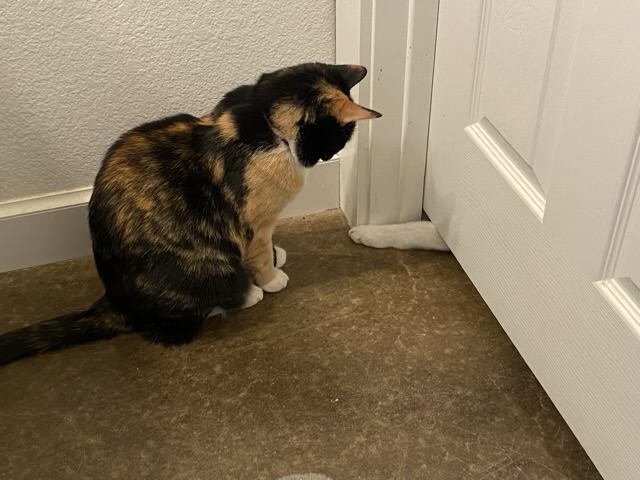
Thor the cat plays a dangerous game, sticking his paws under doors at Izzy the calico. His favorite thing to do is antagonize her, and she doesn’t mess around. She goes for the take down. Right after this picture she went after him, both paws and mouth open. Maybe they are playing? If so, she doesn’t play nice.
We went to a tulip festival where you could pick your own tulips. We were instructed to grasp the stem at the bottom and pull straight up. We often came away with the whole plant! At home I put the stems and flowers in a vase, and had a whole pile of tulip leaves. Was there fiber there I could harvest? I tried different ways of taking the leaf apart, and found translucent fibrous material on the back of the leaf that I could peel away from the fleshy section. (Many plant fibers are harvested after retting, a process that rots away the non-fibrous material, I wasn’t ready to go that far with these tulips.)
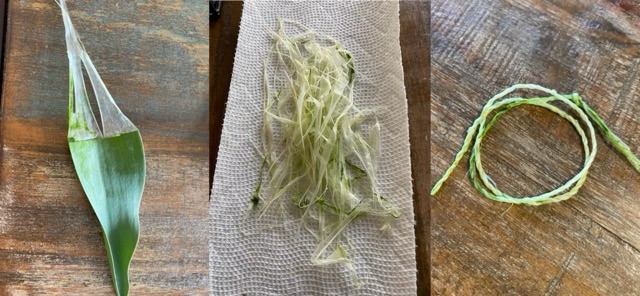
I left the fibers to dry for a couple days, then rewetted them one at a time before twining them together. The resulting twine was not very strong, even after drying.
Tulip blooms don’t last long, and I noticed that the stems were starting to curl up at the cut ends. Would the fiber in the stems be stronger? I peeled the outer layer of the stems and let them dry to find out.
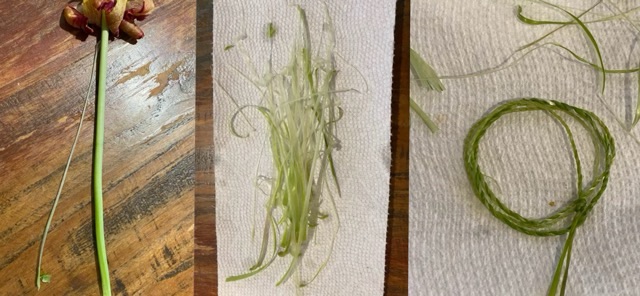
The fiber from the tulip stems is stronger than the leaf fiber, at least with the method I used to harvest. I can’t imagine a survival situation where I was stranded in a field of tulips and needed rope, but if I were, I’d use the stem fiber, and hope that it didn’t need to bear much weight because it still isn’t that strong. When dry, I can break it with my hands with some pressure. Harvesting the fiber is also tedious and time consuming for small gains, but was an interesting experiment.
Here is a different version of a row counter for knitting. I used flat round wood beads and copper wire to make a chain with larger loops to accommodate larger needles. I then used a wood burner to number each bead; it is actually easier to wood burn the assembled chain rather than individual beads. To mark the tens, I used a copper lobster claw clasp with a copper clay leaf (that I made many, many years ago and has been waiting for a project). I find the lobster claw easier to deal with than a melody clip.

 Critters and Craft