We planted one Gregg’s Mist Flower in the front garden. We tried a different variety of mist flower previously, but they didn’t take well, and didn’t attract butterflies. These are growing well and nearly every time I walk by, I see a butterfly! Hurray!
Butterfly on Gregg’s Mist Flower
I believe the butterfly visiting in the photo is a Painted Lady butterfly.
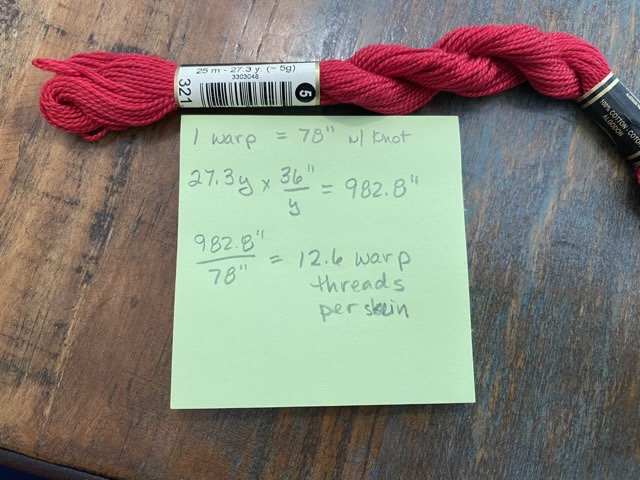
My inkle loom calls out again, and I have a stash of pearlized cotton that needs to be used. My craft supplies are very demanding. I measured the warp space on my loom and did some calculations to see how many warps I could make with one skein.
Length calculations
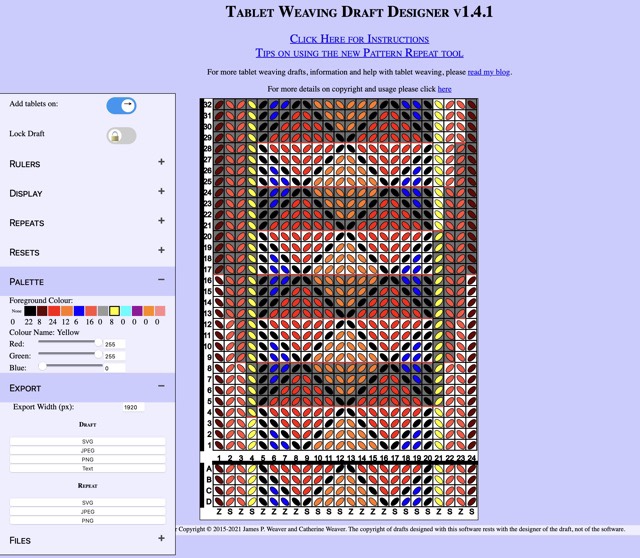
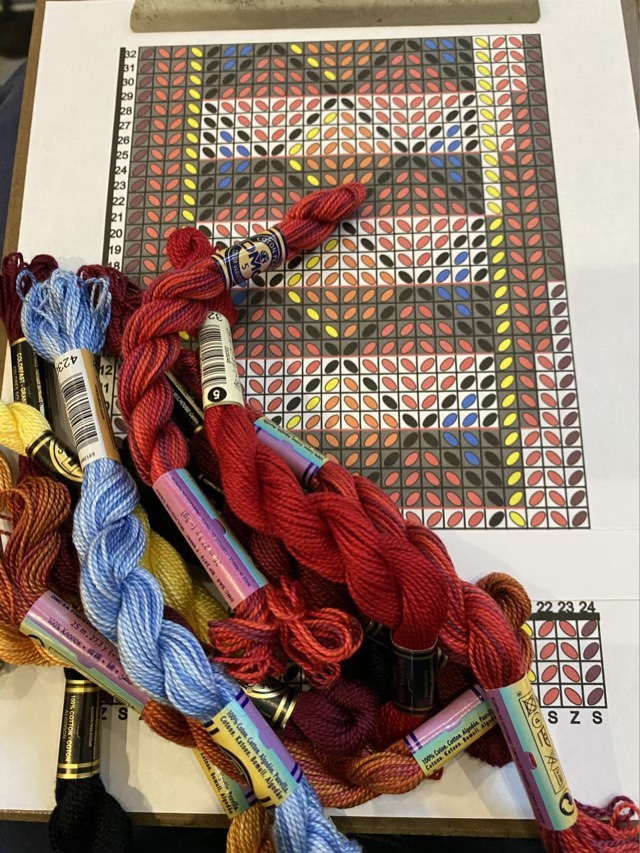
It turns out there are several websites that have apps for designing tablet weave patterns. Neat. I tried the first one on the list, found it intuitive, and designed a pattern that I could make using what was in my stash.
Screen shot of “Tablet Weaving Draft Designer” appPrinted pattern with skein colors
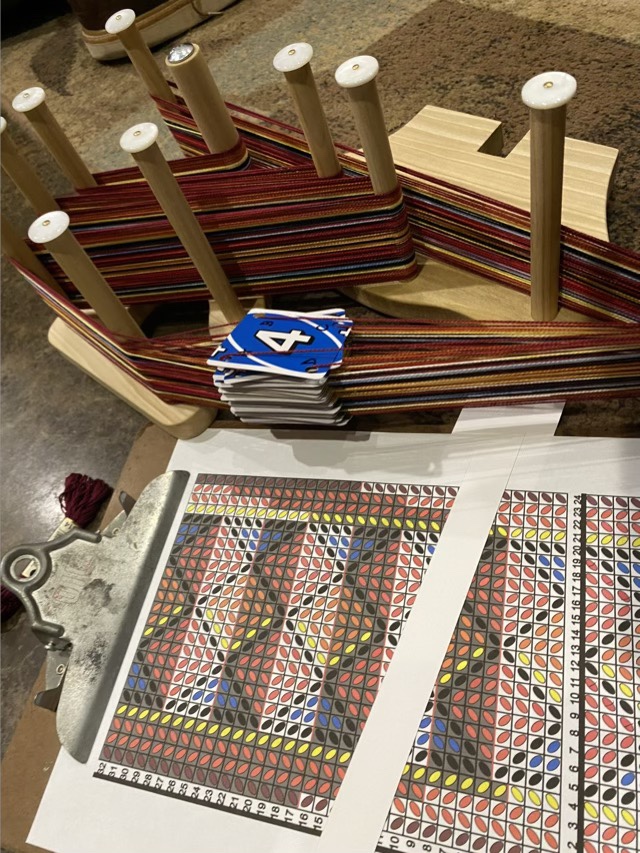
Warping the loom takes a couple hours, but taking time in this step is well worth the effort. The diagram I printed was easy to follow to set up my cards.
Warp completed
I cut a strip of card stock with two long slits that fit over my pattern so I could keep track of my rows. I’m all ready to start weaving! Except, where is my shuttle? No seriously, I can’t find it. I probably put it somewhere safe again. Hm.
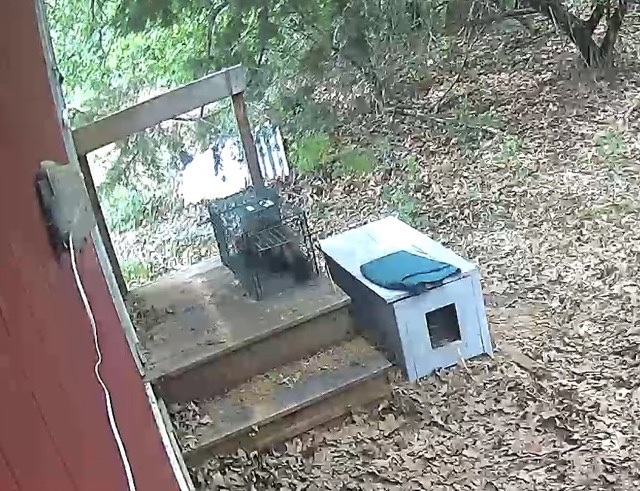
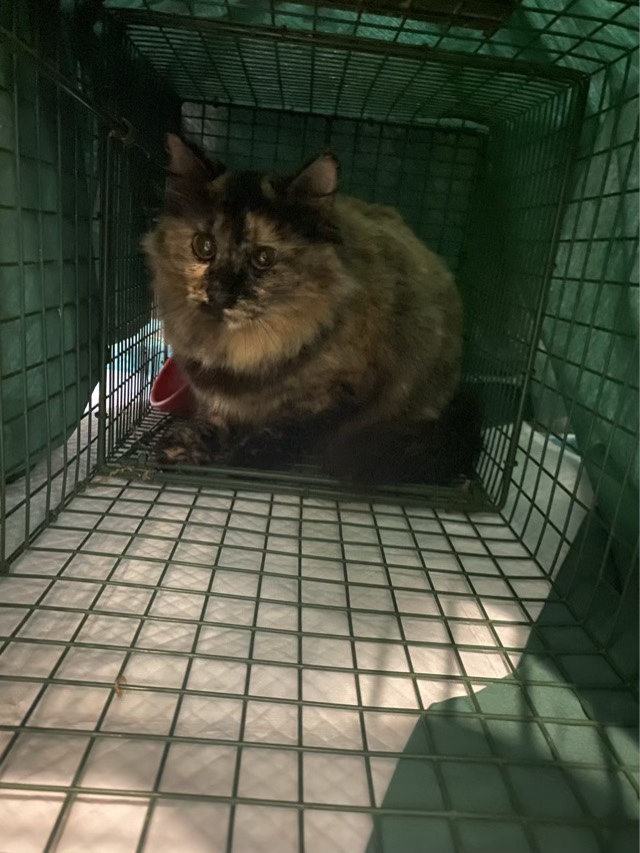
The calico that has eluded me for so long is finally trapped. I changed tactics, setting up a cage behind the coop, with a camera monitoring, and taking out treats once a day. Then on trapping day I set out the good tuna in the cage and … nada. No interest in tuna. So I retrieved the tuna, as she stared at me an meowed, and gave her what she wanted: Meow Mix. Really? Ok. It worked. She went into the cage as I watched the camera footage on my phone, I pulled the string holding the stick, and … snap. The line broke. The stick didn’t move. She didn’t even notice. What a charmed cat.
Video still of Calico in cage
I thought I had missed my window. I went around the coop, she saw me and ran off, and I retied the line to the stick holding up the cage door. Dejected, I went back to my hiding place, but not a minute later, she was in the cage again snacking on Meow Mix (this must be kitty crack for calicos, my inside cat loves it too, but I only use it as a treat, not the main meal.) This time the line held, the stick moved, and the door fell. She was not happy to be trapped, but I don’t blame her. Now she gets a trip to be spayed, then returned to her hunting ground. She probably won’t speak to me again, but I’ll still try to give her treats of Meow Mix.
My inkle loom cried out for a new project as soon as I released the first project from tension. I complied, this time using it as designed by making string heddles and doing a plain weave.
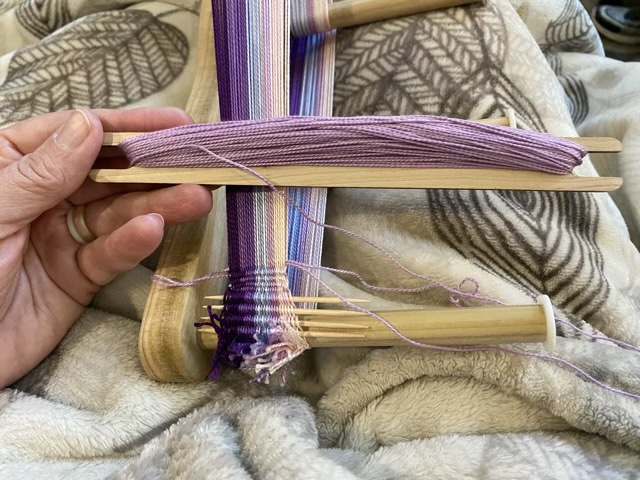
Warp setup with string heddles
String heddles are loops of thread that hold a single warp yarn. Applied to every other warp, it makes it easier to change the shed (which set of alternate warp yarns are on top). This makes weaving to faster, since the alternative is to pick up every other strand on every pass. Here is a video showing the changing of the shed on this loom setup.
Getting started weaving with toothpicks
I started this weaving by laying toothpicks in the shed. I wanted to maximize the woven length, but still get an even start. The tooth picks were brittle, so I may look for a different thin starting material next time. I also wrapped the weft thread in a different manner, crisscrossing around one long edge, rather than wrapping in the middle. I see why people choose this: the profile of the wrapped yarn is thinner, and it frees up one edge to more effectively beat down the warp.
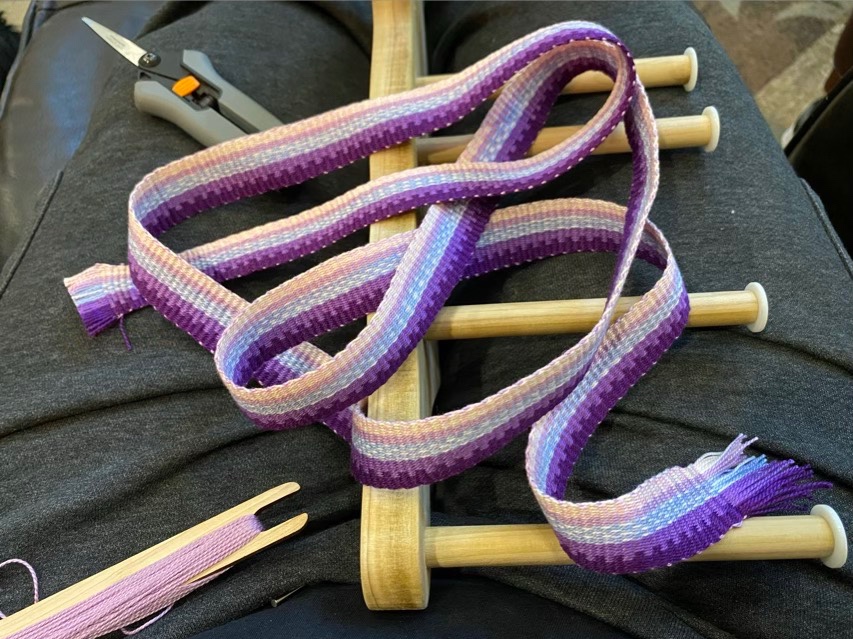
Finished weaving
I used pearlized cotton for this weaving and it didn’t need to be pressed after it came off the loom. Weaving went much faster than my tablet weaving, but the band is thinner. It is still sturdy, and quite attractive both visually and in texture.
Start (left) and finished (right) ends
I’m still working on my tension. This time my tension was tighter at the beginning than the end. Oh dear, I’ll have to start another project and keep weaving to practice. Twist my arm.
Another sign that Spring is progressing is that I get at least one hen that goes broody. She sits the nest and won’t give it up, hisses and yells when someone comes near, and she if there is an egg, she hunkers over it like a dragon on a hoard. I have no tolerance for the behavior and pick up the broody hen off the nest, place her feet in the cold foot bath and take the eggs. I even take the golf balls that help remind the other chickens where to lay. At night I take her out of the nest again and put her on the roost. The bummer part is that when a hen goes broody, she stops laying eggs. My methods have so far worked to break the broody streak, but even once the behavior has stopped, she won’t lay again for weeks.
Broody hen and another hen trying to lay
The hens’ preferred nesting boxes are a little large, two hens shouldn’t be able to fit together, but I rarely get broken eggs, so I let it be. The two pictured above are probably the same two that have dust bath wars over the same square foot of dirt.





 Critters and Craft