Leaf cuts

I’ve continued to make sourdough bread about every other week. Mostly I stick to rye since it has a lower glycemic index than white bread, even using heritage wheat, but the kids like the white sourdough, so it is still in rotation. My recipes don’t change, but I have been trying to perfect a leaf cut for scoring the bread.
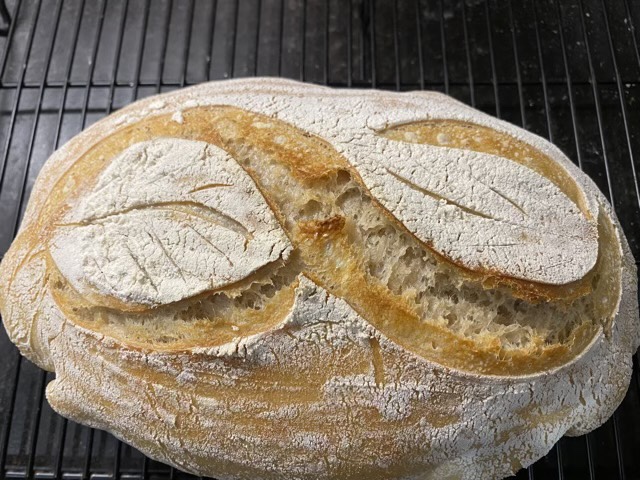
White sourdough scored in a leaf pattern
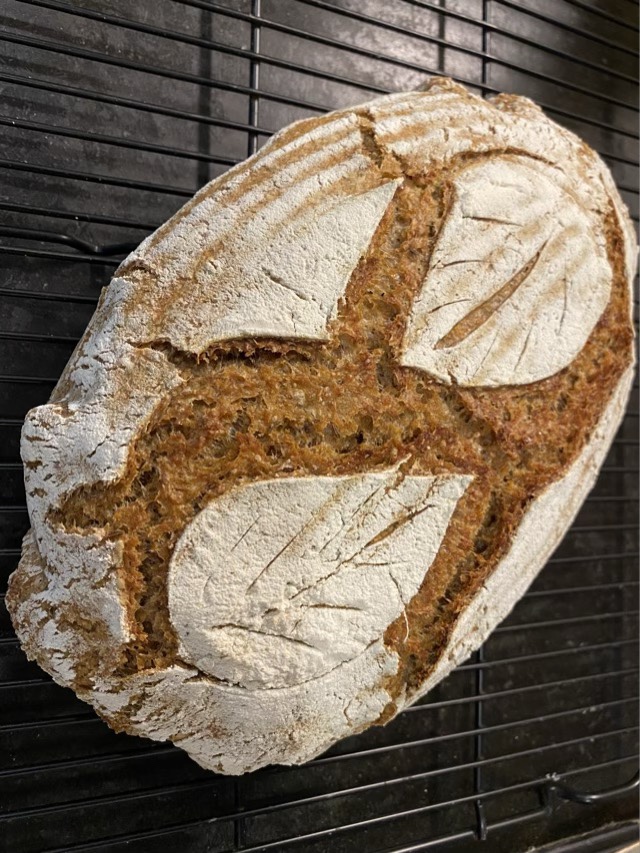
Rye sourdough scored in a leaf pattern

I’ve found that if I make a deeper large sinusoidal cut, then shallower cuts for leaf veins, the leaves sometimes lift up from the surface and look more like actual leaves. If I can manage to free the leaf tip, but leave the other end connected, I get a neat “stem” effect too. Neither of the pictured loaves have all my desired elements. I need to keep practicing.

Shelf fungi

Shelf fungi on a Post Oak

I found this massive shelf fungus on one of my trees out back. It is about the size of both of my hands cupped together. iNaturalist has trouble with fungi, which is understandable since so many look so similar and to properly identify one a naturalist must do additional tests. I will not be taking this fungus through tests as I am not a trained fungi expert, but I will share the intriguing photo. If you want a laugh, Google “shelf fungi on post oak tree” and check out some of the suggested names in “About the image” for the fungus in the photos. Google images also has an abysmal time matching fungi.

Emergency project

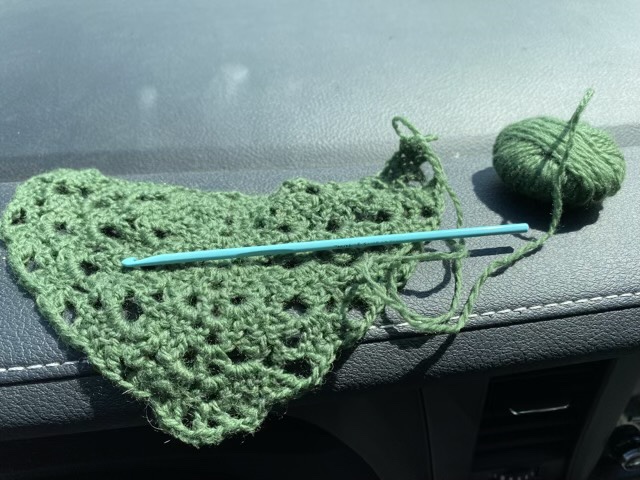
So there are times I forget my project bag, or suddenly have an unexpected wait and didn’t think to grab my project bag. The horror. I have found that having a small ball of yarn and a crochet hook stashed in my purse has come to the rescue on several occasions. I currently have some green fingering weight merino that I am using to learn a new shawl pattern. It is just a wee bit of wool so doesn’t take up much room, and a mismatched crochet hook so I don’t break up a set. Phew, yarn.

Tiny yarn project for emergencies

One is ours

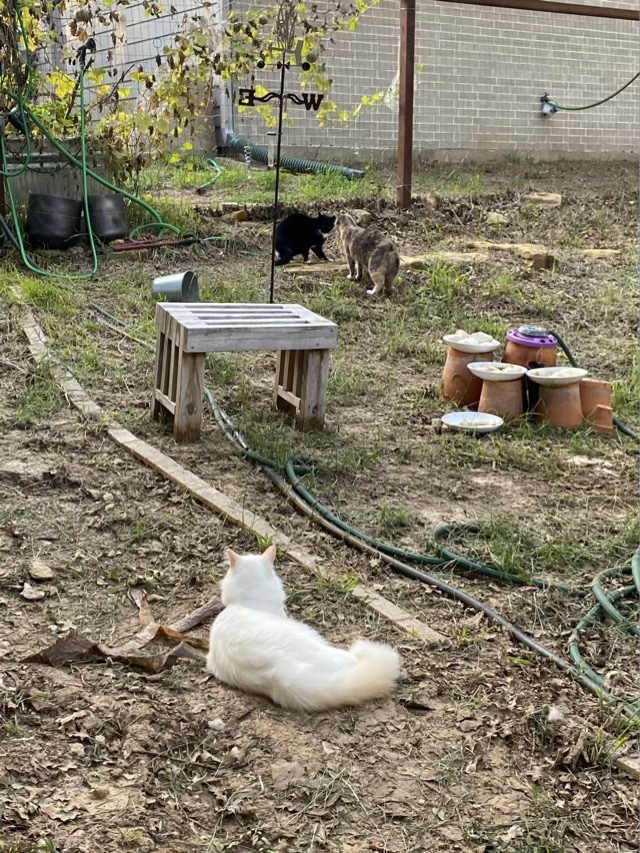
Cats in my yard as viewed from the coop

As I was tending chickens, I saw my neighbor’s tuxedo cat easing over toward the coop. Then I spotted Sophie (who is the only one we pay vet bills for) crouched behind the water fountain, and saw her run out to confront the intruder. Meanwhile, Mr Tom (from the neighbor’s house on the other side), is laying low, watching the shenanigans. If Sophie had spotted him first, she would have run him off as well. Sophie has the privilege of coming inside our house, where she is most of the time. I think the other cats are easing into her territory because she does hang out inside. I would rather she be an inside cat and not fight. All cats pictured have been spayed and neutered.

Winding

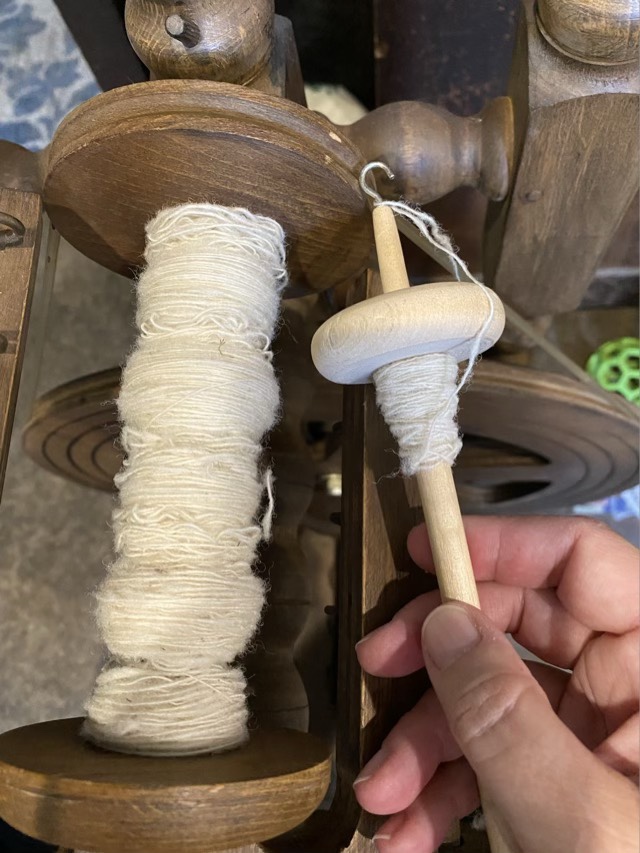
I filled my first spindle of Clun Forest wool while walking the neighborhood. Rather than ball up the singles, or put them on the niddy noddy just yet, I used my vintage spinning wheel to wind the yarn onto a bobbin. I used the hooks at first, but was not pleased with the way the yarn kinked between sections, and I was afraid the flyer was putting in more twist.

Single ply yarn wound from spindle to bobbin using hooks

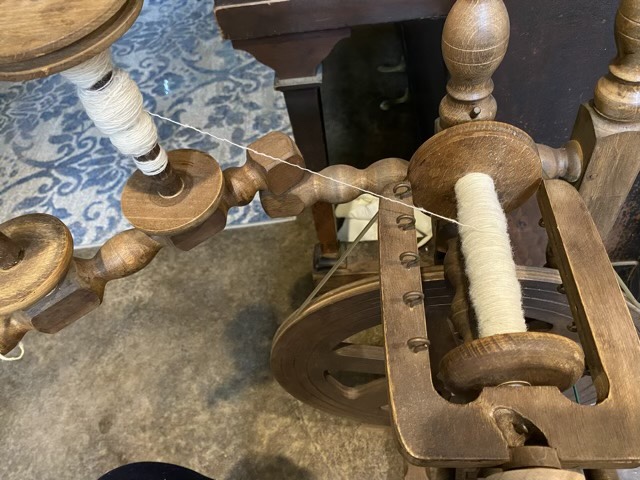
I transferred the yarn to a different bobbin, and this time I locked down the flyer so it couldn’t add twist, and just let the wheel spin the bobbin. I didn’t use the hooks, but guided the yarn onto the bobbin with my hand position to make a smooth transition all along the bobbin.

Transferring yarn from bobbin to bobbin

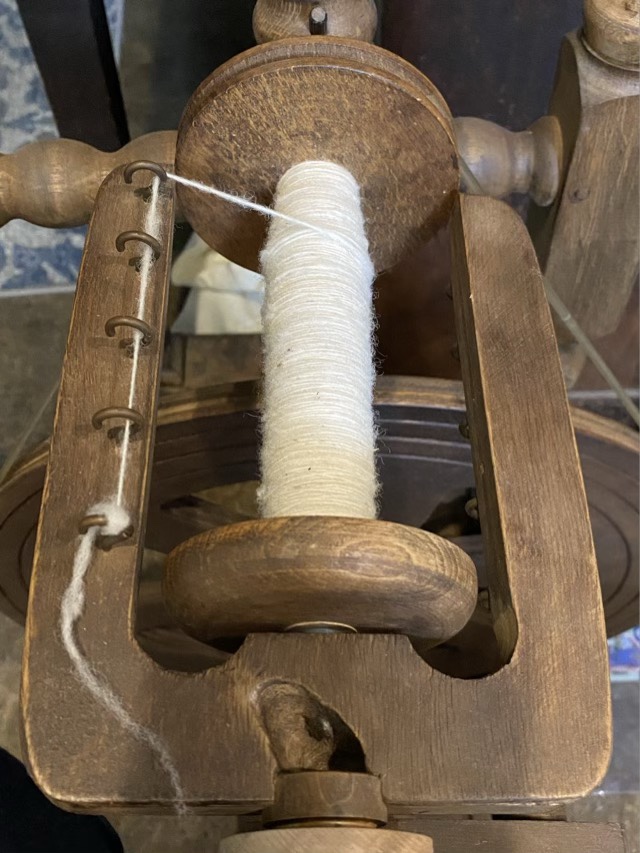
The resulting wrap is much more pleasing to look at. My plan it to add on the singles as I spin them, then ply everything using the wheel.

Smoothly wound singles yarn