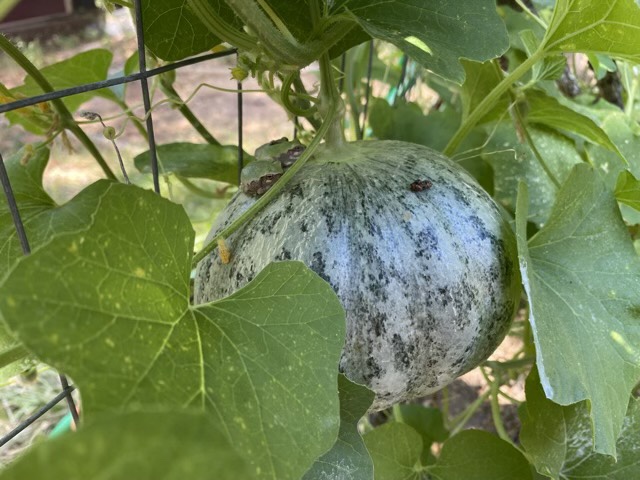
First melon harvested! The frogs did their job keeping the bugs down. I’ve been monitoring the bottom of this one and noticed a crack. But it was an untouched area, no sign of insect nibbles.
Burst melon
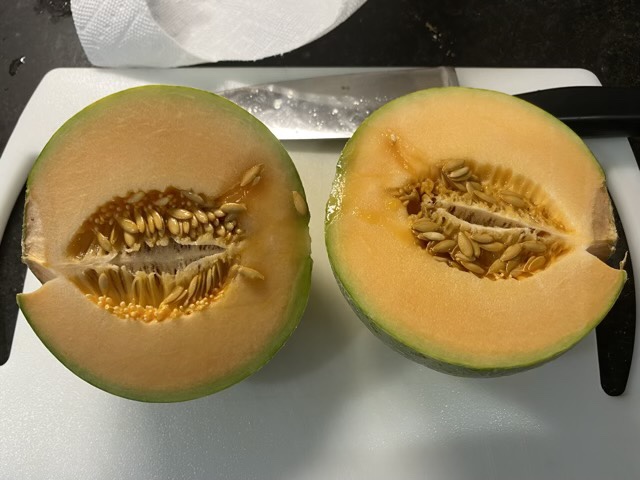
I freed it from the vine and sling and gave it a wash, then sliced it up. So good! It will probably be even better when it isn’t 100 degrees. A few hours in the fridge should do it, but we couldn’t wait to sample. I’m saving the seeds!
Sliced aspire melon
There are several more in various stages of development. Yum.
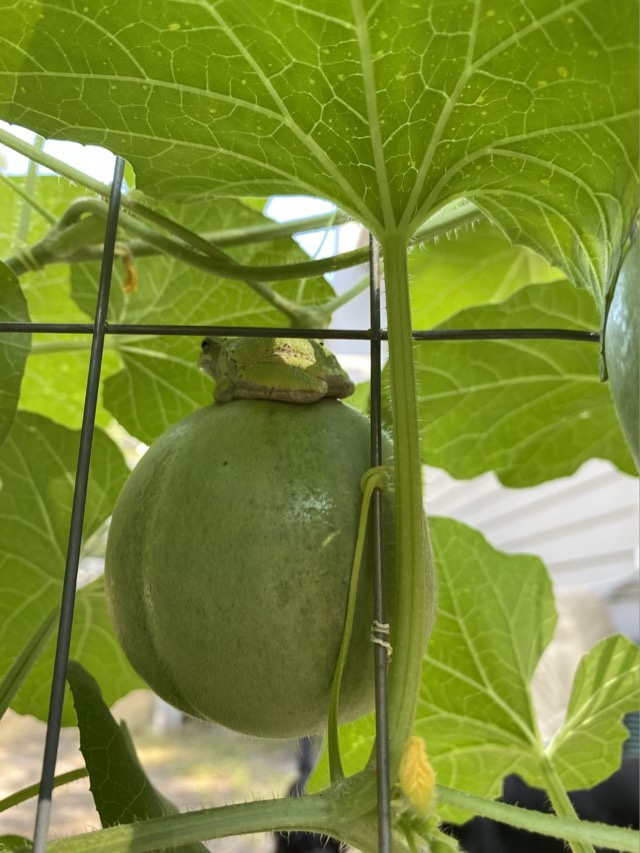
We have melons on the vine! And diligent guardians watching out for bugs.
Frog guardians on an Aspire melonAnother frog guardian
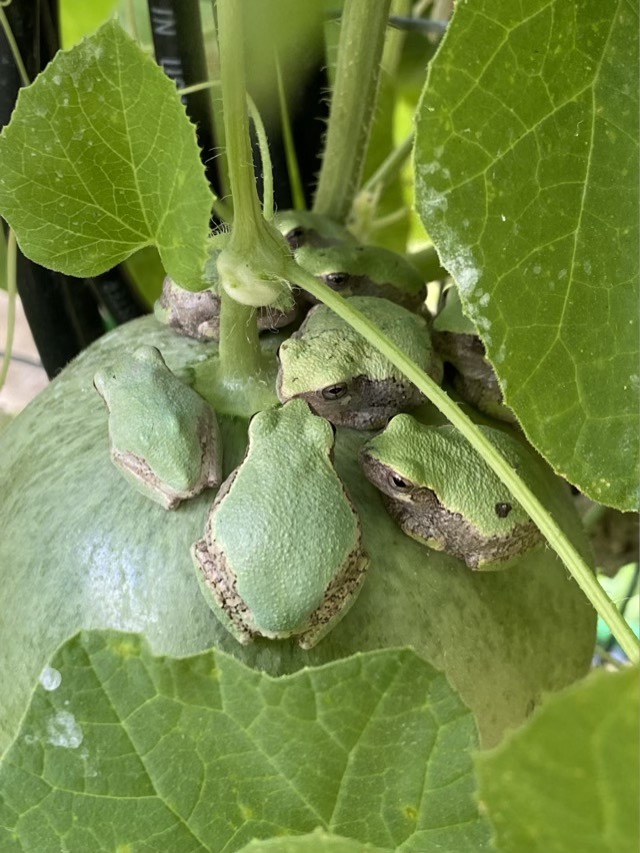
After taking the pictures, I did tie up some netting slings, then sprayed the bottom of the netting with Neem oil, where the frogs can’t patrol. Then I found the frog convention.
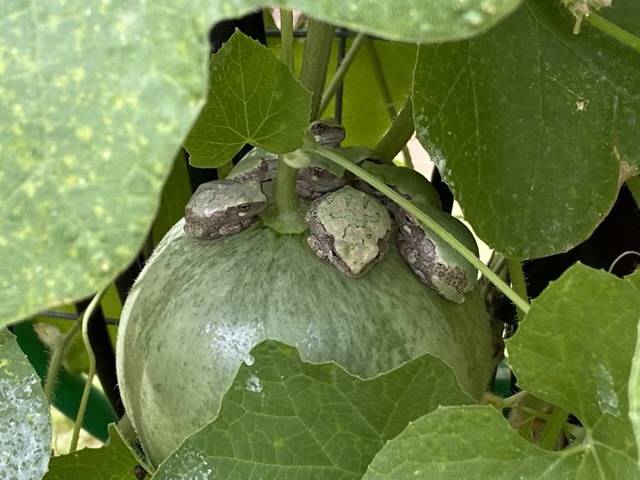
Frog melon conventionDay two of the convention, I counted 8 attendees
I wonder what they talk about in their conventions. Are there speakers giving fine points on camouflage? Maybe break out groups discussing the merits of earwigs vs slugs?
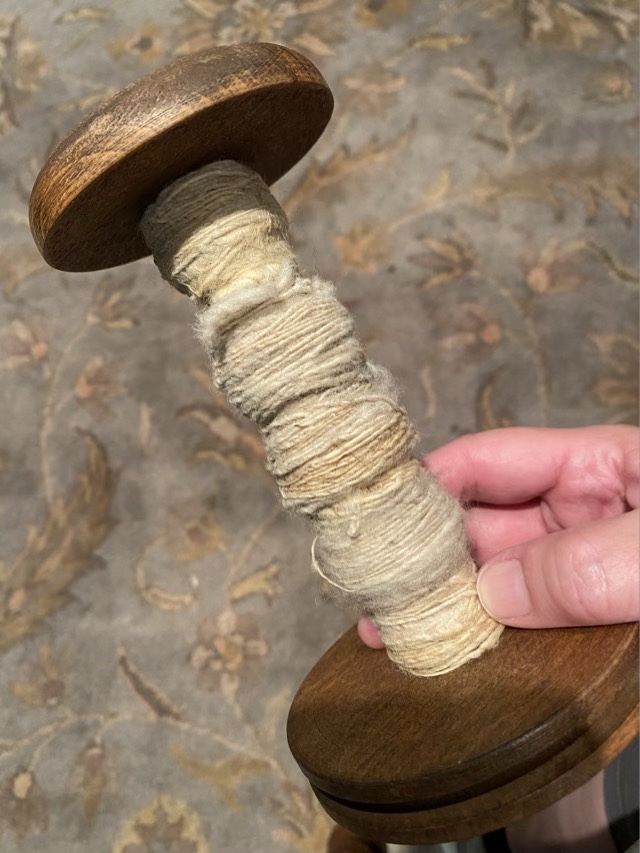
One of the bobbins that came with my vintage wheel (there were 3, which is the original number!) needed fixing. The ends had come unglued from the shaft. There was still yarn wrapped around the shaft, but it was very old and deteriorating. So the first step was to get the yarn off.
Old wool yarn (deteriorated)
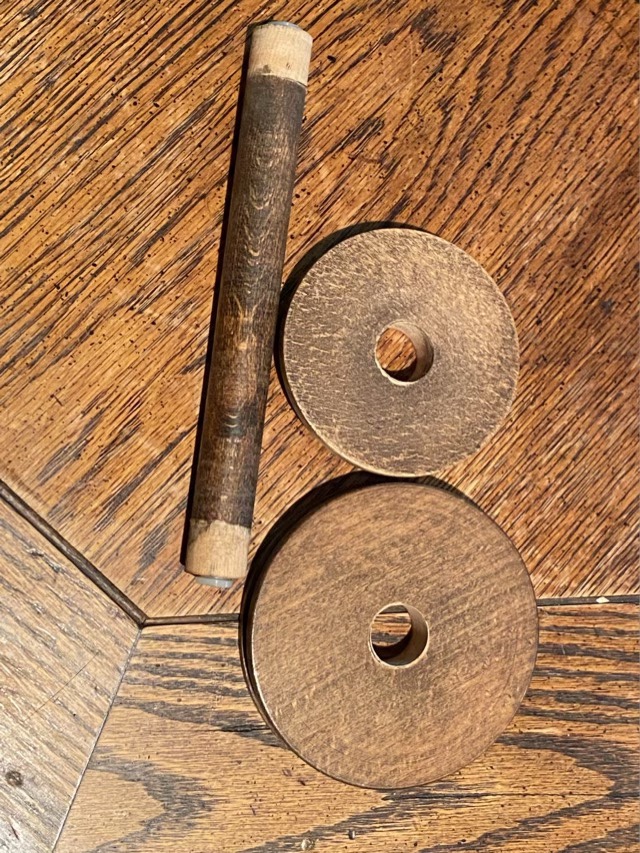
I started winding it off, but it came off in pieces, so my Dad helped and cut off the remaining yarn. I then had the three pieces separated.
Bobbin pieces
I sanded down the old glue and roughed up the surfaces to be glued, and used a wood glue to reattach the ends to the shaft. The next day I had my third spindle back and ready to roll!
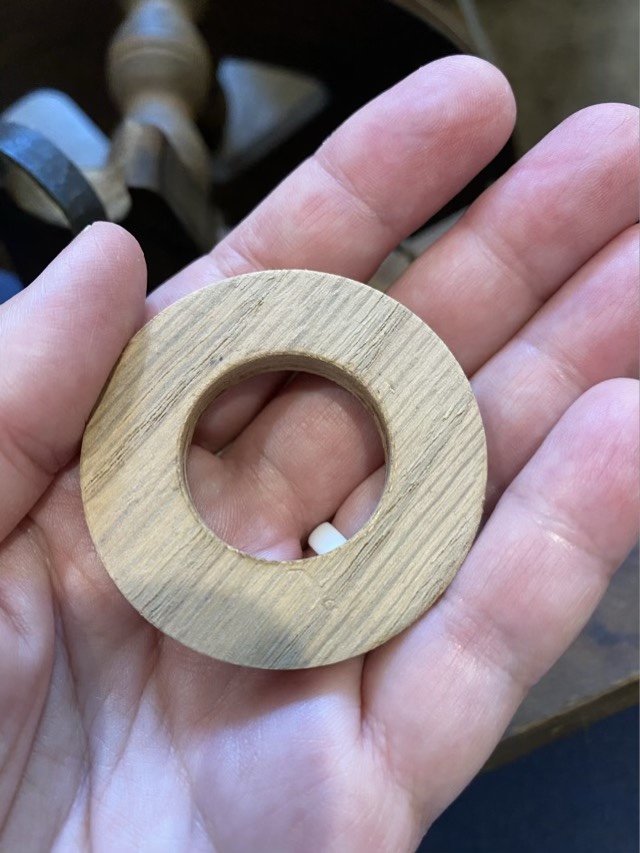
I sat down at my vintage spinning wheel to attempt to produce yarn. I had some lovely dyed roving that my youngest picked out at a weaving store to use. Getting started was a little tricky. Moving the treadle to drive the wheel in the right direction took some practice, then the flyer assembly kept popping out of place. Hm. It seems the support arm for the flyer assembly has sagged over time, making the space about a quarter inch too long. My Dad made me a quarter inch thick wooden washer to put on the flyer side. It worked perfectly!
Wooden washer made from oak using hole sawsWooden washer installed to reduce gap caused by sagging
The way the flyer assembly works is the flyer and the bobbin both spin. The flyer adds twist, and the bobbin winds on the yarn. But they should spin at different speeds. The ratio between the rate the flyer and the bobbin spin gives you how much twist is in the yarn. If everything is working right. I could not get the flyer to slow without stopping, so I went with it. I let the flyer and bobbin spin together to give me twist, then when I was ready, I stopped the flyer and wound the yarn onto the bobbin. It worked to give me yarn! And I had control of how much twist went into my yarn before I wound it up.
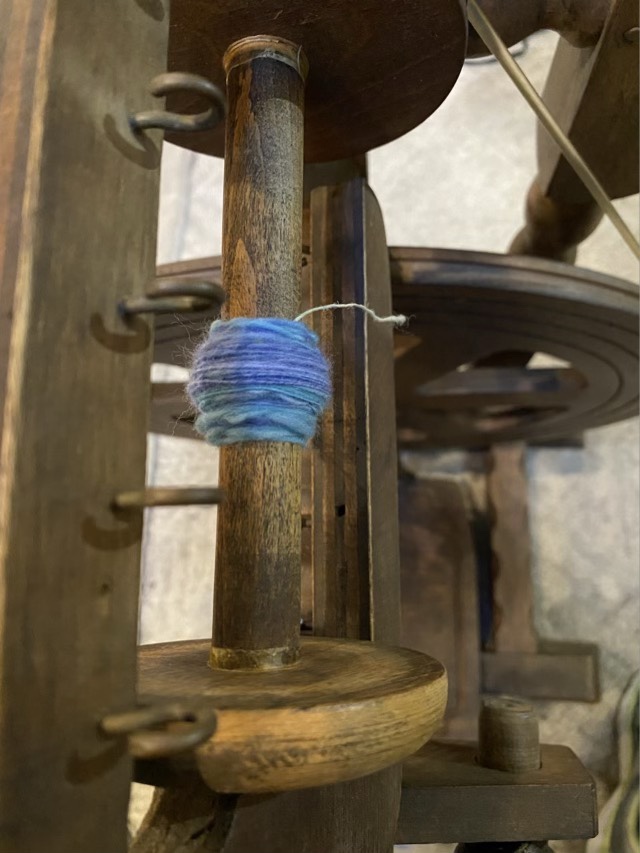
First spin wound on the bobbin
I’m still working on my consistency, but I’ve made yarn on a vintage wheel! Huzzah!
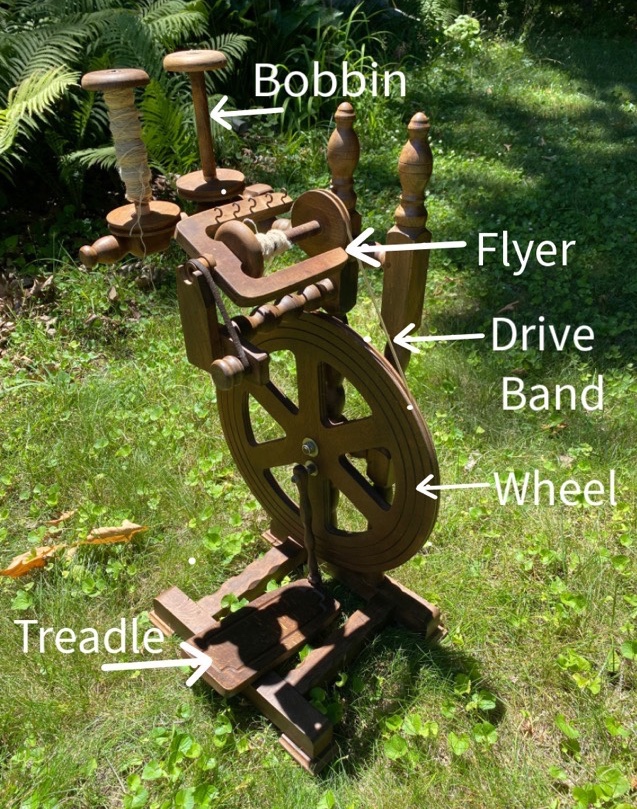
Vintage spinning wheel found at a antique store in Michigan
When visiting family in Michigan, I found what an antique store called an antique spinning wheel. On the tag it also said “Works Great!” I tested the treadle in the store and it did indeed turn the wheel, but I knew nothing about how the flyer mechanism worked. It was also the first time I looked for a wheel and the first store I tried, so I walked away and did some online research as well as visiting a very helpful store in East Lansing called “Woven Art Yarn Shop.” They had three student spinning wheels and graciously let me sit and treadle them all, and showed me how the yarn hooks into the flyer. Armed with the feel of how modern wheels work, I went back and purchased the “antique” wheel.
Dutch spinning wheel with Irish tension
I posted pictures on an historic spinning group and received the answer that this was a Befra Willy Spinnewiel made in Apeldoorn probably in the 70s or 80s. It has a single treadle, which I’ve read is better for ergonomics than a double treadle. It also has a bobbin holder on the side, useful for plying. The flyer mechanism uses Irish tension, which means the flyer has a brake that slows it down and the drive band turns the bobbin.
It was definitely a spinning wheel that was used; not only did it have a bobbin with spun wool, there is darkening on the flyer where a spinner would give it a little push to get going in the right direction.





 Critters and Craft