Starting small

I was curious about how a top down cardigan might be constructed. I purchased a knitting pattern, but was quickly overwhelmed reading through. I decided I needed to start small, with scrap yarn, so found free instructions on how to knit a cardigan for a doll. I don’t need as much yarn or time for doll clothes as I would for human-sized apparel, it gives me a good idea on how construction proceeds, and it makes my youngest happy.
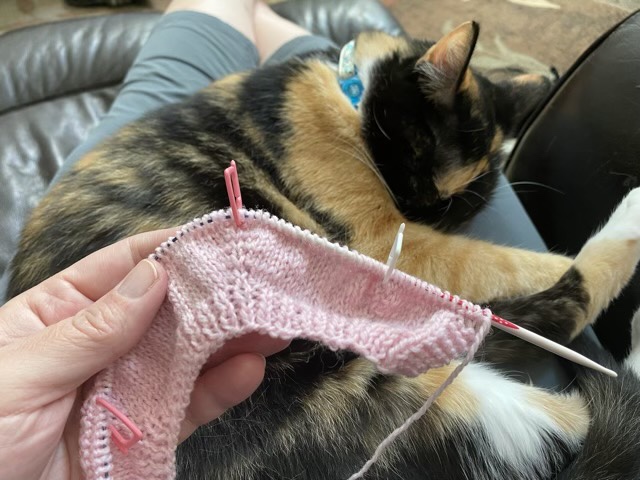
Starting a doll cardigan, top down

So a raglan sleeved cardigan knitted top down is a brilliant thing. There are less seams to match, and it is easier to do custom sleeve and body lengths (which my entire family needs). My doll sweater has some mistakes, but the purpose was to understand, not be perfect. I’m quite pleased with the knowledge gained.
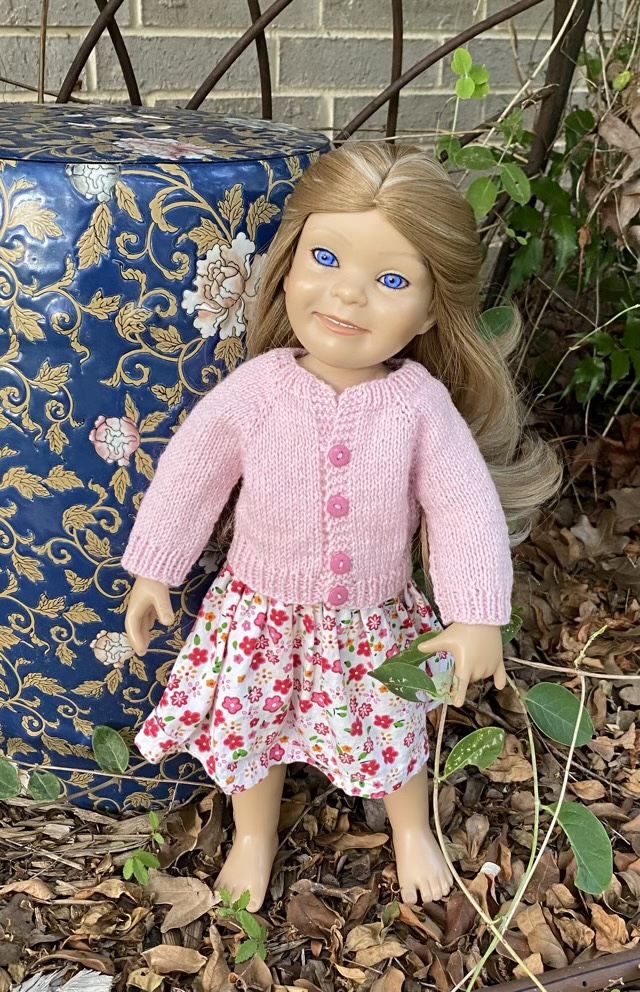
Finished raglan cardigan with pink buttons on a 16” doll

I have made human sized garments, but they have been mostly ill fitting. But I feel my knitting skills are improving, and I am ready to move on from hats and scarves. I do have two in-process projects to wrap up before rushing onward, perhaps this idea will provide motivation.

Something about doorways

There is something about doorways that invite chickens to dust bathe. I read about it in the chicken books before having chickens, and my hens definitely display the behavior. Maybe because the area gets frequently trod upon, the dust is finer and in greater quantity? Well, in greater quantity until the chickens get to it. It is amazing how much dust collects in their feathers. Ha. People have known of this bit of poultry magic for over a century, hence the use of feather dusters. By the way, there seems to have been a bit of drama in the patent process of the feather duster. Susan Hibbard, who was ultimately awarded the patent, had to fight her husband who claimed the idea was his own. If you want to follow me down the feather duster rabbit hole, here is a place to get started. I was quite surprised that feather dusters are not that old, then read that people would use whole wings to dust the hearth, but had to keep the necrotic tool from the teeth of the cats and dogs. So it is the tying of the feathers to a stick that was the patent able invention. But you still have to keep it out of reach of the cat.

Hens dust bathing in the coop doorway

Another welcome native volunteer

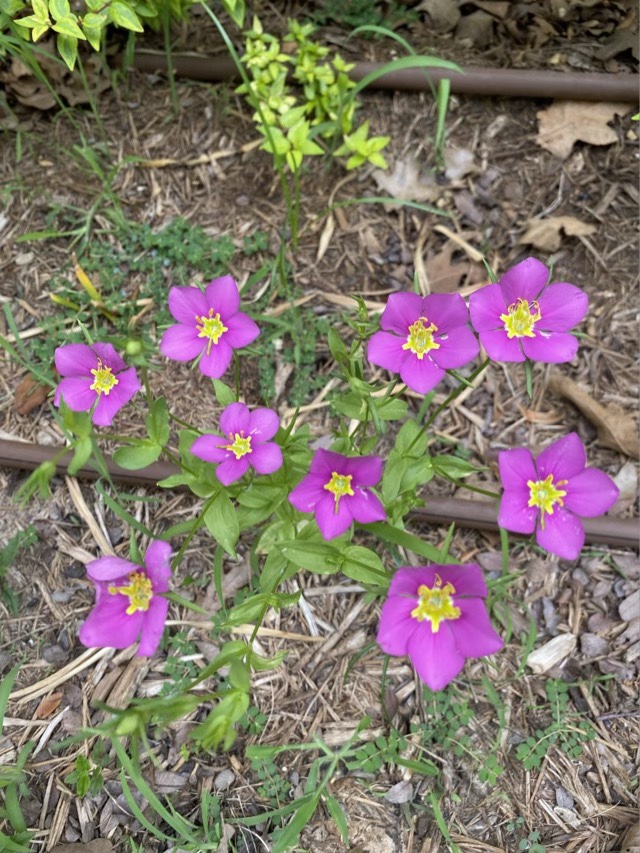
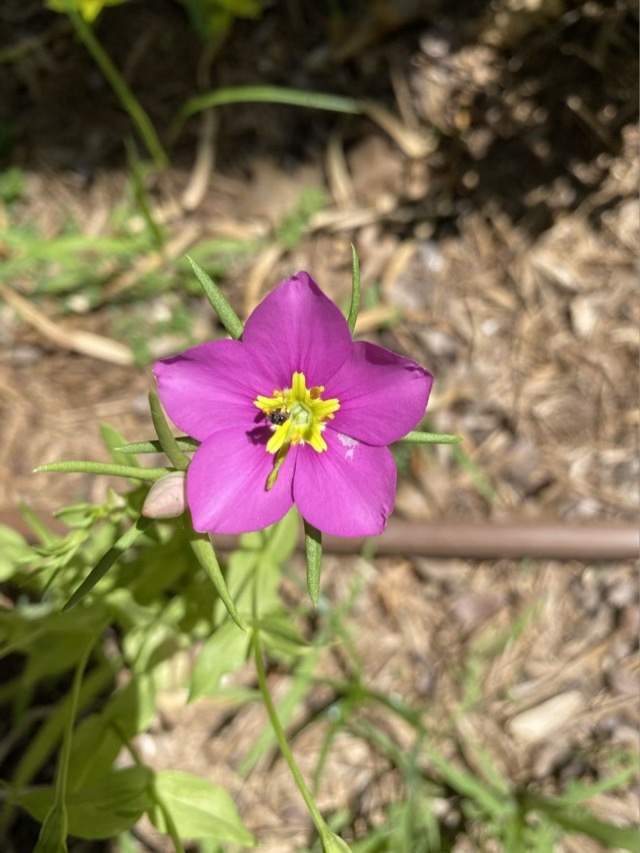
We had a strange plant come up in the front garden. Both my husband and I left it alone because we wanted to see what it would be. It wasn’t prickly or sticky, spiky or viney, in fact, it looked more like a cultivated breed, we just didn’t plant it. I’m glad we left it, because when it bloomed it was spectacular. I plugged a photo into iNaturalist and received a classification of Genus Sabatia. A little bit of image searching yielded a match: the Texas Star. Sabatia campestris, also known as a Meadow Pink, is an annual native in Texas, and, if left alone, will form clumps of flowers that bloom all summer. The petals close up at night and open again in the morning, so are longer lived. We will be leaving it just where it is and hoping it seeds itself, as it is the perfect height between the creeping blue speedwell and the artemisia bushes. We love having native flowers, and I’m glad the flower beds are attracting new natives. I’ve no idea where the seed came from, it wasn’t in any of the seed mixes we’ve spread on the property, but I’m glad it chose that exact spot to grow.

Sabatia campestris
Sabatia campestris

I have also let the native volunteer oxalis go to seed. It likes the garden bed so well that next spring I should have a nice border by just removing plants that stray.

Tassels

The time has come for the annual production of bookmarks. Each year I make book marks for my youngest’s teachers with her picture and an inspirational saying. I also make book mark tassels to coordinate with the picture. This year I’m using thin yarn from my stash, and upping the bling factor by using crimp beads to round off the heads.

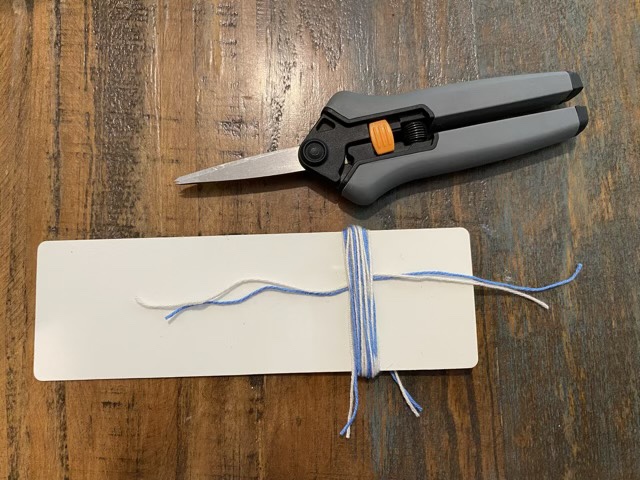
I’m using a 6”x2” piece of plastic as a guide. I cut a 6” length of both yarns, then do 20 wraps of yarn around the guide.
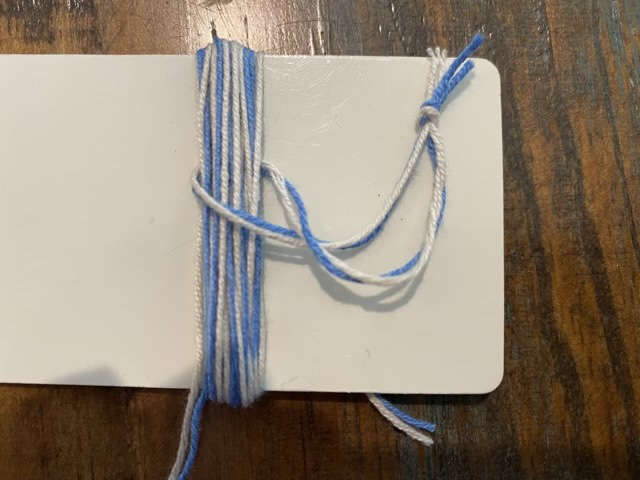
I tie an overhand knot at the ends of the 6” pieces of yarn.
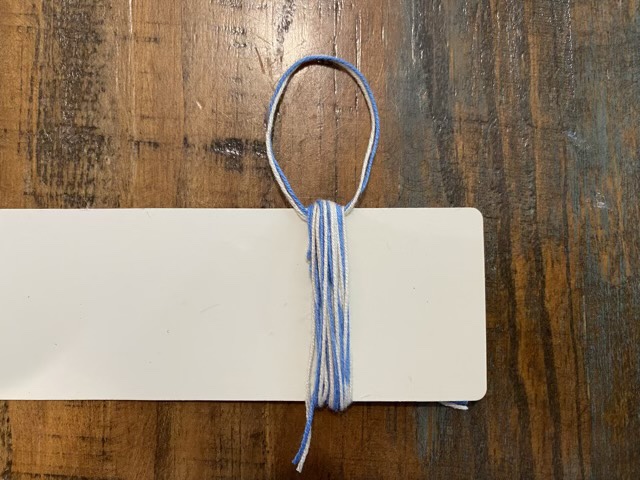
I hide the knot in the yarn loops.
Then cut the bottom of all the loops.
Using common whipping, I secure the cut bits of yarn.
Then trim the bottom of the tassel straight.
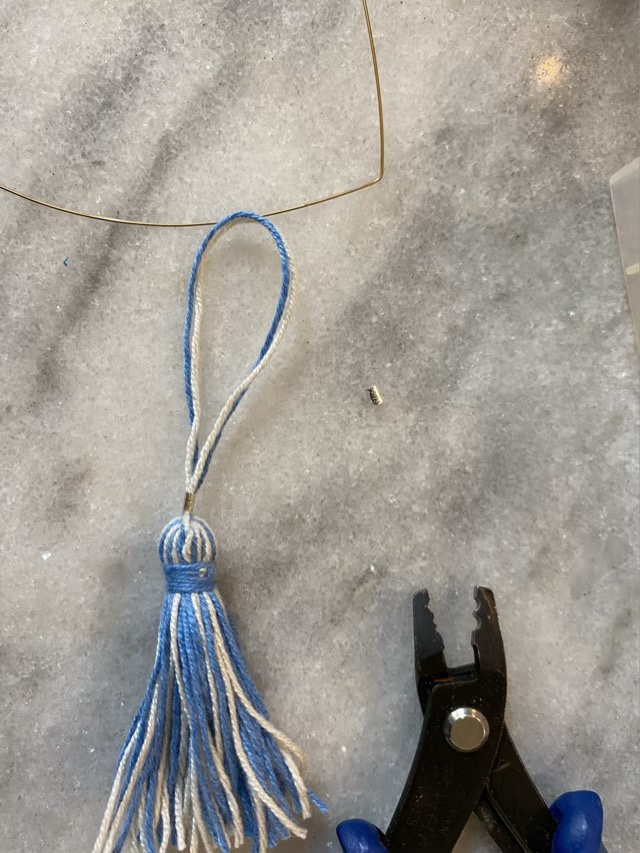
Finally, I use a short piece of wire to thread the top loop through the crimp bead and lock it down with crimp bead pliers to round the tassel head.

Tulips in a jar

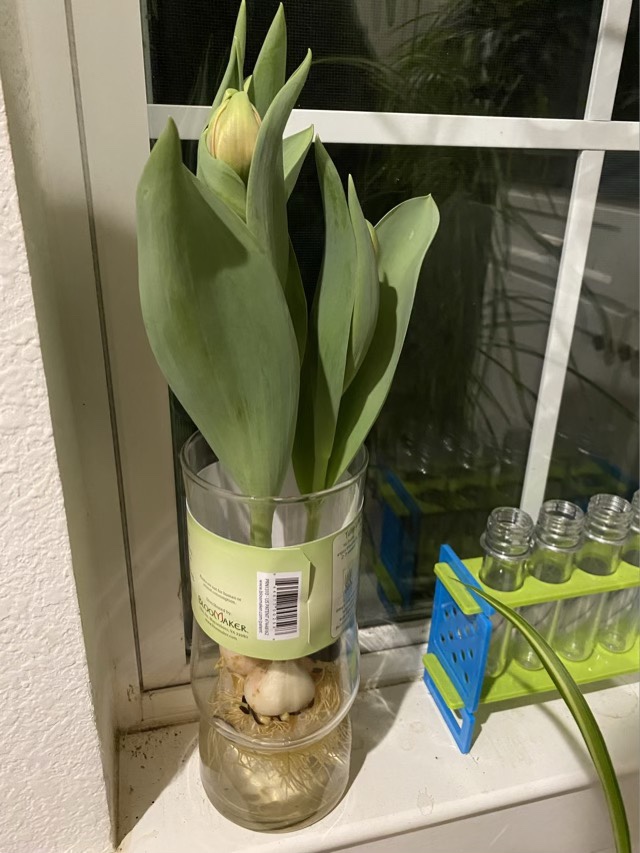
I walked past the bulbs in a jar in the store, then turned around to get one. We don’t have any tulips, and there was an orange one available on the shelf, according to the picture.

Tulips in a jar

My thought was I could reuse the container to force more bulbs, and the orange bulbs could be planted once the flowers were spent.

Are those really tulips?

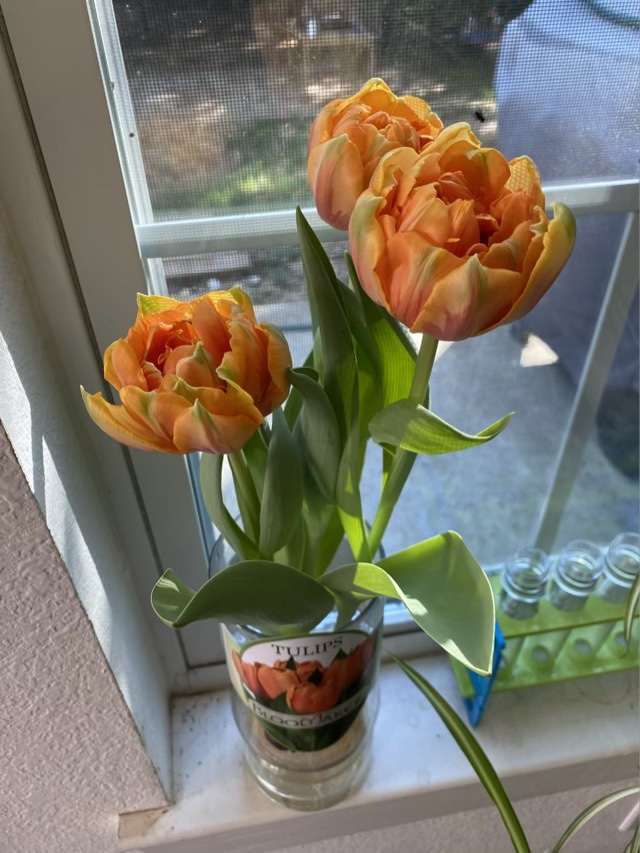
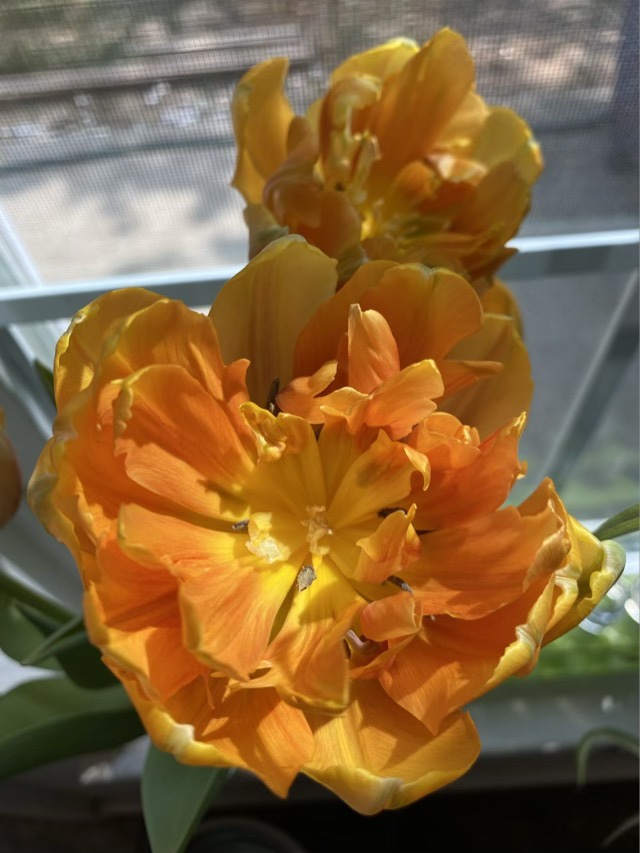
The tulips bloomed, but looked very strange, not like the picture at all, or like a classic tulip. I believe these are peony tulips, which are still tulips, but they have multiple sets of petals instead of a single set seen in a classic tulip. I’m not sure how I feel about them; it seems they are trying too hard. We have triple day lilies growing out front, and I feel the same about them. Showy, but not elegant.

The blooms are almost spent, and you can see the layers of petals

I’m not sure how the bulbs will do outside once they’ve been forced inside, but we’ll give it a go to see.