Nice job trail cam. I like your composition, and the lighting is suburb. A little blurry on your subject, but overall a nice shot.
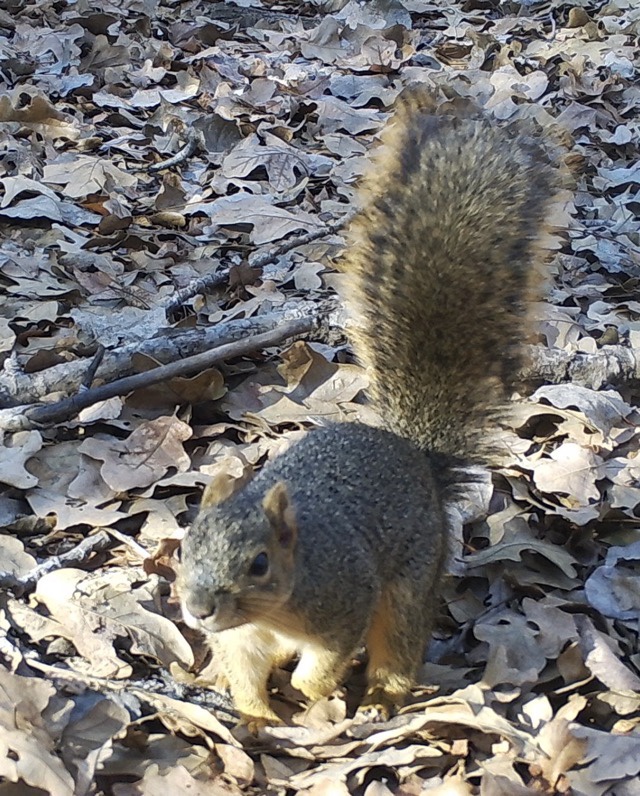

Nice job trail cam. I like your composition, and the lighting is suburb. A little blurry on your subject, but overall a nice shot.
Could it be? Have I found a knitting technique I really enjoy? Maybe! This is another thing that looks complicated on paper, but in practice is not bad at all. I rather like sliding the double pointed needle from one side to the other to start the next row; it is satisfying. In fact, I like knitting it to the edge, rather than sewing on an i-cord, not only because it is a nice finish, but it also hides the edge inside the cord. Neat! There are all sorts of instructions out there, and I admit I did resort to watching a video, so I won’t spell out the steps here. So I remember for next time, though, I used a four stitch i-cord, and used the slip one, knit two together in the back method for decreases at the beginning of a row.
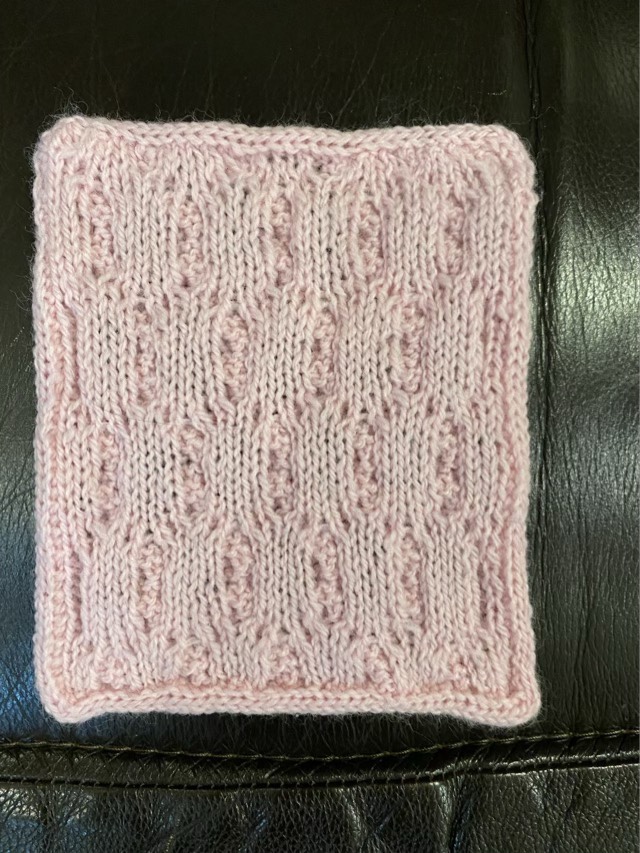
I think the i-cord coordinates well with the cables as well. (Well, there is a sentence that flows strangely. I’ll leave you to ponder the depths.)
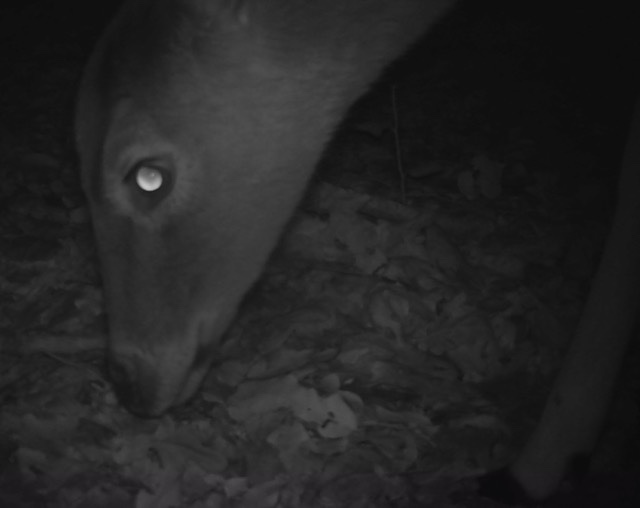
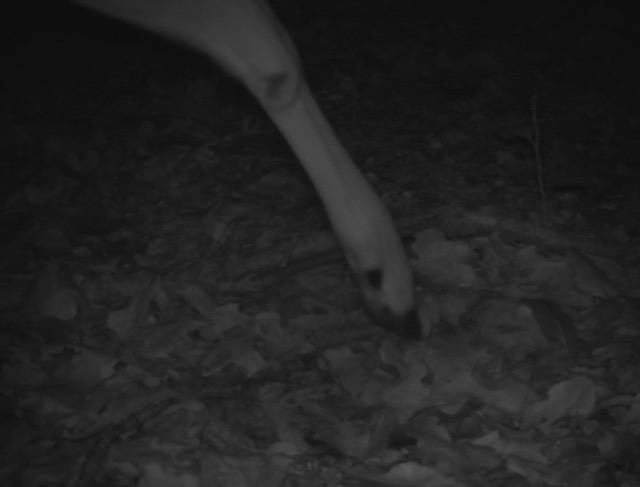
I rather like where the trail cam currently resides for the close ups of skunks and woodcocks, but it is too close for deer. We get pictures of deer parts. Oh deer.
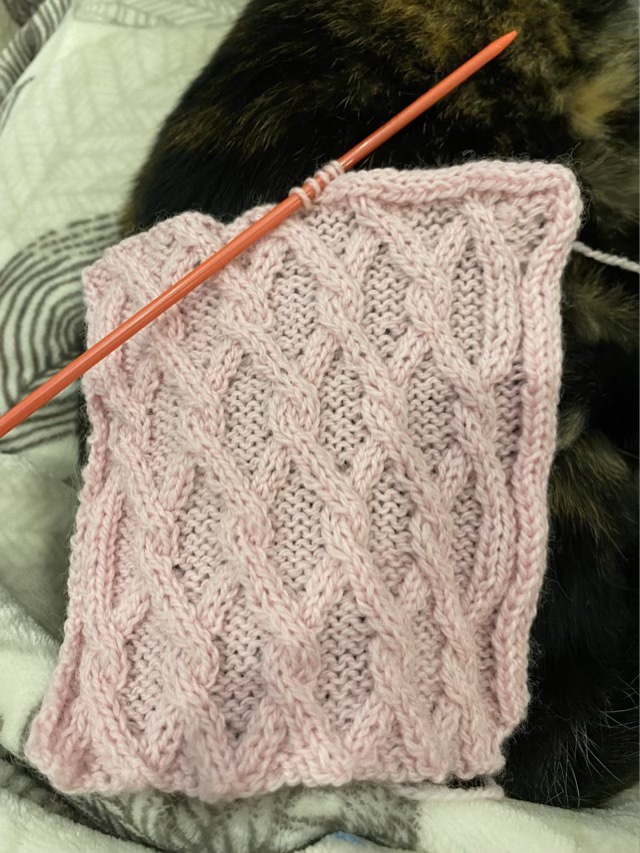
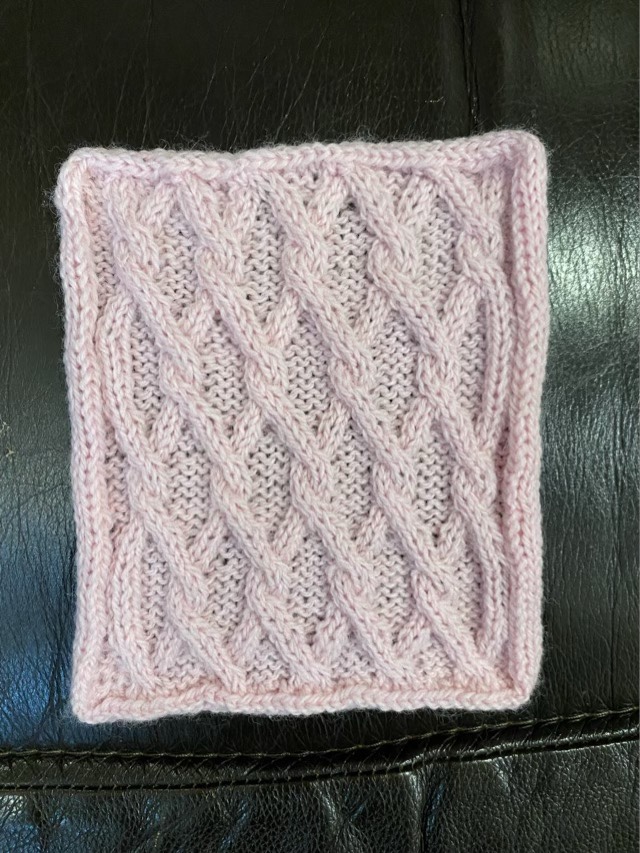
Before I delve into finishing my Grandma’s blanket, I needed to test knit the pattern to make sure I understood all the notations and how it goes together. It took me a couple goes to get the stitch count correct (take the pattern repeat and add the edge stitches, so I remember for next time), but once the number was right, it came together well.
Swatching seems to be a hated or loved knitting activity. I fall on the love side. I would rather see how the pattern or yarn behaves on a small scale before delving into a large project. I used a stocking weight wool yarn, and size 6 circular needle, which is a far cry from the bulky yarn and size 11 needles used for the blanket, but it was the pattern I was investigating.
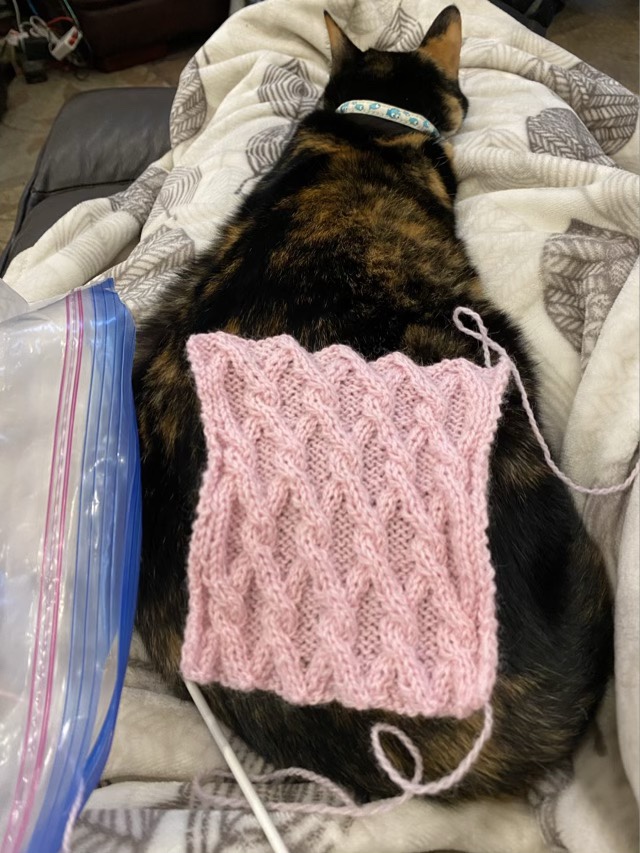
I see why my Grandma liked this pattern, and why she made it so many times. It looks complicated, but it flows well, and it is easy to “read” the prior row of stitches to figure out where you are. Then the back row just follows the previous row’s stitches, and goes in twos or fours predominately, which makes checking for errors easy. The swatch came out OK, and I feel comfortable with the pattern. I do think I will finish off this small piece with a suitable edging, and it can join the doll house blanket army.
Here is another new appearance on the trail cam footage: a skunk!
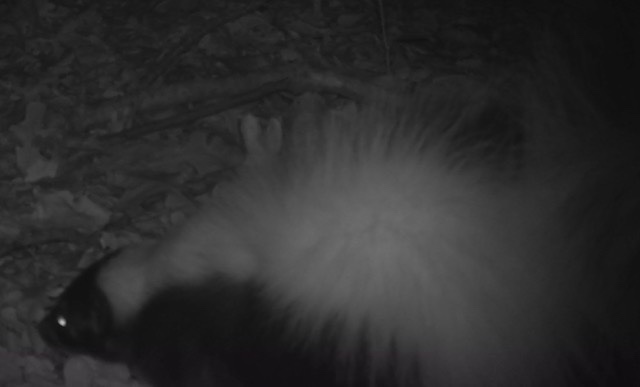
We have certainly smelled when one of these guys has gone off in the neighborhood, and have occasionally seen one trundling about, but haven’t had the trail cam capture an image until now. Neat.
 Critters and Craft