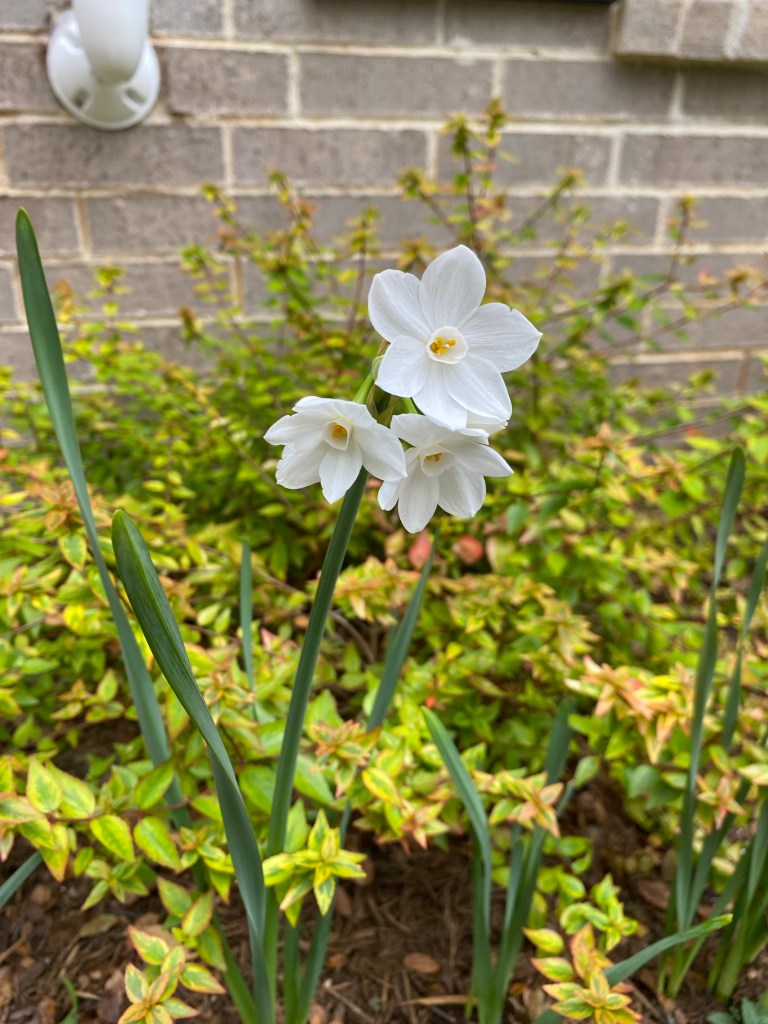
I planted paperwhite in September in the hopes of holiday blooms. Some have decided to bloom now, while others are holding on. Maybe I wasn’t consistent with planting depth. Hm. Still, it is nice to see the delicate white flowers in the front garden.
Paperwhites in bloom in November
The Japanese Honeysuckle is putting out an occasional burst of blooms.
Japanese Honeysuckle in bloom in November
The Shasta daisy also has a handful of flowers to show off.
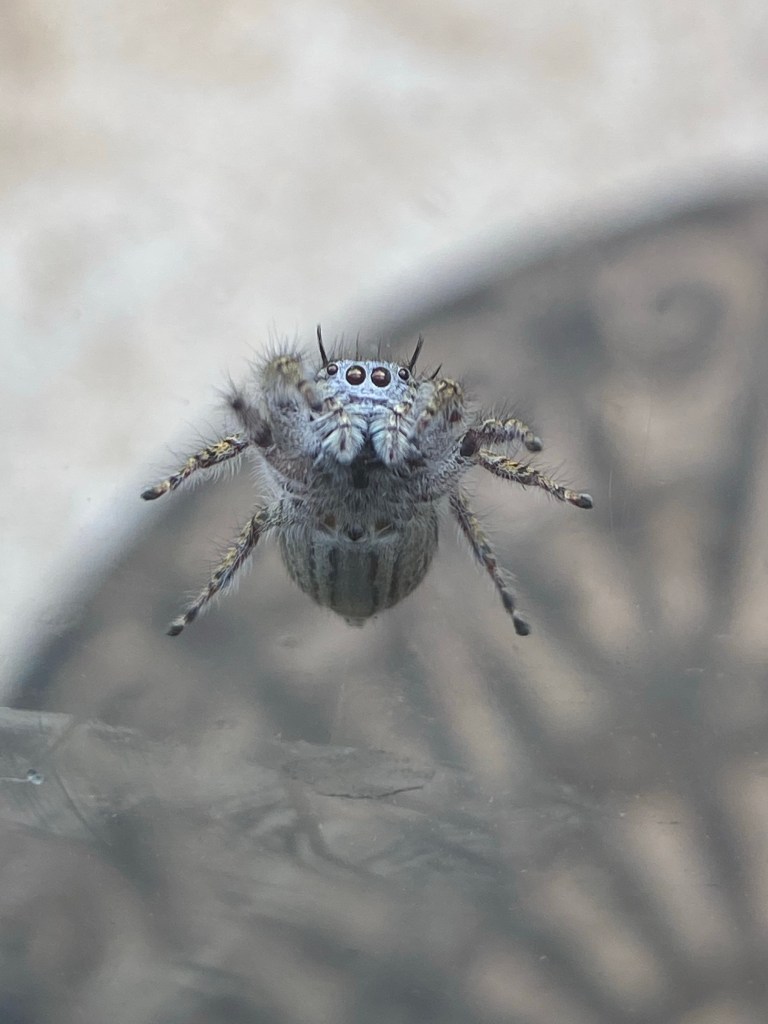
Well hello there little guy. I don’t suppose I will have occasion to get a picture from this angle very often, so I’m going to snap a shot, OK? Then I’m giving you warning that I’m opening the door to let the dogs out. Don’t run towards the door jam, it is squished death for spiders and geckos, but I promise I will check before I close the door since you were so kind as to let me capture your image this morning. Nice eyelashes, by the way. Very chic.
High Eyelashed Jumping Spider on the other side of the glass
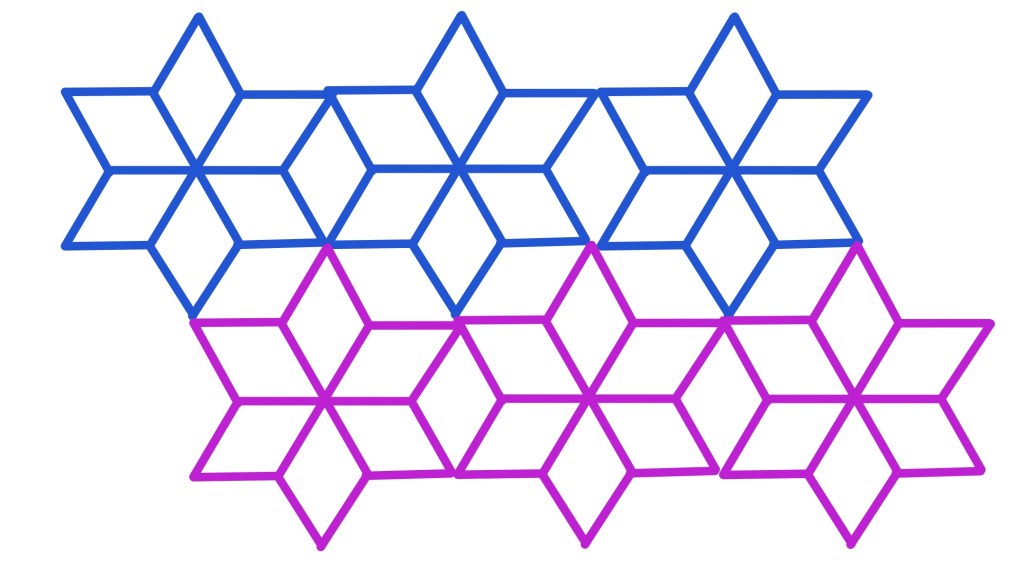
In the pursuit of a möbius scarf that has a center line that stretches with the fabric, I have twisted my brain inside out, backwards, and forwards. I finally sat down and drew what I wanted.
Tessellated parallelograms
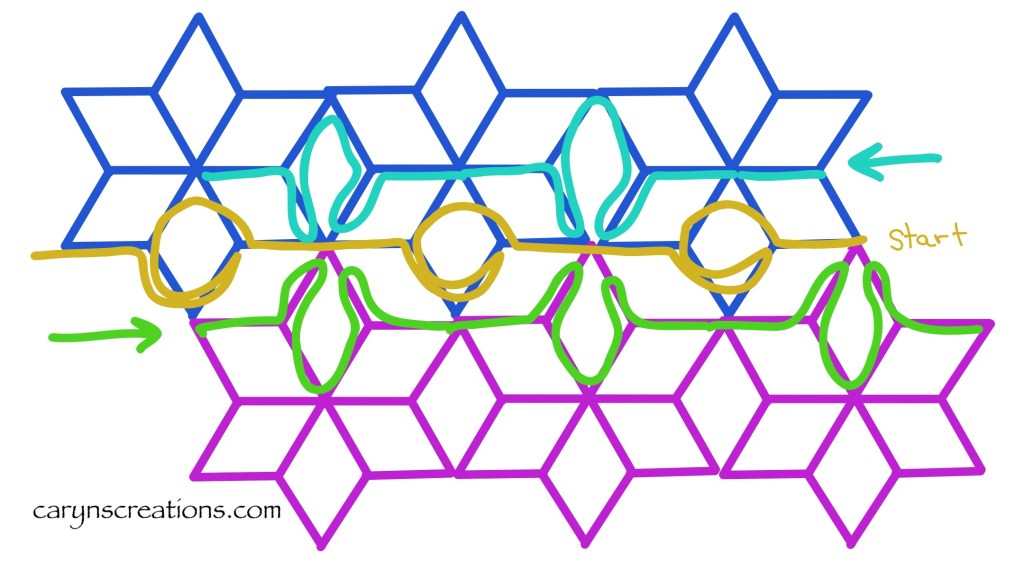
I used different colored lines to trace how the crochet stitches should go.
Breaking up the tessellation into crochet-able lines
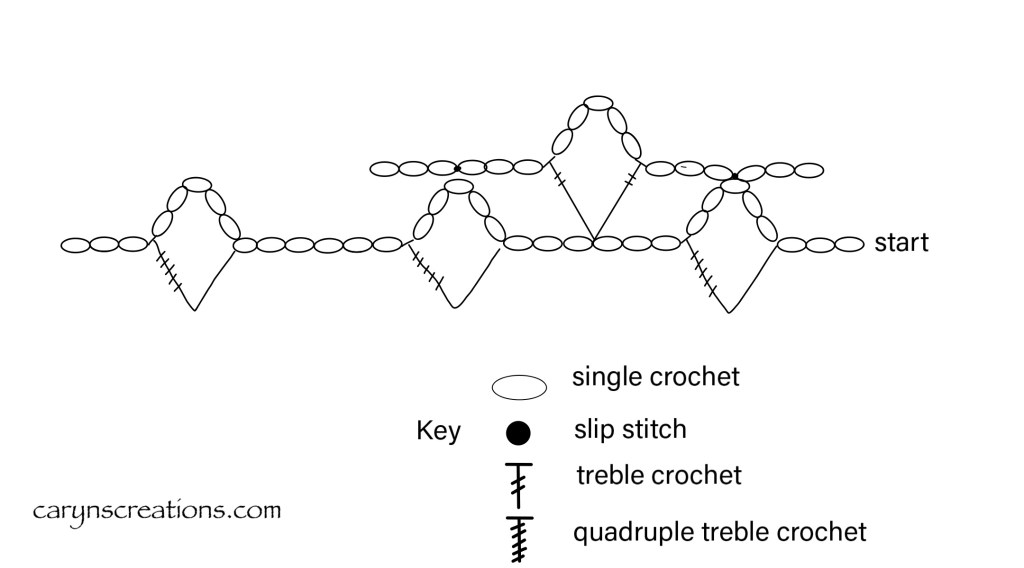
With a little experiment to verify my thought process, I then used crochet symbols over the sketch to solidify the plan.
Capturing the essence of the pattern with crochet symbols
The foundation chain is not strictly a chain, but a connected series of loops. Most crochet patterns start with “chain x number”, but not this one. I only illustrated a single repeat for the subsequent rows, as that is all you need. Each row is offset from the previous row. I’m not going to give a specific pattern for a specific size or number of rows, but I will attempt to put into words what my drawing shows, for those that may need it.
quadruple double crochet (qdc): yarn over 5 times, insert hook into work, (yarn over, pull through two loops) six times
Treble crochet (tr): yarn over 2 times, insert hook into work, (yarn over, pull through two loops) three times
Foundation chain (row 1): chain 8, *quadruple double crochet (qdc) into the fifth stitch from the hook, chain 11, repeat from * to desired length, qdc, chain 3, join with a slip stitch to beginning chain.
Row 2 (and all subsequent rows): chain 6, mark third chain, slip stich in 5 chain loop, * chain 3, tr into middle of six chain length, chain 5, tr into same stitch, ch 3, repeat from *. Chain 3, tr, chain 5, join with slip stitch at mark, 3 slip stitches to get to next starting point.
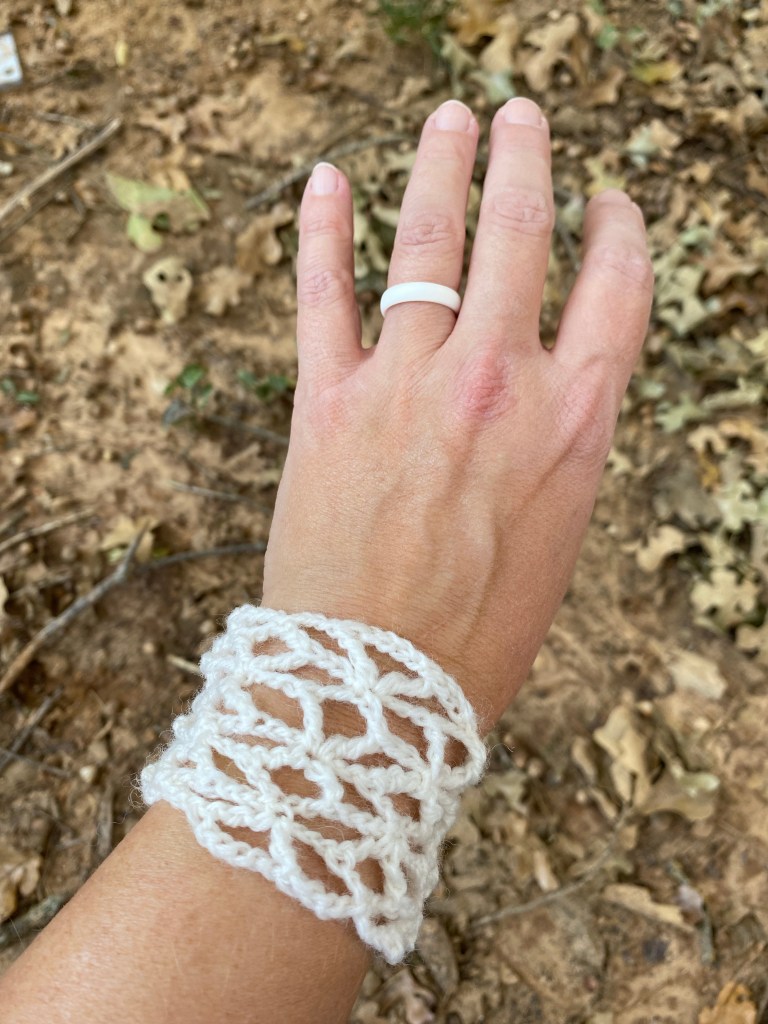
To make this Möbius, when you come round to the mark, give the foundation chain a slight twist and crochet on the opposite side. Each round will go on both sides of the work (the magic of Möbius).
Wrist-sized test pieceWrist sized test piece showing the twist
I’ve started to spin the Shetland wool batt on my walks. I gently separated narrow strips from the large batt, and loaded my arm bag with what I thought was enough to last me one or two walks. Five walks later, and I am still on the initial load of fiber. Granted, I am spinning it finer than I spin alpaca, but wow. Even though it is slow going, I really, really enjoy watching the twist move into the fiber, and the pleasant way the wool drafts out. The plan is still to make a two ply lace weight yarn. I’ll have to test the wraps per inch (wpi) after I ply to see just how fine (or not) I’m spinning. Lace weight measures at 30-40 wpi, while sock or fingering weight measures at 18-30 wpi. I suspect I will have a fingering weight when I ply, just looking at the singles on my spindle.
Spinning Shetland wool with a drop spindle
I could probably spin even finer, but I would probably have to use a supported spindle, which I have not figured out how to do while walking.





 Critters and Craft