Lathe

My lathe is up and running! My husband got a new hammer drill to make the drop-in anchor holes in the concrete slab, and bolted down the lathe in the garage so it can be used. Joy! Now I have to relearn how to use it. The first two attempts were very frustrating, and resulted in two broken spindles. After consulting the schematics, it turns out my tool rest support was upside down (cue forehead slap), which meant the tool rest couldn’t get close to the surface, which increased the chatter and force applied to the wood as it spun. That fixed, I was able to turn an OK spindle, but the proportions were not to my liking. I had made the neck thicker to help avoid breakage there, but made the head wider as well, which made it hard to flick into motion. Attempt four proved again disastrous and the spindle broke on the lathe. Well, I had the tension too tight with the center supports and put undue pressure on the wood. Attempt five went better. My chisels could rest close to the work, the wood was balanced better in the supports, and I switched to sand paper when I started getting nervous about the diameter of the neck. I am not comfortable parting the work on the lathe, so cut the support ends off with the spindle off the machine and finished the tips on my band sander. I used my favorite spindle as a guide, but need to work on my precision as my finished dimensions were not the same (honestly I eye-balled it, I do have rulers and gauges to make the process of reproduction consistent).
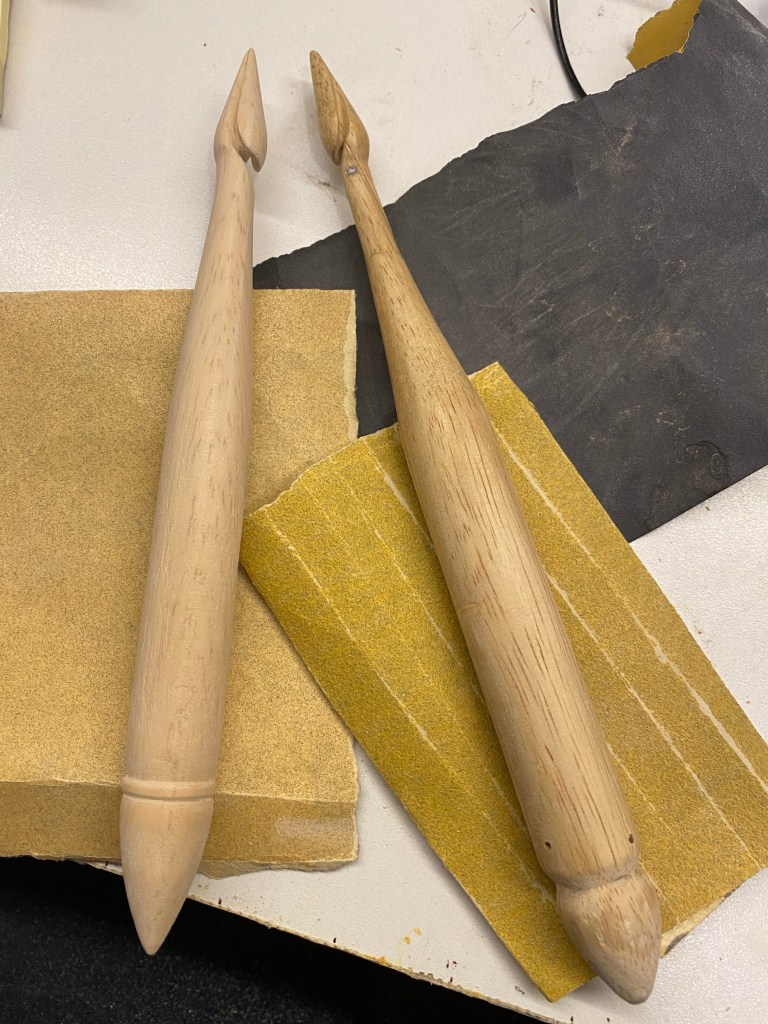
Newly turned spindle (left) and my Frankenstein spindle (right)

I’m very excited to be back to wood work!

Pumpkin set up

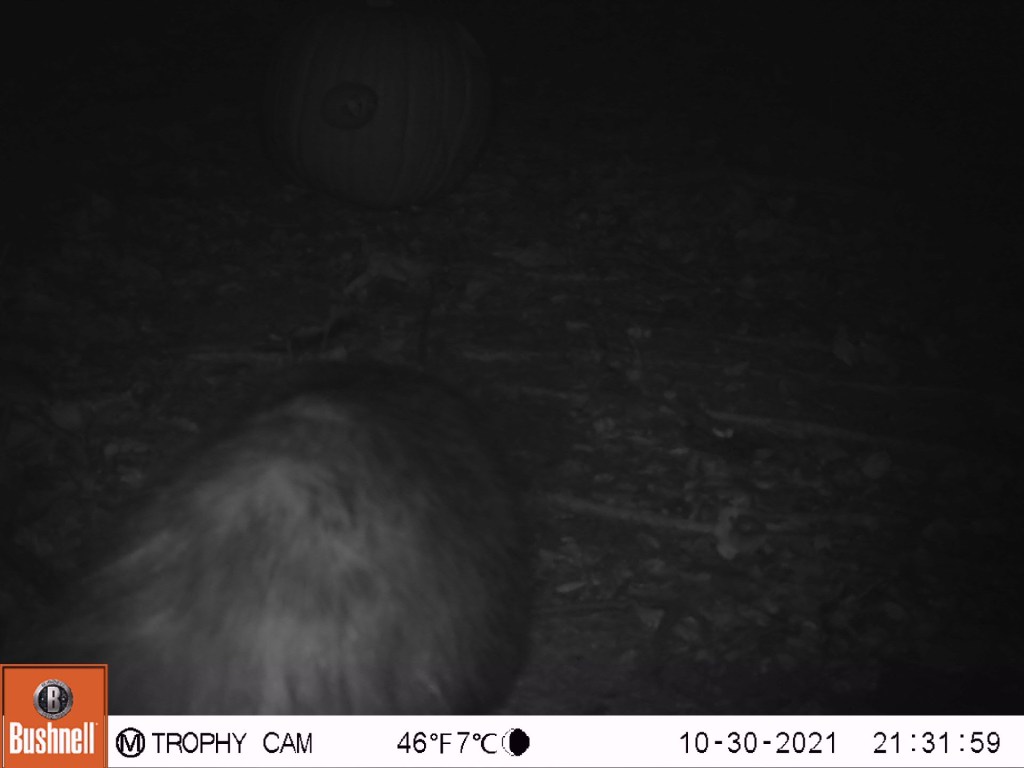
We set one of the pumpkins out in the back woods, with some holes carved for wildlife access, then setup the trail cam to see if any thing came to eat the pumpkin. I sort of forgot about checking it for awhile and when I did go out, I found the camera knocked over lens down, and the pumpkin whole, but all the seeds gone.

Trail camera knocked over in front of the pumpkin

I checked the memory card and there was only one photo of a critter. I believe this is a picture of the back of a raccoon headed toward the pumpkin. Or maybe a possum, but it would be one of the big possums. Maybe the beastie took exception to having pictures taken, or was looking for more seeds when it knocked the camera over. Bummer.

Critter headed toward the pumpkin back in October

Smallest melon

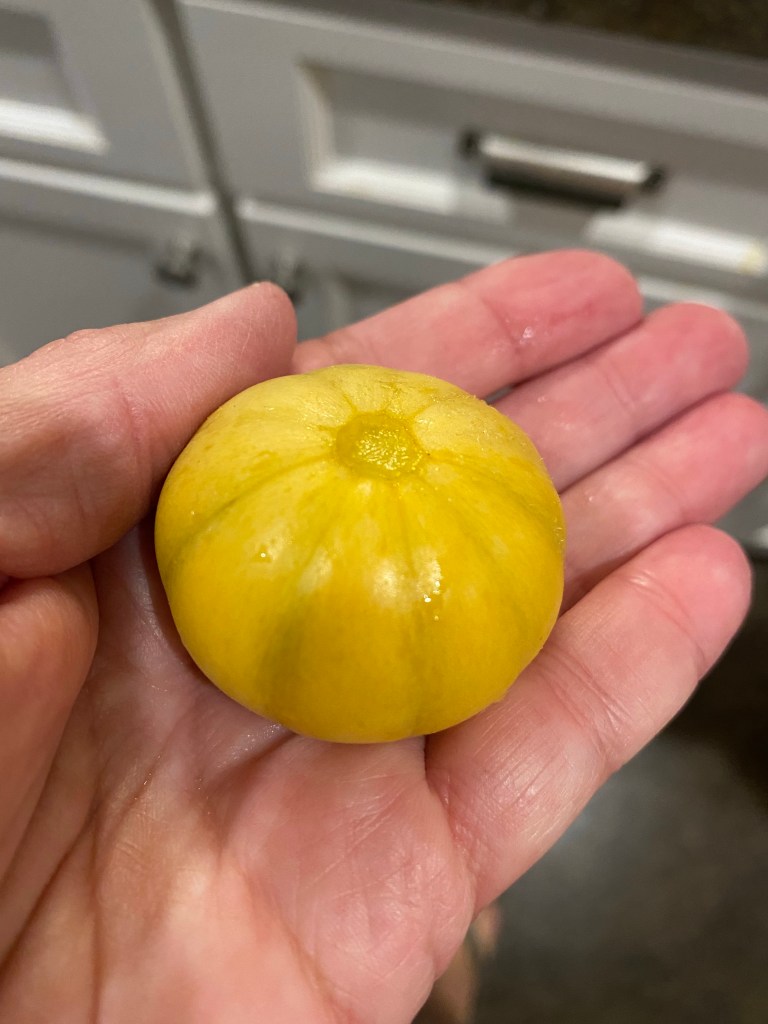
Another melon ripened on the Aspire vines. An itty bitty melon. It tasted alright, all one bite of it, but it was mostly seed. I gave the rind to the dogs because it was soft and still had some flesh on it. Missy was not impressed, so Griffin ate both halves.

Tiny Aspire melon

I thought this was the last of the melons, but walking by I spotted another on a live vine amongst the dead leaves. Yes, in November from a plant I seeded in spring, that was supposed to set fruit all at once. I put a sling around the developing melon. We’ll see what happens.

Aspire melon on the vine in November

Cedar

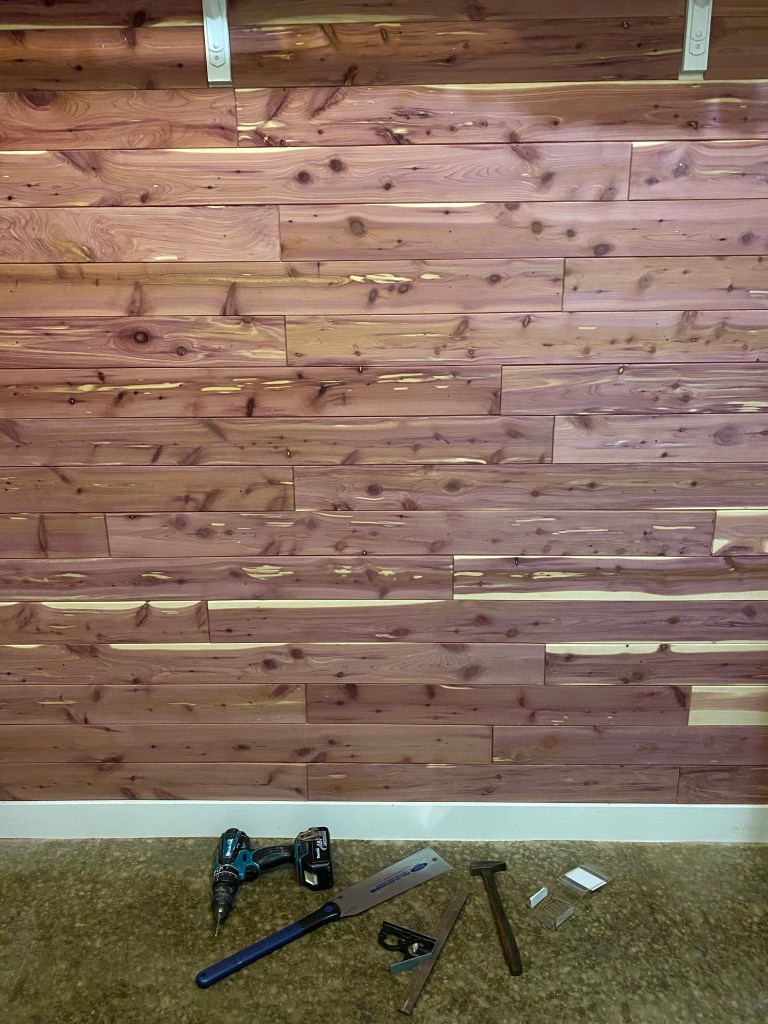
My plan to reduce the chance of further moth infestation is to line one side of my craft room with cedar planks. Aromatic cedar is a natural pest deterrent (and it smells really nice). My craft room is really the house’s master closet, but it is a 10×10 room and we don’t have that many clothes, so roughly 2/3 is craft storage with a small tool bench. The plus side of all this is that I was forced to clean out and reorganize the room, which has been on my to-do list for months. Once I had the back wall clear, I installed the planks over the dry wall using panel nails. It wasn’t a difficult job, and I was able to complete it in a few hours over a couple days. I could then get to the rearranging of the space, which took longer!

Aromatic cedar planks installed on the wall

I did pre-drill each nail hole so I didn’t split the wood. I used my favorite pull saw to cut the pieces, which was honestly easier than taking each piece out to the garage to cut with power tools. The planks are thin, and cedar is fairly soft, so cutting was easy. I did buy painted panel nails, which wasn’t necessary, as the paint came off the head of the nail when it was hammered in.

I’m hoping that this will discourage moths from settling in to my fibers and fabrics that are stored in this room.

Clothes moths

I went to get a portion of my new gray alpaca fleece, and when I opened the bag, the fibers were crawling with little white moths. Ugh. I immediately took the bag outside, then checked my other bags of fiber. It seems that the infestation is currently only in the one bag.

Clothes moth in alpaca fiber

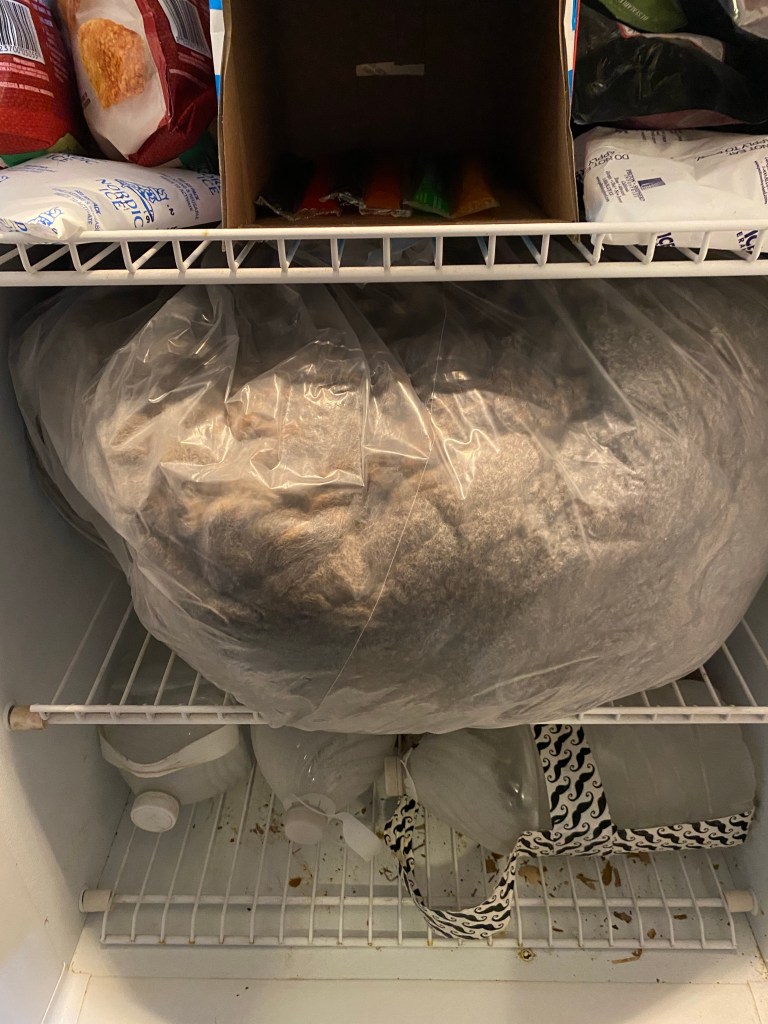
This is my first experience with a clothes moths infestation, so I did some internet research (I know, internet knowledge, but I read several articles and went to a few different websites). I decided the freeze method was the best route for me, mainly because I have freezer space and don’t want to use chemicals. I put the whole bag in my deep freeze and the plan is to leave it in there for at least two weeks. When I’m up to it, I will take it out of the freezer and wash the lot of it (so it may be longer than two weeks, that is a big job). But I’m all creepy crawly now and concerned for the rest of my fiber stash.

Bag of alpaca fleece in the upright freezer