
Happy Father’s Day

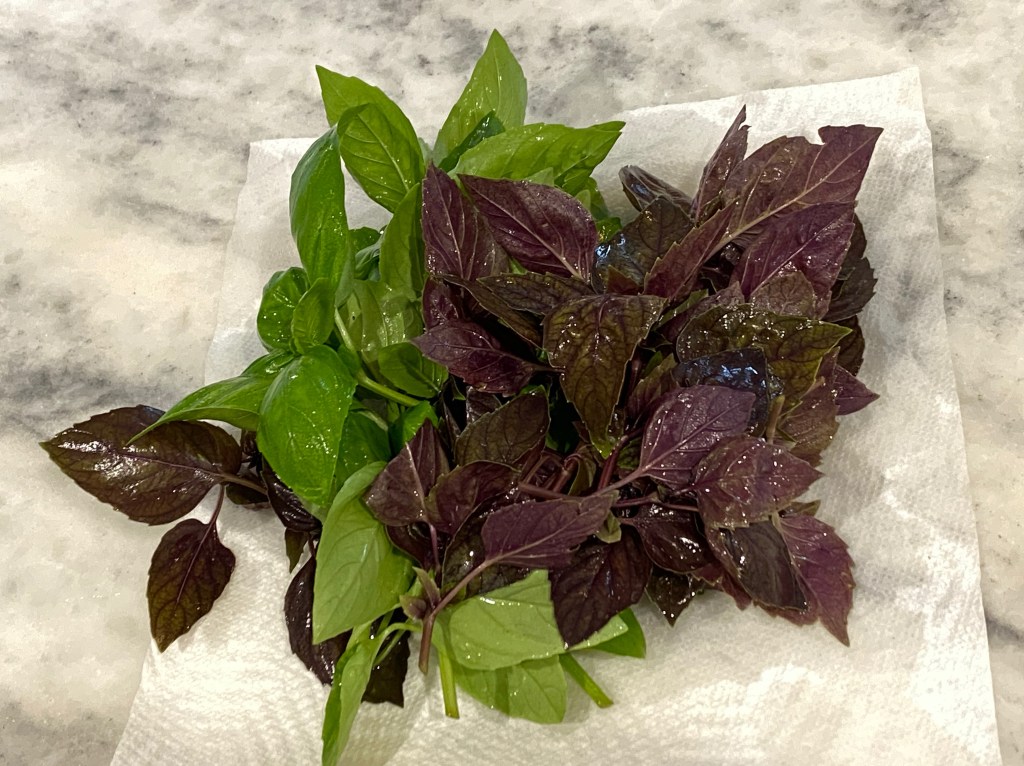
My basils have finally grown enough for harvest! I have a Thai Basil Chicken recipe that I love that calls for three cups of fresh basil. My harvest wasn’t quite there, but the dish still tasted good. I planted four pots of basil with three varieties: sweet, red, and Genovese. All of the Genovese was nibbled away by something, but the sweet and the red are doing very well.
I’ve been wanting to make a pocketed bag for awhile. I decided to use some excess fabric thus reducing the stash as well as making something useful!
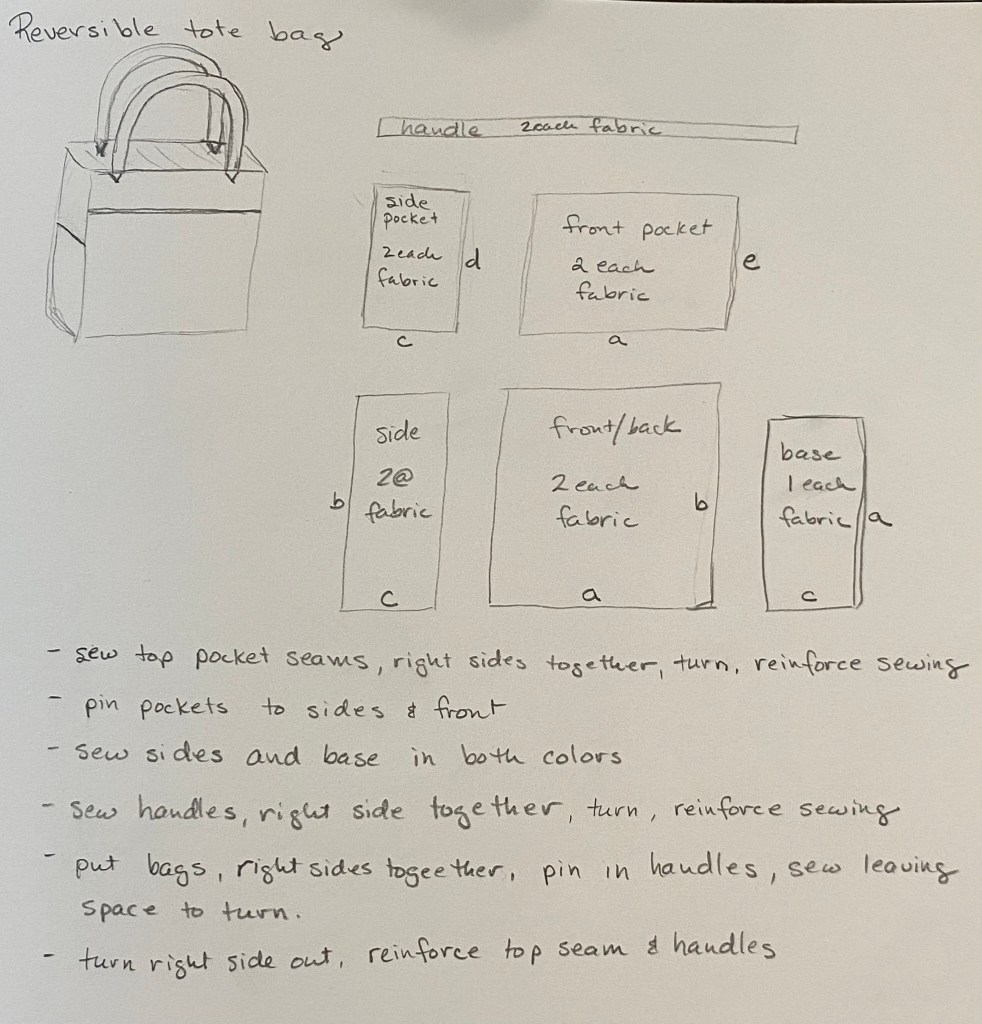
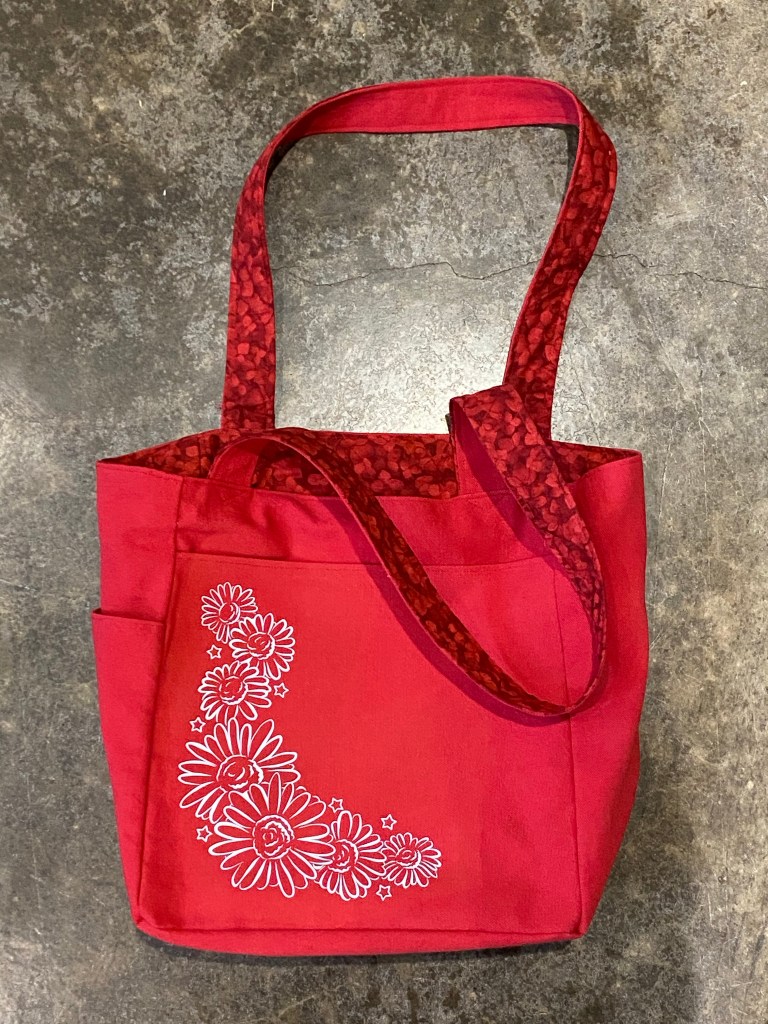
When approaching a sewing project, I usually collect my thoughts by doing a sketch and a rough outline of the steps. Then I use paper to make a pattern. This basic idea can be adapted to different sizes, but my primary goal was to make the side pocket fit a bottle of water (it is good to have priorities). Since this is size independent, I’ll give the outline of the steps below. Pictures of the finished project are at the end of the post.
1. Choose two coordinating fabrics. Iron fabric, then cut out pattern pieces.
2. Sew one piece of each color side pocket together at the top, right sides together. Turn right-side out and sew along the seam close to the edge. Repeat for all pockets.
3. Place the side pocket with right side out on the matching side panel. Place the side panel with pocket right-sides together with the matching bottom. Sew the seam, reinforce the area at the top of the pocket by going back and forth. Sew the plain side panel to the opposite side of the bottom.
4. Repeat step 3 with front panels.
5. Sew up all four sides, from corner to top. Clip the corners.
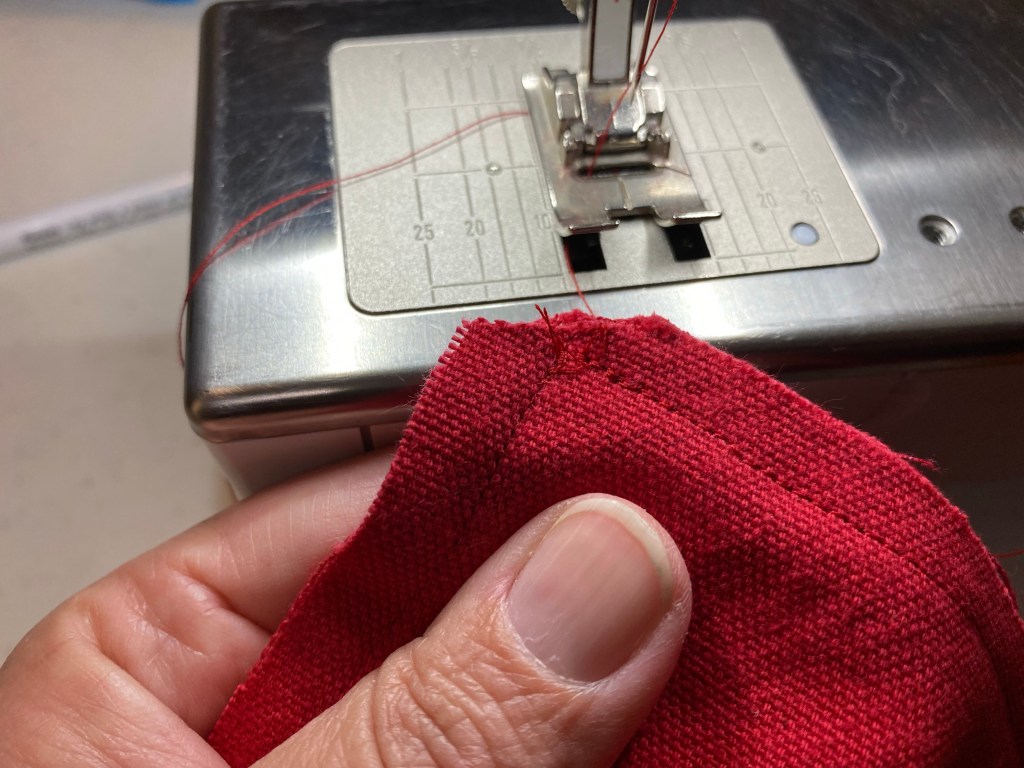
6. Repeat steps 2-5 for the other fabric color. I prefer to have one pocket per panel, so be careful of pocket position (yeah, I had to do some seam ripping).
7. Sew handles right sides together, then turn right-side out. Press. Sew over seams, close to edges.
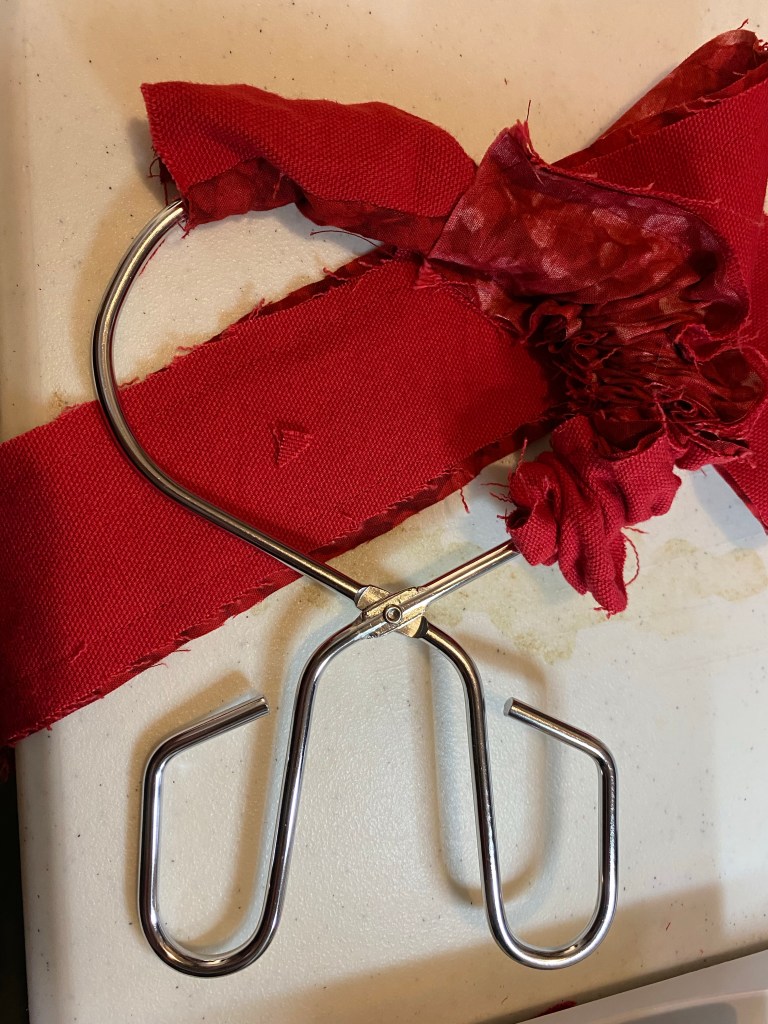
8. You should now have two one-sided bags and two handles. Place the bags right sides together and pin the handles right-sides together between the bags (loop tucked inside). Sew the top seam, but leave about 4-5” open for turning. Be sure to go over the stitches securing the handles a couple times.
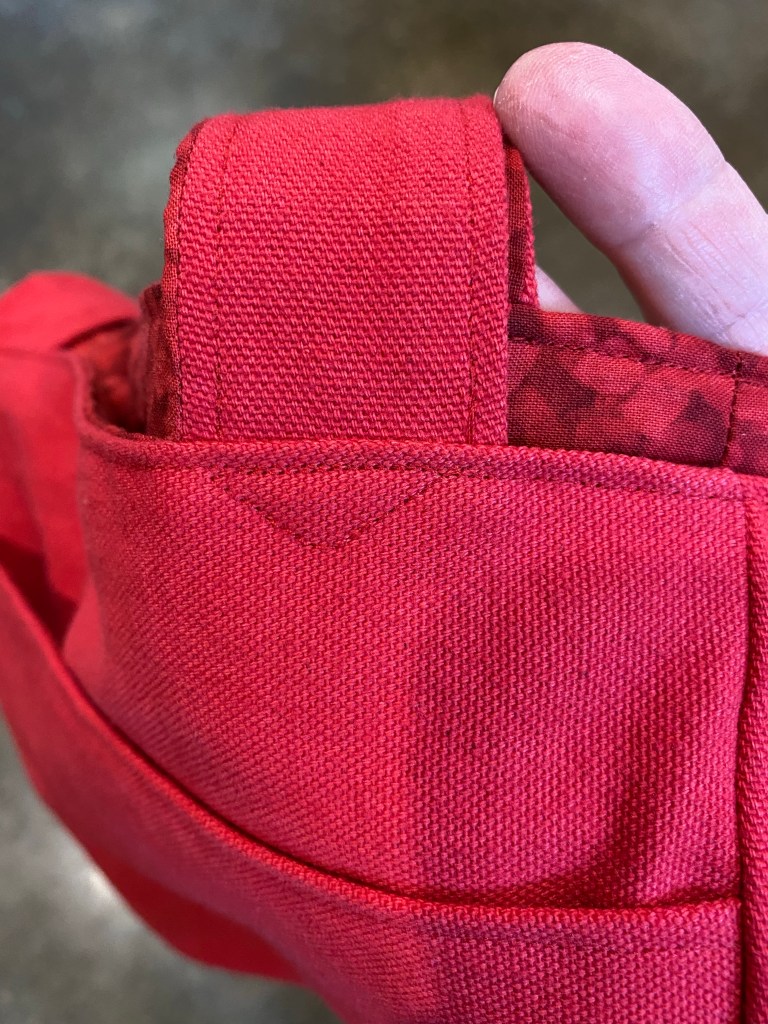
9. Turn the bag right-sides out. Sew the top seam close to the edge, and add some more security stitches to the handles (I sewed triangles). Done!

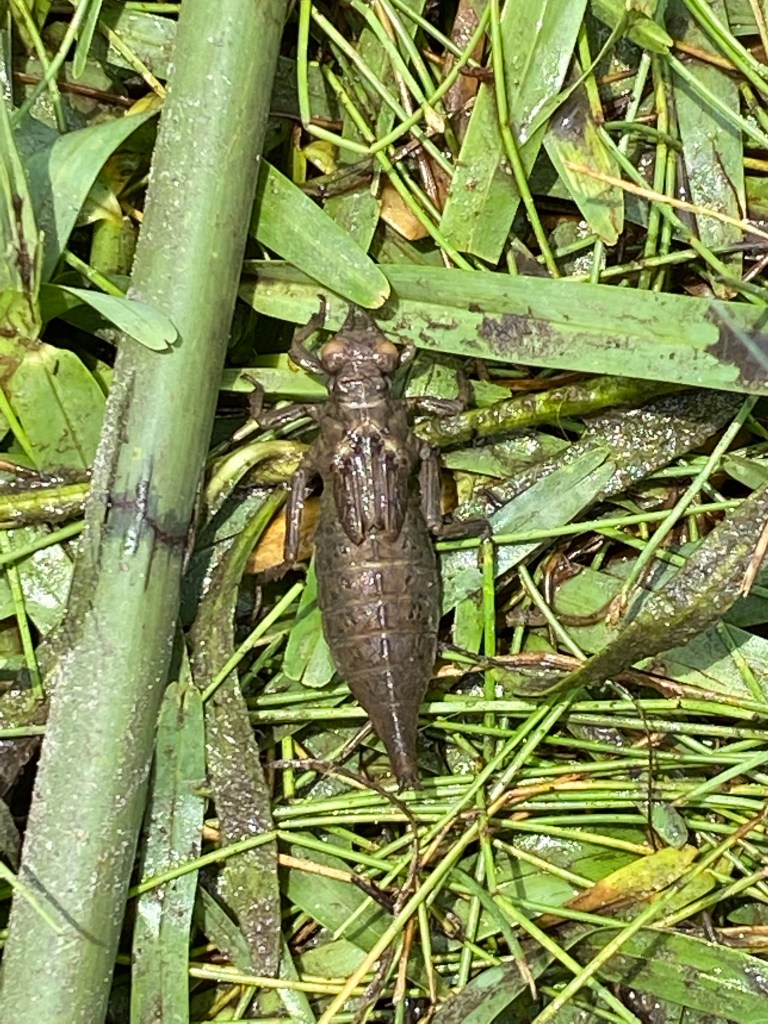
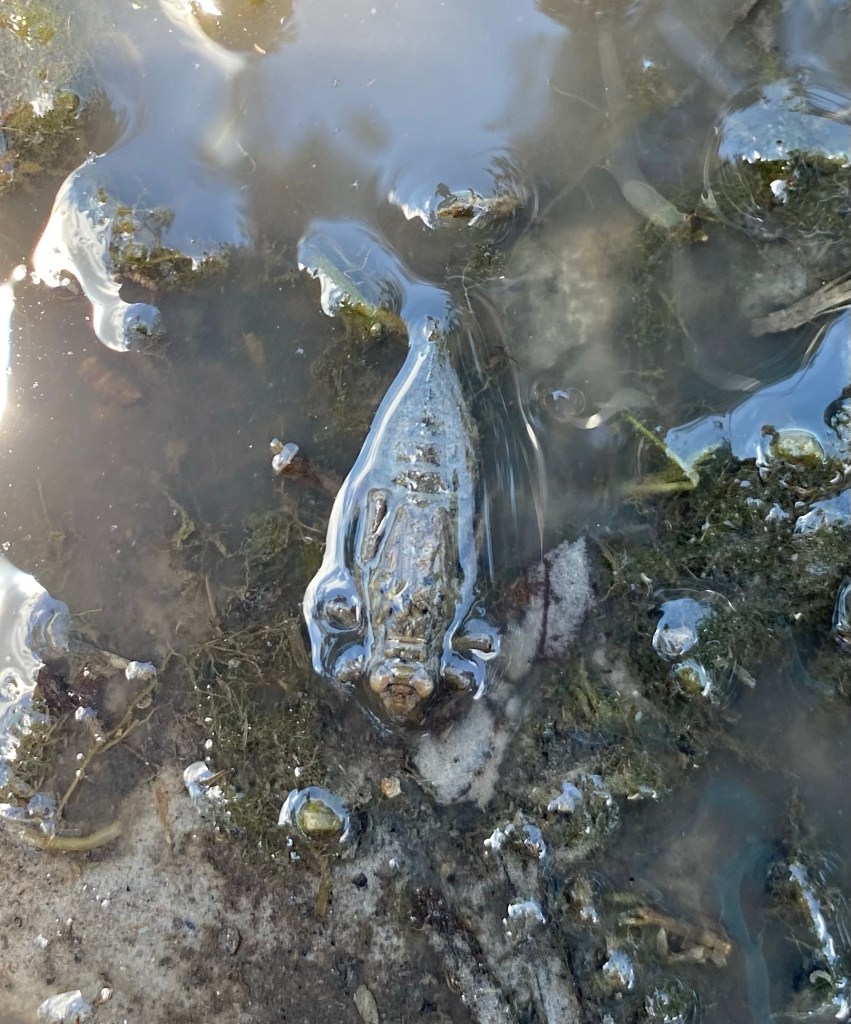
How exciting to see a dragonfly nymph at the lake! This one was probably headed for its final molt, since they are aquatic until adulthood. My eagle-eyed eldest spotted this one and watched it for awhile while my youngest pulled in fish.
I have read that some people spin alpaca fiber without washing it. Alpaca fleece does not have heavy deposits of lanolin like the wool from sheep. There seems to be a great debate on whether it needs to be washed, or at least very strong feelings, so I thought I would make up my own mind in the matter with a little experiment.

I took three samples from the same fleece (Sugar Plum’s). Two were washed (not scoured, but washed in warm water with mild soap), and third I pulled from the cleanest part of the fleece. One of the washed sections I carded using fine toothed hand carders and made rolags. The second washed section I left uncarded and spun from handfuls. The unwashed section I also spun from handfuls. I did attempt to pull out a rough roving-type bundle of fibers, but after sitting in my bag a couple of minutes, there was little cohesion and it was just easier to spin small sections.

The biggest difference was in spinning the singles. The washed and carded fleece spun smoothly and consistently. The washed uncarded was a little more fiddly to spin especially when I reached clumps of thicker fibers. I had to distribute these sturdier hairs with the finer fibers to keep the yarn from drifting apart. The single also had considerably more halo (fibers sticking out), than the carded sample. It was the same with the unwashed fiber, clumps of fiddly bits and more halo, but in addition, my fingers felt like I had applied lotion. There is definitely some kind of coating on the unwashed alpaca fiber, but it was not unpleasant. I did wrap the unwashed single onto my niddy noddy and gave it a soak in warm water and no-rinse wool wash. Nothing came out of the water. Even though I know the color can change throughout a fleece, I still felt the darker color was due to trapped dirt.
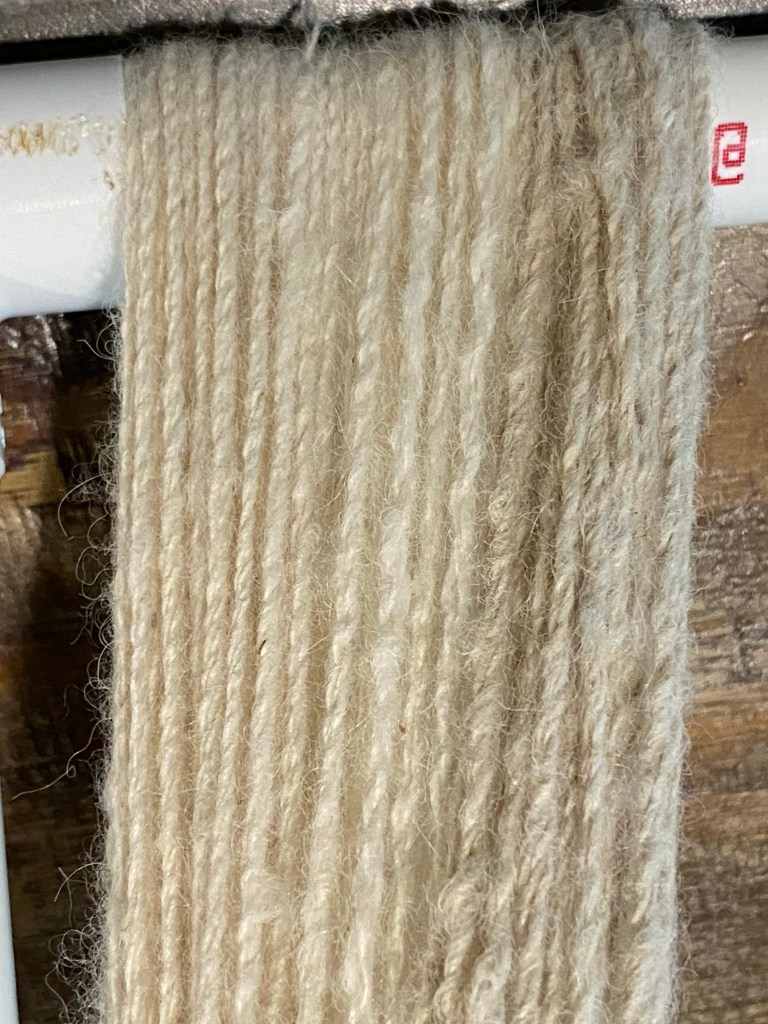
I decided to cable the yarn (ply twice to get a four strand yarn). The differences in fiber preparation made no difference in the mechanics of plying. The uncarded samples still have a more pronounced halo as you can see in the photo above, as well as a less smooth appearance. My plan is to nålbind all the samples with the same stitch (I want to practice a new stitch, so this is a good opportunity).
So how do I stand on the wash or no wash discussion? If I had fleece with very little vegetable matter (VM) and mud, perhaps from a coated animal (the farmer can put coats on to keep the dirt off somewhat, but I don’t know how the animal feels about that), I wouldn’t mind spinning directly from the fleece. The fleeces currently in my possession are not that clean, so I will be washing and carding henceforth.
 Critters and Craft