So many esoteric terms in spinning! (Here is a funny article from Spin-off magazine on hand spinning terms.) In this case, plying is spinning singles together to make a thicker stronger yarn. A cop is the yarn wound upon a spindle. I took the end from the inside and the outside of the cop and plied them together, essentially working from both ends of the single.
Cop on the left, two ply yarn on the rightPlied yarn completing a new cop
I’m still working on consistency, but it is the process I enjoy. It is meditative.
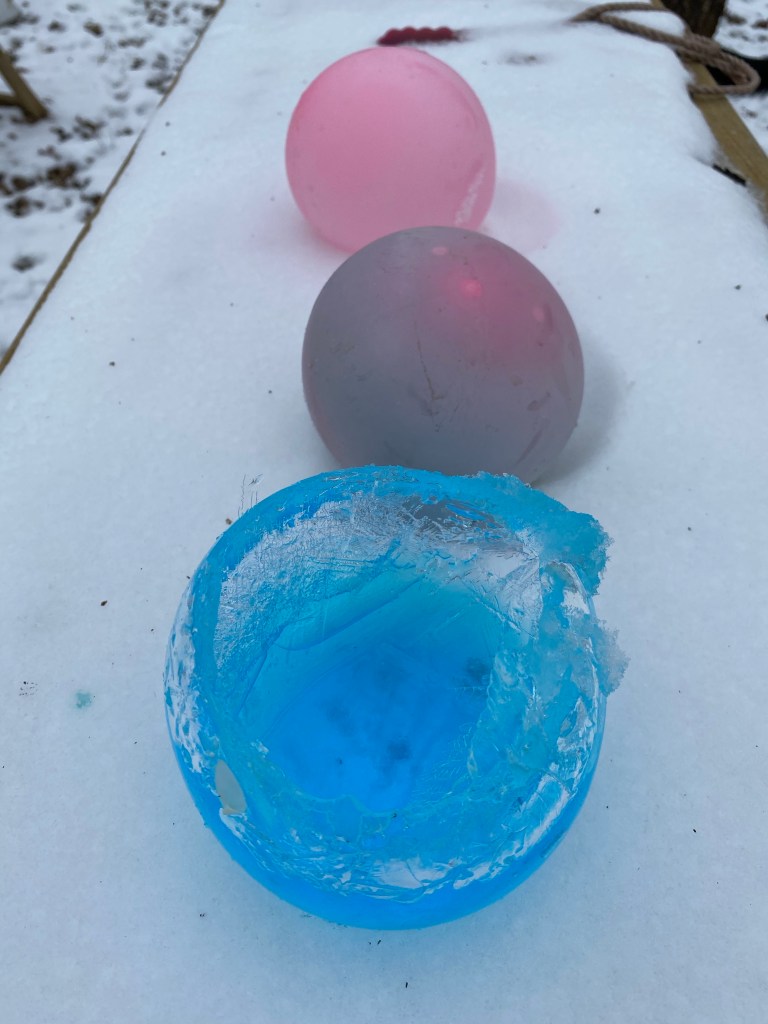
We tried some ice balloons during Winterpocolypse, but didn’t get them outside until the last two days, which even with a low of 16 and a high of 25 was not enough to completely freeze the water in the balloons. We should have started them at the beginning of the invasion of the northern weather, but we didn’t have consistent water, and needed to conserve for vital things like drinking. Making ice globes is probably easier in places who know how to do winter.
Water filled balloons set out in the snow to freeze. The front one was only partially frozen when we broke it open.After an additional day the other two balloons still had liquid water
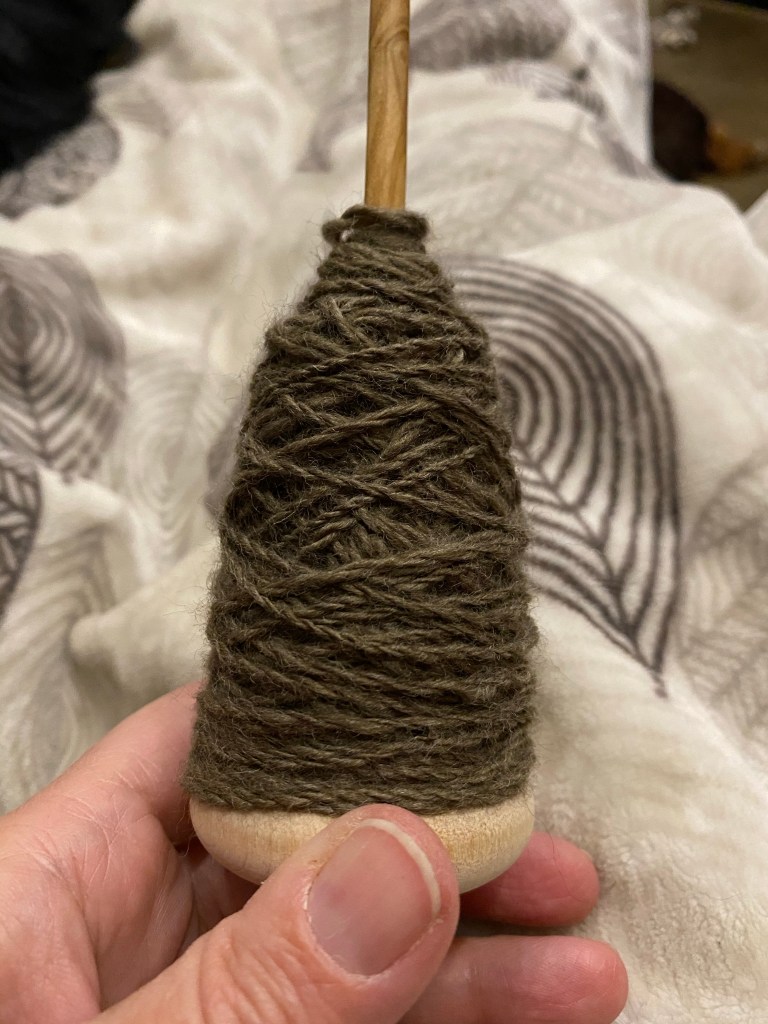
I continue my Frankenstein method of using drop spindles. The shaft is from a Turkish style drop spindle that I made, the whorl is a wooden toy wheel because it was lighter than the arms of the Turkish spindle, and the support is from my original experiments and made from the base of two aluminum cans. Why? Why do I keep piecing and parting? Well, because I want to walk and spin. However it is cold outside and my cat wanted a lap. Drop spinning in my recliner so my very long cat has enough lap room was awkward, then I remembered that cotton spinners use a supported spindle set up, so I dug out the aluminum can contraption. I did not care for supported spinning in the beginning, but it was just the trick this time.
Spinning merino wool with a supported spindle
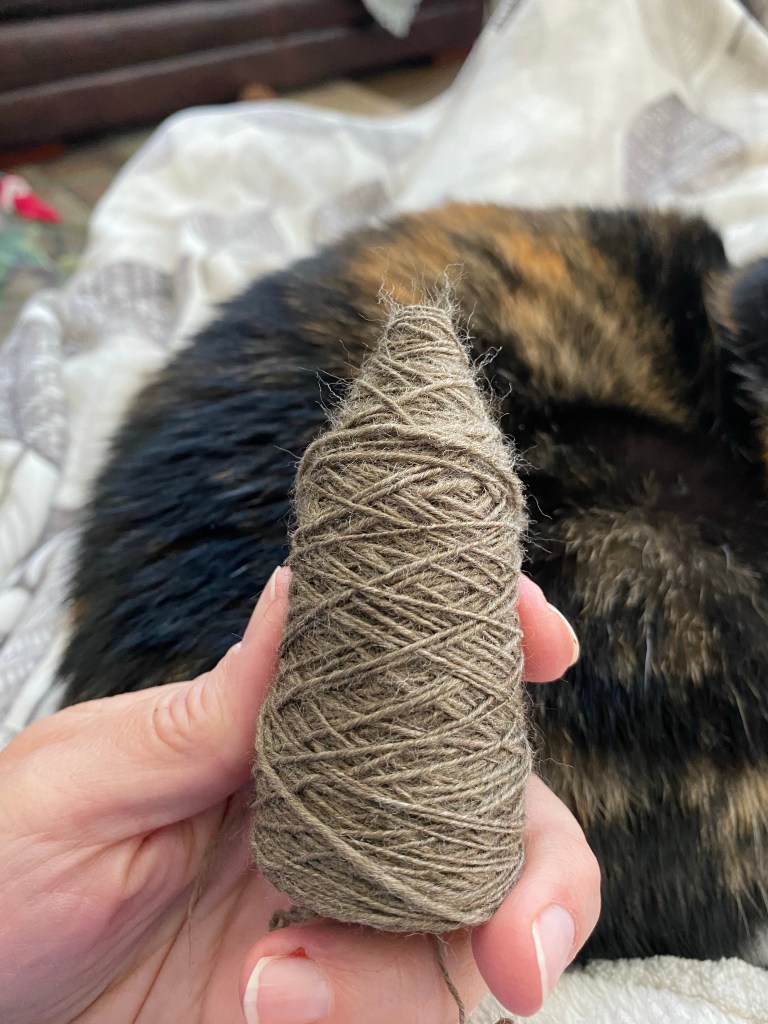
I am able to mix and match because of the shape of the shaft. It tapers sharply to a point at the bottom, which allows it to spin in a rounded support, and has a long taper from the base to the top, which allows the accommodation of various hole sizes in whorls. As a bonus, the cop of spun yarn slides up and off the shaft, without having to rewind!
Cop of yarn removed from the shaft of the spindle
So, if you are new to drop spindle spinning and want the flexibility to try different methods, I recommend looking closely at the shaft of prospective spindles. Or making your own.
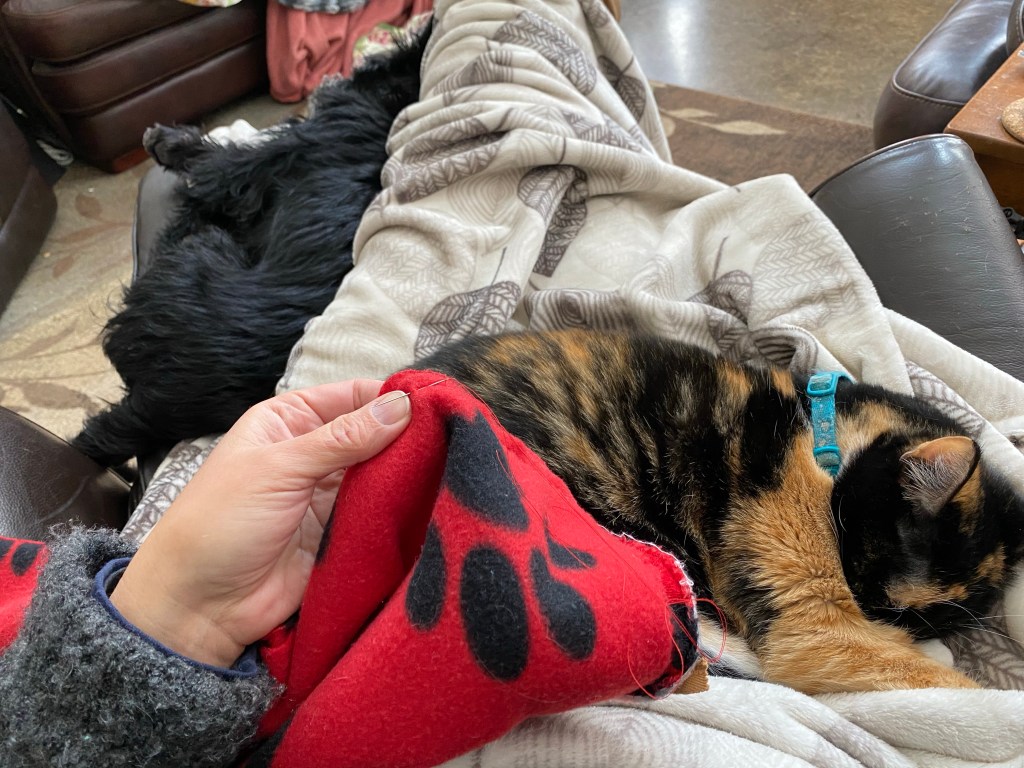
When the cat and dog require a warm lap, what to do? Grab some sewing and give them the lap. Yes, this project would have gone quicker with the sewing machine, but at the time power was still intermittent and I was also cold.
Hand sewing because my lap was required
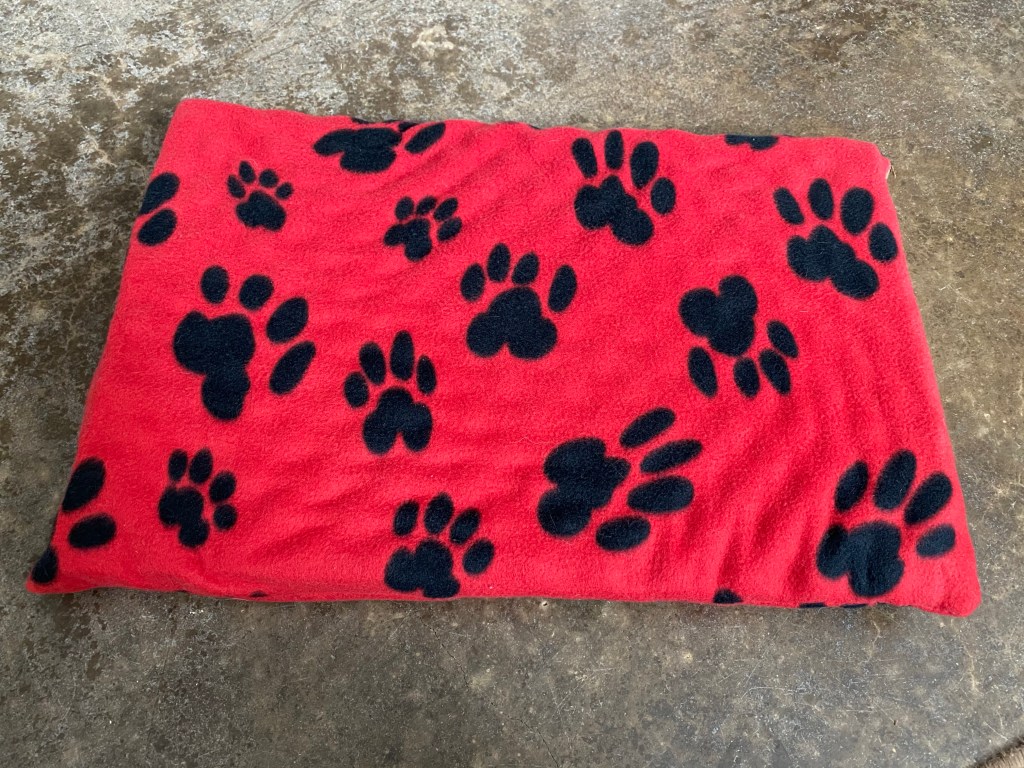
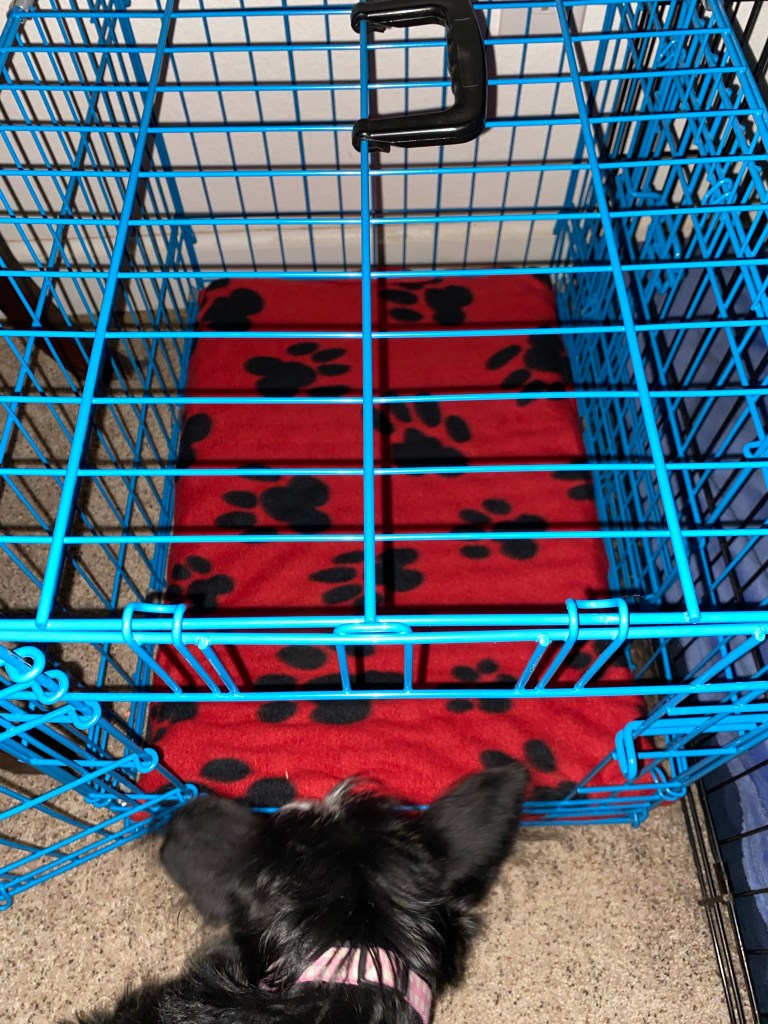
The project was a new pad for Missy’s cage. None of the pads available to order quite fit right, so I ordered some fleece and some egg crate foam (twin sized because it was the most economical). The zipper came from my stash, and I hand sewed that in first, sewed the sides, then cut two rectangles of foam about an inch smaller than the case. It helped to fold the foam in half to slide it into the case, the zip it up.
Finished crate matMissy investigating the new mat (sorry for the flash, no power)
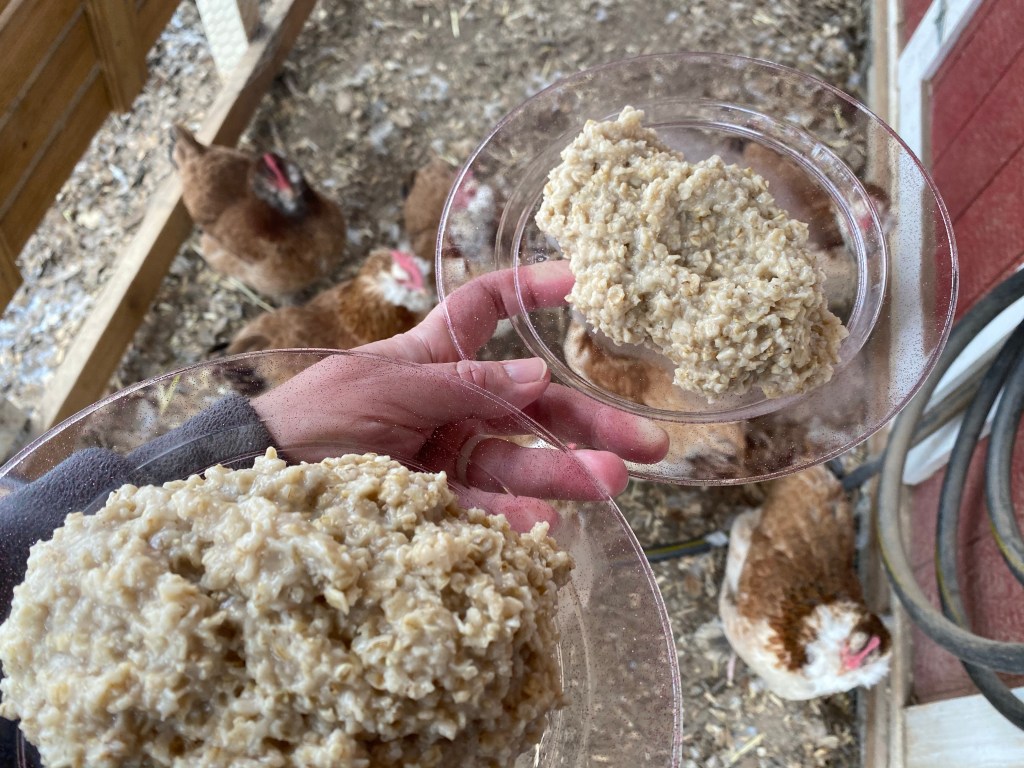
I read that making up some hot mash or hot oatmeal is good for cold chickens. So when we had power, I whipped up a cup of quick oats and took it out to my hens.
Warm oatmeal for the chickens
My hens were not impressed. I honestly think they accused me of trying to poison them. I left it where they were less likely to step in it (again), because sometimes when I leave, they scarf up new treats. An hour or two later it was a definite no go, and I had to pick up the frozen, uneaten masses of oatmeal.





 Critters and Craft