Upgrading old nesting boxes

After seeing nesting boxes for sale on the corner on and off for months (we are in the country), I finally broke down, stopped, and bought a two seater from the nice gentleman selling. It is a vintage nest box, bordering on antique, but I was having trouble formulating my own plans and I had a moment of weakness. The man assured me that even large breed birds would be able to fit in the boxes, but when I got it home and measured it I was unsure. The recommended size for large breeds is 12x14x12. These boxes were 9x13x10. Um.
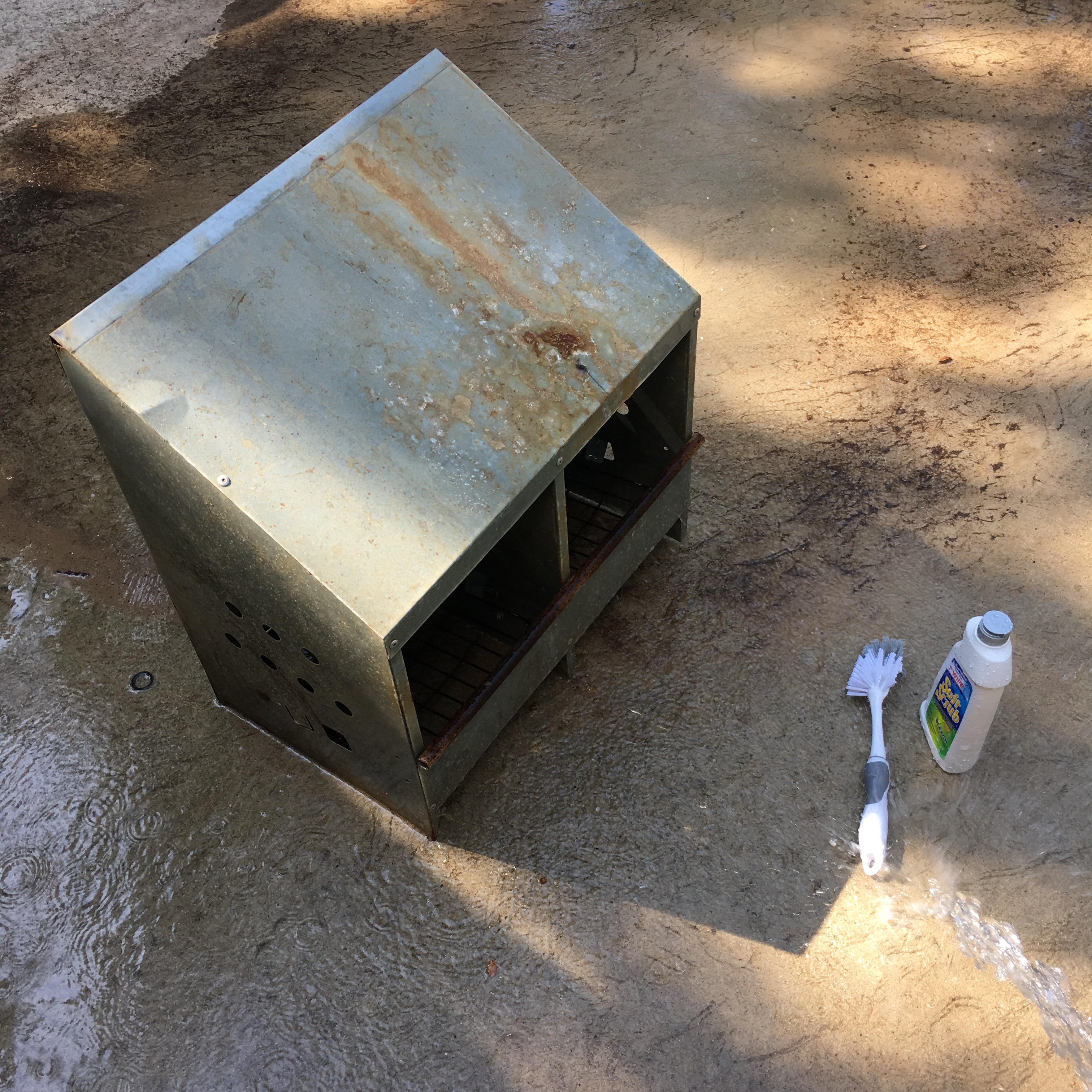
Scrubbing down vintage nest boxes with bleach

I figured out that I could make more room by dropping down the front panel a couple inches. I drilled out the rivets and scrubbed the box with bleach soft scrub (who knows how many chickens used this before!!) The boxes were designed to have an egg portal in the back for collecting. In my coop this isn’t practical, but the wire bottoms are extremely sturdy, so I scrubbed them too.

More scrubbing

Taking apart the box revealed that there was more rust. After the box dried, I used cold galvanizing spray to give the whole thing a coat of protectant. Most paint will not stick to galvanized metal, but this seems to have done the trick. I also gave the wire bottoms a coat of black rust stopping paint.

Sprayed with cold galvanizing, which results in a coat of zinc over the metal

Even though the front edge is rolled to provide purchase for chicken feet, I still felt I needed a landing spot about 8” out from the box. I put 1” x 3/4” strips on the inside and outside of each of the three sides. The outer strips were longer to hold a dowel. These strips also helped stabilize the bottom of the box, and serve as support for the wire bottom in its new position.

Wood stabilization and roost rack

Riveting the front panel back on was simple, but I did need my husband’s help on the final squeeze to break off the rivet wire. The riveter is definitely made for larger, stronger hands.

Upside down garden tool rack

In the coop, I found that the nesting boxes could hang well on an upside down garden tool rack attached to the stud. I put in a couple more screws just for security.
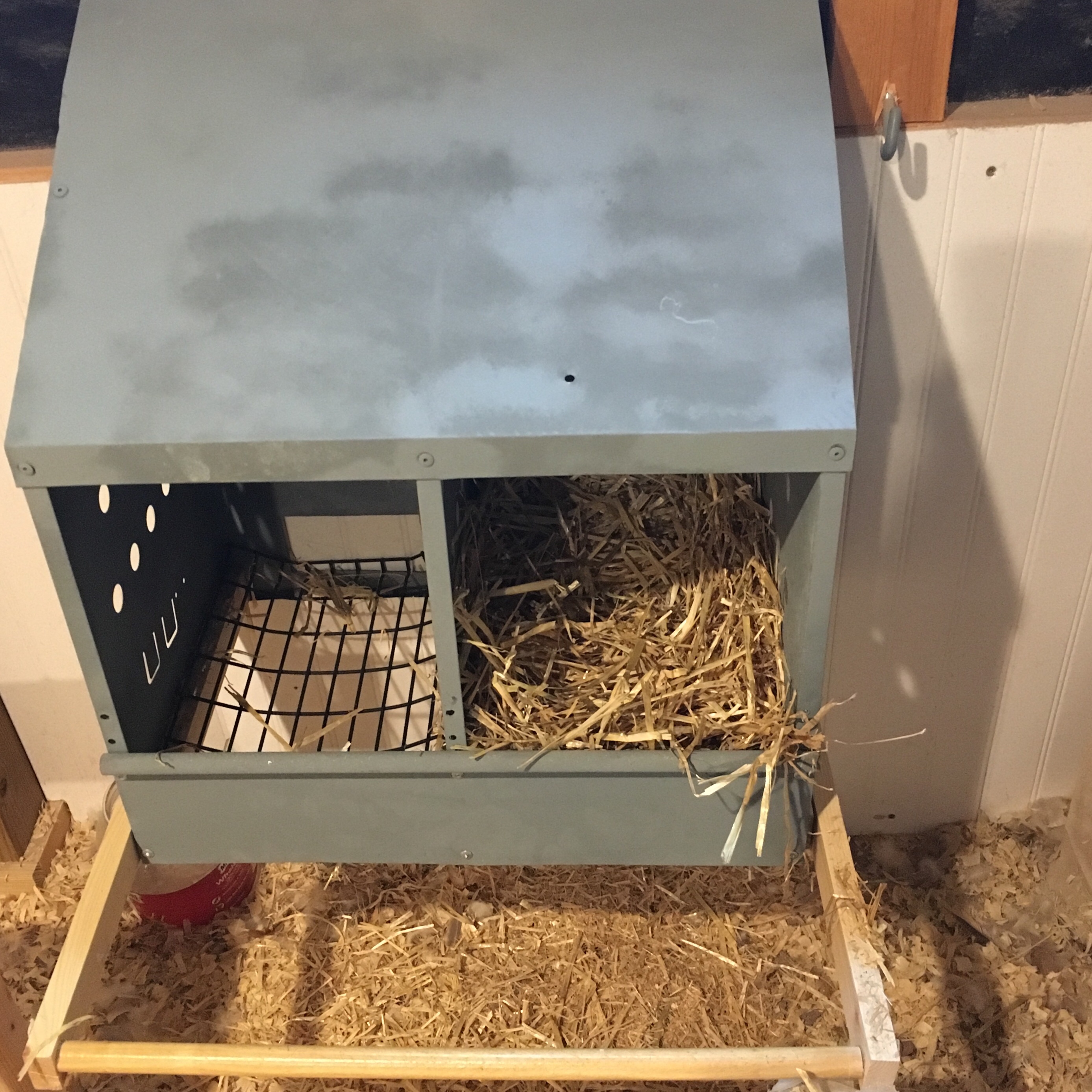
Installed nest box

The perch to get onto the boxes is below the level of the roost, I put straw in each box and a little DE and dried lavender, and the opening is a little larger than it was before. So we’ll see if they use the boxes… in three months or so.
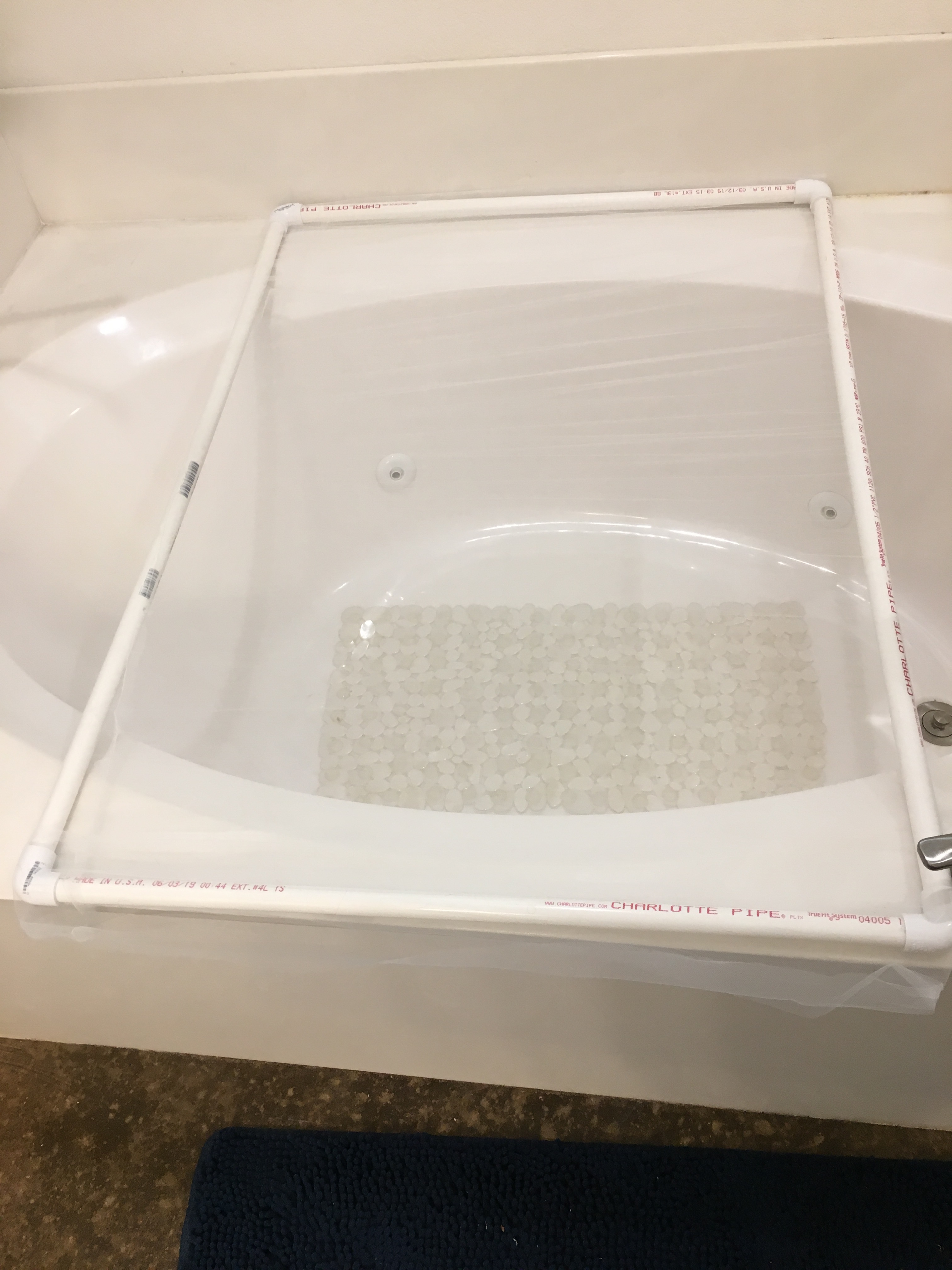
DIY bathtub drying rack

I needed a flat space to dry wet items, so I made this drying rack that sits on top of the bathtub. When I’m not using it, it can be disassembled and stored!

Bathtub drying rack

I purchased 1/2 inch PVC pipe and four 90 degree elbows (always make sure all your elbows fit your tubing before purchasing!) I measured the clear area on the tub and cut lengths of pipe to fit. My area was 41×30, and my PVC elbows were 1.5 inches, so I cut two pipes at 38 inches (41-3), and two at 27 inches (30-3). I used a compound miter saw, but PVC cuts easily with hand saws as well. I assembled the frame with the PVC elbows. I did NOT use glue.

I had some nylon mesh in my fabric stash, and sewed a long, wide tube out of the fabric as wide as the PVC frame, then slipped the tube over the frame. If you have a mesh laundry bag, you could make the frame to fit the laundry bag for a similar effect.

Drying rack with shirt

Supervisors

Fixing the hardware cloth

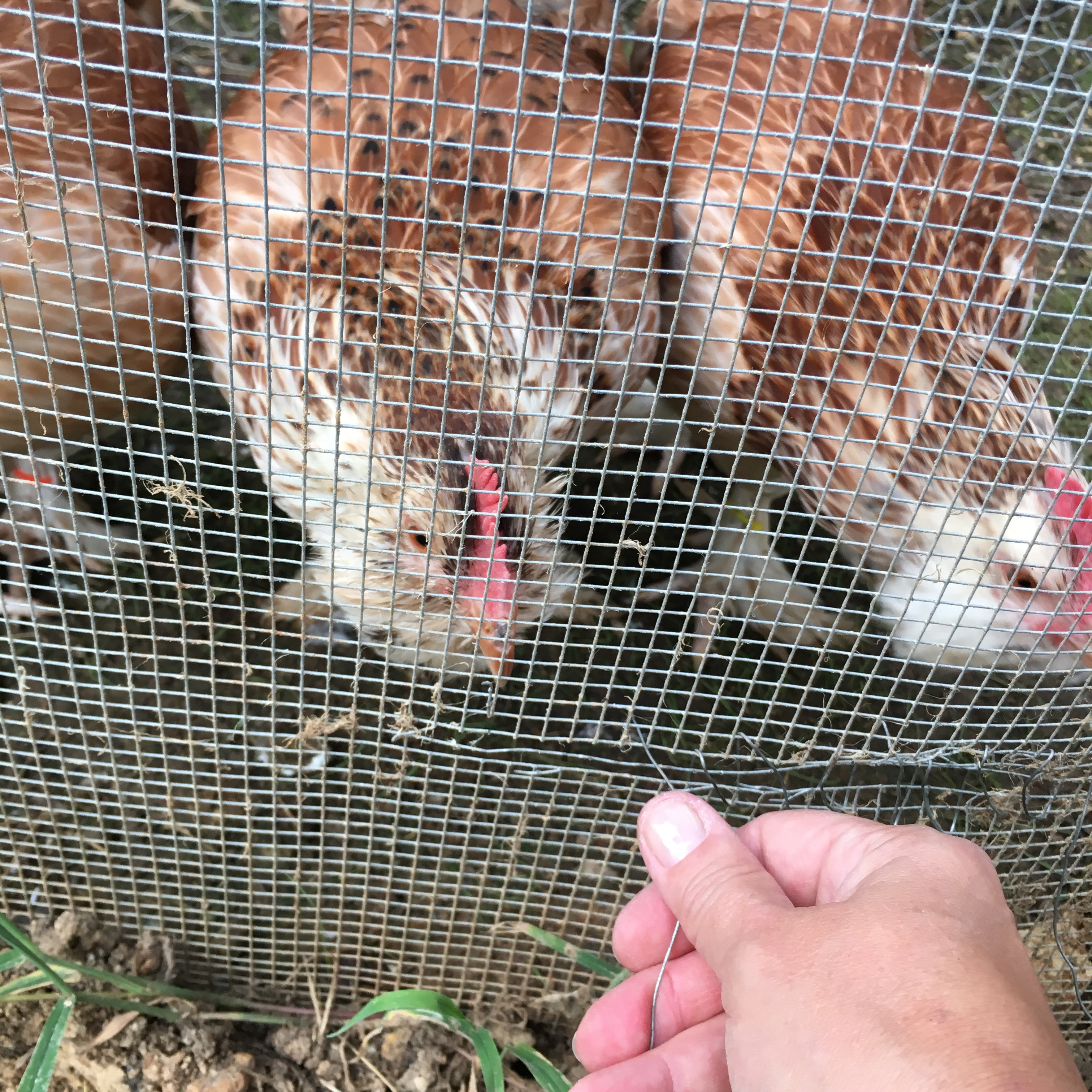
I’m not sure what happened to make a rip in the hardware cloth, but the chickens were very interested in how I was using wire to fix it. They are not great at poking the wire back through to me.

They were also interested in this little black cat that came visiting.

Full screen door

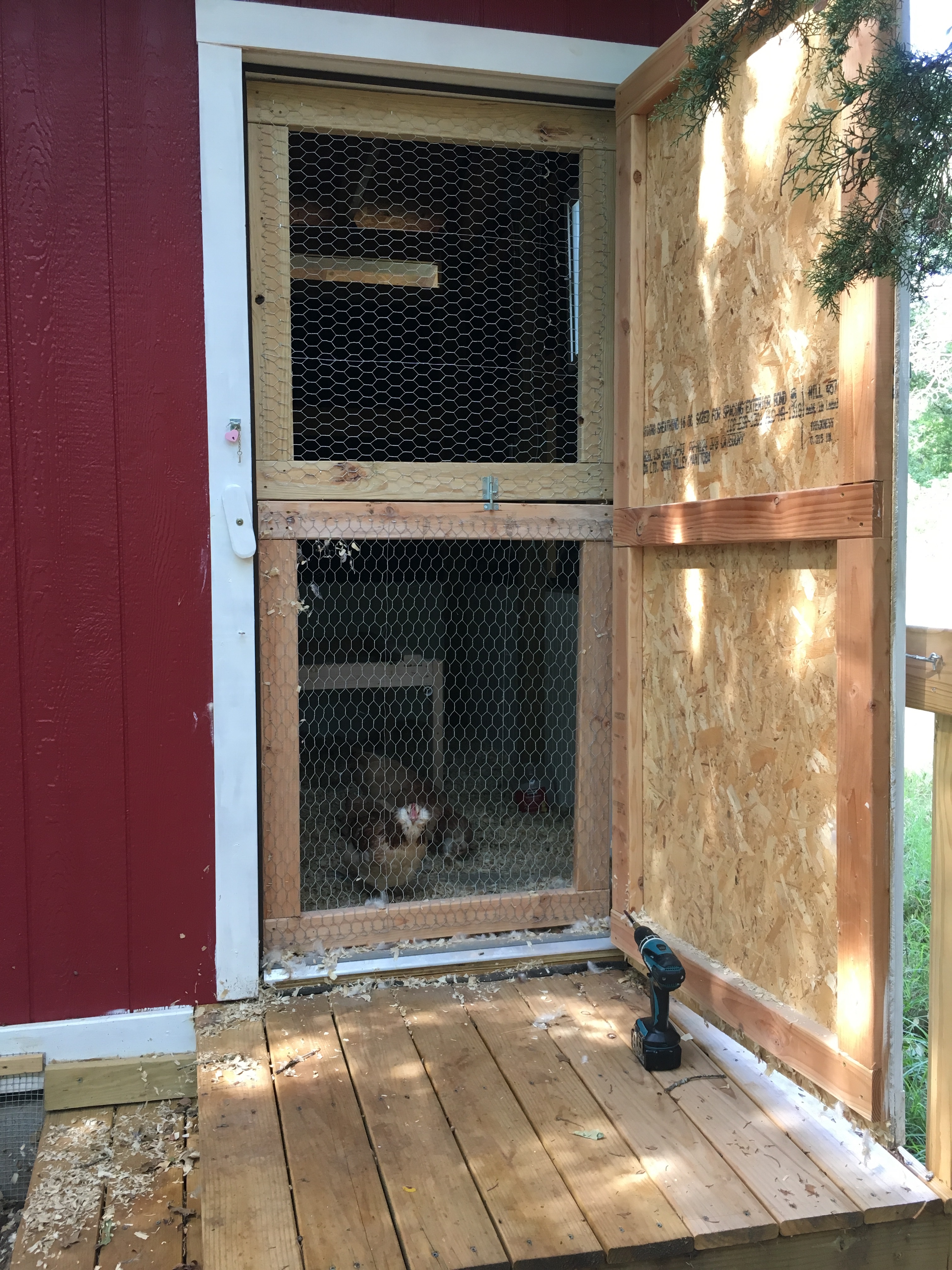
When the chickens were little, I put in a “screen” (it is covered in poultry mesh) door on the back doorway of the coop so I had a way to block them from following me out and to let a breeze go through the coop. I only made it half as tall as the door: they were little! But it didn’t take long for them to be big enough to eye ball that short door and I could see them judging the distance of the jump. So the solid door stayed closed for several months. I finally got around to making a top portion of the screen door!

Screened back door

There is another reason I finally tackled this, aside from that it is cooling down (slightly) and I can get more done outside. My youngest is still very wary of the chickens. Her interaction with them has lately been by Facetime (when I am in the coop, she calls my phone from her iPad). When the chickens eventually get around to laying eggs, I wanted to make a way for my youngest to look for eggs without going fully into the coop. So I rehinged the screen door, and I am planning on putting a nesting box on the wall near the opening. The idea is that she will be able to use the screen door as a block to protect her from the chickens. That is the theory anyway.

Use for metal roofing scraps

I’m using an unconventional thermometer out in the coop runs. It was designed to go on a fridge inside, but I needed it outside more than I needed it inside. Well, we had a big rain, and the thermometer doesn’t work well wet. So I needed a protective place to put it. It has a magnet on the back, and I have several pieces of scrap metal roofing left over from when my husband made the coop, so… voila! I drilled some holes so I could use screws to mount it on the wall of the coop, as as long as I was messing about, I also drilled holes for hooks. I also sanded the rough edges. Now I have a cute little board for a little organizing. Yay.

Metal roof scrap organizer