Natural Egg Dye

This year we tried dying our hard boiled eggs with natural dyes! It was an interesting process, and another that definitely has a learning curve.
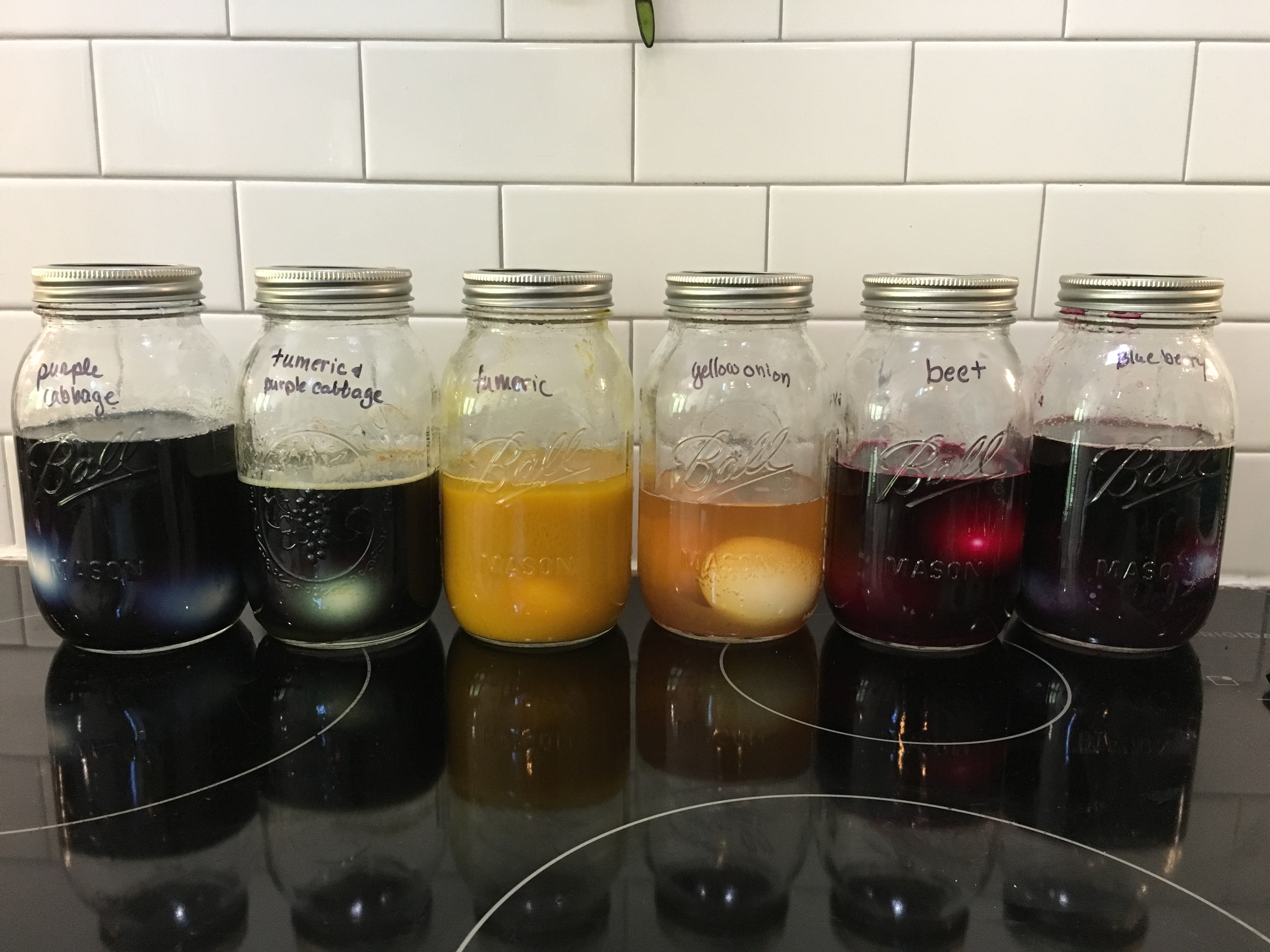
Natural dyes for hard boiled eggs (no vinegar in the purple cabbage solution on the left)

We roughly followed Fresh Egg Daily’s instructions, and bought blueberries, beets, yellow onions, turmeric (buying a small bag of this in the bulk section was less expensive), and purple cabbage. We halved the recipe in most cases, using only 2 cups of water and about 1.5 cups of veggies (or 1 Tbsp turmeric), and added 2 Tbsp vinegar, except for the purple cabbage. Now vinegar in the dye is what helps the dye set on the shell of the egg, but if you make a solution of purple cabbage juice acidic (which is what happens when you add vinegar), the liquid turns pink instead of blue, so I did not add vinegar to that jar. We also tried boiling the turmeric and purple cabbage together for the green color, then boiling them separately and adding about a cup of each liquid together in a different jar. I had already added the vinegar to the turmeric solution, so the “boiled separately” solution was a rusty brown (and I hid it in the pictures, because it was not a pretty color solution).
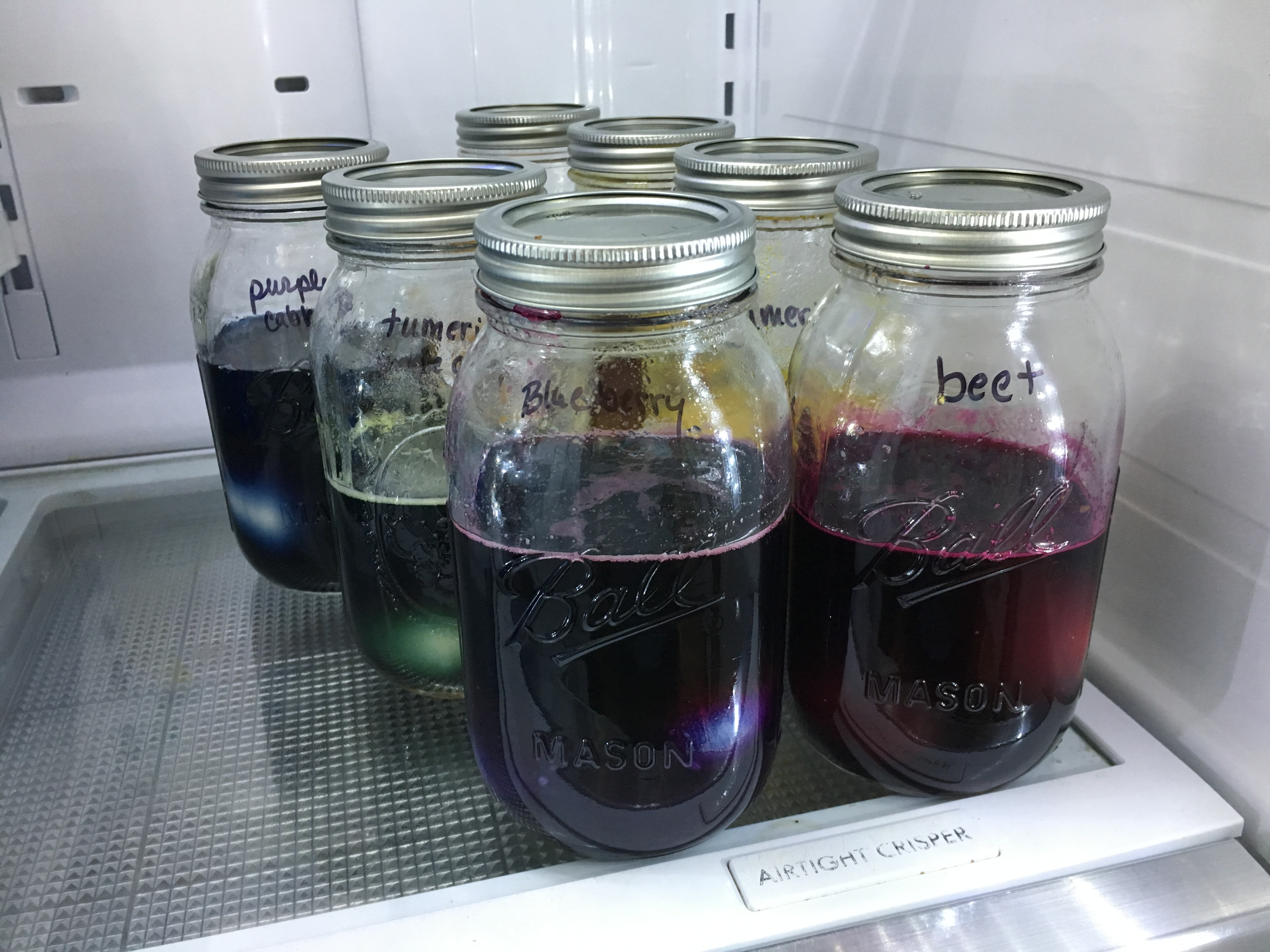
Eggs in solution in the refrigerator

We put hard boiled eggs in each jar and refrigerated them longer than recommended. We pulled the blueberry and beet after 48 hours, and the others after 72 hours.

From left to right: blueberries, purple cabbage (no vinegar), purple cabbage and turmeric, turmeric, yellow onion, beet

Results: I should have taken pictures of the blueberry dye and the beet dye right after I pulled them out of the solution, and then after I rinsed off the particulates. This picture is a day later, and the colors have started to go brown. The most surprising result was that even though the turmeric and purple cabbage solution color was brown, the eggs turned out green. The two darker green eggs had more vinegar in the solution. The purple cabbage solution without vinegar barely colored the eggs, but where there was a crack in the shell, definitely colored the egg white a blue color. I picked off a bit of shell on the beet dyed eggs as well to show the egg white color (no longer white).

Thanks for sticking with the length of this post. Here is a video of chicks learning to perch and fly as your reward.
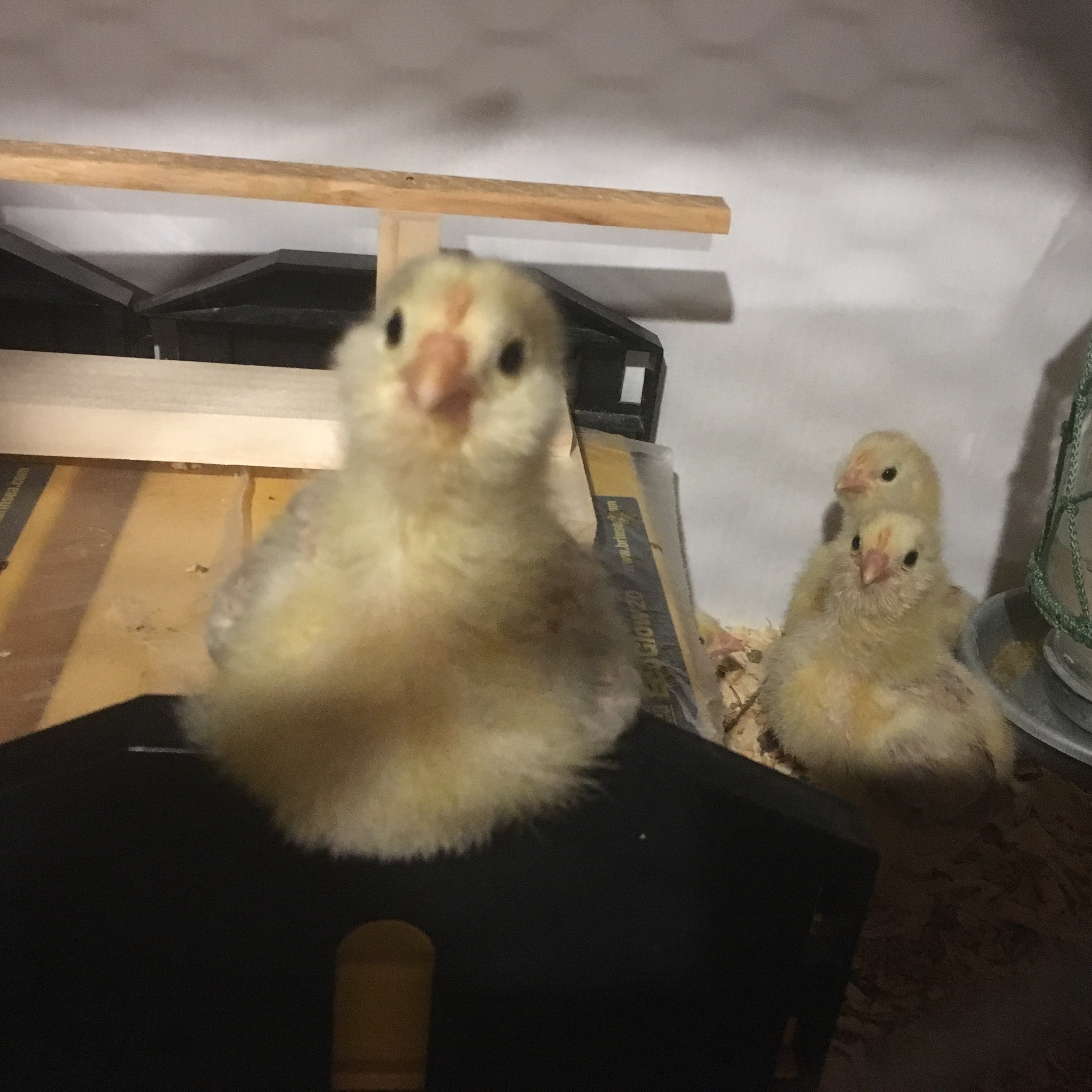
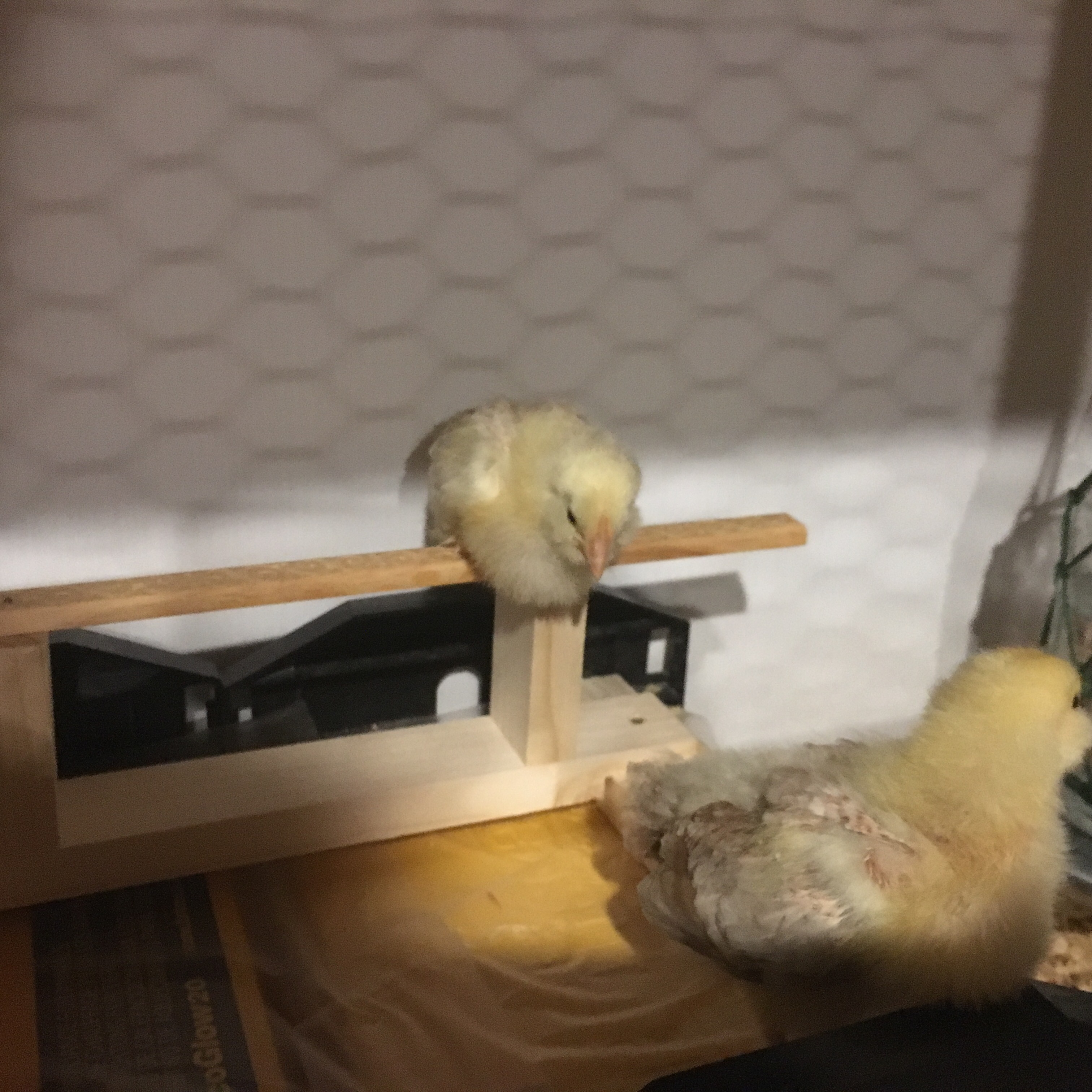
Perched

The chicks are two weeks old! I’m now adding chick grit to their feed, and I found a large jar of brewer’s yeast with garlic that I thoughtfully bought months ago and apparently hid in the back of the pantry, so that is going into their feed too.

I gave them a little clump of dirt and grass from outside. They were extremely dubious at first, I was hoping to get some video of excited chicks, but they waited until I was gone to pick it apart. Oh well.

They are also starting to attempt perching. We’ve had a stick in their brooder since day 1, and they flutter on that a little, but today I found one perched on the side of the heater. Tigger likes to perch on my hand and walk up my arm. Which reminds me, I need to get files to dull their sharp little nails.

Perching on the heater end

A little later my eldest was able to convince another chick to perch on the little practice perch I made from scrap wood.

Chick trying out the practice perch

Following the path

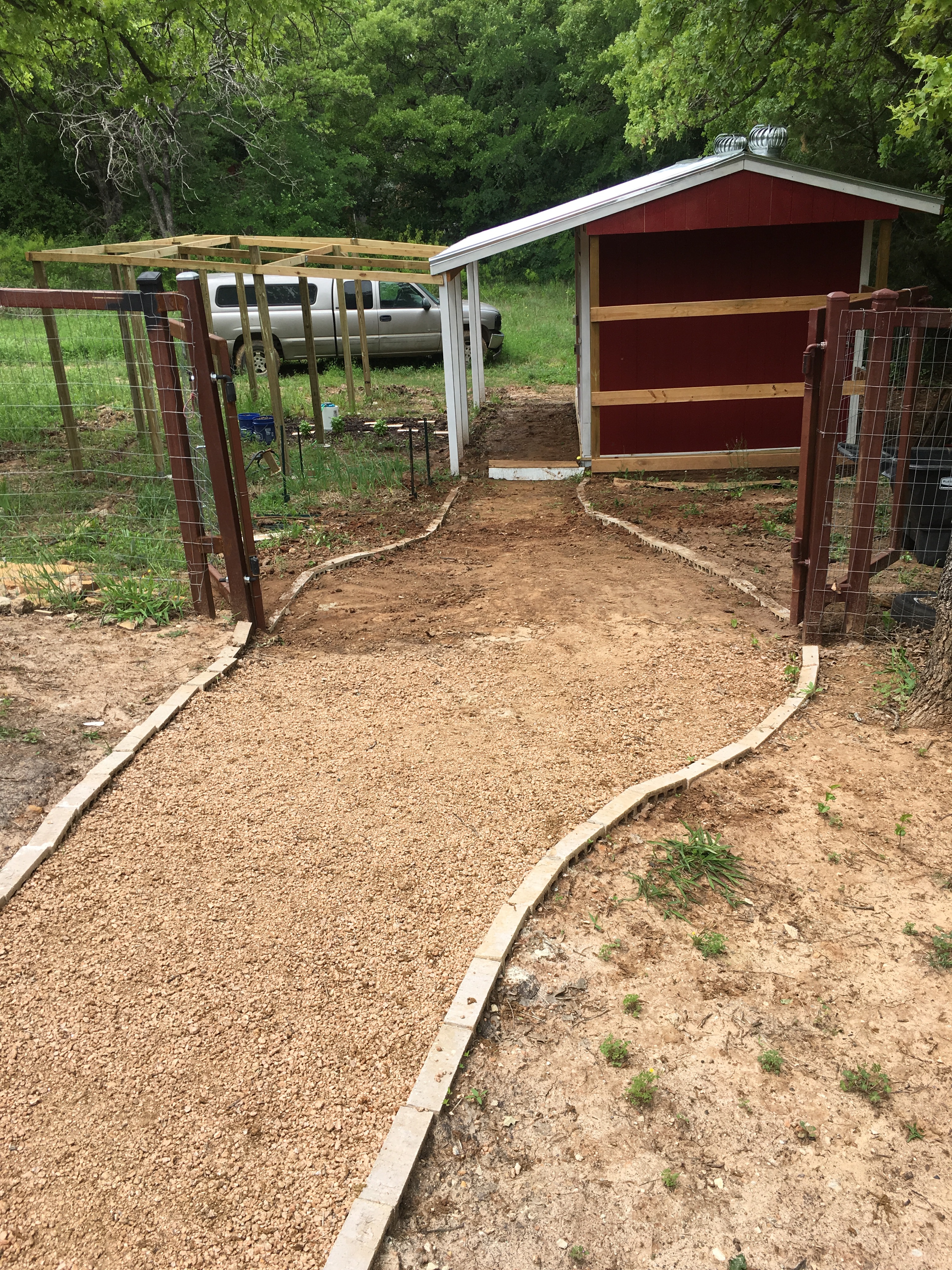
I’ve worked for two days digging and laying brick edging to continue the path from the house to the coop.

I still need to fill it with decomposed granite, but at least the edges are set in. I set two layers of brick on this downhill side. I’m debating in whether to have a couple yards of material delivered, or to pick up bags like I did for the first half of the path.

The chicks are doing well and approaching two week mark. I’ve been working on picking them up with out freak out. Tigger was awesome and did a great demo for the video.

Rebanded

The chicks are really growing! Today we inspected everyone’s colored bands and replaced those that were getting small.

Tigger’s new orange band

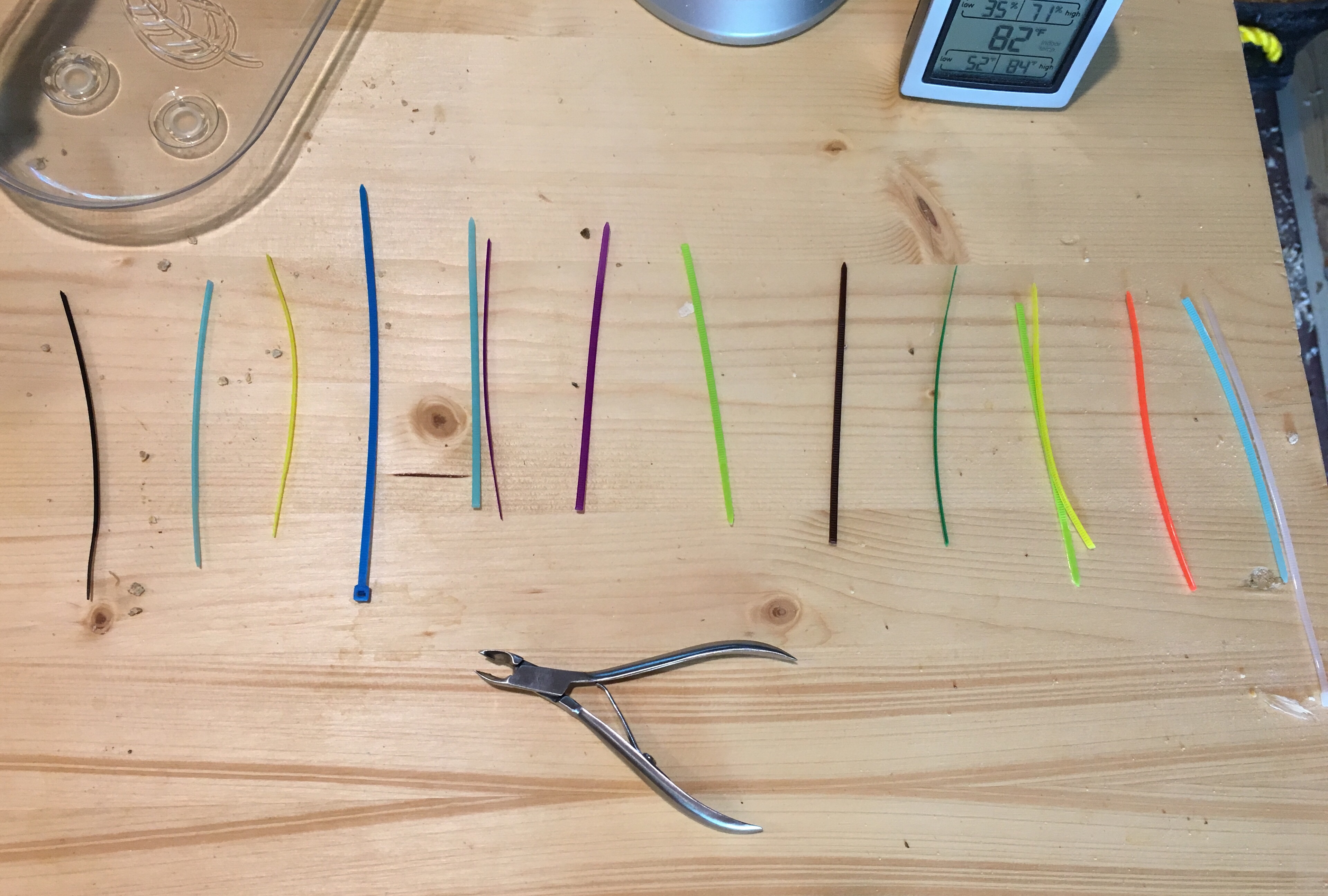
All but three bands needed changing out. The chicks escaped the barrier we put in the brooder, so we laid out the cut ends of the zip ties to see who else needed checking.

Cuticle trimmers work well to clip small zip ties

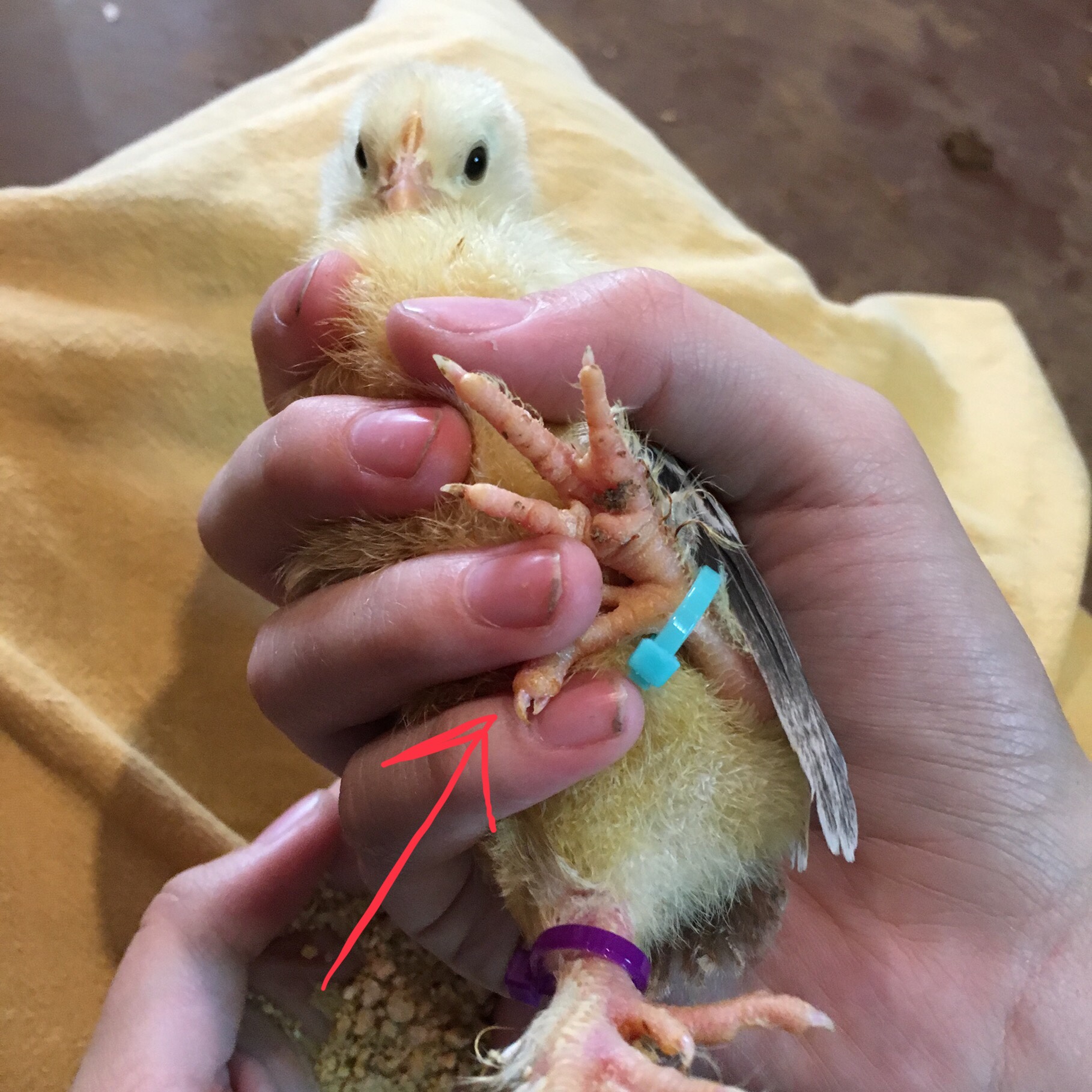
While we were doing band switching and health checks, we noticed that Seashell has a little something extra; namely two toenails on one toe (both feet). From a quick Google search, and browsing some chicken forums (oh my, I’m browsing chicken forums), it seems that the gene that causes extra toes sometimes throws extra nails too. We learn something new everyday!

I nearly forgot to take a video today, so the poor babies were upset about my bright video light. Luckily they settled down quickly after the lights went off.

Heat lamp

Yesterday I learned that the big box stores stop selling heaters in the spring. Understandable, but made me a little panicked when the forecast was for a low of 40 and the instructions on the radiant heat brooder say to keep the air temperature above 50. We’ve lived in Texas for awhile. We don’t own heaters.

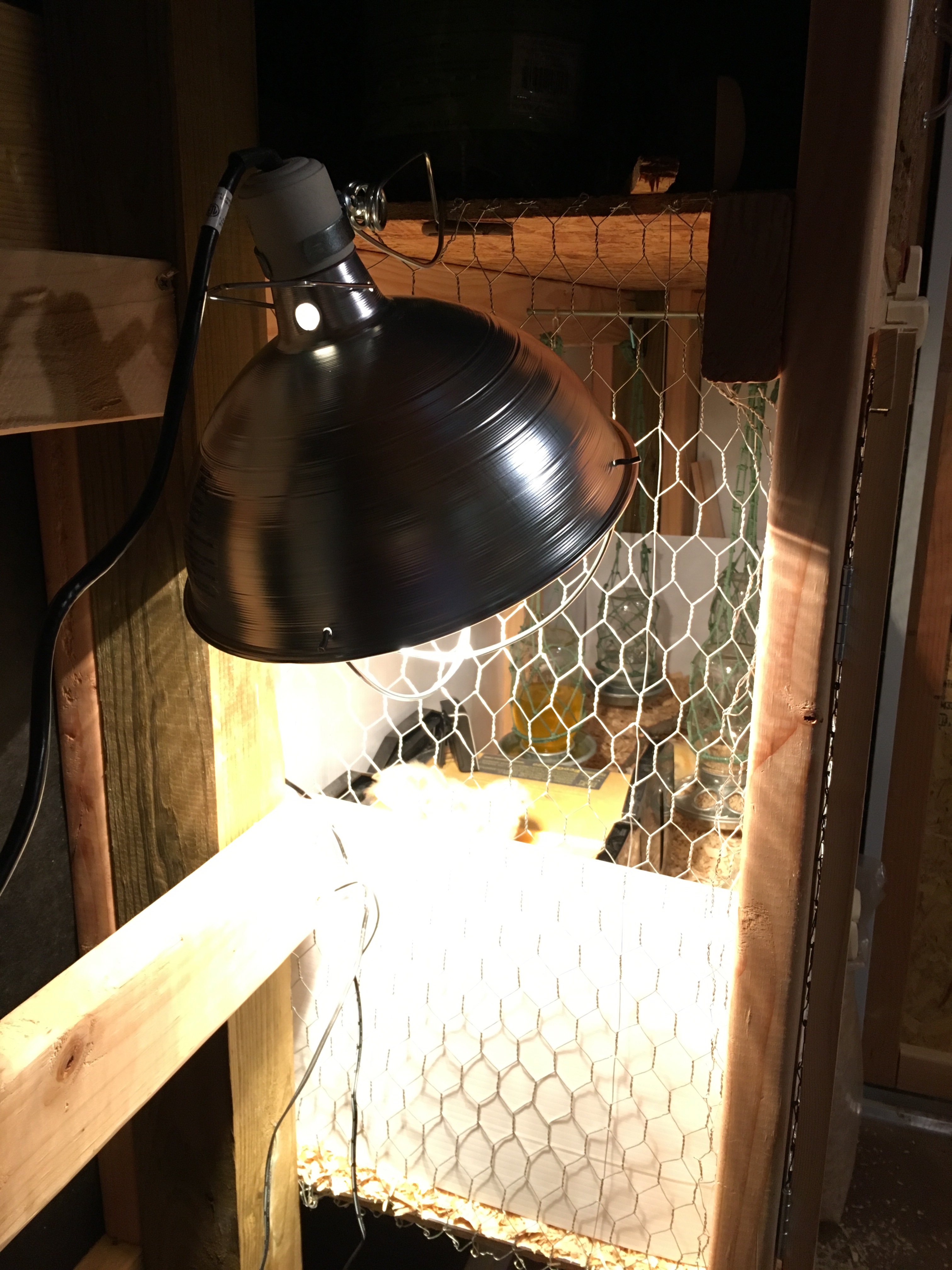
The blanket around the end of the brooder area was OK during the day, but to be safe, I went and bought a brooder heat lamp (and took down the blanket, I’ve been through a fire, don’t want to again). The heat lamp worked. The air temperature in the brooder near the lamp stayed in the high 50s. The chicks were happy in the morning.

Brooder heat lamp, it looks closer than it is.