Golf balls in the nest

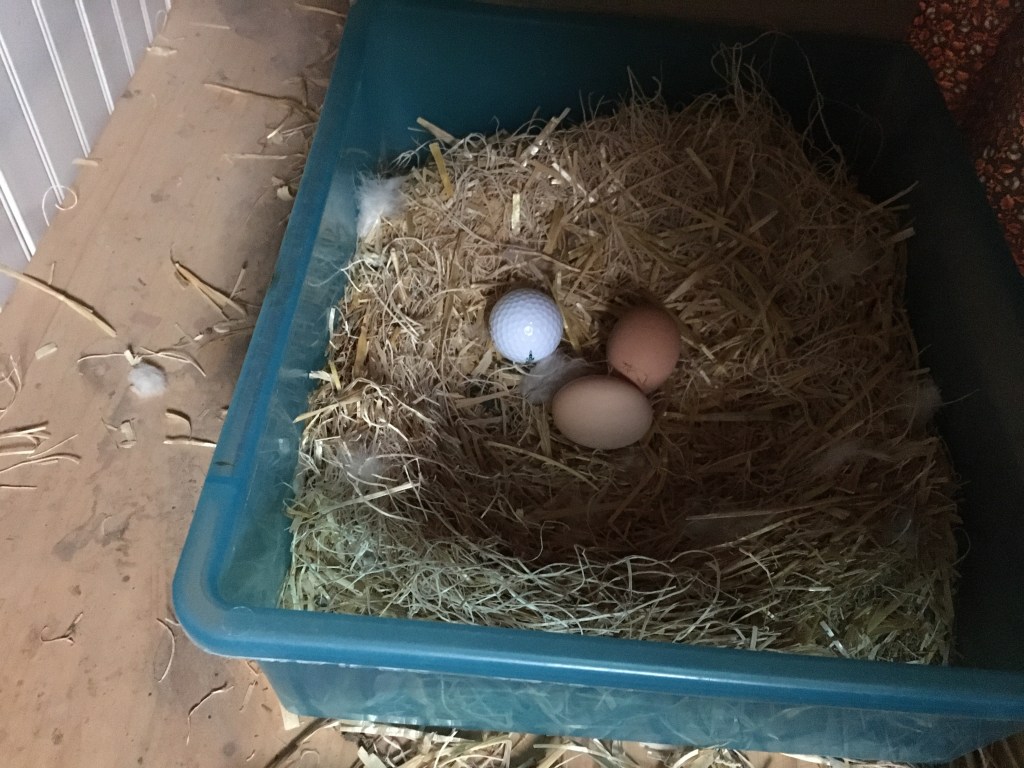
A couple of months ago, I took all the golf balls out of my hens’ nests because we were seeing a series of broody hens. A few hens were sitting on only a golf ball and getting sassy about it! The golf balls have been in the nest since the chickens were pullets to show them where they should lay their eggs. Hens will look for the safest place to lay, and if another hen has laid an egg there, it must be a safe place. I took all the golf balls out to see if it would change their behavior.
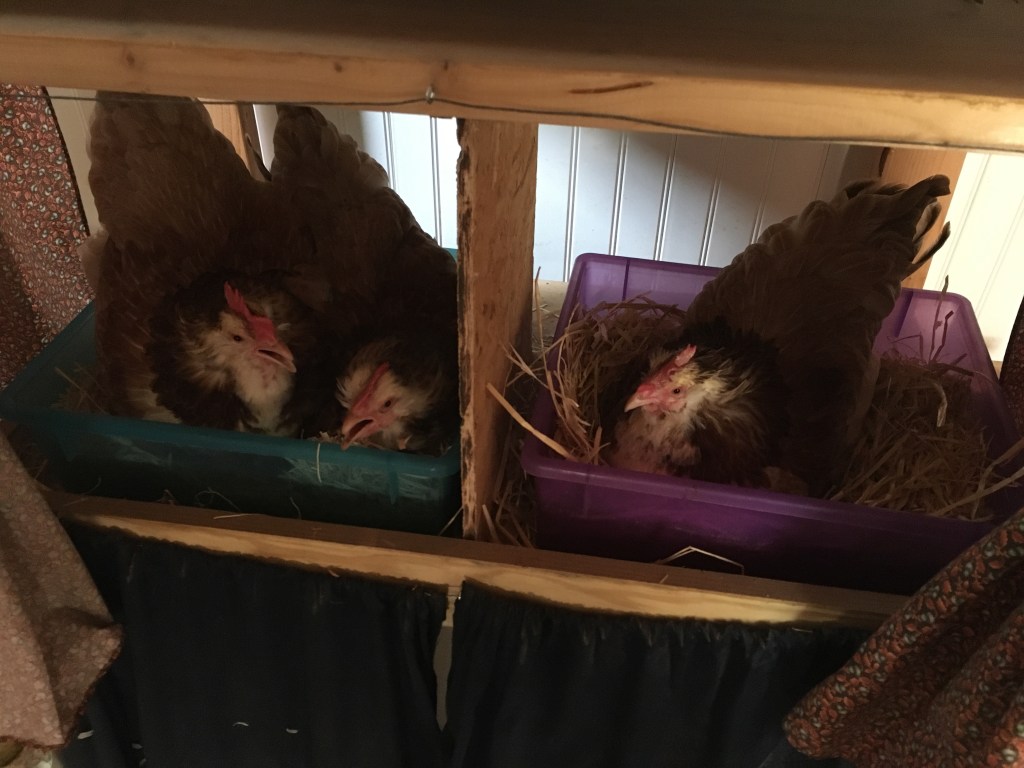
Two hens in one nest. Um no, girls.

I did see a dramatic drop in broodiness (where the hen insists on sitting on eggs), which could be because there were no fake eggs, or because it is summer and just too darn hot. However, several times I also caught a hen not waiting her turn for a nest, but just climbing in with her sister. Ugh. I’ve read that this is one way eggs get broken in the nest – overcrowding. The two nests pictured above are the two favorites. The other four nests have been completely abandoned. So I put golf balls back in the shunned nests to see if that will cure the doubling up, but not encourage brooding in a favorite nest. Time will tell.
Nest box shift

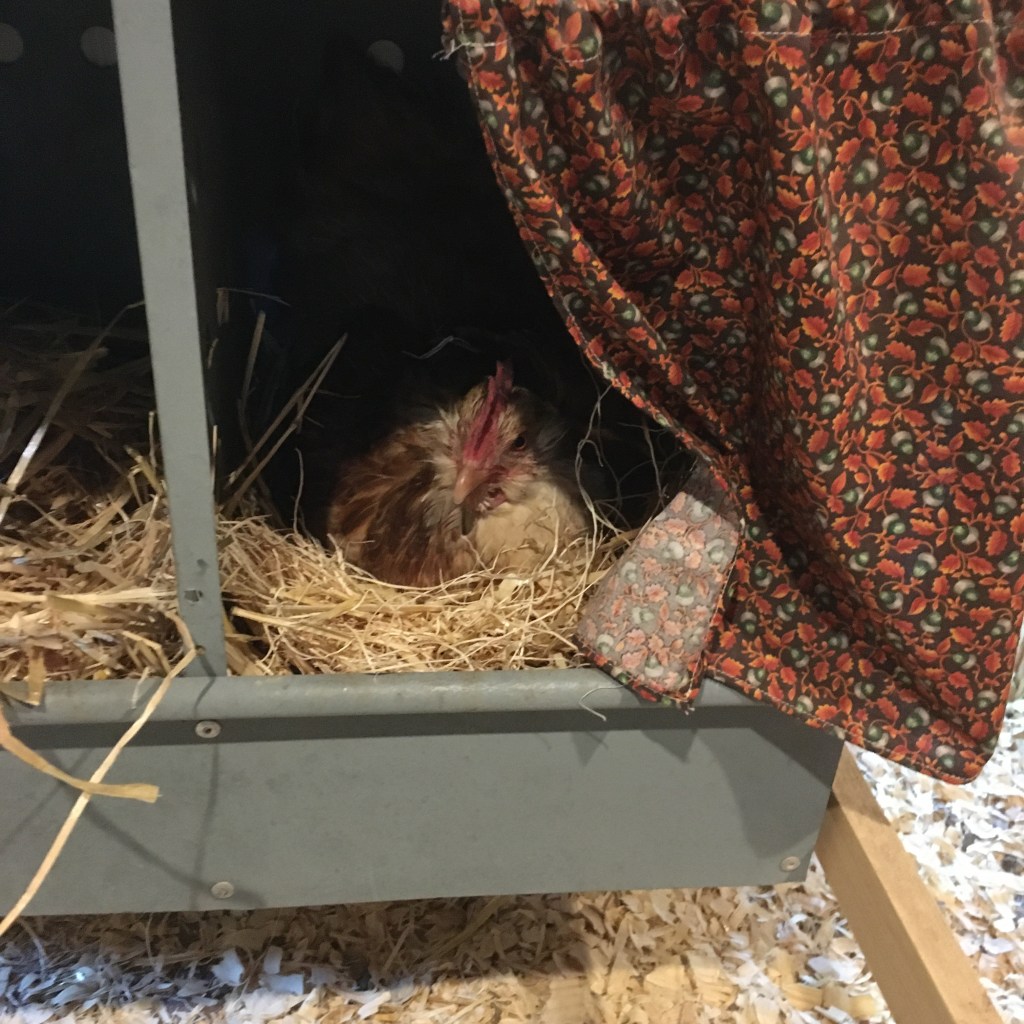
Since the snake visited, the favorite nest boxes have changed. No one is laying in the floor nest boxes, and the new favorite is the right side of the old metal nest box I refurbished. Before snake, no hens laid in that box. Ever. Now they wait their turn for it. And they make themselves fit! Egg production is still way down, or being eaten.

Nest box update

The other problem with broody hens is that they take up valuable nest space. After catching two hens in the same box I thought something needed to be done, especially when I found an egg under the roost because a hen wasn’t able to have nest time. So I made more curtains and rearranged the other two lower nest boxes to be similar to the favorite boxes.

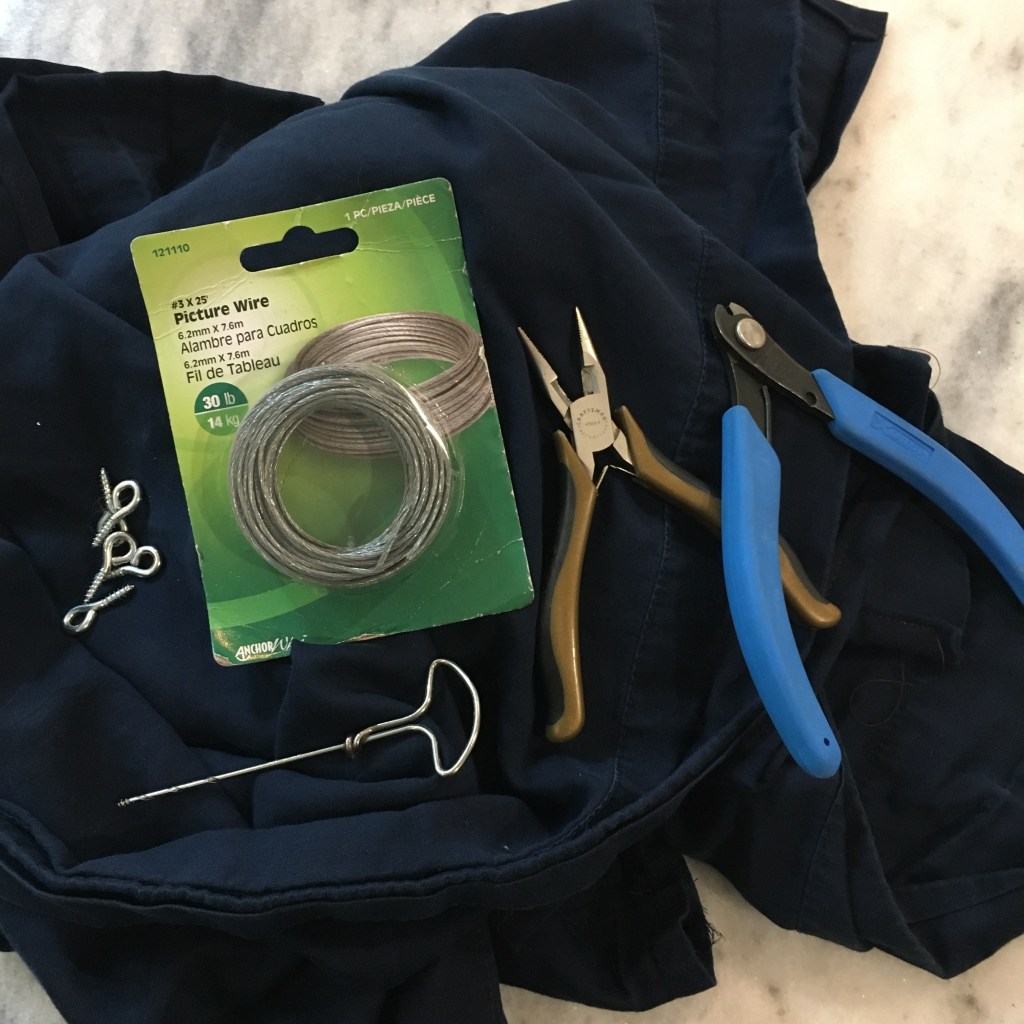
Next box curtain supplies

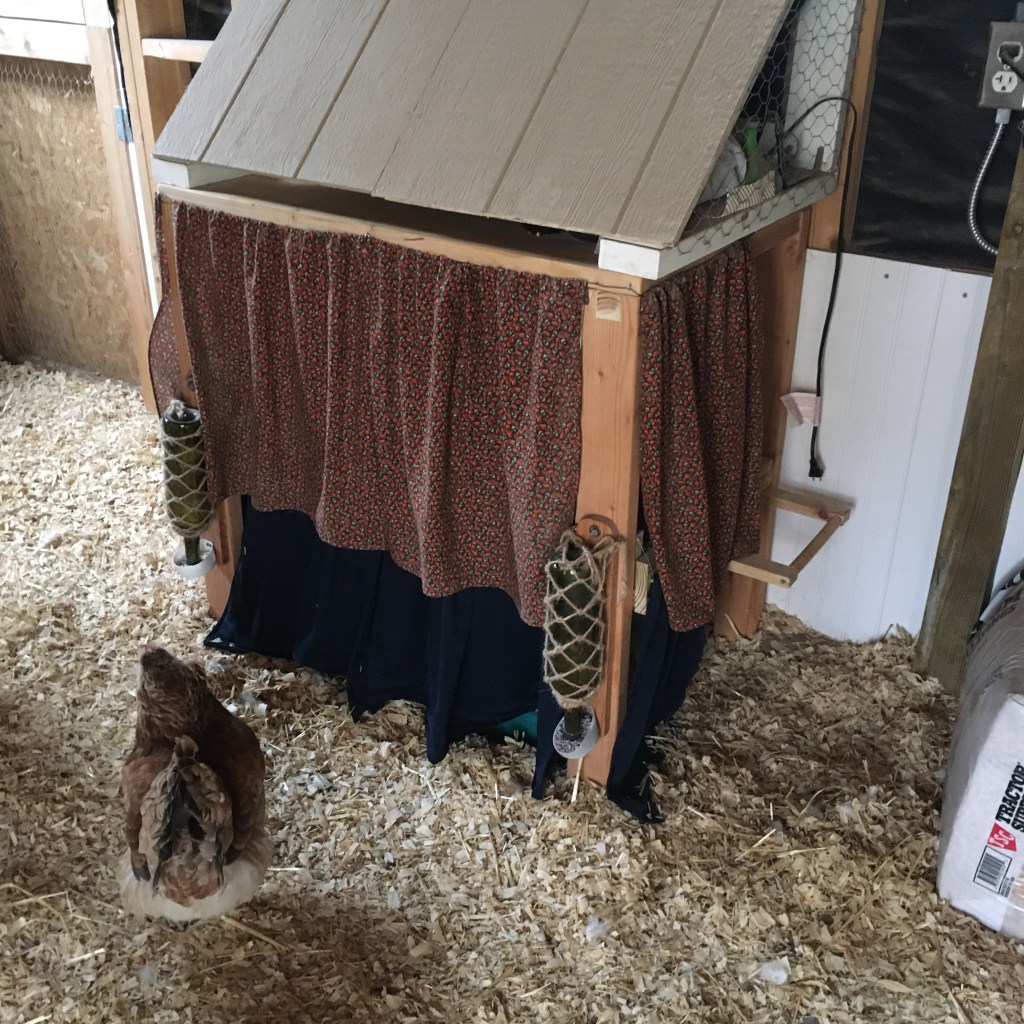
I used some old sheets to sew four panels, then strung the panels on picture wire using the screw eyes to attach the picture wire to the table legs.

Nesting box table with new bottom curtains

The hens were quite interested in what I was doing. I had a large audience. And when I was done, a hen crawled in a bottom box. Hurray!

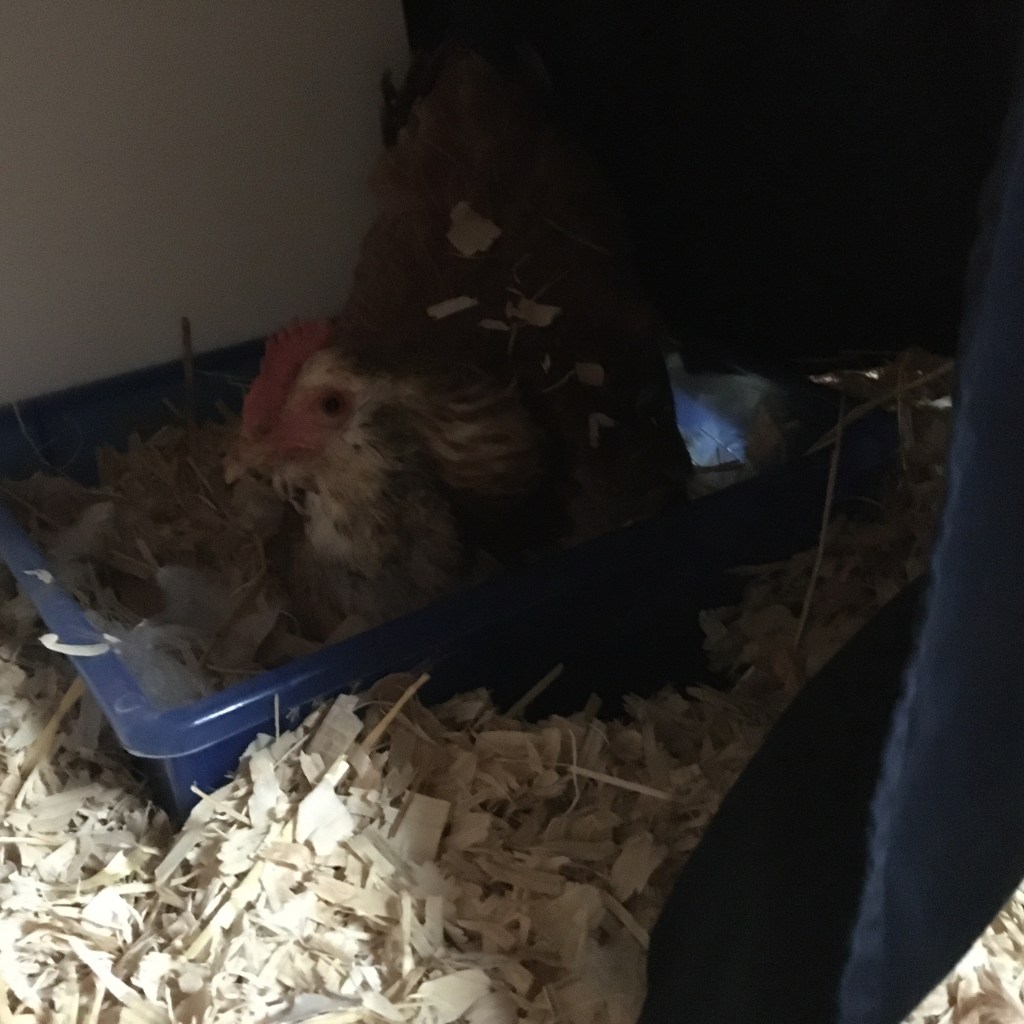
Magic in a bottom nest box
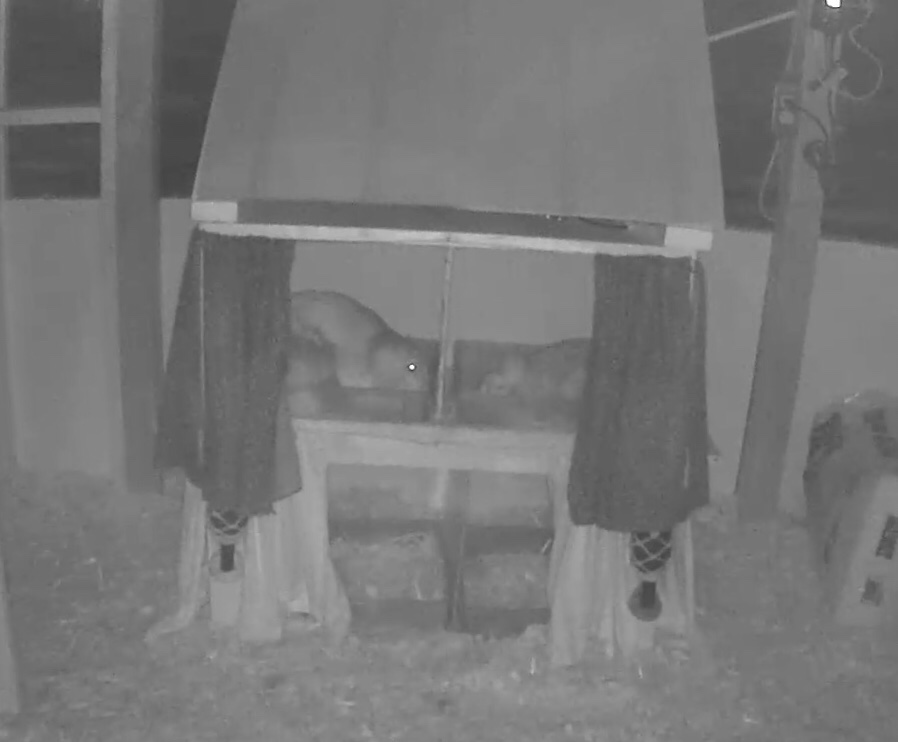
Curtains open at night so I can see the culprits, who were put back on the roost after this photo.

Round Nest in a Square Box

Oval nest in a rectangular box, to be precise

I’m sharing a picture of one of my hens’ favorite nest boxes because it makes me happy. I love how even though the box is rectangular, they have spent so much time fussing with the straw that they have formed a nice oval. Now, sometimes an egg will land on the outer slope of the nest and roll into the corner, but at least I know to look there now. They have two favorite nests, both with these repurposed bins given to me by a friend. The other four nesting areas lay dormant, but these, behind the curtains, are hoppin’ places to be!

Trying a new ID method

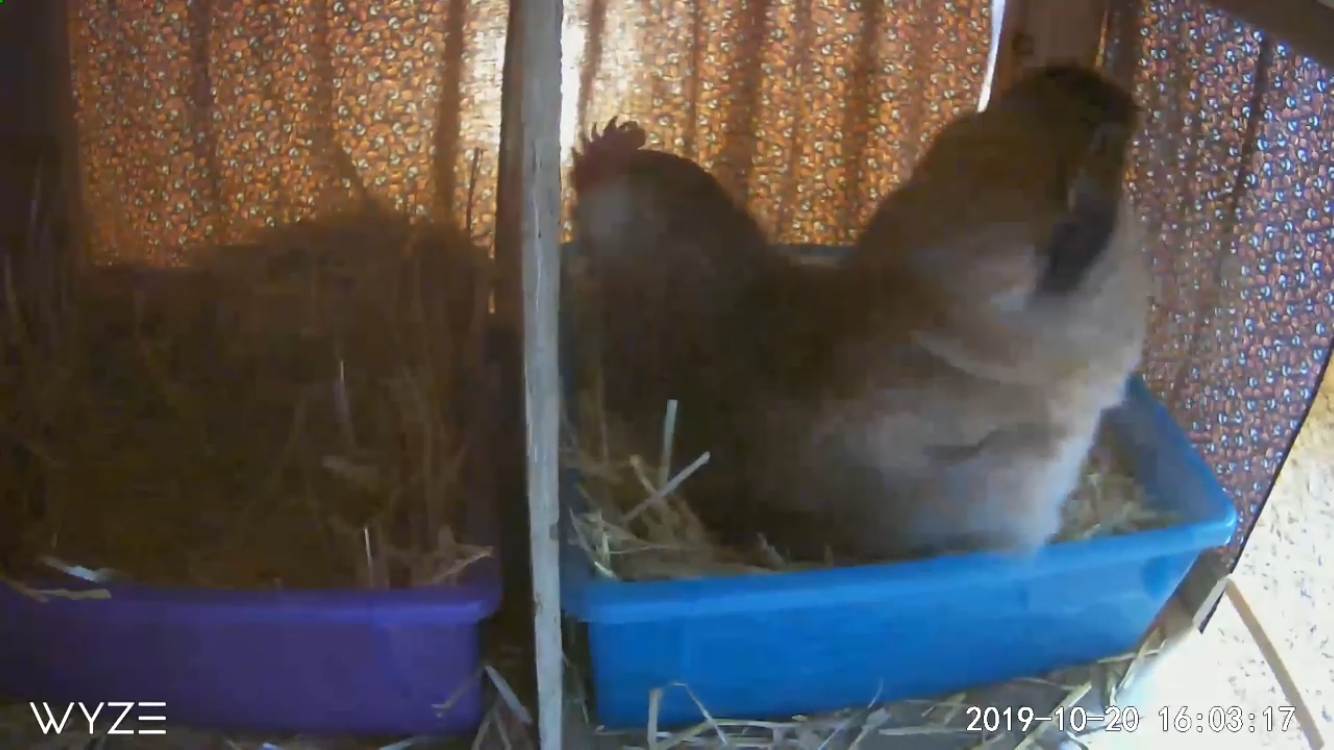
I put the Wyze camera where we could see the popular nest boxes. It is neat because we can see the chickens in the nests, but the angle does not make seeing their colored leg bands easy (or even possible).

Jade getting settled into the nest

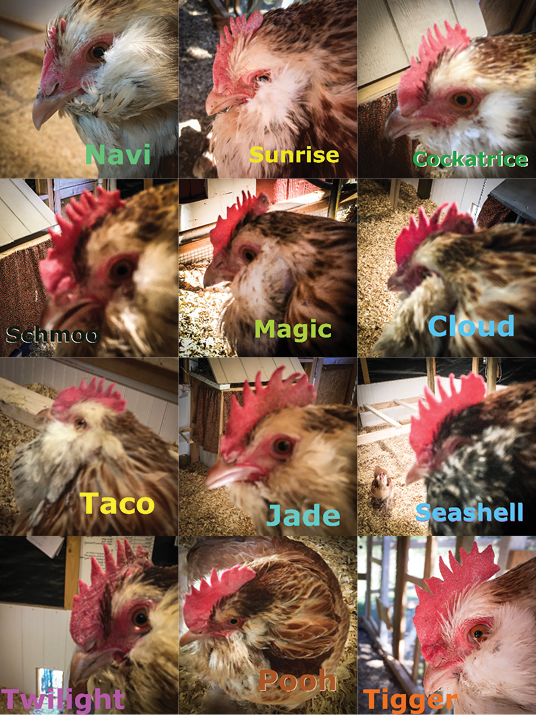
So we are trying a new method of chicken identification, at least for the purposes of figuring out who was on the nest when. I took pictures of all their combs, which are all slightly different. (Scientists identify orca whales in a similar way; by taking pictures of their dorsal fins.) Trying to get a clear picture of the comb when they are wiggly and their head is rarely still was a challenge, but eventually I figured out to tuck the subject under my arm and angle my phone camera back toward their head. I then used Adobe Lightroom to adjust the photos and get the combs all facing the same way.

I printed a reference sheet and then checked the camera. I think this is a viable method! I was able match Jade’s comb with the reference. Not sure how much time I will spend going through the saved footage to figure out who laid what egg, but it might be helpful if I have an off egg and need to figure out the culprit.